Page 10 of 41

Nachtwachen

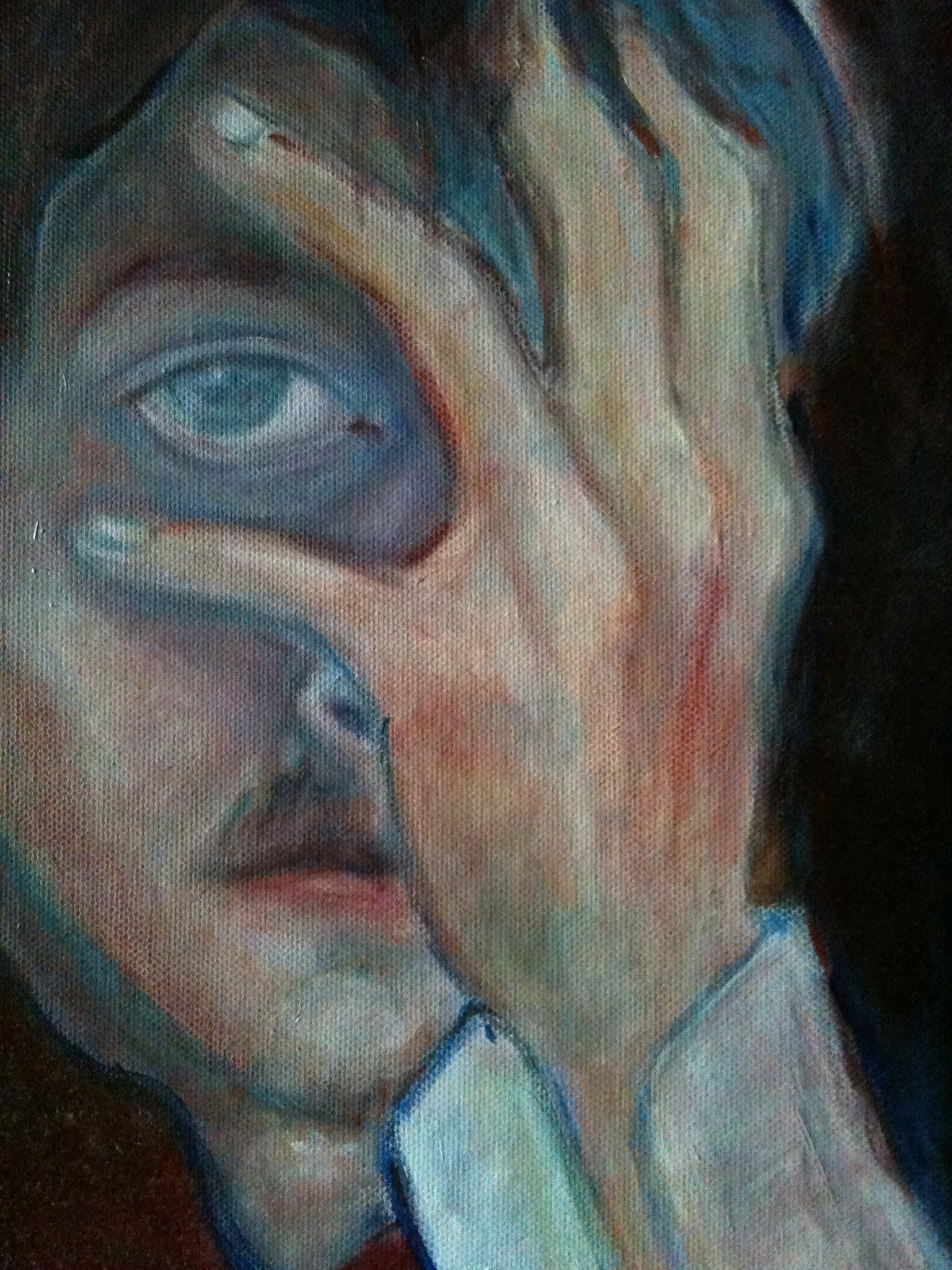
Screenshot 2014-04-10 03.43.03Seltsam denkt K, wir haben geredet, immer geredet, einmal er, einmal ich, ununterbrochen geredet, und doch habe ich niemals erfahren, was ich wirklich erfahren wollte. Allerdings habe ich auch niemals direkt gefragt. Ich habe ihm meine Referate gesandt, ich habe über mein Studium und über Politik geredet, und mein Großvater hat über seine Kindheit geredet und darüber, dass meine Generation die seine nicht mehr verstehen konnte. Immer wieder hat er mir aus seiner Kindheit erzählt.

Meine Fragen waren die eines Kindes, das versichert werden möchte, dass in der Dunkelheit keine Monster lauern. Je nachdrücklicher das Kind fragt, desto verzweifelter will es versichert werden, dass es keine Monster gibt. Kann man einem solchen Kind die Wahrheit sagen?

Ich habe meinem Großvater niemals ins Gesicht gesehen und ihn gefragt, ob er gewusst habe, dass das Regime, dem er folgte, kaltblütig den Mord an über sechs Millionen Menschen plante und durchführte. Ich habe nicht gefragt, was er gedacht hatte, als den Juden öffentlich alle Rechte entzogen wurden. Ob er selbst, mein kluger, gebildeter Großvater, sich als einer Herrenrasse zugehörig empfunden habe, der es nicht zugemutet werden konnte, den Gehweg einem Juden zu teilen. Ob er es aushalten konnte, durch den Stadtpark zu spazieren, auf einer Bank zu sitzen, deren Benutzung einem Juden verwehrt blieb. Was für eine Zukunft er für Deutschland nach der Reichskpogromnacht vorausgesehen habe. Und ich habe ihn nicht gefragt, ob er sich selber an den Verbrechen seines Regimes beteiligt habe.

Vielleicht vertraute ich darauf, dass er auf meine Andeutungen, meine Referate und meine erhitzten politischen Ausführungen, immer in Monologform, nicht antworten werde. Auf meine Referate für ein Studium, das er mir selbst ans Herz gelegt, von dem er sich aber etwas anderes für mich erwartet hatte. So dass ich im Zweifel – und in gegenseitigem, stillschweigenden Einvernehmen – annehmen durfte, dass er es verstanden hatte, sich einfach so unauffällig wie möglich durch diese Zeit zu manövrieren.
Die Radbruchsche Formel und Restitutionsansprüche

Notiz: Radbruch zum gesetzlichen Unrecht und der Natur übergesetzlichen Rechts. Nach der sogenannten Radbruch’schen Formel entschied das BVerfG 1968,  dass die Akte der Vermögenseinziehung unter den Nationalsozialisten nicht isoliert, sondern nur in ihrem Kontext der Vernichtung von Menschen zu bewerten seien und der BGH, dass diese Akte “niemals Recht, sondern von Anfang an das Gegenteil, nämlich krasses Unrecht waren.” Allerdings legte der BGH zugleich dar, dass die alliierten Rückerstattungsgesetze – auch wenn sie faktisch einen weiten Ausschluss konkreter Rückgabebegehren bewirkten, rechtmäßig waren – da sie die wieder  herzustellende Rechtssicherheit als eines hohen Gutes des Rechtsstaates zu schaffen geeignet gewesen seien. Die Frage bleibt bis heute: wenn das Unrecht so krass (Wortlaut der Entscheidung) war, dass die Unerträglichkeitsklausel Radbruchs zur Anwendung kommen konnte (und daran besteht kein Zweifel), wie anders als durch vollständige Wiedergutmachung konnte ihm auch in rechtlich hinreichender Weise geantwortet werden?

Und weiter: der Rechtsfrieden, der derart wieder hergestellt wurde, war nicht der Rechtsfrieden derjenigen, die ihres Lebens, ihrer Lebenswerke und ihres Vermögens beraubt wurden. Wie die Erben Max Sterns es formulieren: Rechtsfrieden auf Seiten der Opfer des nationalsozialistischen Regimes kann erst mit Befriedung der Ansprüche durch Restitution geschehen.

Sehen wir in die Passage des BGH, mit welcher im Jahr 1953 der Rechtsfrieden der jungen Bundesrepublik mit den Folgen einer umfassenden Aufarbeitung und Restitution aufgewogen wird, so bleibt der Eindruck einer gewissen Hast. Hier heißt es in einer für eine BHG Entscheidung recht nachlässigen Sprache (siehe: “Rechtswirrwarr”): “Dadurch, dass der nationalsozialistische Staat in der Lage gewesen war, seine Akte des Unrechts viele Jahre mit allen ihm zur Verfügung stehenden Machtmitteln durchzusetzen, waren deren Auswirkungen auf allen Lebensgebieten so weittragend und tiefgreifend, dass nur ein neuer Rechtswirrwarr entstanden wäre, wenn die Rechtsordnung über die nun einmal entstandene Tatsachen einfach durch Nichtbeachtung hinweggegangen wäre. Die Entwirrung des durch jene Unrechtsakte geschaffenen Chaos konnte vielmehr nur durch eine besondere gesetzliche Regelung vorgenommen werden.”  BGHZ 9,34 (44 f.) = NJW 1953, 542

“Weittragend und tiefgreifend” war in der Tat die Aufgabe, die sich der jungen Bundesrepublik in der Aufarbeitung seiner jüngsten Vergangenheit stellte und welcher sie jedenfalls in den fünfziger Jahren nach wohl inzwischen einhelliger Auffassung nicht nachkam. Zu stark war der Wiedereinzug von unter dem Nationalsozialisten tätigen Funktionären in die Ämter der jungen Bundesrepublik. Bequemlichkeit, Wiederaufbaueuphorie, eine fehlende Auswahl alternativer, fachlich kompetenter Anwärter (weil diese ermordet oder vertrieben worden waren) – dies sind die nachsichtigsten Erklärungen der Dynamik jener Zeit. “Weittragend und tiefgreifend” – wie im Grundsatz vom BGH erkannt – wäre das Maß für ein hinreichendes Gesetz gewesen, die aus dem Unrecht resultierenden Vermögensverluste zu restituieren. Wenn das Unrecht derart krass ist, dass die Radbruchsche Formel der Unerträglichkeit zum Tragen kommt, so bleibt das erlittene Unrecht als unerträglich im Sinne Radbruchs bestehen, wenn ihm keine ausgleichendes oder doch wenigstens ausgleichende Gerechtigkeit anstrebendes Recht zur Seite gestellt wird.

Ein Gesetz, dass dies nicht bewirken kann, so bleibt zu argumentieren, hat auch nicht die Kraft das “krasse Unrecht” zu befrieden.

Der Fall Eichmann: Strafrechtliche Verantwortlichkeit für staatlich legitimiertes Handeln

Der Fall Eichmann: Strafrechtliche Verantwortlichkeit für staatlich legitimiertes Handeln.

In der letzten Wochenende-Ausgabe der “taz” (vom 15.03.14) erschien ein Interview zum Thema Restitution von beschlagnahmter Kunst während des Terrorregimes der Nationalsozialisten in Deutschland, das auf zwei langen, anregenden Gesprächen mit der taz-Redakteurin Petra Schellen beruhte, die mir Gelegenheit gab, zu diesem Themenkreis umfassend Stellung zu nehmen. In diesem Interview ist unter anderem in den biografischen Hinweisen von diesem Buch “Nachtwachen” die Sprache, auf das ich seither mehrmals angesprochen wurde. Auf der hier verlinkten Webseite “nachtwachenroman.com” finden sich für den Interessierten Ausschnitte aus dem Roman. Vielen Dank für das Interesse!

loopholes and the art of legislation

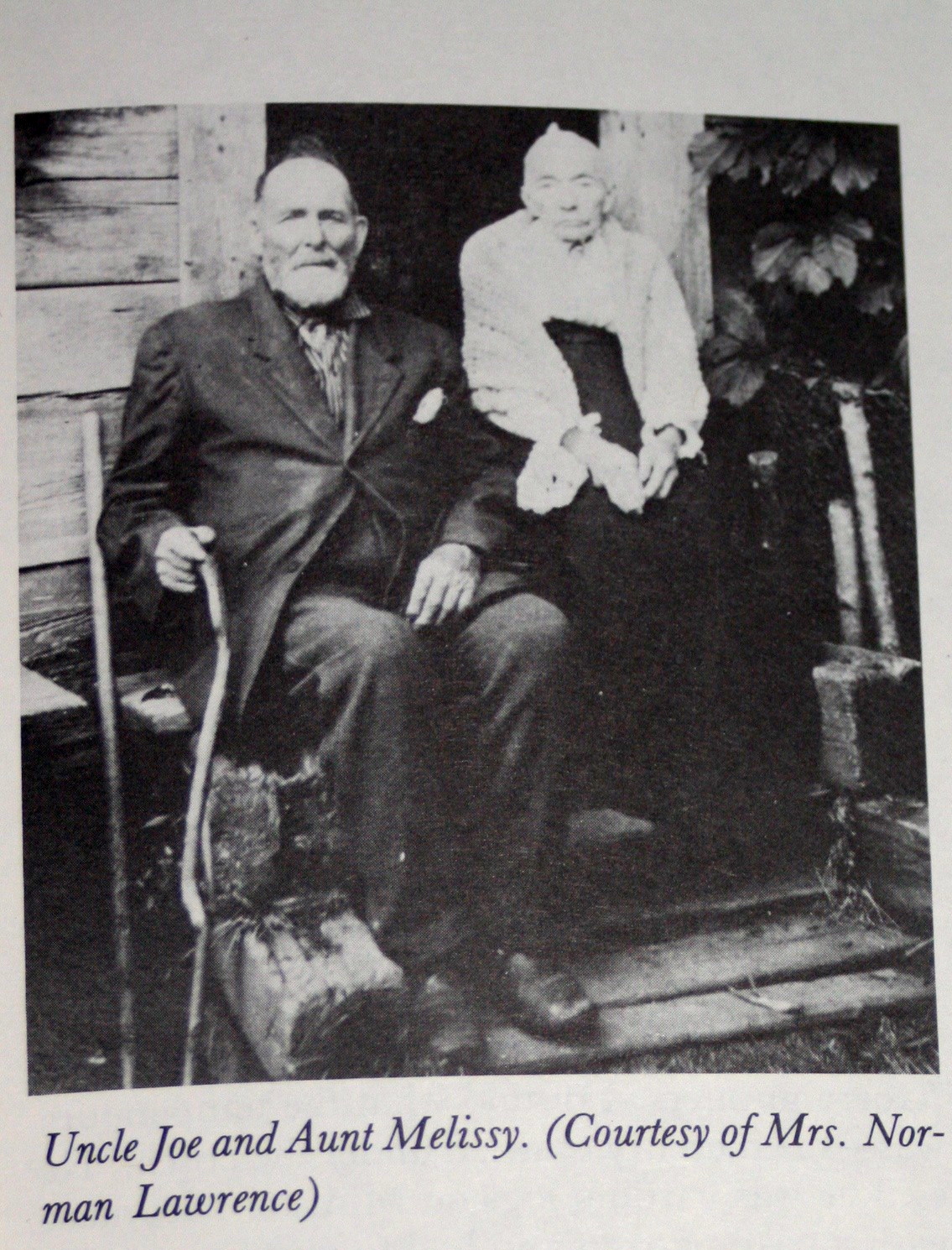
Image - Version 2When we arrived at the cottage we were basically frozen. Courtesy demanded to offer someone who came to the cottage door a cup of tea – but I would have offered it regardless of etiquette because the girl was in need of one. She gladly accepted and entered the cottage. The old people were at the Sunday meeting still and so I got busy rekindling the hearth fire and put on a kettle with fresh water to boil. I knew Aunt Melissy would approve of the church elder’s daughters having tea with me.

The girl had readily slipped into the bench at the window and had pulled her sock feet up to wrap her long skirt around them to warm up. As long as the fire wasn’t going it wasn’t too warm in the cottage either, but it was nicer than outside, and my feet started thawing.

The girl had put her chin on her kneecaps and looked at me without much expression, a bit as if we had been friends for a while. After a moment she lifted her head a bit and said: “I’m Fiona. Don’t tell me your name. My mom says I shouldn’t know you. So, if you don’t tell me your name I don’t know you, right. “ Fiona grinned. “She didn’t say we couldn’t have tea.”

She hugged her legs tight, I could see she was still cold. But there was something on her mind. As long as we were alone. “It’s difficult, to make rules.” She added gravely. As if she was not the one looking for loopholes. Or maybe as if looking for loopholes was her special function in the system of making good rules. “I mean,” she added “to make rules that are to be followed to a point. Not to forget anything. Though you know they will be looking for a loophole. And you have to make the rule as tight as possible. But still workable.” She took a deep breath. I had no idea where she was coming from. Why she was telling me this?

“Why would they?”, I asked. “Why would they look for loopholes, I mean.” Maybe it was an ignorant question but it was the first thing that came to my mind. I didn’t even now who “they” were supposed to be. “Why wouldn’t they?” Fiona retorted. “Doesn’t everybody crave freedom? Just everybody? And especially those who are bound by a contract to obedience?”

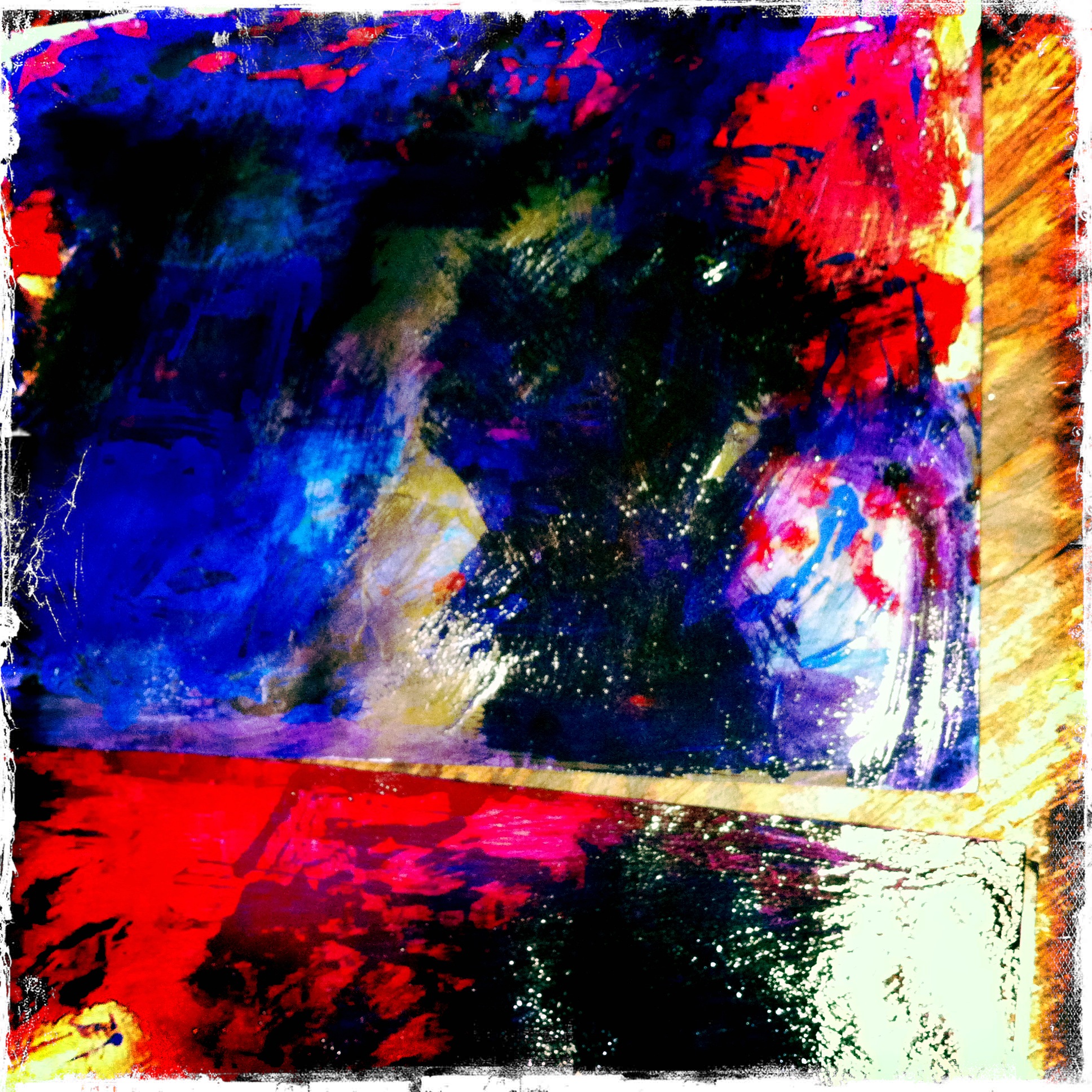
Artist’s logic: to a friend who just celebrated an important birthday, (isn’t any birthday?)

While I travel between two very different worlds, one might just as well say, universes, between the paper world of the lawyer backed up by the many stories and needs of my clients, as different from one another as one can imagine, and the turpentine world of art, the stark smells, the mess, the need to tangle that which has just before been neatly ordered, backed up only by my own perception of the beauty of randomness, my need to stretch beyond the confines of an individual biography and yet of course always landing face first back in, well  if not in the mud then at least in a bucket of paint like any other clown in business,

while I travel between these worlds I feel entirely grateful that for some random reason I have been given the gift of intense pleasure in all these fragments that might never amount to much, not make a front page but at any time give me a sense of wonder and awe of the wild twists and turns. How I wish you would, too, I mean, take intense pleasure in what is, not fear how much or how little there is to come. Take the deep breath and dare to live this imperfect, strange, angst-ridden, beautiful, funny, short, long, light, dark thing called a life. How I wish you’d get to be just you, not judge yourself nor let yourself be judged by others while you lay down, if only for a moment, the burden of your insight.

Here’s to the wild twists and turns, my friend, to moments of desperation followed by sudden outburst of unfounded optimism, to the great calm between the days of discontent and the fractured mirror of contentedness reflecting the light of other possible worlds.

IMG_3159


Die Strafprozessordnung als Mittel zur Restitution von NS-Raubkunst?

Jenen, die mir im Zusammenhang mit meinem kurzen dpa-Interview zu der von den von Herrn Cornelius Gurlitt beauftragten Rechtsanwälte eingelegten Beschwerde gegen die Beschlagnahme der Bilder aus der Schwabinger Wohnung, geschrieben haben:

Vielen Dank, dass Sie sich die Zeit genommen haben, Ihre Meinung zu dem Vorgehen der Ermittlungsbehörden im Fall Gurlitt zu artikulieren. In der Tat halte ich die Strafprozessordnung nicht für das geeignete Mittel, eine Restitution von NS-Raubkunst auf rechtsstaatlichem Wege zu erreichen. Wie Sie dem Artikel auch entnehmen konnten, plädiere ich hingegen dafür, dass wir den Erben der rechtmäßigen Eigentümer endlich durch entsprechende Gesetzgebung die rechtlichen Instrumentarien zur Restitution bereit stellen, um erlittenes Unrecht jedenfalls so weit wieder auszugleichen, wie das durch die Rückgabe der Bilder an die Erben geschehen kann.

Dass ich fordere, dass dies mit rechtsstaatlichen Mitteln zu geschehen habe, ist in meinen Augen eine demokratische Grundforderung, die ich gerade in Hinsicht auf die Erfahrungen unseres Landes während des NS-Regimes für unerlässlich halte.

Vielleicht können Sie selbst durch engagierte Meinungsbildung bei Ihren Vertretern im Bundestag dazu beitragen, dass ein Gesetz zur Restitution von NS-Raubkunst verabschiedet wird. Ich weiß aus meiner Arbeit mit Jugendlichen, dass auch unter jungen Menschen der Wunsch zu einem Ausgleich des maßlosen Unrechts, das jüdischen Mitbürgern während des NS- Regimes zugefügt wurde, weit verbreitet ist und nach wie vor viele Menschen eben gerade nicht der Meinung sind, dass “dies alles lang zurückliegt”.

Der Fall Dr. Hildebrand Gurlitt –

Inger-Kristina Wegener's avatarArt & Writing

Heute hatte ich die Gelegenheit, mich als auf Kunstrecht spezialisierte Anwältin in einem Interview mit der online Redaktion des Magazins der Deutschen Anwaltauskunft des DAV  zu dem Fall Cornelius Gurlitt, dem spektakulären Kunstfund in München-Schwabing, zu äußern. Neben den rein rechtlichen Erwägungen zu Fragen der Restitution, siehe: http://anwaltauskunft.de/magazin/gesellschaft/kultur-medien/158/das-thema-restitution-hat-weiter-bedeutung/, beschäftigt mich seit Tagen auch die komplizierte Biographie des Dr. Hildebrand Gurlitt. In Ergänzung des Interviews folgende, durchaus fragmentarische Anmerkungen:

Dr. Hildebrand Gurlitt, deutscher Kunsthistoriker, war einer aus der Liste handverlesener Kunsthändler und Auktionshäuser, die im Rahmen der von Herman Göring initiierten, der „Aktion Entartete Kunst“ folgenden „Verwertungsaktion“ mit dem Verkauf von Werken im Auftrag des Deutschen Reiches betraut worden waren. Die Komplexität auch der zu erwartenden Fragen nach der Provenienz der nunmehr zu beurteilenden Bilder aus dem Archiv des Sohnes Cornelius Gurlitt spiegelt sich in der Biographie des Vaters. Hildebrand Gurlitt selbst hatte als Leiter des König-Albert Museums in Zwickau…

View original post 879 more words

The elusive act of teaching children how to be creative …

Legal Chimaere

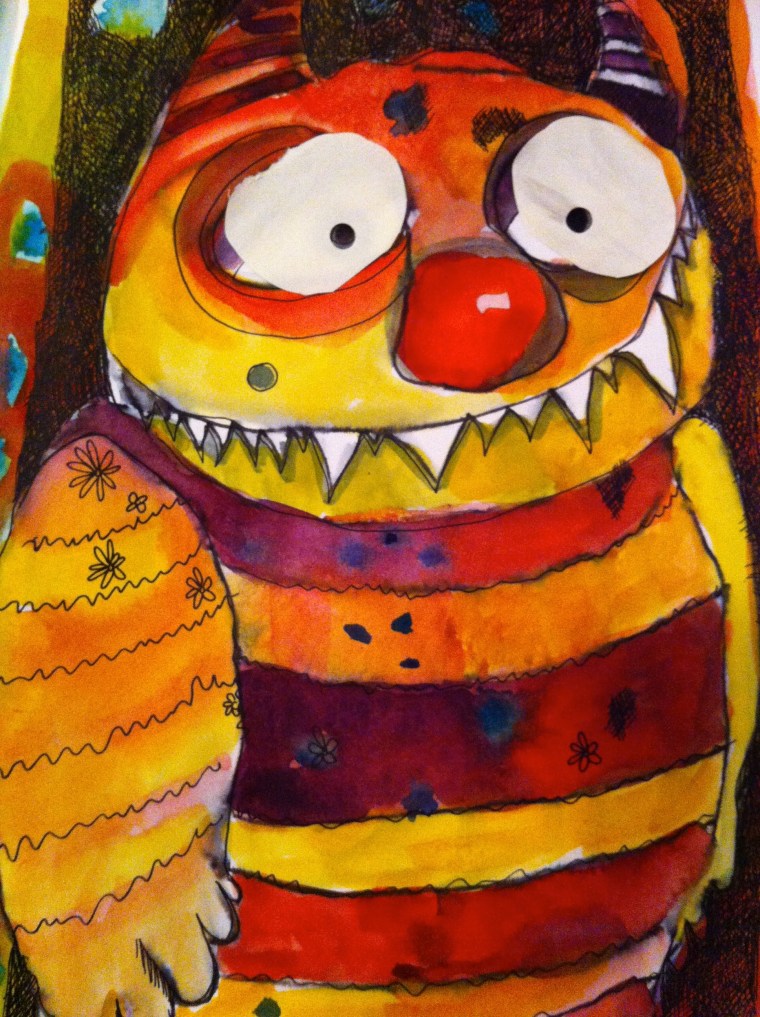
To be creative is a basic desire of humans, all humans. It is a genuine expression of who we are even before we are defined by our social and economic circumstances. To teach a child to be creative therefore seems to me an elusive act. I look at children with a sense of awe, they are still there, right at the origin, and all I do as the teacher I am honored to be at times is to take them on the same kind of  long walk that I had been privileged to undertake with my own grandparents and I simply allow them to discover their world and to collect at will what responds to their own desire of creating this world new. If we’d allow our children more freedom and time to explore their own world and provide them with materials that are not dedicated to specific purposes, we could cut back on many extracurricular activities. Let them venture out there and the artist that lives in every one of us but is acutely alive in our children is ready to meet all the great challenges of art right in our neighborhood.


Time itself took notice of the unlikely creature

IMG_2513

“I  will be back.” Was it even meant to be a promise or rather the a mere, impulsive expression of an intent? The gargoyle pondered this question over many days, even weeks after the mason had left. He remembered the exact  sound of the words, their intonation, the expression of the mason’s face, the thoughtful gathering up of the tools, the turn of the head to once again rest his eyes upon the face of the stone creature, the final words – the gargoyle relived all of these moments and weighed them, day after day.

Every day up to midday he collected small reasons why chances were good that the man should appear this day, after midday he thought of excuses why he could not possibly have made it possible to come this day but would surely be able to fit it in tomorrow or at least before the week, the month , the season was over.

Perhaps the last gargoyle had been lonelier than he had cared to admit previously or maybe this obsession with the return of the mason was just yet another way to pass time.

Waiting for something to happen, somebody to appear, seemed to be far superior to just being, even if it infused his previously peaceful existence with a permanent sense of pain, a feeling that was so close to boredom that at times he would have been unable to distinguish it.

Boredom or pain both compromise our sense of regular time passing and whereas a day had just been a day, an hour just an hour before the advent of meaning and desire (now time had a direction, time existed so the mason could bridge it, so the gargoyle could subtract minutes from the greatest distance that separated him from the return, the moment when the mason had finally turned his back on him and left the roof), now a day could be excruciatingly long, especially if the gargoyle thought to have detected sounds coming from behind the closed roof door.

Expectation, gladness, desire, wishfulness, frustration, even despair were all variations on the same theme, waiting. Waiting in turn meant the refusal to accept time for what it was; it was like a progressing illness. It never occurred to the gargoyle to abandon his unreasonable expectation and to return to stone nature in order to gain the peace he longed for. Peace seemed attainable only if his curiosity about the reason for the return of the mason could be satisfied. Time passed and the mason did not return. Eventually the initially glad expectation turned into a numb pain, over time seemingly removed from any cause. A general disappointment  overcame the gargoyle, the most human of feelings, as if something that had been promised to him was now purposefully being withheld. It was as if his existence was gradually being tainted by something he could neither name nor really be completely sure of.

Time itself took notice of the unlikely creature and inexorably started gnawing at him with tiny teeth. The  gargoyle still formulated his thoughts in human phrases. But instead of patiently following a thought until it moved just out of grasp and then starting all over again like a child, he had taken to a summarizing his thoughts in a more generalist way, often colored by self-pity. A second rate stone poet he was now, defeated and ridiculous, utterly grown-up and utterly human. He felt contempt for himself, for his dependence, his passive waiting, his pathetic obsessiveness but he couldn’t help himself. There was no way to stop. No way to stop waiting. Tiny cracks were forming in the rough granite surface. Defeat was looming.

Transformative forces


IMG_0537

He  was but a gargoyle, a stone image.  How the gift of sentient observation had come to him he did not know any more than man knew where the soul originated. From his place on the roof he observed people, adults and children alike and marveled about the passage of time. After years and years of observation, of overheard fragments of conversation that the wind had carried up in the same unreliable and moody way he carried a fragrance like a caress or deposited leaves and debris in the gutter, from years of watching children grow up and age, he had concluded that humans were born with many gifts only to shed them with the years until nothing of value was left. Adults to him, the steadfast observer, were a manifestation of a process of  deterioration of their former promise.

There seemed something broken about adults to him, men and women alike, as if the original balance of their design had been spoiled. He liked children perhaps because they seemed unaware of the passage of time. He observed with pleasure as a seven year old girl straining under the weight of a watering can that she had been sent to fill up at the pump stopped in her tracks and put down the watering can only to pick up a small, white pebble to examine with great  interest and sincerity as if she had struck treasure. Another day he had observed  a young boy crouching on the path in an  immobile position for close to an hour, a long time in human count, to closely look at the street of ants entering the church underneath the granite slab step of the back door. It was the same ant street, as  wide as the arm of the local butcher,  that the custodian had failed to banish form the grounds even after many years of relentless and poisonous battle.

Every now and then, from his precarious precipice the gargoyle observed a kid  blinking up into the grey light of an early Northern spring day, scanning the gargoyle’s own dark silhouette against the diffusely bright clouds.  He had never seen any adult lift their head to actually study the structure and ornamentation of the church. It was children only, children  possessing the gift of timelessness by focussing on something small just outside their reach and holding on nonetheless, thereby transcending the moment that was forced upon them by wisdom or mere whim of the ruling adults in their lives. And all that time he was waiting just as they were waiting, existing in limbo, in a state of not knowing, waiting to be unbound, for his fate to be revealed to him, and yet dreading it, dreading it was but a process of diminishing, of deterioration just as the passage of time exemplified by human behavior seemed to indicate.  And yet, there were moments he still believed in the transformative forces of time and light.