Page 11 of 41

retail culture

IMG_3250A parking lot and two blocks worth of retail place ankered around a Barnes and Nobles book store had replaced the industrial clutter of deserted flat brick buildings and weeds she had known like an internal landscape of suburban dread for all of high school. The place now had the mark of a new era of tidy franchised architecture, the clocks had been reset to zero and were running fast. Fifteen years count-down to decay, or to the day the last book would be printed, whichever came first. There was no emotional reaction to the replacement of her childhood environment with these exchangeable elements of retail culture. The fact that it was nearly impossible to tell whether she was in New Jersey or California actually felt kind of welcome, delaying the realization that she had indeed come back. She pulled into the parking lot next to a brand new looking silver Ford SUV with enough space to accommodate a mini baseball league team but most likely outfitted with only two child safety seats and DVD headrest monitors. It was still raining.


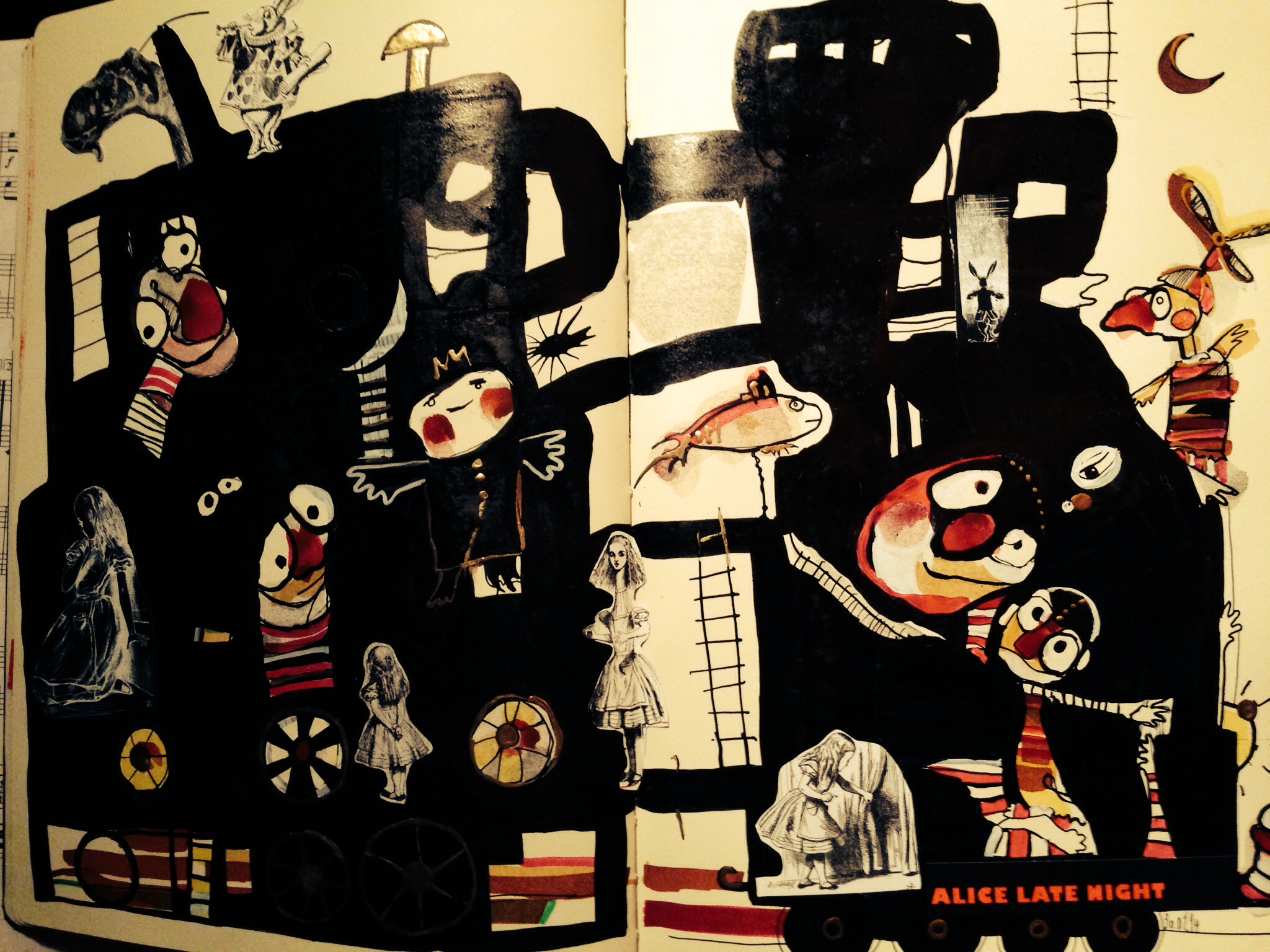
Alice at Night or the long way since Chauvet

Alice at night

The longer I “make art”, the more I am intrigued by the uniquely human need to conjure up coherent images that are  no direct translations of the visual environment as our eyes and brain perceive it.  We know that this strange obsession of humans to conjure up images exists for over 30.000 years. The oldest surviving images known to us painted on walls of a deep bear cave in Chauvet, France, are breathtakingly beautiful. It is remarkable that 30.000 years later we are still able to relate to these early images, maybe even understand their narrative, remarkable considered that these are images of a culture lost in time, as distant from our own world as some imagined extraterrestrial culture. We see  and feel rhythm, movement, beauty – but we do not know why these drawing were created. All we seem to know is that this is our heritage. Maybe this is the cradle of human consciousness – the need to create images and see images in the curving path of a charcoal line.

If we proceed beyond our modern time’s desire to sell most anything in the world , and to employ the power of images to achieve this, we are still creating without truly knowing why we are doing this. Images as marketing tools are so powerful not only because they are almost disturbingly universal due to their pictorial content, but because can be read by anyone who can see, that will reliably be read even when the person “reading” is not aware of the deciphering act. There is no analphabet to images even though they are in their own way as illusionary and abstract as words are to the thing they are representing.

Images are incredibly powerful in influencing our behavior because we are born to react to the furthest abstraction to the original that is still distinguishable from “everything else” (as the most complete description of what the thing is not.) We are wired, so to speak, to read out these abstractions, the blur perceived from the corner of the eye, because every second counts. But that might be true for any moving organism. However, we also obsessively and compulsively creating images, inventing new coherent thought and context.

I think that the human mind though sharing most of its features with other living creatures  – for the last, let’s just say for arguments sake: three percent is completely different. We are doing something that no other living creature will engage in: we are writing new programs. We are creating new worlds. In the beginning was the word. And the word was an image.

Each drawing in itself contains a coherent thought if not a universe. Asked to explain how an image I am either observing or creating is coherent I’d be at a loss. But I know – while I am working on it –  that there is some kind of balance and I continue working towards that balance until I feel I have achieved it or know for sure that there is no way to get there any more. And when I have achieved that balance I know something follows, that there is a consequence to a coherently spelled program, even though I do not know what kind of consequence.

And what fascinates me is not the fact that I have some half cooked up theories about drawing, its origin, its relation to human nature but to observe that this impulse, and may it be explained completely differently, has driven me to drawing for all of my life, or more precisely since I received my first set of rectangular Stockmar beeswax crayons at the age of three and was instantly smitten with the living force of the colorful horses drawn on the metal box. I do remember with vivid clarity that this image on the crayon box instantly conjured up another image, one that I knew I had to draw, one that I have drawn many times since – and I am still looking to find the balance for that one particular image.
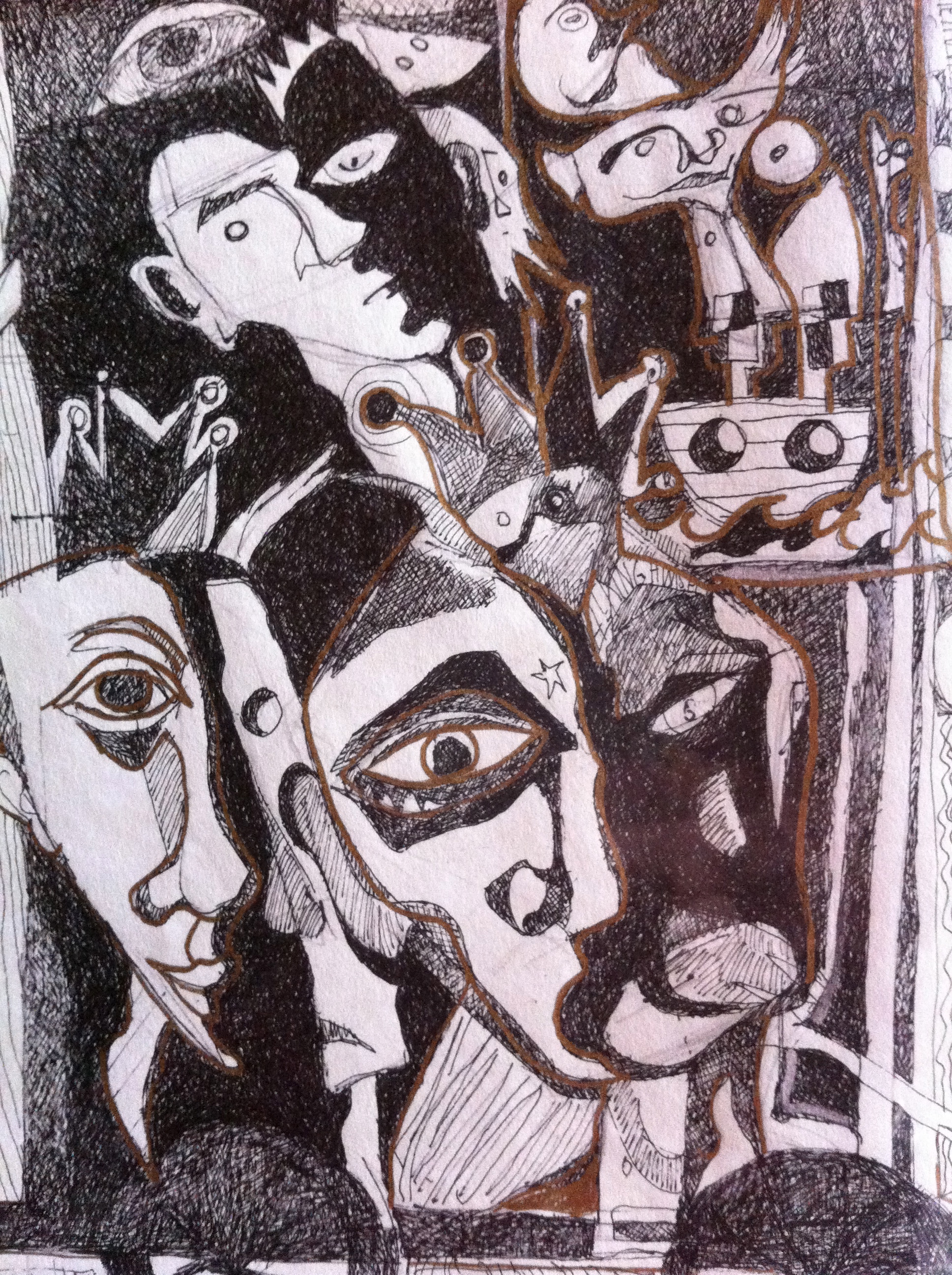
assault on reason

there was a time the child knew with unfailing certitude that what was presented to her as the inevitable if not inexorable logic of reason was but a clever disguise for the a massive assault on reason .IMG_0538

One second of eternity at Lake Willoughby

IMGP1041Lake Willoughby, grated into plutonic rock by a deep glacier, is a 300 feet deep, water filled scar between two mountains with biblical names, Mount Hor to the West and the Eastern Mount Pisgah. If you stand on the North Shore of the lake, it actually has the appearance of a deep fjord, though there is no outlet to the sea. Instead there is said to be an underground aquifer connecting the basin of Lake Willoughby to that of another eerie body of water beyond Mount Hor, Crystal Lake. In my mind that acquifer had the form of a water filled cathedral, in my mind I saw swimmers gliding swiftly through a space abandoned by a people even older than they were. There was an incredible, inexplicable light the way I imaged this. You have to keep in mind that I imagined this within a dream without actually seeing it, two steps down and under. Even though my sober mind took offense with the inexplicability of the light.

While I was thinking and conjuring up images within the dream I stood at the waters edge of the lake as I had done many summers and the water exactly like the water of lake Willoughby as I remembered it acted like a mirror. The surface seemed to be like a sheet of glass of finest quality, separating the clearly visible underneath from the still world above, and the mirror image of this world like an incomprehensible fourth dimension in between both worlds. Again I saw the forms in the distance, gathering around precariously piled up, submerged boulders. Each winter these boulders avalanche down Mount Pisgah and roll into the lake to form the outline of an inaccessible stone city, creating an intricate mountainous terrain. I wondered how long it would take to fill the deep ravine of the lake with boulders and fleetingly thought of the old story about the small bird wearing away a mountain with his beak to mark the passing of the first second of eternity. In my dream I had this thought.

Po Tolo

IMG_2146

“My grandfather, your great-grandfather, believed that there is life in the Sirius system. The Dogon, an African tribe with very acute astrological knowledge, have believed for centuries that there is life out there as have the ancient Egypts and the Sumerians. According to the Dogon Sirius is accompanied by two other stars, a very small and incredibly dense star they call Po Tolo, which means “very little star”, and which modern astrology has confirmed to exist only recently and calls Sirius B. Indeed it has turned out to be a small star with an incredible density, heavier than the iron we know on earth. The Dogon also claim that the other star in the Sirius-System is lighter and larger than Sirius. They call it Emme Ya. And around Emme Ya they say there orbits the home planet of the Nommos, the children of Sirius and Emme Ya.“

My mother inhaled deeply. I knew she was thinking of her grandfather. She still missed him. He died some years before I was born but she had told us many stories about him.  I had always imagined him a very stern man, rarely smiling, expecting a great deal of my mother. I couldn’t picture him indulging in fantasies about alien life.


Thibeas’ final days

Inger-Kristina Wegener's avatarArt & Writing

wearily, the king inspected his ragged group of counselors, the budget long since exhausted, the tin soldiers melted, the castle but a shack with weeds growing through the cracks, human miscellaneous mistakes, crooked timber all of his entourage, and yet there was a light in their eyes that the glorious days had not known, and he was glad he had taken their erroneous advice.he pointed out the fine detail of the scratched figures in the rock, the fish, the symbol of the ancient ones, which so far seemed to have gone unnoticed by his advisers whereas thibeas concluded that their travels had lead them along the old path which they had wandered unwittingly, their tired feet drudging over the worn out stones like so many tired feet before them. wonderingly now they looked back and saw indeed that the smooth surface over which they had come bore the polished colors…

View original post 183 more words

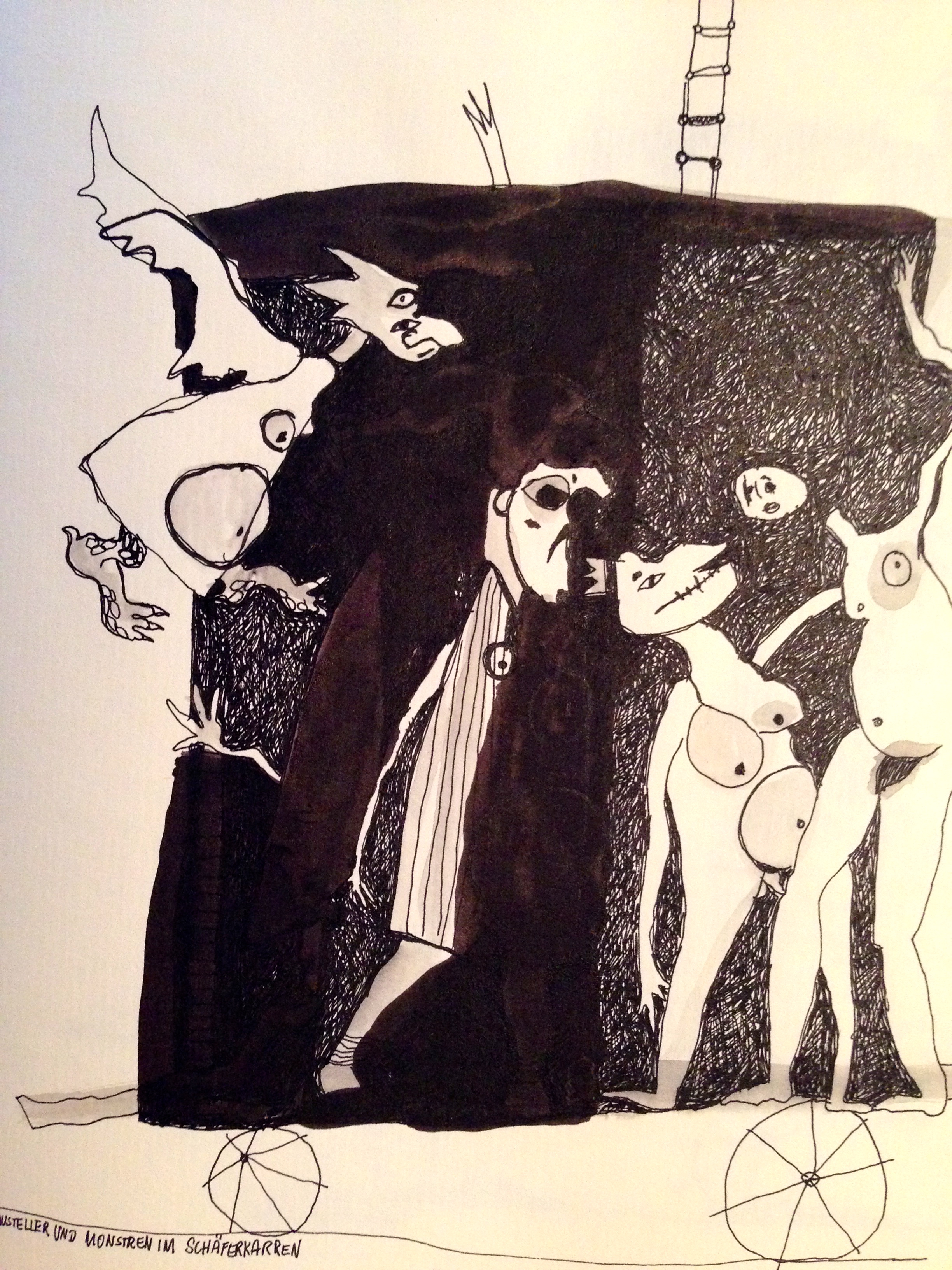
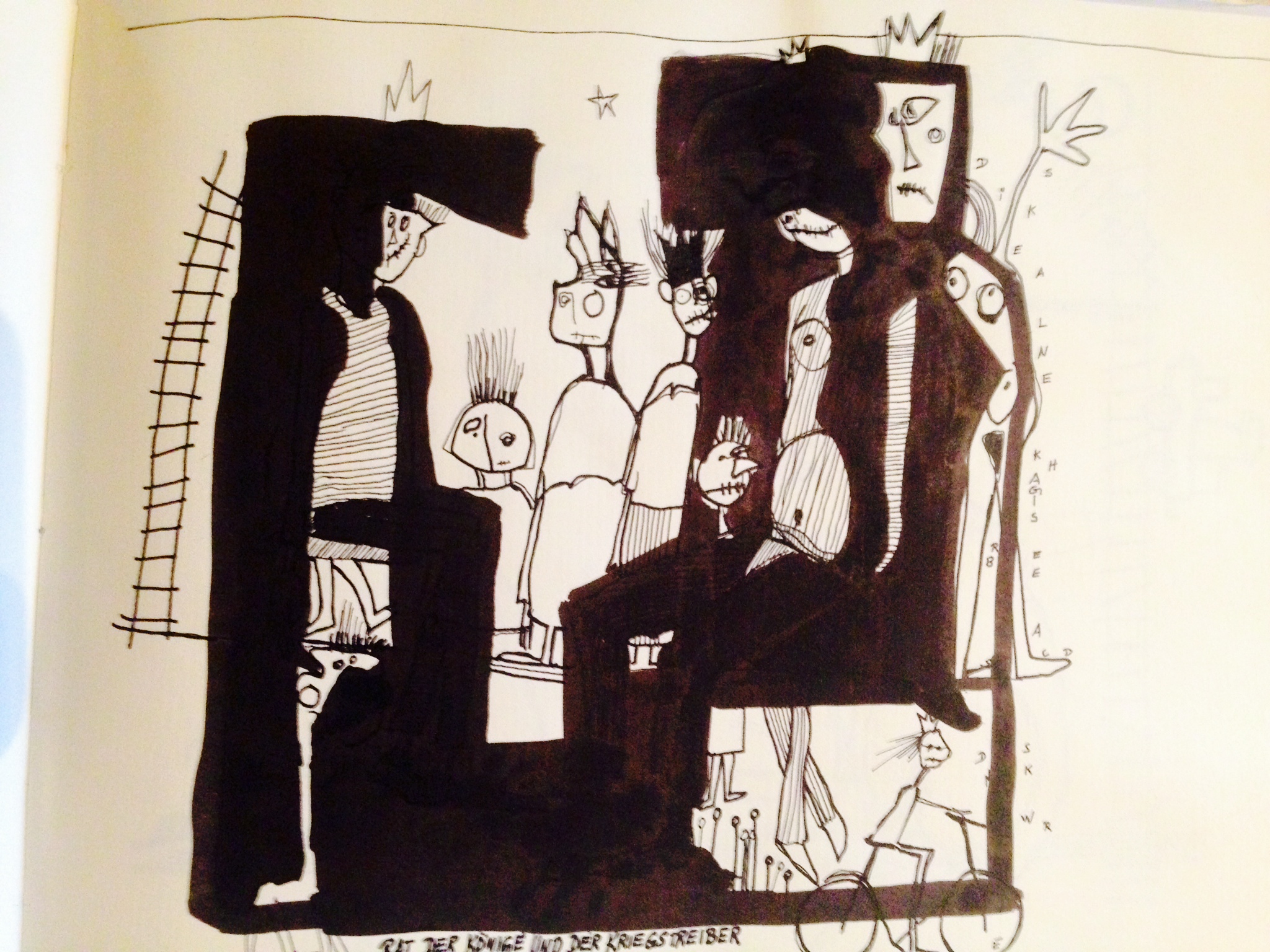
Zur Natur des Rats der Könige und Kriegstreiber – on the nature of the council of kings and warmongers


Once they realized that there was not one king or one queen, but a succession of kings and queens each of whom was “the” king or “the” queen regardless of their individual identity, so that in fact, the king or the queen was not only unconquerable but  actually immortal, that times might change and ideas might change but “the” king or “the” queen” would not, so that one revolutionary, one upraising idea might threaten an individual queen or king and even overthrow them, garrote them, end them, but would have to accomplish this task within one lifetime, while “the” king or “the” queen had all the ages of the world  to wait, witness and rise again, once they realized that “the” king or “the” queen might use this or that war monger to clear the way once time was good and ripe and yet would discard of the warmonger as easily as of the revolutionary as soon the need was satisfied, once they realized that this was so, they also realized that it was not their task to interrupt the fleeting council of kings and queen and warmongers but use their one lifetime to conjure up from the source, the holy grail, a people that were as unconquerable as the grail, giving a random gathering of people a binding, unifying reason to be, to defend their freedom against the usurper through all the ages and to recognize their freedom as not a consequence of liberation but as an unalienable right and quality.
Rat der Kuonige und Kriegstr

Spuren der Kindheit

just plain beautiful …

Wolfgang Schiffer's avatarWortspiele: Ein literarischer Blog

Ein Kunstbuch von Jón Thor Gíslason und Ylma Ürmeny

Was im Jahr 2000 bereits einmal als Künstlermappe in 13 Exemplaren aufgelegt (und schnell vergriffen) war, ist nun – wenige Wochen vor der Kölner Ausstellung des Isländers Jón Thor Gíslason am 7. Februar im Kultursalon Freiraum – als Kunstbuch im Druck erschienen.

In einer Auflage von diesmal 100 Exemplaren hat der Labonde-Verlag die zehn Kaltnadelradierungen des Künstlers und die Texte gleicher Anzahl seiner Frau Ilma Reißner-Gíslason, die eingedenk ihrer familiären Wurzeln als Lyrikerin unter dem Namen Ylma Ürmeny publiziert, in der seinerzeitigen Originalfolge reproduziert. Jedem der 100 nummerierten und von den Künstlern signierten Exemplare liegt zudem eine Original-Kaltnadelradierung von Jón Thor Gíslason aus dem Jahr 2013 bei.

Die zunächst unabhängig voneinander geschaffenen Radierungen und Texte haben gemein, dass sie um Motive aus Kindheiten kreisen – die Sujets der Grafiken sind Darstellungen von Kindern selbst; die Gedichte geben in unprätentiösem Ton und…

View original post 62 more words

British Storybook illustration – the golden time of the childrens’ book …

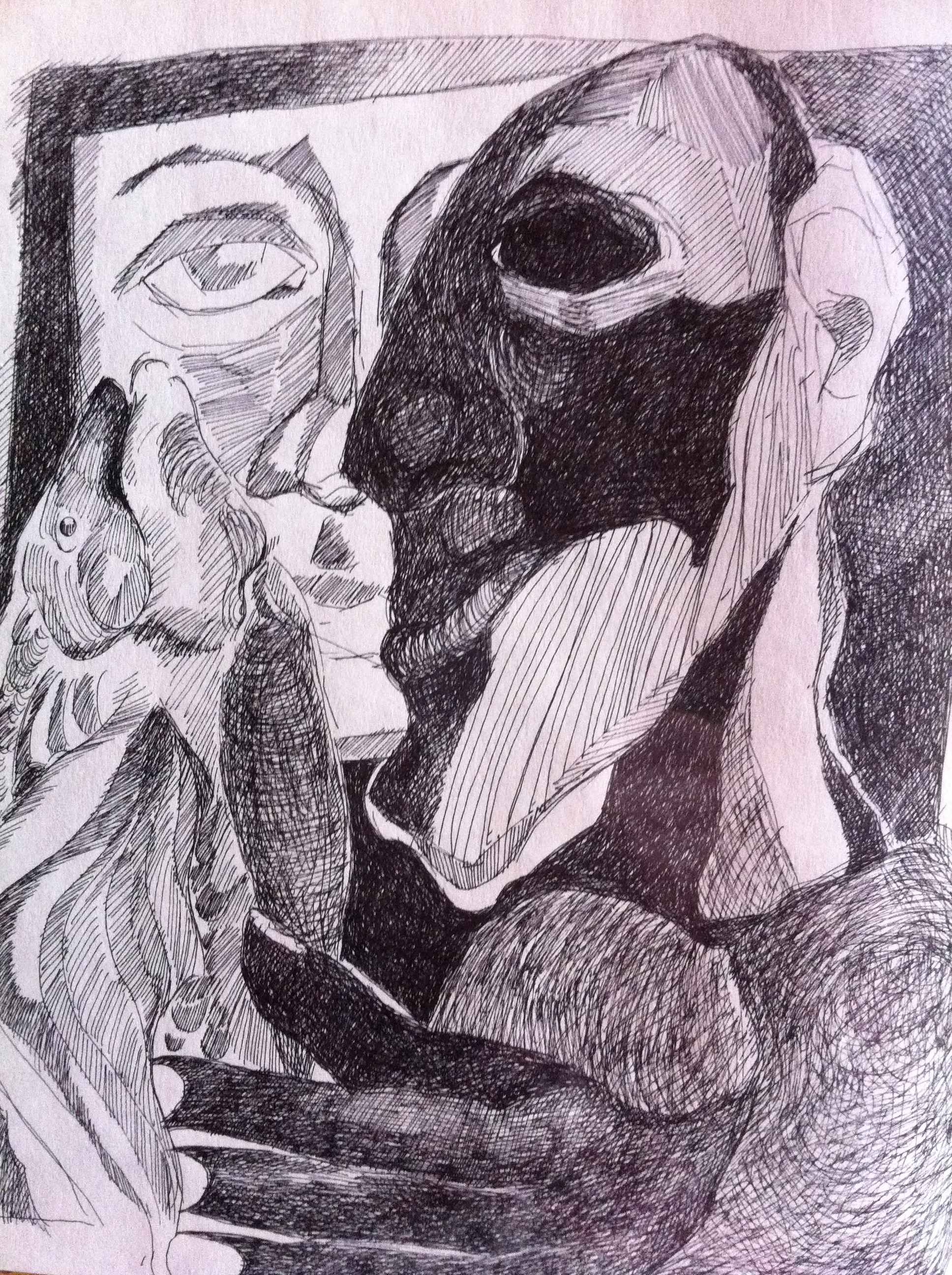
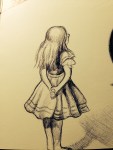
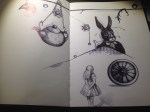
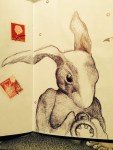
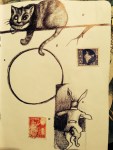
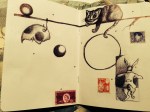
After drawing for many nights I didn’t feel I wanted to let go just yet. True, my paintings are calling urgently, but what are a few hours? So I kept on drawing and I used John Tenniel’s Alice in Wonderland illustrations as an inspiration. Alice again, why do I keep coming back to Alice? Well, if I do at least I am in good company. To this day Lewis Carroll and John Tenniel keep inspiring artists worldwide.

These ball pen drawings are based on the original illustrations by John Tenniel. One cannot tire of those original illustrations any more than one could tire of Arthur Rackham’s illustrations of Grimm’s Fairy Tales. There have been many beautifully illustrated versions of Lewis Caroll’s Alice (Alice in Wonderland  and Through the Looking Glass), for example the great illustrated version by Robert Ingpen,  and Grimms’ Fairy Tales as well (have a look at the version illustrated by Albert Schindehütte!) – but Tenniel and Rackham are surely not only the archetypes of Alice and Grimms’ illustrations but also provide some kind of archetypical blueprint for childrens’ book illustration in general.

Arthur Rackham also illustrated Alice in a fluid, strange way, I think 1907, but as a child I clearly preferred the Tenniel characters in their weird, warped precision. Yet I seemed to have known that the Rackham illustrations of Grimms’ fairy Tales provided a direct gate into the realm of the story and later, much with the same feeling, I swooned over the Hawthorn’s Book of Wonder illustrations by Rackham but then didn’t care as much for the Walter Crane edition. Kate Greenaway, though once as successful as one of the best British illustrators, was not quite dark enough for my five-year-old taste. I still remember, children do have an appreciation for the dark places, for their imminent terror and promise alike.  Well, you see, this small excursion into the world of Tenniel was a nice diversion for me. Next weekend I will take some of the characters and try to use in a Photoshop-Crashcourse my very talented cousin and illustrator Lotta NUSUM will treat me to. I’ll keep you posted!

This is the sort of book we like

(For you and I are very small),

With pictures stuck in anyhow,

And hardly any words at all.

C.H Chesterton about Randolph Caldecott