Page 16 of 41

Der Fall Dr. Hildebrand Gurlitt –

Heute hatte ich die Gelegenheit, mich als auf Kunstrecht spezialisierte Anwältin in einem Interview mit der online Redaktion des Magazins der Deutschen Anwaltauskunft des DAV  zu dem Fall Cornelius Gurlitt, dem spektakulären Kunstfund in München-Schwabing, zu äußern. Neben den rein rechtlichen Erwägungen zu Fragen der Restitution, siehe: http://anwaltauskunft.de/magazin/gesellschaft/kultur-medien/158/das-thema-restitution-hat-weiter-bedeutung/, beschäftigt mich seit Tagen auch die komplizierte Biographie des Dr. Hildebrand Gurlitt. In Ergänzung des Interviews folgende, durchaus fragmentarische Anmerkungen:

Dr. Hildebrand Gurlitt, deutscher Kunsthistoriker, war einer aus der Liste handverlesener Kunsthändler und Auktionshäuser, die im Rahmen der von Herman Göring initiierten, der „Aktion Entartete Kunst“ folgenden „Verwertungsaktion“ mit dem Verkauf von Werken im Auftrag des Deutschen Reiches betraut worden waren. Die Komplexität auch der zu erwartenden Fragen nach der Provenienz der nunmehr zu beurteilenden Bilder aus dem Archiv des Sohnes Cornelius Gurlitt spiegelt sich in der Biographie des Vaters. Hildebrand Gurlitt selbst hatte als Leiter des König-Albert Museums in Zwickau zwischen 1925 und 1930 aktiv und fortschrittlich das Bauhaus und zeitgenössische Kunst gefördert.

Deutsch: Fanny Lewald
Deutsch: Fanny Lewald (Photo credit: Wikipedia)

In Folge hatte er wegen seiner progressiven Einstellung als auch wegen des Umstandes, dass er jüdische Vorfahren hatte, unter anderem mit der jüdischen Schriftstellerin Fanny Lewald (1811-1889) verwandt war, seine Position als Leiter in Zwickau als auch in der Folge als Leiter des Kunstvereins Hamburg verloren, bevor er sich dem Kunsthandel zugewandt hatte. Viele der Bilder, die in der Schwabinger Wohnung gefunden wurden, könnten zu den Dr. Hildebrand Gurlitt zur „Verwertung“ übergebenen Bildern aus öffentlichen Sammlungen gehören.

Allerdings sind in den Presseberichten der letzten Tagen weitere Namen von Sammlern und Titel von Bildern bekannt geworden, die auf eine andere Provenienz, nämlich auf Raubkunst, verweisen und daher eine ganz anderen, verschärften Ansatzpunkt zur rechtliche Beurteilung von Notverkäufen und “Besitzaufgabe” geben: Bestätigt wurde etwa, dass Cornelius Gurlitt mit dem Bild „Löwenbändiger“ von Max Beckmann zumindest eine Arbeit aus der Liquidierungsmasse der Alfred Flechtheim  GmbH im Jahr 1933 veräußert hat.

Alfred Flechtheim
Alfred Flechtheim (Photo credit: Wikipedia)

Dem Avantgarde-Kunsthändler Alfred Flechtheim war 1933 die Aufnahme in die Reichskammer der bildenden Künste verwehrt worden, effektiv ein Berufsverbot, das den bekannten Kunsthändler in die Emigration trieb. Ebenfalls erwähnt wurden die Sammlers und Kunsthändlers Max Stern, der 1937 unter Liquidierung seiner Sammlung aus Deutschland emigrierte (siehe auch das Max Stern Art Restitution Project), und des Sammlers und Galeristen Paul Rosenberg, der vor dem Einmarsch der deutschen Truppen nach Spanien fliehen musste und seine Sammlung des Impressionismus und der Moderne zurückließ (vergleiche mit dem biographischen Bericht der Enkelin Rosenbergs, Anne Sinclair:  deutsche Übersetzung: Lieber Picasso, wo bleiben meine Harlekine. Mein Großvater, der Kunsthändler Paul Rosenberg, Kunstmann, München, 2013, ISBN 978-3-88897-820-3 zitiert nach wikipedia).

Was sich in diesen knappen Ausführungen nur andeuten mag: die tatsächlichen betäubend paradoxen, barbarischen Umstände der Zeit, wie sie sich unter anderem in der Biographie dieses Mannes, Dr. Hildebrand Gurlitt, spiegelt. Dr. Hildebrand Gurlitt, dessen Expertise als Insider für Avantgardekunst dazu führte, dass er von eben jenem Regime, das für den Verlust der seinen akademischen Verdiensten entsprechenden Positionen verantwortlich war, mit der “Verwertung”, das heißt dem Verkauf von Werken der Art und Qualität betraut wurde, die er während seiner Zwickauer Zeit aktiv gefördert und für eine öffentliche Sammlung angekauft hatte. Nur angedeutet werden in derartigen Ausführungen die dramatischen Umstände, unter denen verfolgte Künstlerinnen und Künstler, Sammler und Kunsthändler sich von manchen jener Kunstwerke trennten, die sich wahrscheinlich nun auch in der Sammlung der sichergestellten Kunstobjekte des inzwischen betagtem Sohnes Cornelius Gurlitt befinden. Das ist keine historisierende Fantasie. Die Provenienz, die manches dieser Bild tragen wird, darf getrost und nüchtern als blutig bezeichnet werden. Nicht von ungefähr wurde der systematische Entzug jüdischer Vermögenswerte als  Verbrechen gegen die Menschlichkeit nach der Alliierten (Londoner) Erklärung ausgewiesen, dies in Übereinstimmung mit der Haager Landkriegsordnung von 1907, der Grundlage des humanitären Völkerrechts.

Der Schwindel erregende Schätzungswert der Bilder, die in der Wohnung von Cornelius Gurlitt sichergestellt wurden, gewährt Einblick in den oftmals nur als impliziert verstandenen und kommunizierten Kontext jeglicher Diskussion über Restitution, einen Aspekt, der jegliche Verhandlung über Restitution zwangsweise beeinflussen wird, jenen der unfassbaren Wertsteigerung der Bilder heute als Haushaltsnamen bekannter Künstler der klassischen Moderne. Dabei lässt sich leicht vergessen, dass der im Zentrum des Restitutionsanspruches nicht das Bild, sondern das gegen seinen ursprünglichen rechtmäßigen Eigentümer verübte Verbrechen ist.

Das Max Stern Art Restitution Project formuliert exemplarisch, worum es im Zentrum bei dem Thema Restitution von sogenannter Raubkunst gehen sollte http://www.concordia.ca/arts/max-stern.html:

“As more details surfaced about this dark episode of Dr. Stern’s life in Nazi Germany and the circumstances that ultimately brought him to Canada during the Second World War, it was learned that he sought restitution of art works from his private collection seized by the Gestapo. While he had some success in recovering a few pieces, the majority of his property was never returned.

Committed to continuing where he had left off, the executors and university beneficiaries established The Max Stern Art Restitution Project. Knowing very well that this initiative would not be without its hurdles, it was agreed that the moral and financial imperatives underlining this cause were worth pursuing as long as necessary.

We hope that this website will be used both as a resource and an example for those government agencies, educational institutions, museums, collectors and members of the art trade who are committed to resolving the injustices caused by Nazi cultural policies.”

Restitution allein als die Wiederherstellung von als in Angesicht des Verlustgrundes ethisch verträglicher Eigentumsverhältnisse zu betrachten, greift entschieden zu kurz. Zu kurz greift letztlich auch die Washingtoner Erklärung von 1998 und die Handreichung zur Selbstverpflichtung der Bundesrepublik Deutschland.

Wiederherzustellen ist letztlich, wie die Erben Max Sterns es formulieren, der Zustand von Gerechtigkeit durch Anerkennung und Annullierung oder Rückgängigmachung der Umstände, die Verfolgten des Naziregimes widerfuhr.  Das dies nur bedingt gelingen kann, liegt in der Natur des Verbrechens, entbindet aber nicht von einer ethischen Verpflichtung, es dort, wo es möglich scheint, auch zu unternehmen.

Es steht den Erben Sterns an, eine solche Gerechtigkeit, bis zur einer erschöpfenden Aufklärung der unter dem NS Regime erlittenen Verfolgung – einschließlich der Enteignung von Bildern – zu fordern. Es steht uns als beurteilenden Gutachtern der Rechtslage gut an, nicht zu vergessen, dass es immer noch um die Wiedergutmachung erlittenen, unsäglichen Unrechts geht.

Children’s books and art

photo-2

In my work I feel inspired by artists like Jim Henson, Maurice Sendak, Edvard Gorey, Tatjana Hauptmann, William Steig and Uri Shulevitz who are often underrated in their artistic merit due to the fact that they have published work for children. The archetypical quality of a simple story or image can be very powerful. More recently I have come to greatly admiring the work of German artists Albert Schindehütte (Hamburg) and Einar Turkowski (Kiel). Both of these artists also chose to illustrate what one could see as children’s books but I suspect their work is being  cherished by children as well as by artists and people who love art. Their illustrations hold an inexhaustible, dependable pleasure for me.

Art and me, or: The crowd at my breakfast table

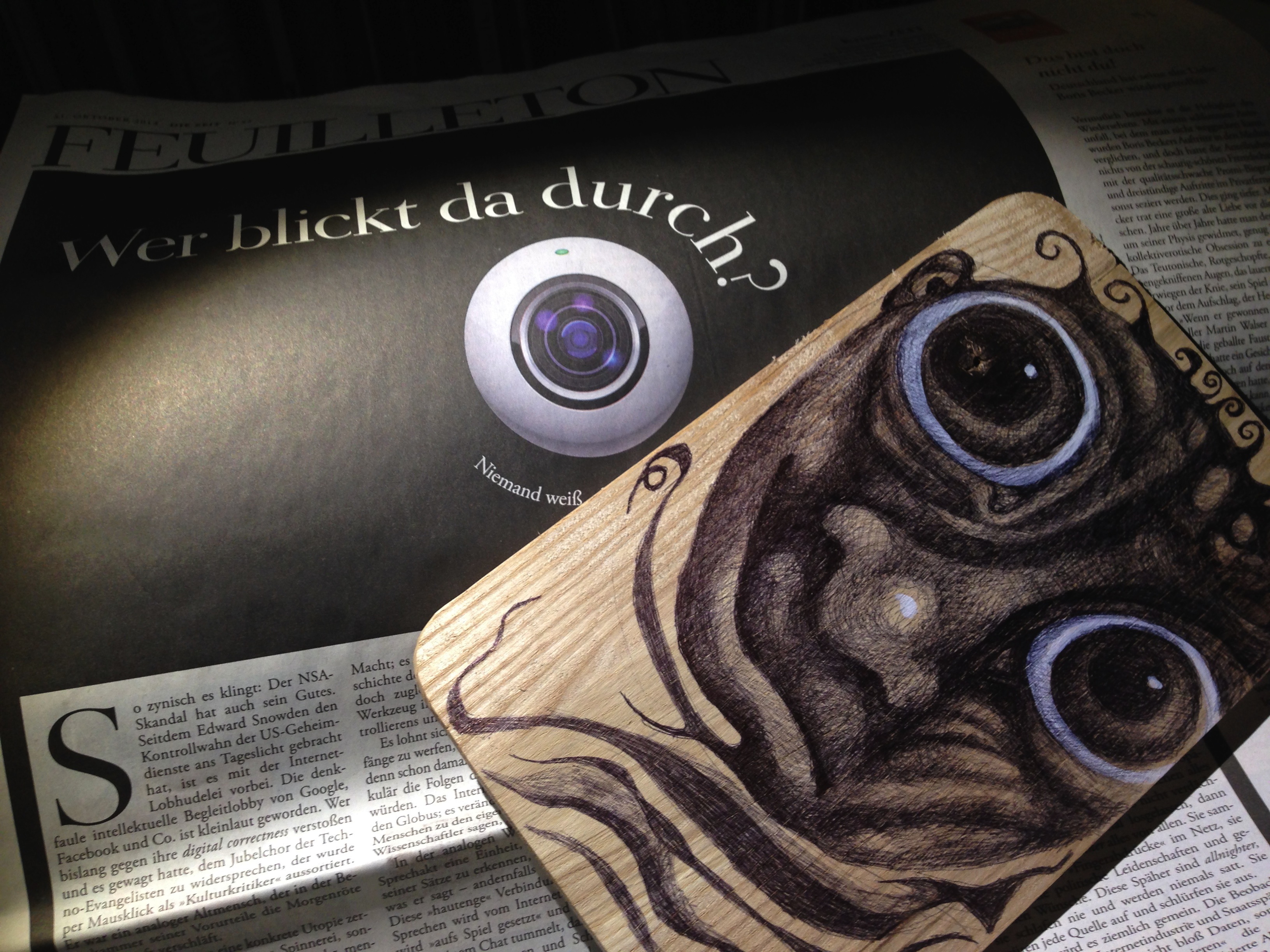
Wer guckt da durch?

Art and me, we have a strange and very complicated relationship. I have been chasing it with determination and desperation, and it has cold-heartedly denied me. The pain of rejected love is cruel, but I submitted to it only so long. I retreated, admitting defeat was the most dignified thing to do in this situation, I thought, and I became a lawyer. But then, surprise, instead of going its own way, art took up a habit of following me instead, never quite disappearing out of sight, yes, I would say, teasing me, challenging me.

Eventually, we made up, kind of, since then I have been treating it with respectful nonchalance,and it has been faithfully and annoyingly waiting for me ever since at the breakfast table, casually asking me: “So, what are you up to today?”, not being offended by my silence while I am hiding behind my crucially important notes for the day, while I am all business, anticipating legal arguments and dictating the first legal brief in my mind, instead asking again, equally casually: “Mind, if I tag along?”, and I – with an air of studied indifference respond: “Sure, why not?”, and out the door we rush.

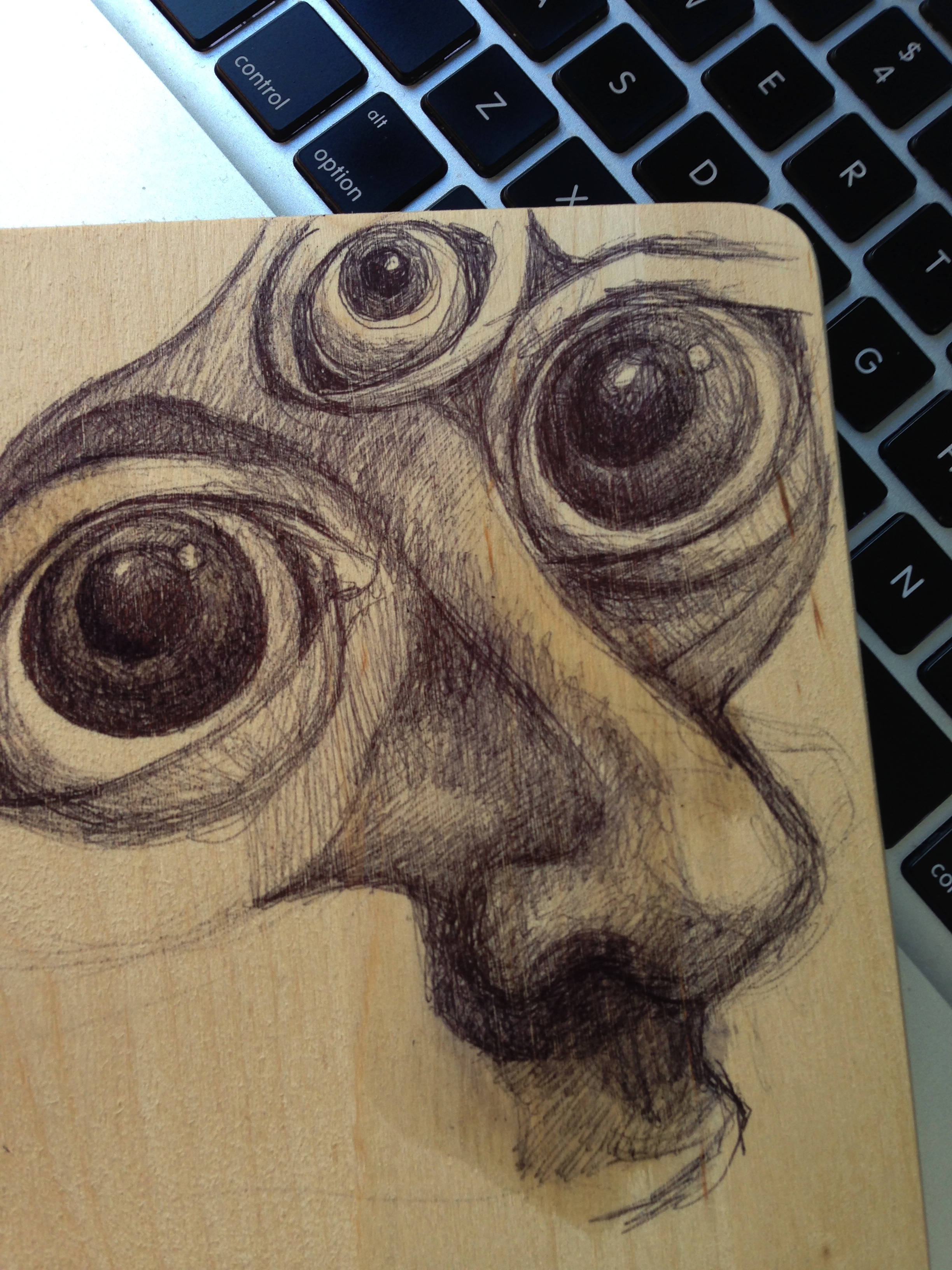
And when I come home in the evening and I open my very important briefcase out tumble bits of this and that, drawings on note paper, done while I was on the phone, creatures with big eyes while I was thinking about security of data transmission, one of my new wooden drawings “Watch out while you are being watched” over a quick coffee break. At home I don’t know how to archive the mass of these  bits and pieces anymore, nor where to store the heap of casual paintings done at night, JUST because, and during every free moment and I feel like I imagine the husband must be feeling who doesn’t quite know whether he is cheating on his wife when he spends time with a female friend his wife is well aware of or whether he is cheating on said female friend when spending quality time with his wife.

Garbriel Lorca, the beautiful Spanish poet who was murdered by the Nationalist Forces shortly after the beginning of the Spanish Civil War in 1936 – who really was a much better poet than an artist expressed it very much the same way, because he loved drawing, tenderly calling it his “mistress” while he stayed married, of course he did, to his writing. I remember reading in a small, illustrated Lorca volume I had bought at the Heinrich Heine Buchhandlung at the main train station of the Berlin Zoo station – a book store that was as great and complicated and deep and full of books and ideas about books as it could possibly get, probably a dependance of Borges library. I was twenty and attending classes by Prof. Robert Kudielka at the HdK, the University of Fine Arts in then still Westberlin – while actually meaning to study law at the Free University. You see, from the beginning this was a complicated thing and the small Lorca volume seem to me like an announcement of something I was not ready to grasp yet. I still own it.

I got constantly side-tracked during those years because of places like the Heinrich-Heine book store where they absolutely supported the idea of spending your entire cash worth a month of earnings at  some student’s job on a heap of books you could just so carry to the register – after first staying for what seemed like days in the sacred railway catacombs, resembling a labyrinth of overpacked shelves. You’d come out with marvelous finds, books that had been hiding for decades, books unknown even to the book seller, and you and the book seller would jointly rejoice in the find, and the book seller would come up with a fantasy price for the book because the one displayed on the inside of the cover seemed – unreal. 51 cents, Pfennige, or something like this. So, you’d pay 2,50 DM, and it wasn’t a used book, it was a book that had been waiting for you to be the first owner patiently since about 1953, well over a decade before you had been born and even more time before you became literate and then some more.

I got constantly side-tracked because there were the collections of old masters in Dahlem, one S-Bahn station before Thielplatz, my law school station, and you’d only guess that I must be a somewhat decent lawyer for passing my exams besides the fact that getting off the train in Dahlem to for a small detour through the beautiful tree-lines streets of Dahlem as often as not ended up with an entire day in the collections, studying Rembrandt and Baehr and flemish artists instead or, if I made it to class in the morning, not returning from the university’s cafeteria at lunch time because it was located pretty much right next to the collections.

I am actually now practicing law, specializing, surprise, on art and law, and art still has a very sly way of side-tracking me. Maybe it has something to do with the fourteen years I spent in New York, idling away time at the MoMA and the Met, and at Crawford Doyle booksellers. Art has always influenced the Why and Where, has seduced me to accept situations I would not have dreamed of for the sake of studying a Vermeer at the Metropolitan Museum of Art, Calder’s Circus at the Whitney, or rough Miro drawings at MoMA or Gerhard Richter‘s black and white paintings at MoMA, Odilon Redon, Armando Reverón, Richard Serra, Lucian Freud, Swoon, Kiki Smith, Marina Abramović, Nancy Spero, my appetite may have been more voracious than discerning, but it found nourishment as I found distraction from more pressing questions and challenges and time passed swiftly as I was holding still, holding still and just looking and looking.At times that seems my main occupation. Looking. Thinking. Understanding. Reversing. Looking again.

Sometimes now I suspect that I do what I do – including law – because of art not despite, but I am loath to follow up on that suspicion. For now, I like the casual question in the morning, the uncertainty, the “Wow, this is still going on” and with as much determination and desperation as ever before. One could not ask for better. Want me to tag along. Sure.

By the way, above drawing is one done on the side, complementing a serious legal interest of mine. Even as I write this blog. Who is watching you? I am still married to the law. But if you made you way through to here, you realize that I as I have spoken about “art” as a single occupation I have really referred to two loves: Writing and painting. Now, that is – almost – too much for one life. definitely for one blog article that is already stretching the limits of a reasonable article’s length.  It’s a bit crowded at the breakfast table at times.

someone’s watching you – privacy of data, an appeal / round two

Image 5

“Writers must oppose systems. It’s important to write against power, corporations, the state, and the whole system of consumption and of debilitating entertainments. I think writers, by nature, must oppose things, oppose whatever power tries to impose on us.  … You know, in America and in western Europe we live in very wealthy democracies, we can do virtually anything we want, I’m able to write whatever I want to write. But I can’t be part of this culture of simulation, in the sense of the culture’s absorbing of everything. In doing that it neutralises anything dangerous, anything that might threaten the consumer society. In Cosmopolis Kinski says, “What a culture does is absorb and neutralise its adversaries”. If you’re a writer who, one way or another, comes to be seen as dangerous, you’ll wake up one morning and discover your face on a coffee mug or a t-shirt and you’ll have been neutralised.” Don DeLillo (Panic #1, Nov. 2005, pp. 90-95.)

And is it not at the same time a cynical paradox and the hybris of writers, artists and maybe even lawyers, yes, now that I mentioned it, certainly lawyers as well, that in striving to be effective, successful, sharp, persuasive, unveiling, exposing, revealing, uncovering the workings of the machine we also strive for the kind of recognition that neutralizes our very effort. This is still the romantic idea of the individual rebel, the genius writer, the brilliant artist, a sly title afforded with societal approval by the very system that is being accosted, criticized and opposed just because this honor neutralizes, even castrates the very effort it lauds. Don DeLillo writes accordingly in Underworld that true proof of existence lies with the recorder not the recorded, the one who does not have a name but the authority to write the code which makes time tick. My words, his idea, by the way.

If you did indeed value the corrosive of your intellectual ability  you would choose to remain unknown behind a work that was known for its efficiency. you would not buy the idea of the genius writer who ends up on a t-shirt or, for that matter, on Facebook where you can democratically and to no specific end be approved of by the click of a button, but you would anonymously and in a group of like-minded minds labor towards the specific end of a realization of your ideas.

this is, coming round from yesterday’s etude on the privacy of data, another appeal to keep private if you can and claim the right and authority to do so.

do you feel like you are being watched?

fearful knowledgeit’s because you are. the recent discussions about the privacy of data – or the absence of such privacy when it comes to any form of telecommunication or electronic communication – has revealed that for now that even the basic implications that could lead to a meaningful discussion of the issues at stake are at best only vaguely understood.

the increasingly public lives we seem to live obscure the nature of information even further. the general public as judged by news coverage and political discussion seems somewhat nonchalant about their own data privacy, maintaining that private data could not be of any use to those who fish for it (what do you care about what I had for breakfast?), and that those who had anything to hide should better be found out early, with other words that to the law-aiding citizen the privacy of data is not of great urgency. The sheer mass of private, non-relevant information creates the further illusion that what one reveals in electronic form was as elusive as a thought shared with a friend in a crowd of people.

to reintroduce the idea  that information may not be – as more commonly understood – an abstract observation extracted from a state of reality to communicate the specific nature of that given state, but instead the first cause to make reality, with other words, that information is to the “thing” it describes what the letter is to the word and the line that draws the letter is to the letter, to reintroduce this thought at the moment when countless legal aspects of data privacy are already causing the discussion to meander without true force, may be pushing the discussion to the brink of madness, but it could also turn out to be immensely useful.

“In the beginning was the word”, this grand opening refers to the provenance of the idea – translating thus the term “logos”, which refers to the inherent logic and order of things. The order of things as encoded in a word very much like a program that at the same time provides a building plan for a specific “thing”, is the cause for its realization and provides the necessary algorithms to build it. Furthermore, if the chosen word, data, information, has “wisdom” (Hebrew for “word”), which means: knowledge of the world as a whole, to speak the right word is to give the initial and irrevocable impulse for the creative act out of which reality follows.

Maintaining authority over that kind of knowledge as far as it refers to your individual data, even if it included plainly what you had for breakfast, whom you’ll meet for lunch and what your favorite color is, might be a cautious and recommended approach until you could positively rule out that this kind of data is indeed what makes you. That could be the making or the unmaking of you.


the art of evolution

IMG_0875the line that weaves a monster creates a world of possibilities. hopeful monsters, evolution by systemic mutations, as developed by goldschmidt in his theory on “hopeful monsters”, provides, as a metaphorical recourse, the right to hope against all odds that what is uneven – think Kant and the crooked timber of humanity – might be not only necessary but at times preferable to what is normatively expected. (citation after: dartouth.edu/~dietrich/NRG2003.pdf
“a single mutational step affecting the right process at the right moment can accomplish everything, providing that it is able to set in motion the ever-present potentialities of embryonic regulation” Goldschmidt, R. The Material Basis of Evolution (Yale Univ. Press, New Haven, Connecticut, 1940).

everywhere and nowhere – a trip to berlin and back


IMG_0872IMG_0882


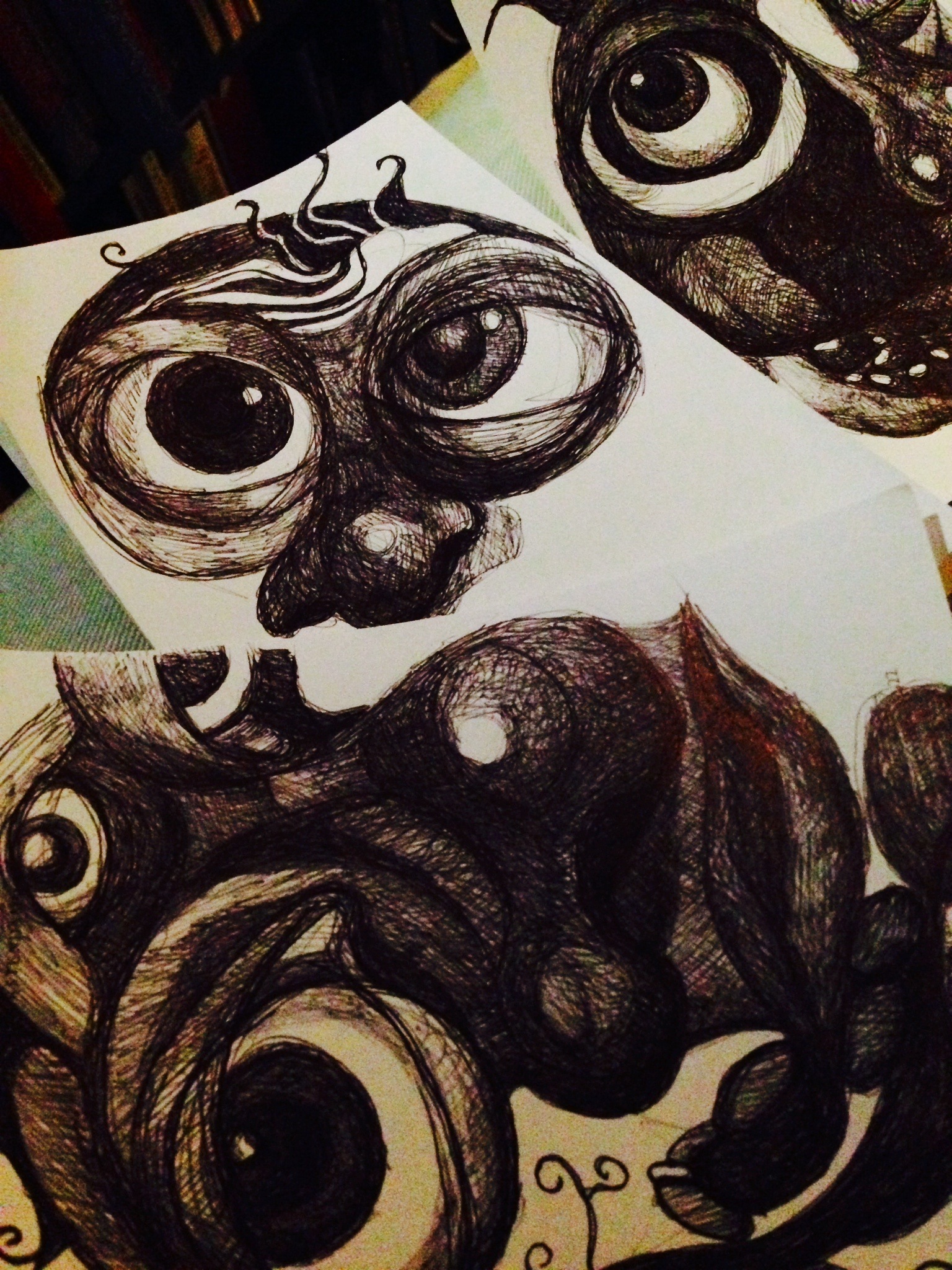
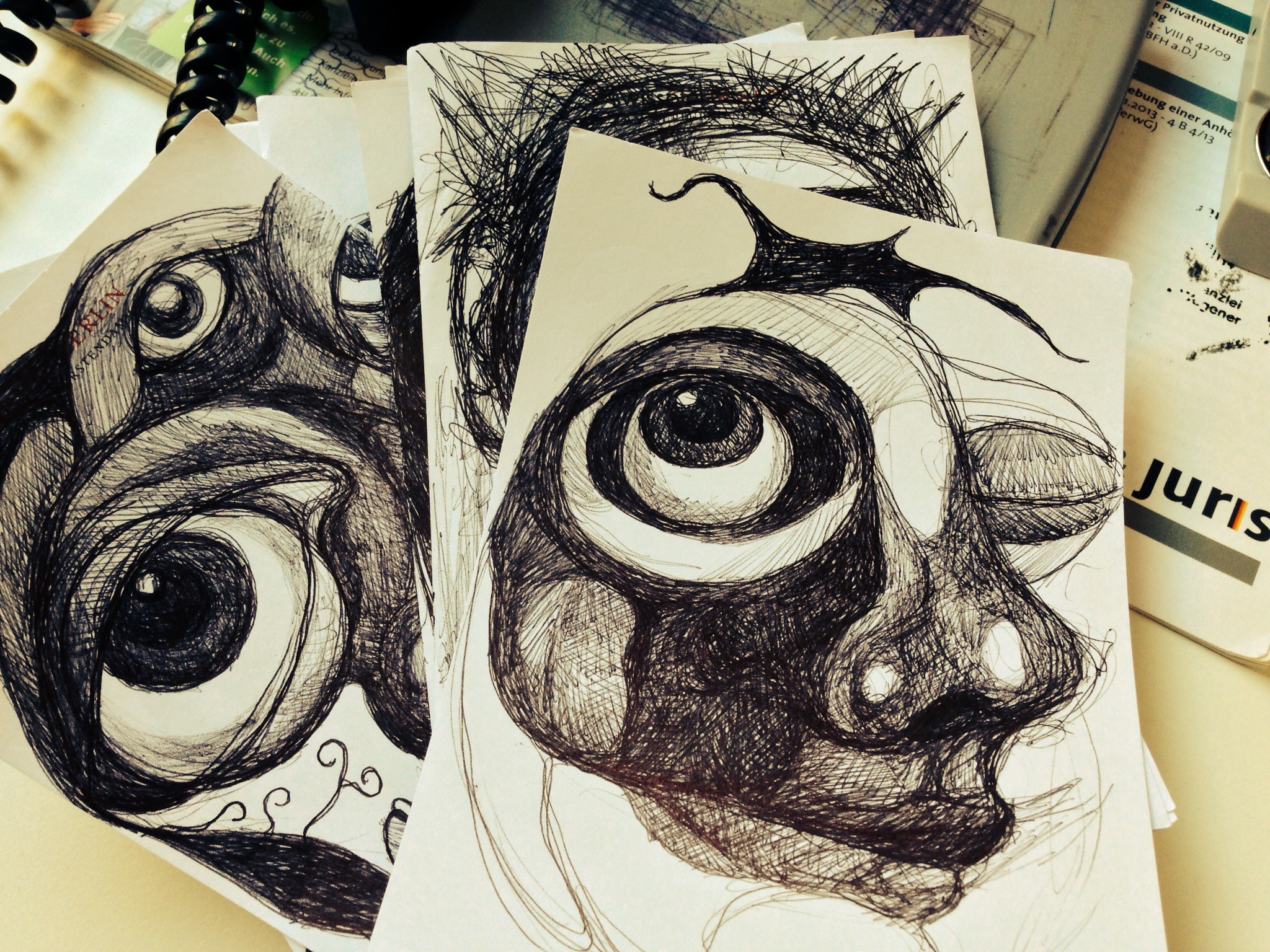
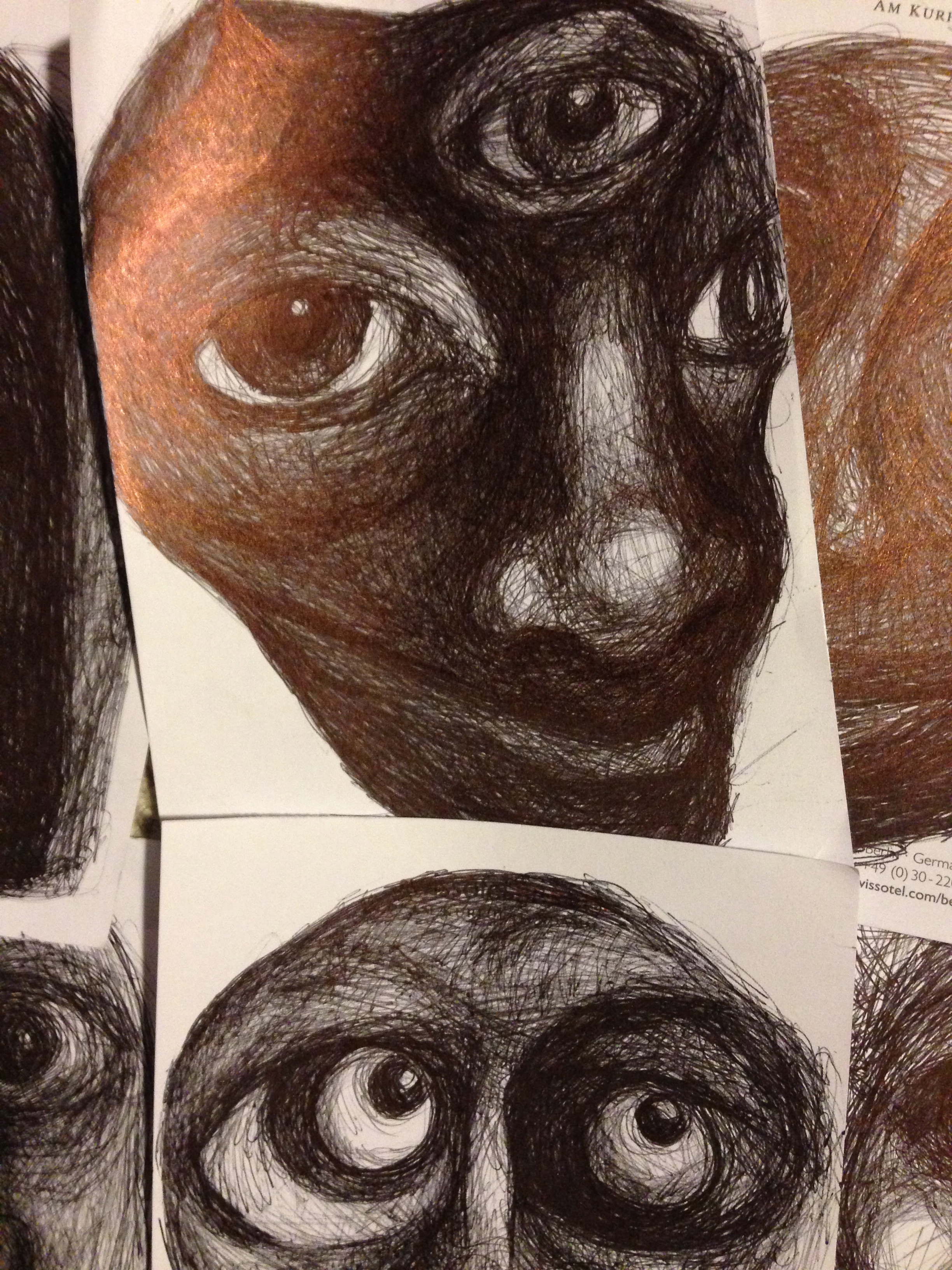
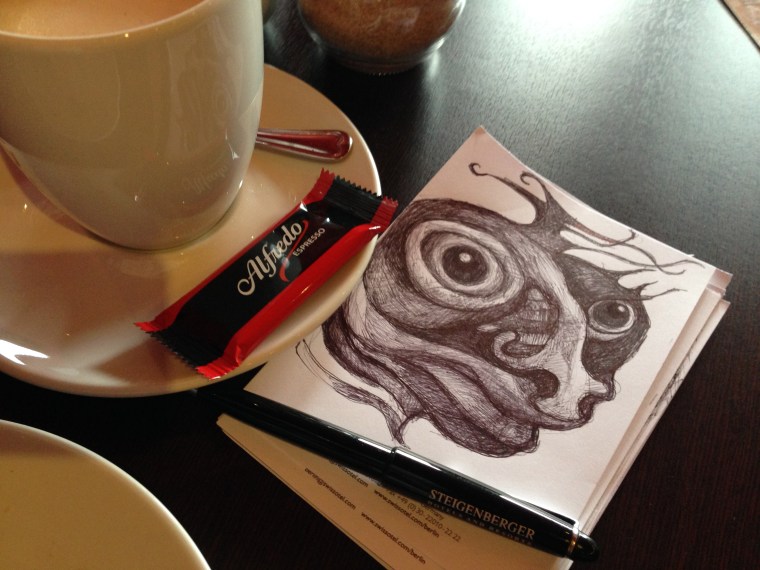
black ball pen, anywhere paper. while working as a lawyer specialized on the representation of visual artists, sometimes the time in between, travel time, waiting times, coffee breaks during a conference turns out to be a creative space in which not just some kind of creative maintenance seems to happen but actually – while I am using readily available art supplies like note paper and ball pens provided at said conference – something interesting, some original kind of work or an idea that will be worth developing. like this weekend. i added to my to do list for the day: buy plenty refills for black ball pens. something’s coming.

Where were you when Thompson hit that home run?

Brooklyn Dodgers
Brooklyn Dodgers (Photo credit: Wikipedia)

You see, writing that sentence to me is kind of scary, in fact, it requires quite a bit of courage. In a few words it describes all I know – and I do not know – about a culture I lived in and that I breathed in for thirteen years. And then some. If you think “13” you’ll understand how well suited I was to be in that place, because it seems to me that it is more important to have an association to the fact that Ralph Branca wore the 13 that day, way back then, in 1951, than to even have been born at the time when Thompson hit that home run and the Giants won the game 5-4.

A long time ago a friend taught me my first real American phrase. This was after years of English classes at school had rendered me a perfect fluent, neutral speaker of a language that is so rich in tones and associations that my lack of sensibility for the colors of a certain word might have invoked an association equivalent to a machine’s translation of, say, John Updike.

My first real American words were: “How about them Yankees?” And we practiced them for a few weeks. We lived in the same apartment  building on 95th Street at that time, and we would practice in the elevator upon chance meetings. Me: “Hi Joe! How – about – them – Yankees?” He: “Howabout’em?”. Eventually, I sounded somewhat more like I was asking what I was asking. Only, of course, I didn’t. Because I wasn’t. Asking. I had not the first clue about baseball. But I kind of started getting the gist of things.

Maybe you have guessed from the first paragraph what I am reading at present. I am still the academic speaker I was when I first lived in New York, fluent to a fault and with blank undertones to my speech. But then again, I have those in my original, my native language too, the blank undertones, speech that leaves no associations for the listener even if it seems rich with referrals and meaning to me.

But be that as it might, not for nothing have the years passed and have I entertained something that should be called, for lack of other words, an illegitimate affair with a language not my own but with a passion so strong that at least I feel like I have staked a small claim on a land that rightfully belongs to others.

And that claim should not be judged by my own ability to play the instrument,to speak the lingo, to actually ask about that homer, scary thought! – but by the fact that my ear is now catching all that it might have missed when I first listened to that tireless speech of the city, 95th Street, Columbus, Broadway. I read about the outfielder Bobby Thompson on that day in baseball history, Oct. 3rd 1951, in that landmark novel and I do not only think “Ralph Waldo Emerson” and “Shot heard ’round the world” from his Concord Hymn, something I might have done before (and something, fittingly, DeLillo never mentions, the “Shot heard ’round the world”).

I mean, I know this, but I can also actually picture the guys, J. Edgar Hoover with the torn newspaper and all, and I hear them as clear as I hear music from Mozart though I am separated from that in time and space and culture, too, and I get it. Or, let’s be honest and a bit humble, I think, I get it.  I think I know who they are, these guys and their wives, like  Nick and Marian, and where they come from and why it is inevitable that one of of them should head straight into cardiac arrest after the game, and I know that they are real and I might meet them out there one day and recognize them and smile at them. And they, in return, would not give a f- and would have no clue who that meager shadow was, passing by. Which would be just fine with me.

I get so much reading these pages and listening to them, so much detail that I didn’t get before that it delights and amazes me despite the fact that it is of no use to anyone including myself other than for its sheer entertainment value. Which is a result of half a lifetime of practice. There is something in there that tells you about how language connects us to a specific place and time and how obstinate and inefficient love insists on being.

I doubt I could pull it off, that question, asked leisurely in a conversation. As if it was something, one asked, conjuring up a feeling of common history, no matter where you stood.  And, sorry Joe, I still have to ask someone in the streets about them Yankees, but I know what it means when I hear someone doing it, and I hear the city and its history and its people and their loans and their marriages and their kids at college. So, let me get back to reading then. Underworld.