Page 26 of 41

Entdeckung – Ausschnitt aus den “Weidenkindern”

Sie waren auch erstmals verschieden in ihrer Begabung, etwas zu tun. Die anderen Kinder konnten Fuchs und Rabe, Eule und Wolf nicht unter der Oberfläche des Tons fühlen wie es der Rotschopf vermochte. Der Ton bewegte sich bereits, bevor das Mädchen ihn berührte, als sehne er sich nach ihren Händen, und die Kreaturen spielten in der dehnbaren Masse, die Rothaarige musste sie nur vorsichtig erfassen und hervorziehen. Kaum dass sie etwas an den Formen zu ändern schien, wenn die Figur erst einmal behutsam von dem Mutterblock getrennt worden war. Auch die anderen Kinder spielten gern im Ton, auch sie kneteten und modellierten kleine Kreaturen. Manche erwiesen sich dabei als geduldig und geschickt, andere mochten nicht lange still sitzen und ihren Händen die neue Fertigkeit abfordern und begnügten sich mit dem Kneten des Tons, um unvermittelt aufzuspringen und sich anderen Spielen zu widmen. Aber auch von den Kindern, die sich mit Ausdauer dem Ton widmeten, konnte sich keines mit dem Rotschopf messen. Ihre starken Finger befreiten nicht nur die Form, sondern auch den Geist des kleinen Abbildes aus dem Ton, sie zog Tiere und Kinder aus dem verdichteten Nichts.

Art & Law / another sketch

Art & Law / another sketch

a random list of lawyer-artists: Piero della Francesca, Heinrich Heine, E.T.A. Hoffmann, Robert Schuhmann, Goethe, Adalbert Stifter, Igor Stravinski, Gottfried Keller, Franz Kafka,Kurt Tucholski, Wassily Kandinsky, Cézanne, Henri Matisse, Antonie Tapies, Winfried Bullinger, Bernard Schlink Julie Zeh

Not surprisingly lawyers who are also writers are not at all uncommon. The art of writing truly is heart and brain of the legal profession, a necessary skill but also a reason to enjoy this profession even in its mundane days. You know that you are a lawyer when you do enjoy writing about a defect vehicle with a bivalent engine and when you put effort into writing it well.

Most of the visual artists I know about on the other hand actually fully changed careers (the contemporary artist and law professor Winfried Bullinger, Berlin, being a notable exception). Most of the musicians did (with the exception of E.T.A. Hoffmann who managed to be a lawyer, writer, musician). Some of the writers did, too, like Julie Zeh, and yet their legal training shows in their writing in many ways, starting with insights into the legal profession they have been privy to.

These observations (writers might stay lawyers, visual artists and musicians change careers, starting out as lawyers) seem to make perfect sense. After all the law does not use the language of visual forms (though you can’t practice law without abstraction, a link between the visual arts and the legal profession that Kandinsky pointed out), and lawyers do not sing, except for the occasional lullaby to their children.

But art and law, may it be writing, music or visual arts, are very similar in their understanding of their work as a process not only in the sense that every trade necessarily needs to follow certain steps to come up with a product or a desired result but in the sense that the result is the process itself.

This is nicely illustrated in music. You can only experience music during the unfolding of the process, even though the process might have a name (Symphony No. 4 in B Flat Major, Op. 60; II. Adagio), unless you are willing to entertain the thought that time is illusionary you can never meet up with the work in its completed, “static” form. The same is true for writing. Creation (on the writer’s side of the process) and recreation (of the reader) of any kind of text relies on a complex process-orientated if time disconnected cooperation between the writer and the reader. The product of writing might be a book, a stack of paper etc. but only in the decoding process can this product be assimilated into the readers realm.

In the visual arts this connection sometimes might seem less obvious, the results (depending on the art form) being seemingly static. A painting is a painting is a painting. But even the tableau painting is the product of a singular unfolding process – and probably can only be truly enjoyed if that process is comprehensible to the viewer through the painting/ the art object. (I have seen dead paintings before, a sad sight, but a good painting is process).

As much as humans might desire stasis, translating to: security, at heart they know that stasis cannot be achieved, at best an illusion of final laws, regulations etc.:

In the more than thirty thousand years of art history (watch the wonderful Werner Herzog documentary, “The Cave of Dreams”) and legal activity (responding to the need of their communities to reflect changing circumstances in their way of cooperation) the arts as well as the law have left testimony to the human desire to understand the harmony of process and metamorphosis, of inevitable change. I believe that people in their heart of hearts wish to learn the art to dance to the music of time (Anthony Powell) rather than to be dragged by the music of inevitability.

für viele:
Hermann Weber, Juristen hinter Literatur und Kunst, Tagung im Nordkolleg Rendsburg vom 16. – 18. September 2011, Reihe: Rechtsgeschichte und Rechtsgeschehen, Band 18, 2013, 2. Auflage, Gebundene Ausgabe, 208 Seiten
ISBN: 978-3-643-11768-7

Klaus Kastner: Literatur und Recht – eine unendliche Geschichte, Neue Juristische Wochenschrift (NJW) 2003 S. 609-615

Was ist CIRCUS UTOPIA ART Press?

Was ist CIRCUS UTOPIA ART Press?

Der Name CIRCUS UTOPIA für meine Arbeit in der Schnittstelle “Kunst & Recht” entstand aus einer Eingebung. Der Wunsch, dass Menschen unterschiedlichster Weltanschauungen miteinander ins Gespräch kommen können, ohne ihre eigenen Positionen aufzugeben und doch mit einem offenen Ohr für die Ideen anderer, mag utopisch erscheinen. Aber wir schulden es unseren Kindern, es jedenfalls zu versuchen, ihnen die hierfür notwendigen Werkzeuge mit auf den Weg zu geben. Ich habe ehemalige Schülerinnen und Schüler und ihre Eltern gefragt, was Circus Utopia für sie bedeutet.

Joy Ann Lara, Westfield, NJ, artist, mother of two sons who were taking classes in my studio:

Art is a universal language. Experiencing it with Kristina through her art classes for children has enabled my sons to express themselves at a time when words failed to capture the range and intensity of their feelings. Making art built a bridge that spanned isolation and misunderstanding, and provided a sense of home and safety that mere words–even words coming from those who loved them and tried to protect them — could not. While I love words and treasure their eloquence, I recognize that images (visual art) are somehow more visceral, purer, and can be more powerful in conveying “hard to describe” things. When words fail, art picks up and moves it forward.

Experiencing art is vital to a connection with our innate creativity. It touches all aspects of our lives, not just areas that are obviously “creative”. Art practices the ability to re-imagine and rebuild. And rebuilding, don’t you think, is indeed a daily task that determines the shape and viability of our future.

Alena, 17, Schülerin, Hamburg:

Circus Utopia Art Press ist für junge Menschen die freiwillig Lust haben sich mit Rechten auseinander zusetzen. Ich finde gerade für uns Jugendliche ist es eine tolle Möglichkeit, die Rechte kennenzulernen. Wir sind uns vielen Rechten nicht bewusst, wir haben in den Stunden die Möglichkeiten mit anderen Schülern, unsere Meinungen auszutauschen. Es bringt uns viel Spaß. Ich finde, das dieses “Unterrichtsfach” an allen Schulen unterrichtet werden sollte, denn es ist wichtig, sich mit dem Gesetzen sowie auch mit der Welt und verschiedenen Kulturen auseinander zu setzen. Es ist schwer diese große Welt zu verstehen, doch mit bunten Farben vereinfacht unsere Dozentin uns es. Sie hat ein tolles Engagement und ich würde mir wünschen das mehr Lehrer/in gibt, die Lust haben dieses Fach zu unterrichten.

Rebecca Miriam, 20, Jurastudentin,Leipzig:

Circus Utopia macht es mir möglich jegliche Sprache zu verstehen. Und hiermit meine ich nicht nur Ländersprachen, sondern die Sprachen der Menschen verschiedener Kulturen, verschiedener Weltanschauungen. Schwarz auf weiß, so steht es geschrieben. Wer bin ich? Wer sind die anderen? Wie funktioniert ein Miteinander? Doch in einer Welt, die so komplex ist, reichen Schwarz und Weiß nicht aus. Farben helfen zu verstehen.

Janne S., Schülerin, Hamburg, 19:

Circus Utopia Art Press ist für junge Menschen eine Form sich mit Rechten und Gesetzen auf kreative Art und Weise auseinanderzusetzen.  Innerhalb des Kurses geht es darum, sich eigenen Gedanken zu machen und diese durch andere Aspekte und neue Perspektiven zu ergänzen. Es geht nicht um die Bewertung von Gesetzen, sondern es geht um das Auseinandersetzen damit. So bekommt man einen Eindruck davon, was Gesetze sind, warum sie für uns eine wichtige Rolle spielen und welche Möglichkeiten wir durch sie haben. Nur wer ein Gesetz versteht, kann für sich entscheiden, ob er dieses akzeptiert oder ob er es in Frage stellen möchte. Unabhängig davon wie man ein Gesetz findet, kann man lernen, sachlich und respektvoll seine Meinung zu äußern, ohne dabei einen Anderen persönlich zu verletzen oder anzugreifen. Gesetze sind dazu da, sie zu verstehen und um über das Verstandene dann zu diskutieren. Man sollte froh sein, dass es für junge Menschen die Möglichkeit gibt, sich in dieser Form mit dem Gesetz auseinanderzusetzen, denn es können nur neue und sinnvolle Gesetze beschlossen werden, wenn alte überdacht werden. Innerhalb einer Demokratie ist es erlaubt, Fragen zu stellen, genauso wie es erlaubt ist, zu sagen, dass man bestimmte Themen nicht besprechen möchte. Keiner ist gezwungen sich zu etwas zu äußern, man bekommt aber die Möglichkeit dazu, wenn es einem ein Bedürfnis ist. Sich zu äußern bedeutet nicht, anderen seine Beweggründe mündlich schildern zu müssen, man kann sich auch künstlerisch ausdrücken. Das ist eine Besonderheit dieses Kurses und es gibt introvertierten,sowie extrovertierten Menschen die Chance, sich hier einzubringen. Für mich persönlich ist der Kurs eine Form den eigenen Horizont zu erweitern, um in seiner Persönlichkeitsentwicklung voranzukommen, indem man Dinge versteht. Nur wer selber versteht, kann Anderen beim Verstehen helfen und somit Entwicklung fördern. Unsere Dozentin gelingt dies besonders gut, da sie sich als Person sehr zurücknimmt und somit Raum für neue Ideen und Ausdrucksmöglichkeiten der Schüler lässt. Solche einen Unterricht und dieses Engagement hätte ich mir in meiner Schulzeit von meinen Lehrern gewünscht.

Lotta M., Mode Designerin, NUSUM, Hamburg, 26:

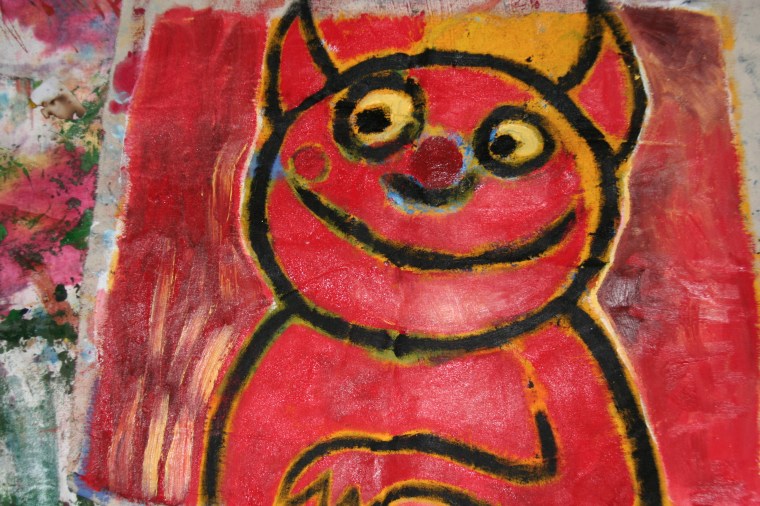
Für mich ist CIRCUS UTOPIA ein Projekt, das Kunst lebendig macht, zum Träumen anregt. Die Welt bräucht Träumer, Künstler, Denker. CIRCUS UTOPIA macht die Welt ein Stück bunter! Ich selbst habe immer eines von Kristinas Monstern dabei und zeige ihm die Welt wenn ich Reise!
Monsters everwhere

Monsters everwhere

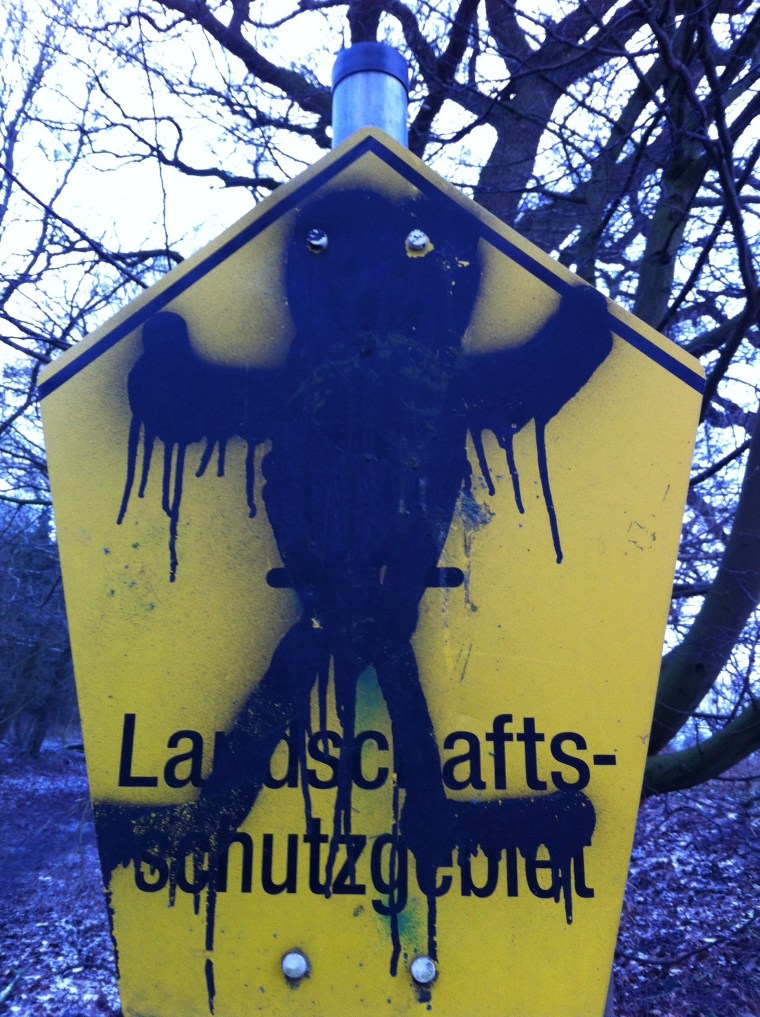
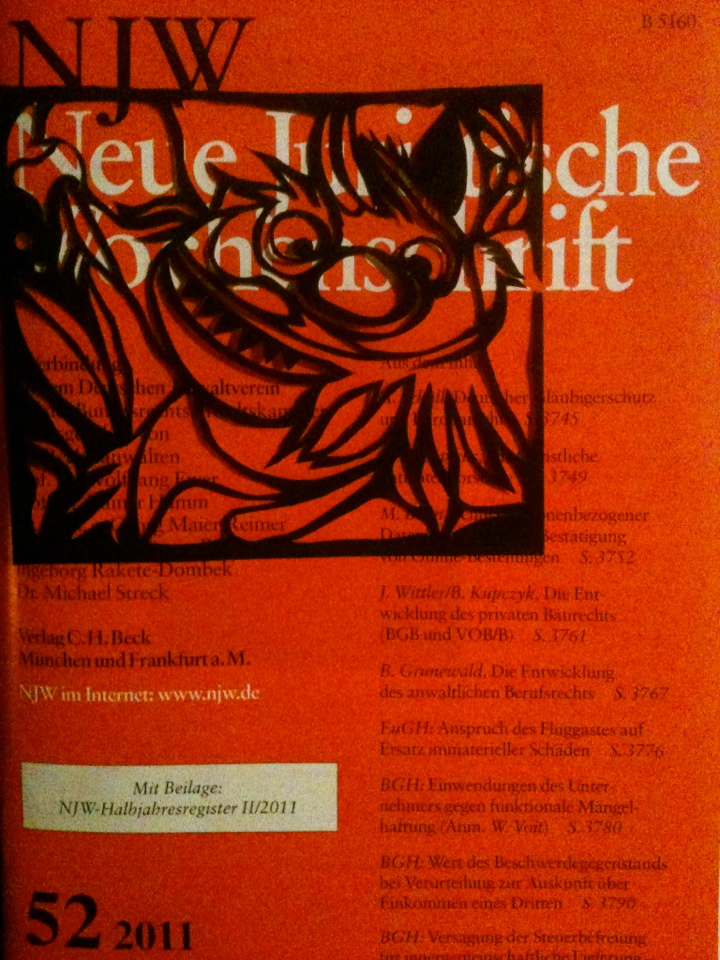
While taking walks I usually pay attention to the marginal ways people express themselves in public. “Marginal” in the sense that one cannot identify a specific purpose to an expression nor the reason somebody had to feel compelled to make such a public, albeit anonymous statement. This picture was taken in a wooded area near to Hamburg. The original sign reads “nature preserve” (Landschafts-Schutzgebiet) and the symbol chosen to communicate the idea is a stylized black owl. I have noticed that these signs seem to be attracting alterations wherever they are displayed. It’s funny, considered that they are only found pretty much out of the sight of urban traffic.

It’s a bit mysterious to me. What is it that the sign communicates (despite the sober, original administrative message)? What triggers the desire to change it? Is it the way the owl stares at the viewer with yellow (paper-cut like) eyes?

The changes mostly interpret or exaggerate the original monster like quality of the cut out owl. Here someone actually spray painted a monster on top of the owl, completely obscuring the original symbol. It seems not too far fetched to state that the simple anthropomorphic quality of the monster points back to the very origin of art, the moment when humans started to express themselves with symbols.

As Mircea Eliade has observed in his work “The Sacred and the Profane”, even in the modern world we pay witness to a deeply ingrained “mythical” comprehension of the world by reacting to triggers. The world through human eyes is “fraught” with religious value, or at least with “meaning” in the sense of an offer of communication not necessarily only between people but also between people and nature, people and the inanimate world, people and the perceived reality of an order of their world that they must adhere to to give their own lives value and meaning.

Could it be that the character of this sign inadvertently triggers such a response? And that the response is rendered in just the same language? Artist’s musings, for sure …

I have often been asked why monsters are a recurring theme in my work. Obviously there is not one answer to that question. Sometimes it’s their naivety and friendly, childlike celebration of the world that attracts me. But I have done other more serious monsters. And I feel that one underlying theme might be a response not unlike these anonymous signs. Though I do not paint on traffic signs …

Just to round this up: I have also seen the signs and the little owl creature changed through weather and sunlight, resulting in faded or partially peeling paint. And in the midst of these beautiful alterations the little owl changes character, always peeking out at the world and talking about time and change … Seems that nature itself takes pleasure in participating in this game …

past and future

past and future

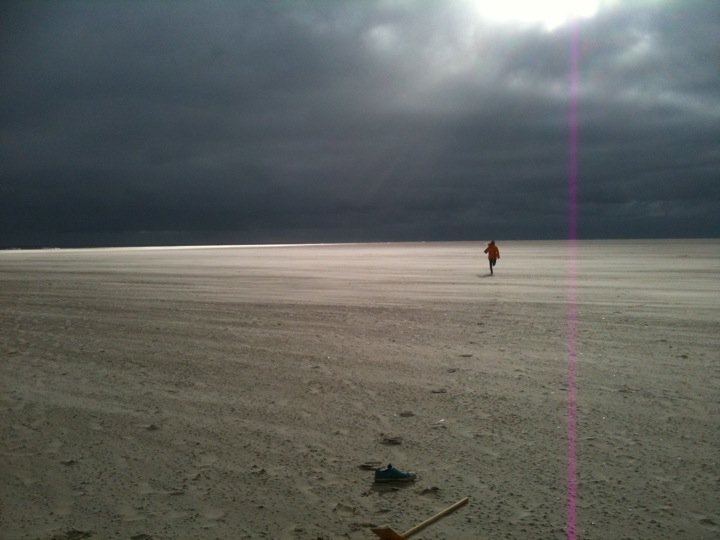
but to this day humans are unique in their ability to remember both, the past and the future, only sometimes they are not aware of this enviable gift because, you see, past and future are often confusingly alike and quite difficult to distinguish.

multiplying y – creating depth

multiplying y - creating depth

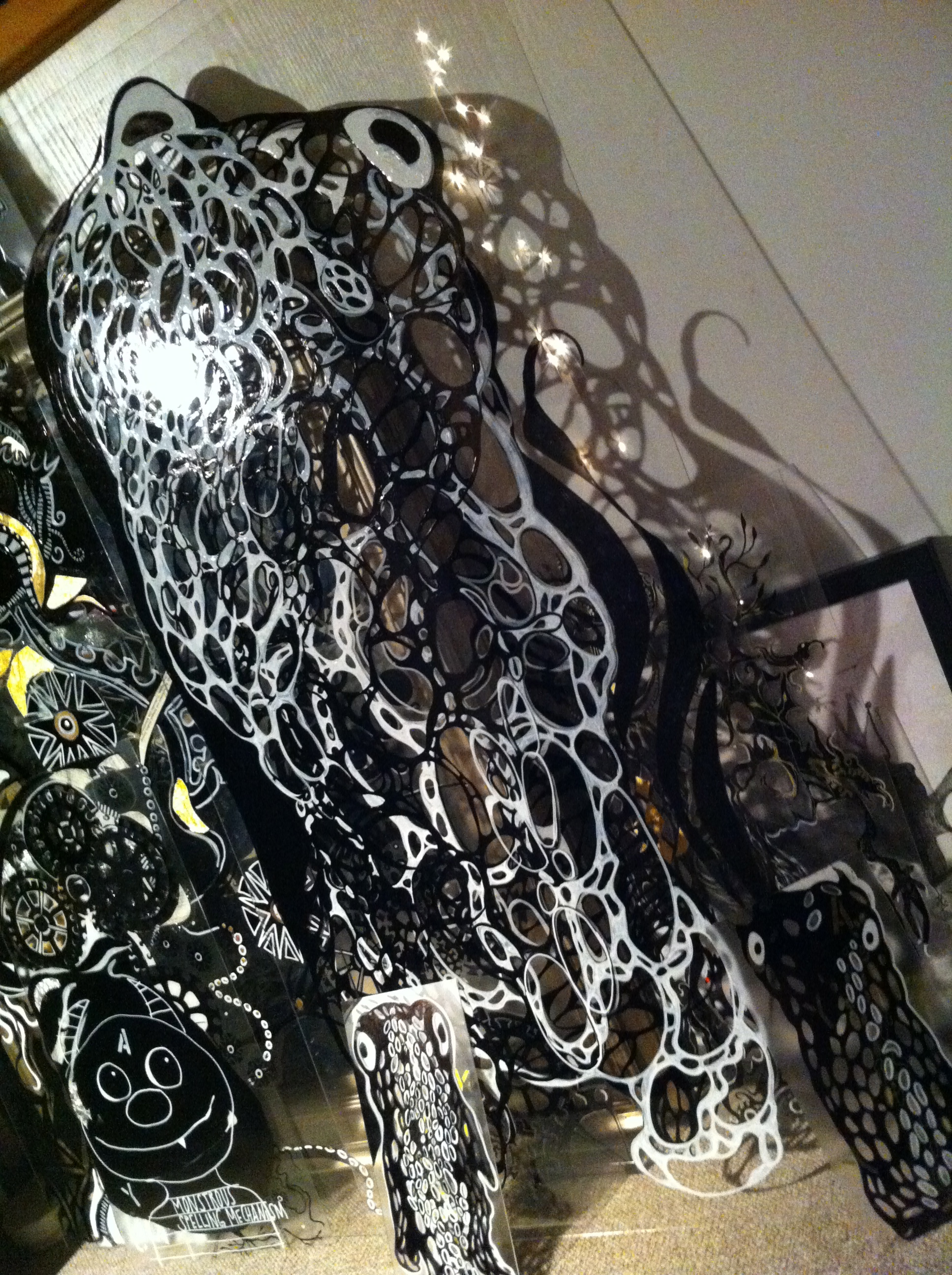
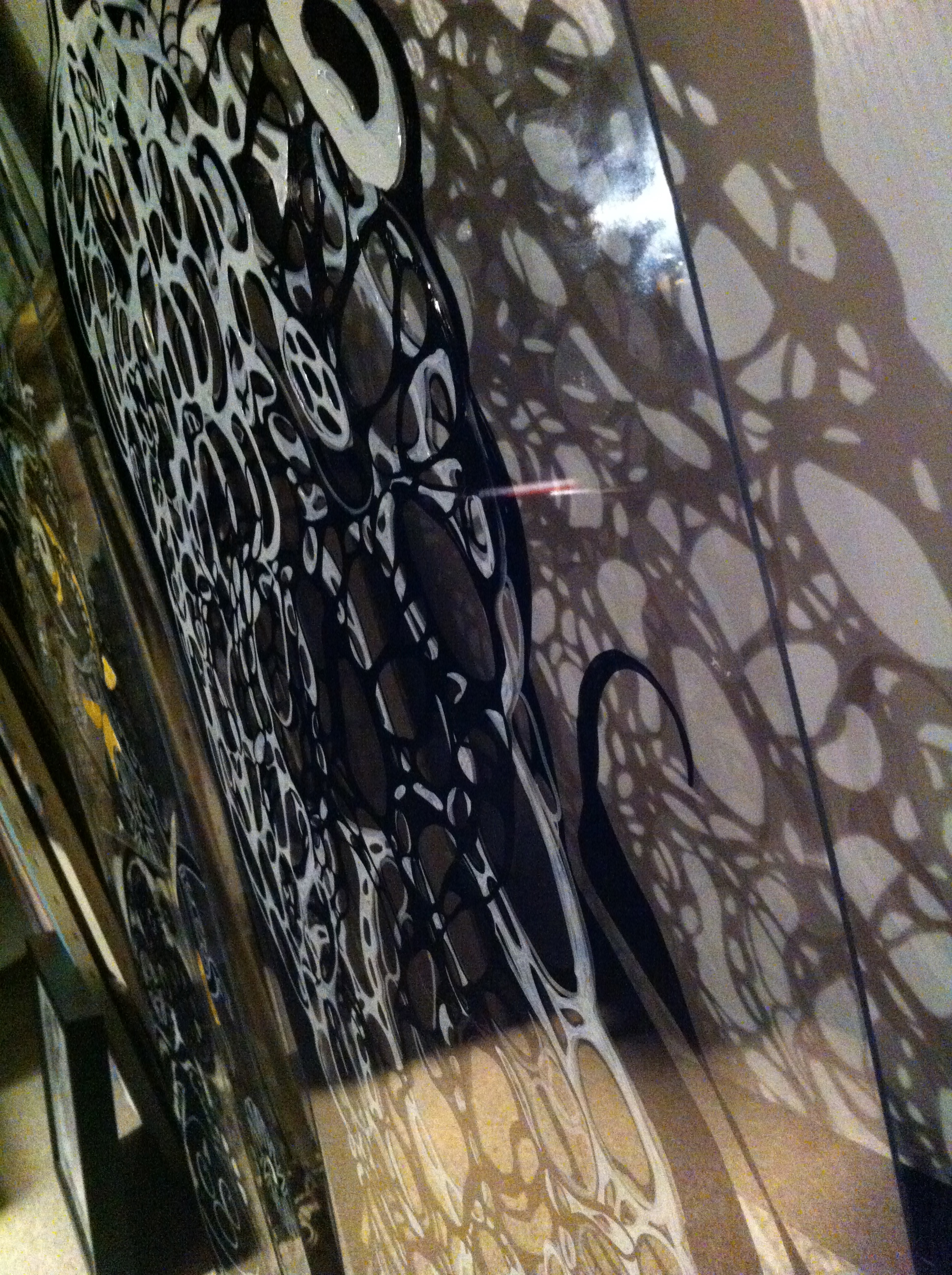
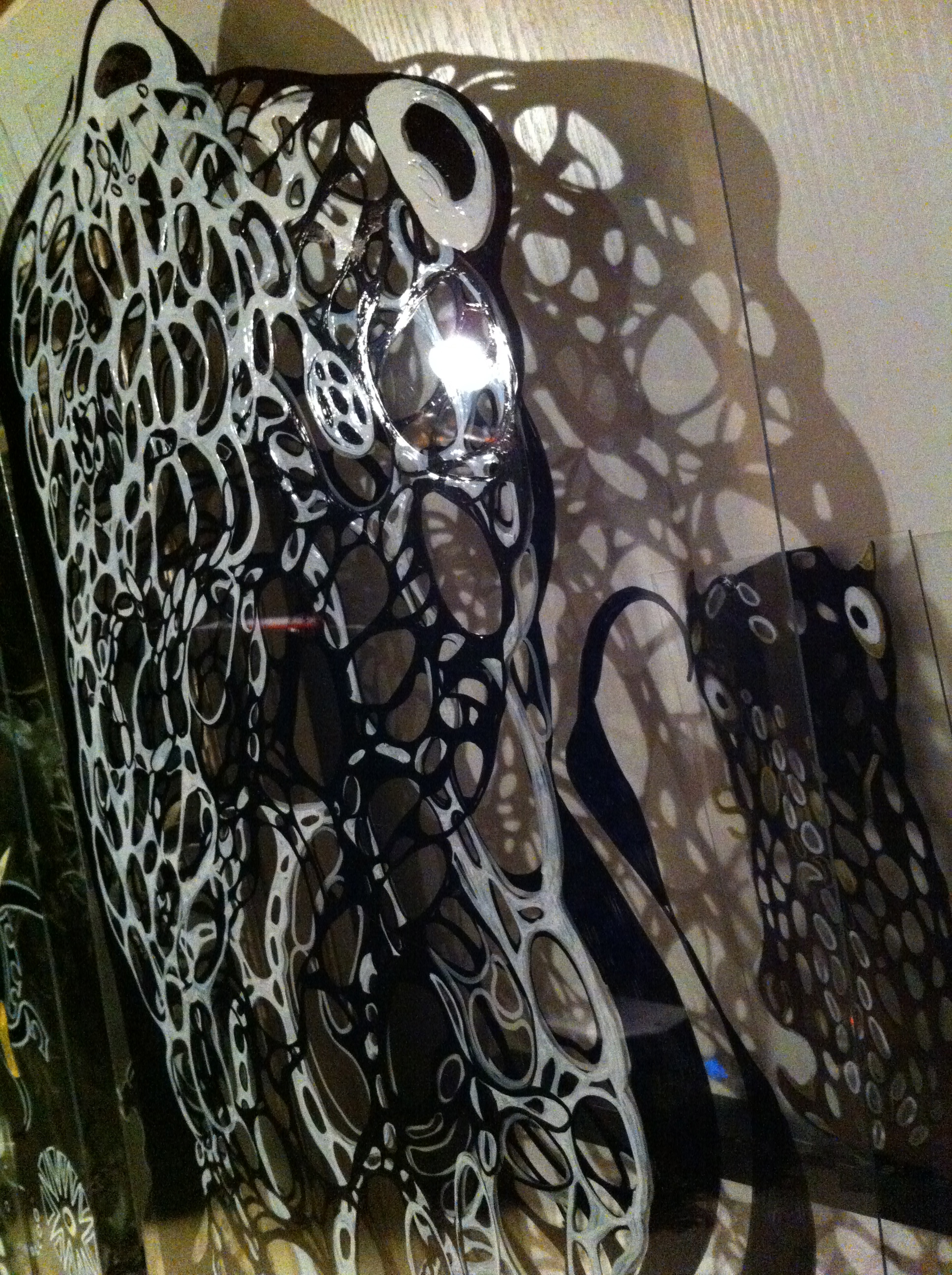
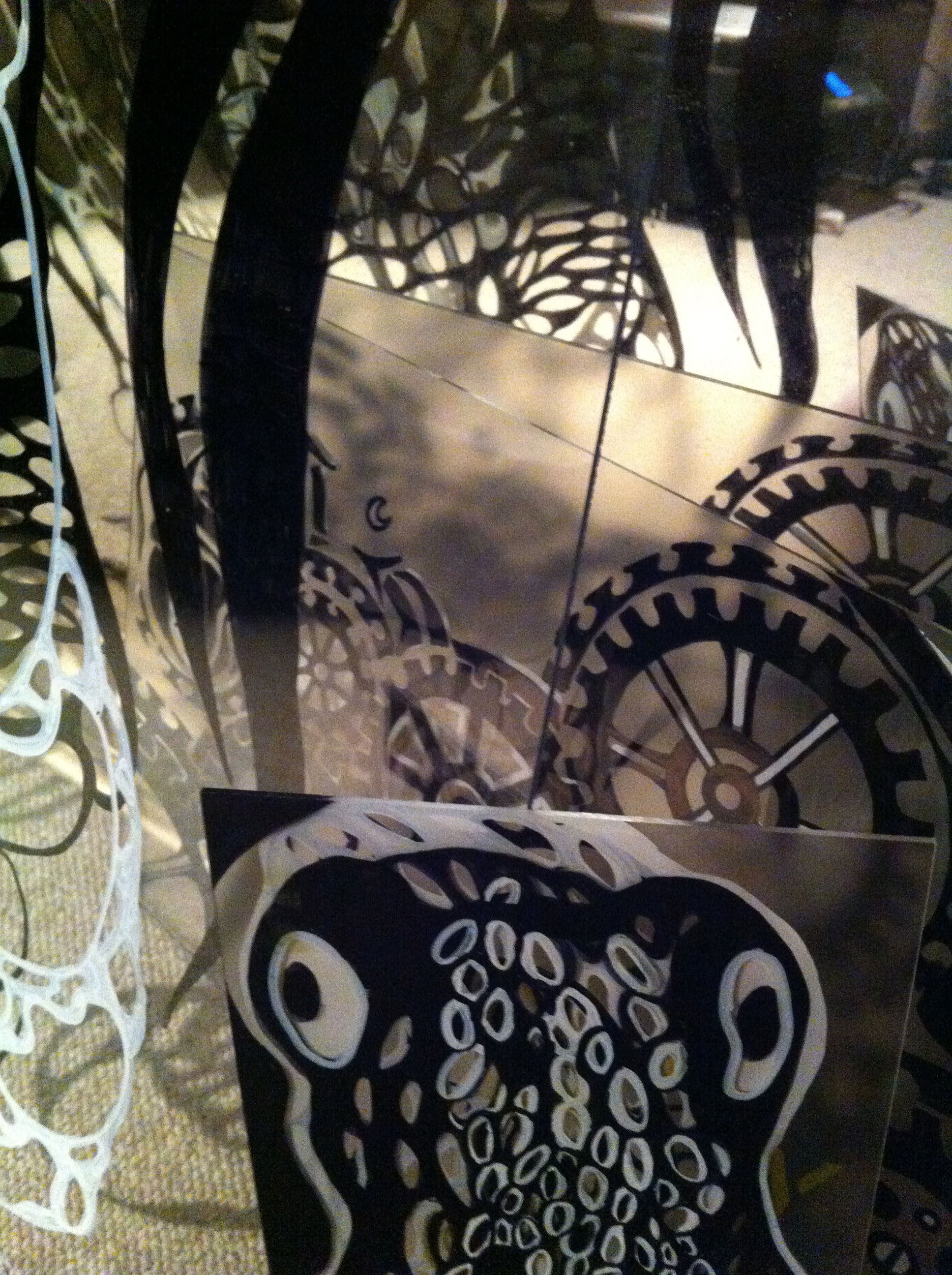
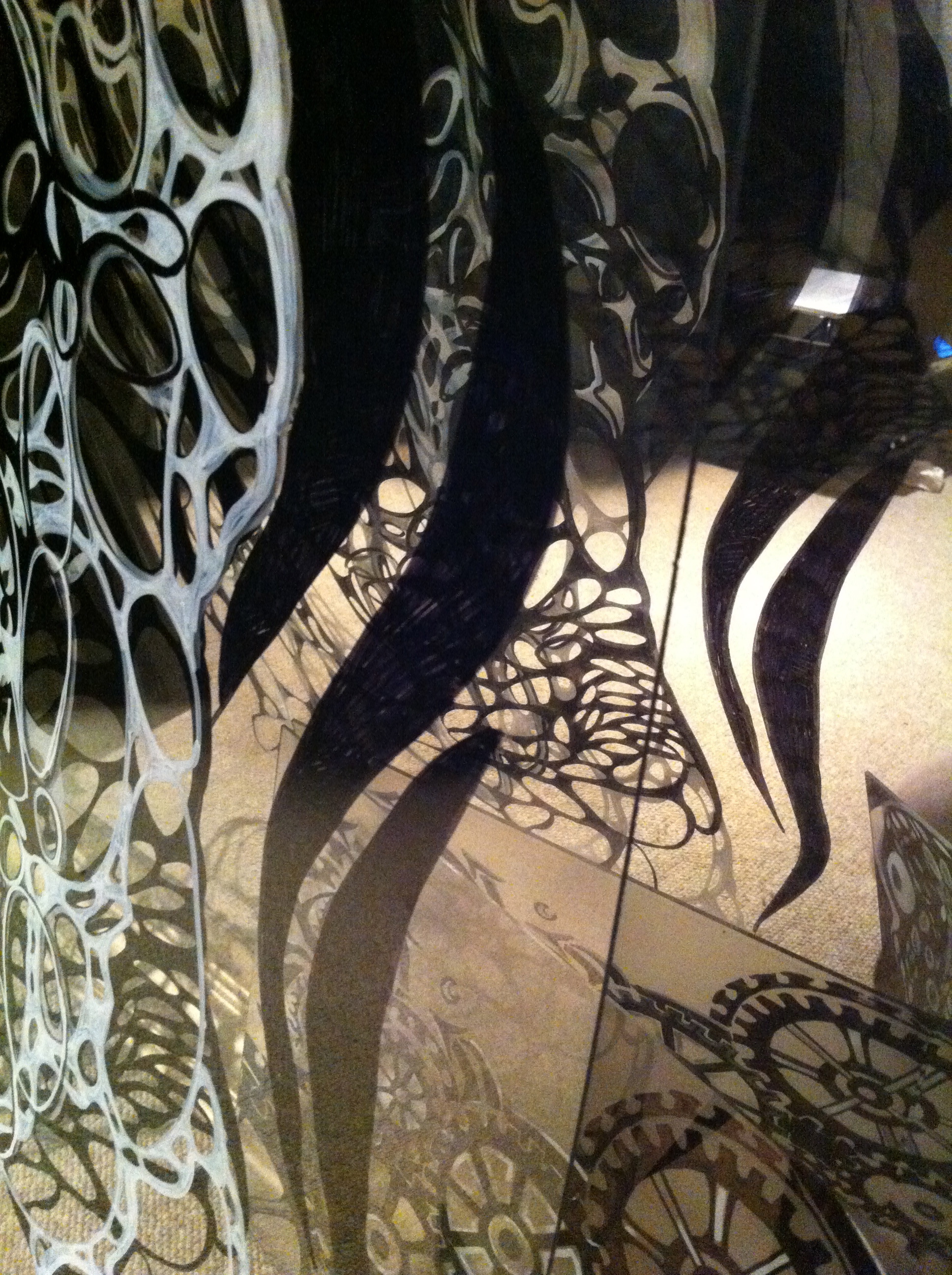
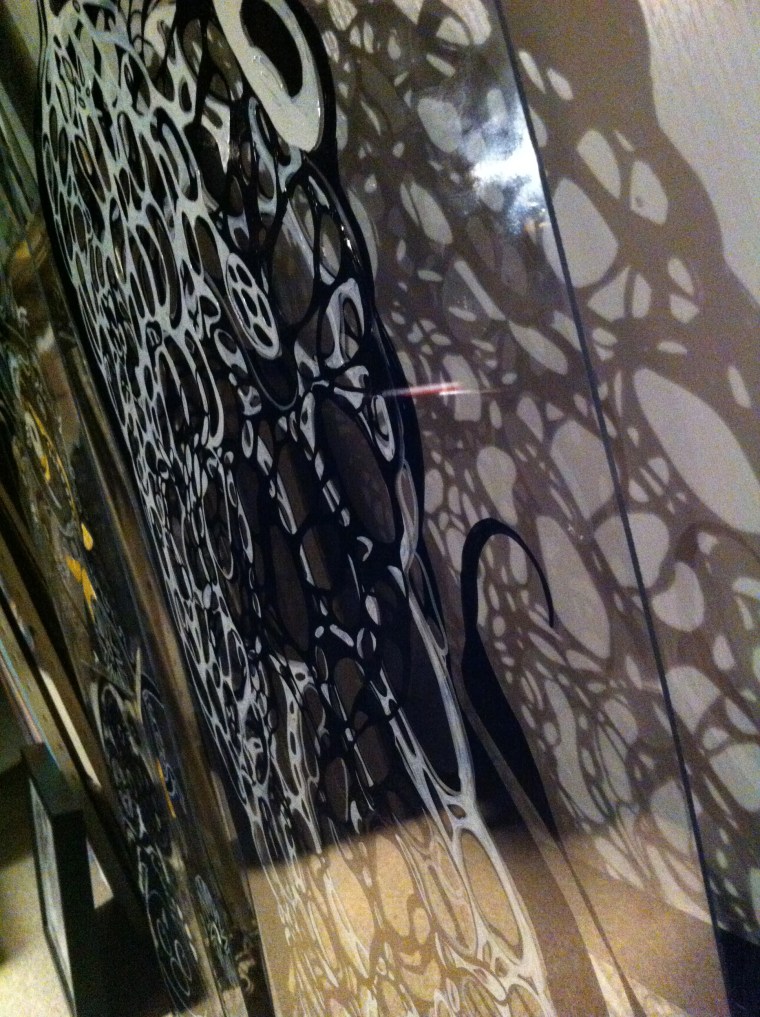
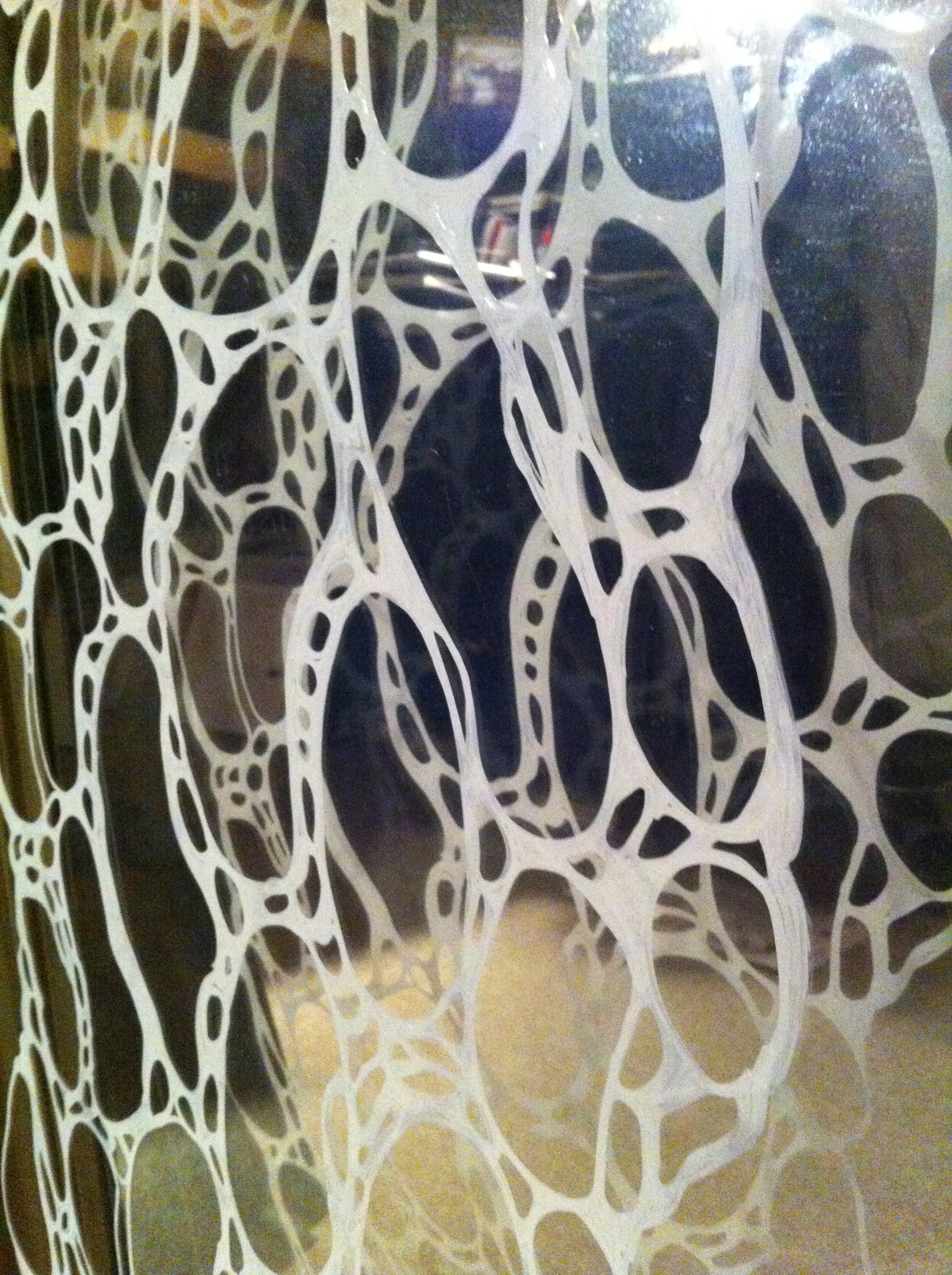
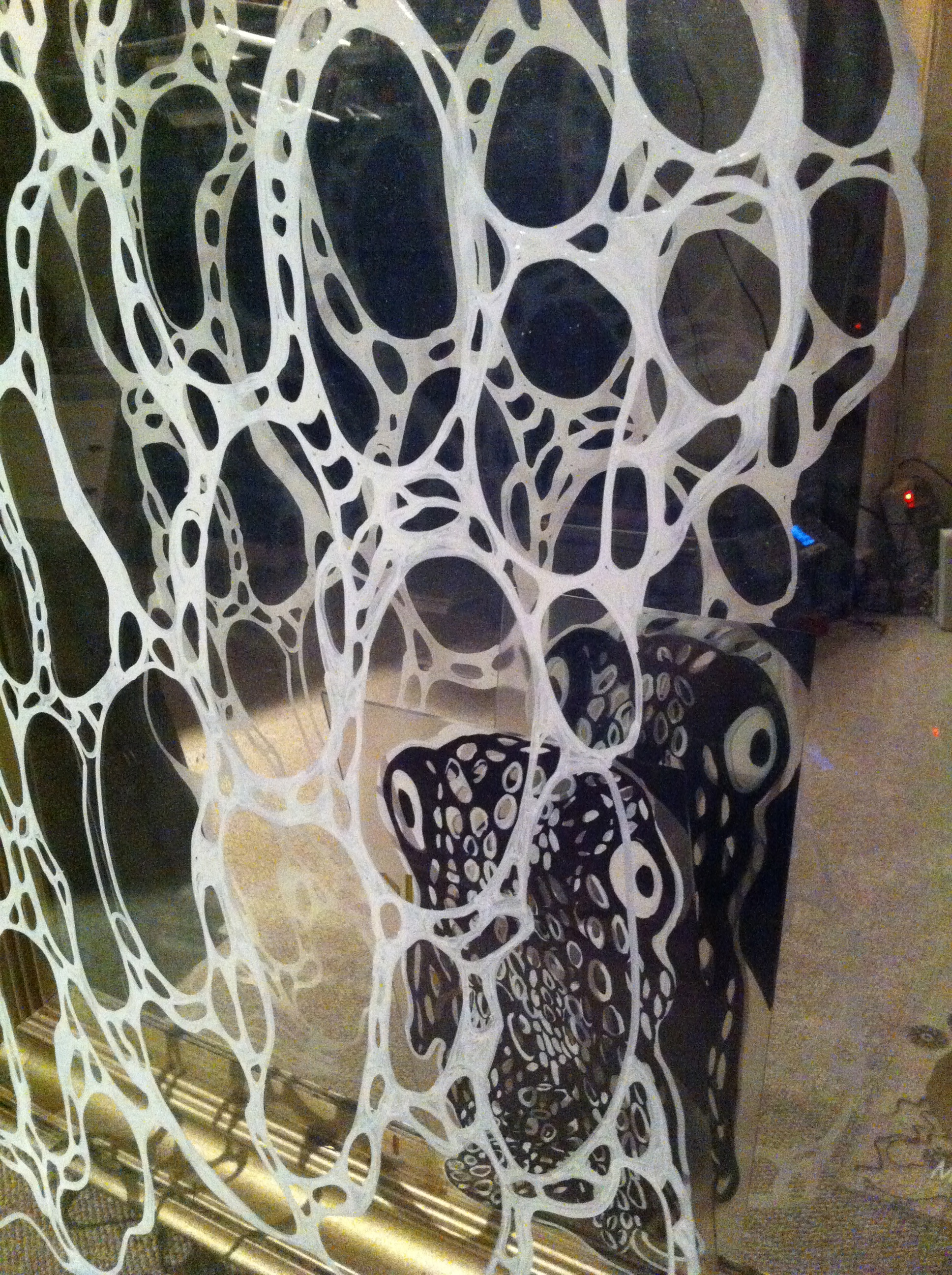
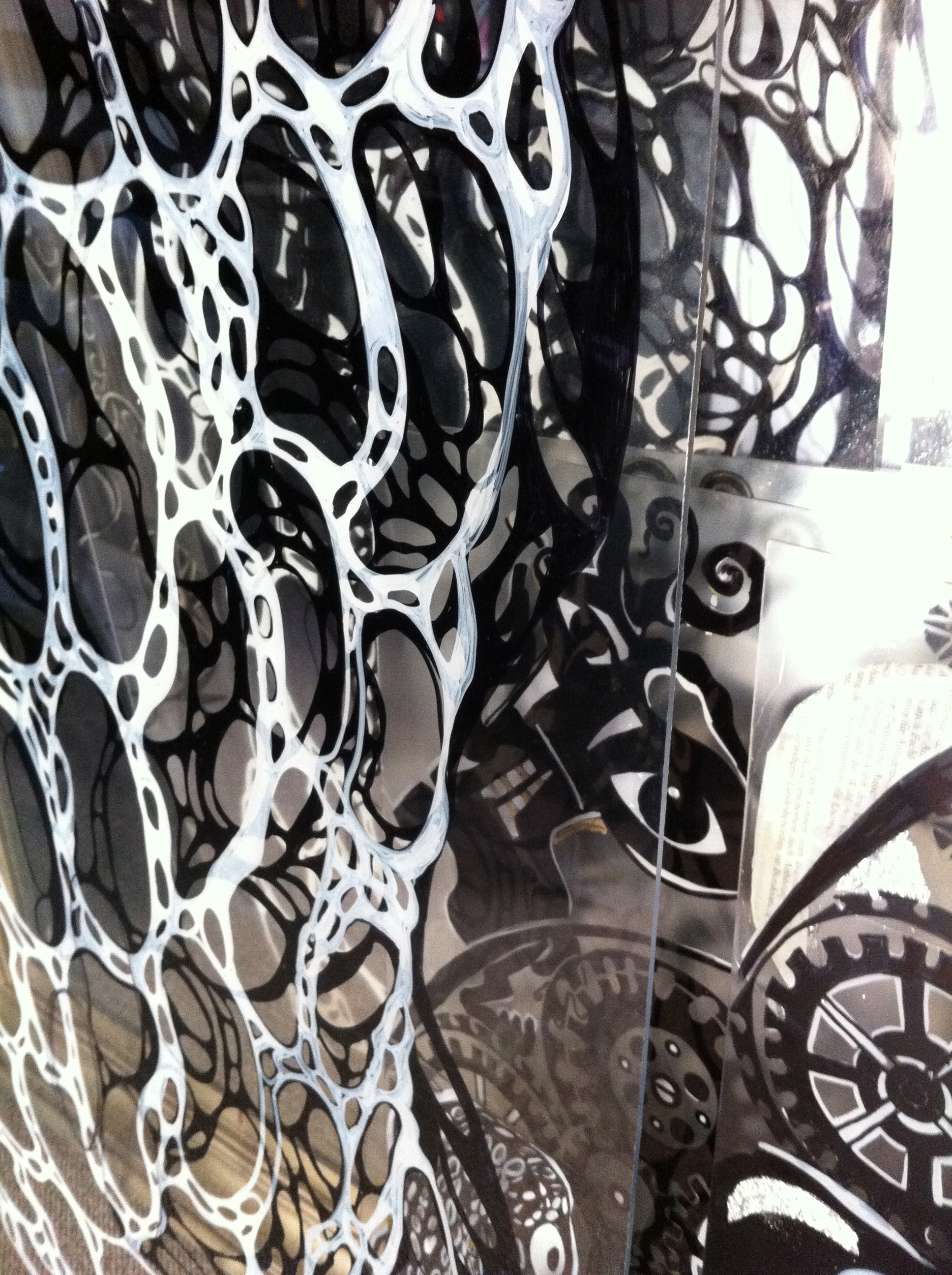
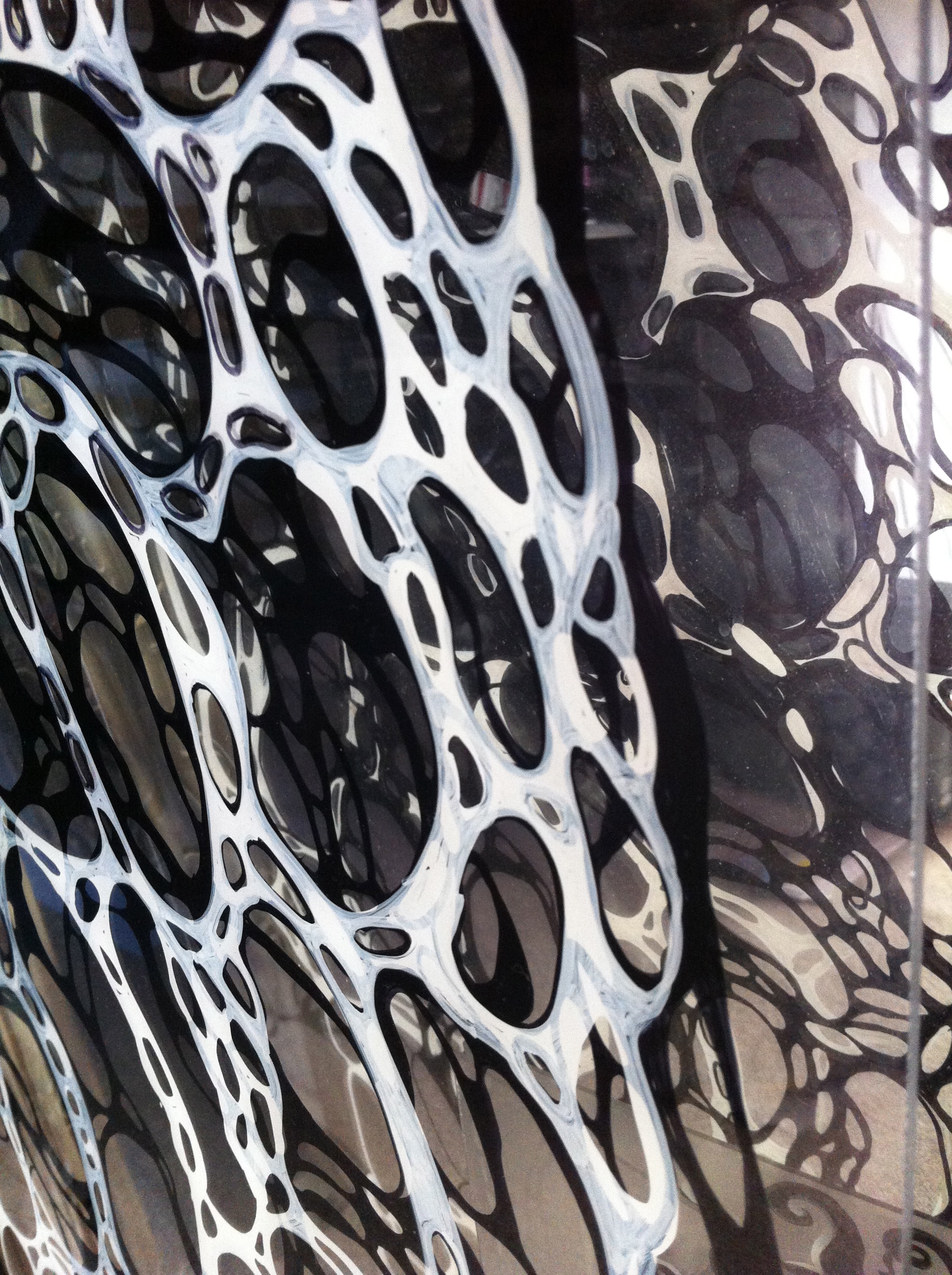
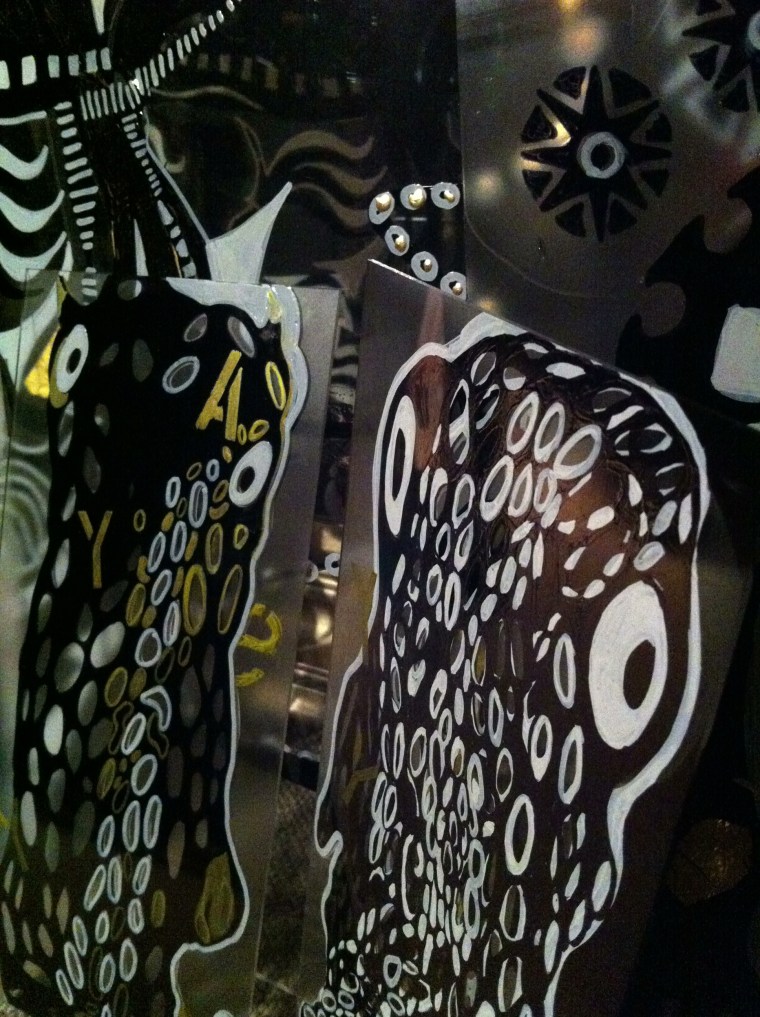
I thought it would take at least two more nights to finish this acrylic sheet but as I couldn’t stop drawing I finished it last night. I drew five layers altogether until I felt more lattice pattern would obscure the interlacing layers (which I drew on both sides).

It’s intriguing that working on a transparent sheet creates a drawing that feels at the same time tangible and elusive.

I think it would be great to multiply “y” further but this time not by adding more layers but by creating additional pieces in the same format. Five to ten sounds good for starters. I have always had a taste for the non-identical multiples in art. By the way, each sheet is about 1,30 m high. But I could also start by using up all the small panes I still have (about eight), drawing layered monsters, then proceed to the larger sheets.

Back to home depot it is …

multiplying y – the next night

IMG_5722 IMG_5723 IMG_5724 IMG_5725 IMG_5726 IMG_5727So I started multiplying y. Drawing the net pattern on the larger glass panes allows the rhythm of the pattern to emerge. I started with white on one side of the acrylic sheet and drew a loose knit-like pattern. Then I layered black organic lace-work on top. I drew about five hours, then I called it a night. But not before playing a bit with my new building block system of drawings, creating deep, three-dimensional images by arranging and rearranging different elements in front of a big mirror. You can see that the combination of smaller drawings getting “caught” in the net-pattern of the larger pane really works well. I have to finish the larger drawing, I think it will be another two to three nights. After that I want to try a wilder, more impulsive web of lines on a large sheet. What if …

the process of multiplying y – or: the power of “what if …”

Art is a question. Or, more precisely an active research framework where one question leads to another through tangible action. In my case, at the moment, that tangible action is drawing. Every night. On acrylic glass panes.

As an artist you know the question every finished work asks of you. What if? Every night since December 26th I have finished one drawing and every morning I have looked at it and asked myself a simple “What if …?”.

What if, for example, instead of one layer of that net-like surface the creature I called into visual reality I tried two layers, or three? So, that is what I will do the following night. And once finished, I will study it and realize that something happened when I multiplied the net-like layers (actually by five). The feeling that one net-like layer caused me to encounter has deepened. As this is art and not science, this was not necessarily predictable.

But the drawing is still small, more like a study of the possibilities of layering net-like patterns. So, today’s question will be “What if … I took a much larger glass pane?” I still happen to have one of those, by the way.

At some point I might ask myself: Why? Y? Why layer net-like patterns night after night? Why nets of all things? Small. Larger. One layer, Five layers. But asking for the meaning of the pattern or symbols does not follow inevitably as part of the inquiry. I might just as well choose not to ask that question and stay with the mere technical observation.

The one question I never ask myself is: “Does it make sense?” I have been asked that by others, of course. Repeatedly. The implication being: Isn’t it a waste of time?

The answer, to that question is so obvious, that I don’t have to ask myself. (More obvious at least than the right of someone else to ask me why I actively waste my life-time). Does it make sense?

The answer is that if it would make sense in the spirit of that question I would not do it. I would not do it even if I felt like it. Even if I had an urge to do it. I just wouldn’t, if it made sense.

I am like a cartographer, stringing together points on a map. Does is make sense to look at the stars and wonder how far one could go? Does it make sense to accelerate a particle? Does it make sense to be breathe? Rather than to contemplate such a question I ask: “What if.” Many times over. Night after night. Dream after dream.

Art is a question.

“Thing” from “Our World”, a sixth grade art adventure

I have been so very fortunate as to have been invited as a visiting artist as well as a “lecturing lawyer” into classrooms in the US and in Germany. Sometimes I think that I missed my calling (being a teacher) – but I am ever so grateful for the freedom of being able to work with students without having to write report cards.

A recent project involved a sixth grade class that took a tour of the NordArt 2012 (where I occasionally work as an independent art docent) as an inspiration for an amazing project. The idea was not to copy something they had seen that day, visiting the second largest annual exhibition of contemporary art in Northern Europe after the dOKUMENTA ( catching my breath here …) – but to do art. Full-Stop.

So for once (and with the approval of an amazing art teacher who decided not to grade the work) the rule was: there are no rules other than the ones the provided material imposes. And gravity. And so on. Of course, the rule that there are no rules, as a sixth grader pointed out, is a rule. There was a lot of philosophy going on anyhow.

Is there such a thing as an original idea? What if you took the whole class to a planet where nothing they had ever known existed, where there was no up nor down, nor warm nor cold, no soft, no hard, no form they had ever seen before and no function to any form they could think of? Was such a world conceivable? And what happens if you start finding form where there had been none? Would you be able to find an idea without having been exposed to any form before? How can something come out of nothing? What was first, the hen or the egg? We had a ball.

Of course, there was the material. Wire. Paper, Glue. And paint. Lots of paint. No rules here either. How to apply paint? Sure you can use a brush. Or your hands. Do you have to apply it at all? How abut freeing the paint from the idea of application? We did that too. And were having a ball. Again.

The kids came up with incredible colors, beautiful forms and great stories. Some of their work took form, much of it was fleeting. We saw the most amazing colors running down plastic sheets, swirling colors on paint palettes, painted hands and faces. It was beautiful. It was certainly lots of fun. I am convinced it was art.

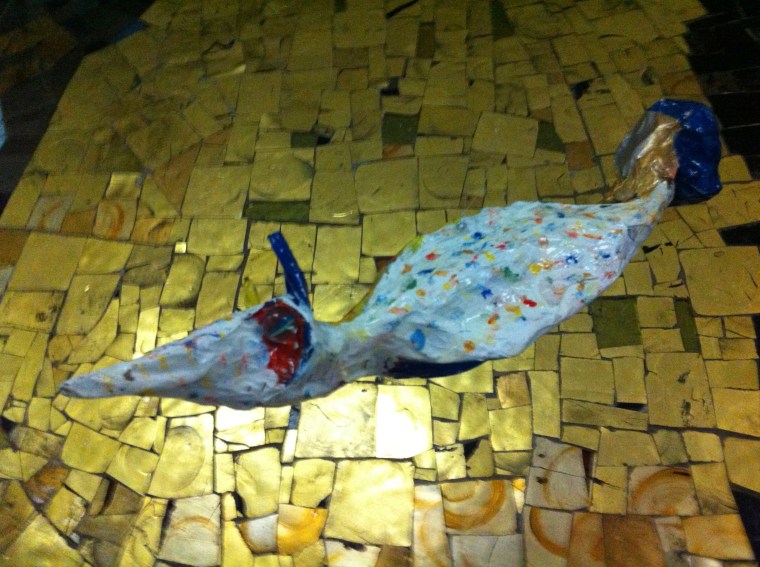
The creature posted here was just one of the many creatures and forms populating “Our world”, as the students called it. We have yet to collect their stories and assemble them in a book. I will post more. For now: the “Thing”. I love it.

ART and kids, that is an awesome mix. I do so hope they will keep some of their wild and creative impulses and treasure them as they are getting older. There is nothing as joyful as turning your back to all the “ifs” and “buts” and just be. In the process. Your process. Your life.