Page 11 of 25

Little Red Riding Hood – a cautionary tale?
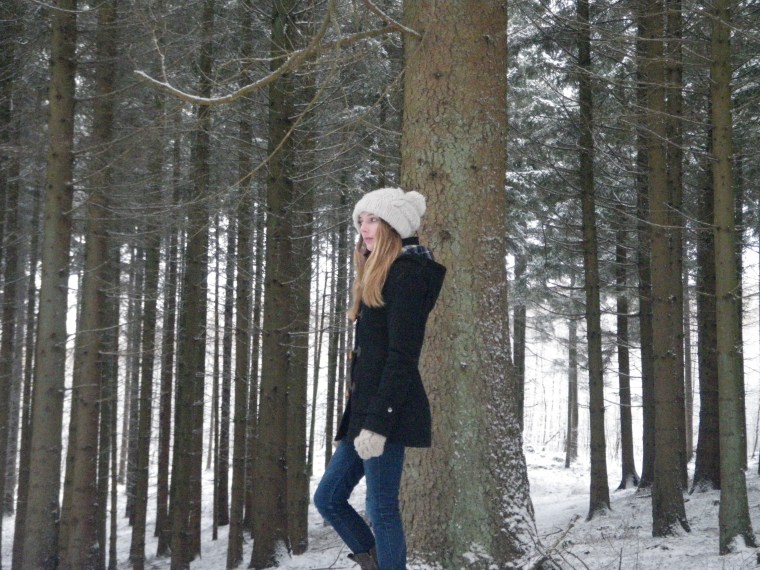
Little Red Riding Hood - a cautionary tale?

Dearest daughter,

in response to your letter in which you asked me very nicely to please allow you to walk into the wild woods by yourself:

remember Little Red Riding Hood? There was not a child more law abiding, sweet and obedient than her. A fact often overseen by those who refer to her story as a cautionary tale: the first third of it is entirely dedicated to how much everyone loved her due to her lovely and loyal disposition, truthfulness and dedication to her mother’s advice and guidance.

Do you think anyone hearing the story for the very first time – and being somewhat ignorant of the basic concept of morality in a fairy tale – do you think that such a person would expect her to forget about her mother’s advice the very first moment she encounters a challenge? Which is exactly what happens once she has wandered off happily with her basket filled with goods for her sick grandmother.

Well, we have to concede that she strays from the path of virtue for two reasons that somewhat make us stay sympathetic to her ordeal: first of all, she means well. A bunch of flowers from the wayside would surely be a welcome present for her grandmother? Never mind though that mother not only warned her against leaving the path but actually forbid her to do so! We see her put her own judgment without much quarrel with her conscience before her mother’s clear and concise directions. Let’s not forget we are talking about the most obedient girl in the village here!

The second aspect to exculpate her somewhat of course is that she is being seduced by a cunning conjurer of convincing tales. Can we really expect her to stick to those dry rules when confronted with the loveliness of the world beyond the right path as presented by a seasoned liar? The woods have never looked more inviting to her than after the wolf’s description of finely scented flowers growing in the shade of luscious trees! Shouldn’t we also blame her mother, by the way, who sends her into harm’s way? If there is a wolf lurking in those woods, as she well knows, why does she send her little girl on the errand? And you expect me to send you out into a world full of strange and unexpected temptations, equipped with just a few rules?

Here is the part of the story that has not been distributed widely but is worth considering. Prior to the whole walk in the woods scene Little Red’s mother had received a letter from her daughter. “Dearest Mother”, it read, “I am responsible and obedient. I would never do anything you told me not to! I have proven myself, now let me go!” Wouldn’t such a letter touch a mother’s heart just as yours’ touched mine? Wouldn’t it make her feel just a little guilty that she hasn’t entrusted Little Red Riding Hood with an important errand earlier already, Little Red Riding Hood, the best behaved, the loveliest, the most obedient girl in the village? You bet, it did. And we all know how the story ends!

Wait a minute, how does it end? If you think it has a bad ending, read again. Here we see her, sitting chipper at the table at her grandmother’s house, enjoying wine and cake in the company not only of her suddenly recovered grandmother but also in the company of a handsome huntsman?

Maybe this is not a moral warning tale about a girl who forgets the rules while she walks through the woods, ahem, to school on her own for the first time. Maybe it is a story about a girl who needs to make her own mistakes to find her own way, wolfs and all, and that despite all dangers there is a good chance for her to do just that. Maybe it is a story about a mother who needs to let her child go into the woods to find a way out again?

The more I think about it, the more I suspect that this is more a tale about the inevitable fact that mothers have to let their children go their own ways despite their fervent wishes to protect them against all evil and bad will, real and imaginary.

Go walk find your way through the wild woods as you must, my Little Red Riding Hood. But know that there is a wolf out there who will talk about moonflowers in the shades of the trees far off the beaten path …

With all my love,
Your Mother

artist statement – freedom is attainable

artist statement

compulsion to paint. is there a name for that? from that name was my compulsion born? and if my creative activity is to be described as compulsive behavior, do i wish to be free from it? as much as i desire freedom from life.

i am awake. through my waking mind images pass. i take a brush, a pen, and through brush and pen these images record themselves. i might be highly organized, efficient, sober, inquisitive etc. in my rational mind, but these images are what they choose to be.

there is no agenda, no program, don’t ask me for one. just a life between pillar and post.

what i want to see in these images (and you might see something else, they are as much yours as they are mine): freedom, mindfulness, compassion. a furious gentleness towards life. i see old stories in new clothes. there are stones, there are shadows. there is a smooth path under a tree. and i can relate all this and then return to what i know. because what i paint and write is what i confess not to know. and yet it is not ignorance i serve but the luminous mystery of a letter, a line, a word, a constellation, 20 degrees south-east of the belt of Orion, 23 times more luminous, twice the mass and the diameter of “our” sun. what i know is that if i could indeed throw an object hard enough, it would escape gravitational attraction, that there is a black hole in the galaxy M87, and that freedom is attainable through our words and acts.

sad? or sappy.

sad? or sappy.

broken things
don’t make me sad.
remember the last
time you were really sad?
you don’t?
good for you.
believe me,
broken things
don’t make me
sad.

rain on windows
does not make me sad.
remember the last time
you were really sad?
you don’t.
good for you.
believe me,
rain running down windows
does not
make me
sad.

sappy songs
do not make me
sad
either.
remember,
and so on.
believe me,
they don’t make me sad
at all.

you do.
remember?
you don’t.
that does
make me

forget it.

Inger-Kristina Wegener's avatarArt & Writing

Was ist CIRCUS UTOPIA ART Press?

Der Name CIRCUS UTOPIA für meine Arbeit in der Schnittstelle “Kunst & Recht” entstand aus einer Eingebung. Der Wunsch, dass Menschen unterschiedlichster Weltanschauungen miteinander ins Gespräch kommen können, ohne ihre eigenen Positionen aufzugeben und doch mit einem offenen Ohr für die Ideen anderer, mag utopisch erscheinen. Aber wir schulden es unseren Kindern, es jedenfalls zu versuchen, ihnen die hierfür notwendigen Werkzeuge mit auf den Weg zu geben. Ich habe ehemalige Schülerinnen und Schüler und ihre Eltern gefragt, was Circus Utopia für sie bedeutet.

Joy Ann Lara, Westfield, NJ, artist, mother of two sons who were taking classes in my studio:

Art is a universal language. Experiencing it with Kristina through her art classes for children has enabled my sons to express themselves at a time when words failed to capture the range and intensity of their feelings. Making art built a bridge that spanned isolation and misunderstanding, and provided a sense…

View original post 694 more words

shadows

IMG_5733

the shadows were moving slowly, swaying like branches in a light breeze or high buildings on a windy day. to detect purpose in these gentle movements required a slight degree of paranoia, and yet there was no apparent natural cause to explain the shift of the shadows away from their corresponding objects and towards the center of the village like water draining from upset glasses.

finally, there were just a bits of shadow left, like drops in a sink adhering to the enamel by their surface tension. these droplets of shadow were sparkling like rainbows, no grayness reflected. the air was still and non-expectant, noon in a depressed small town, and the realization that the world was without shadows had not yet sunk in. in a dirty jeep, parked close to the village center, a woman lit a marlboro.

even those who had dismissed the shadows as inessential, felt disconcerted when the birds ceased to sing. on the morning of the third day, after a dawn without luminosity had given way to dull day light, small insects began their crawling procession towards the centers that had swallowed the shadows.

and someone laughed at the gray man in his wrinkle free woolen suit who solicited signatures on retro-active insurance policies. “one day only”, he implored, “an amazing offer”, but they shooed him away while watching the myriad of tiny, scarlet colored spiders tie a living ribbon between the outskirts of the village and the shadow drain.

and yet, the spiders said, too easily do you accept that we form a living ribbon, and wander into oblivion. one by one. what to your eyes a living ribbon is, to ours is a band of pain, and joy, and hope against all odds.

Das war die NordArt 2012 für mich – ich freue mich auf die NordArt 2013!

NordArt 2012: Quantenphysik trifft Buddhismus

von Inger-Kristina Wegener, rechtsanwalt-kunstrecht.deBild

Oh, East is East and West is West, and never the twain shall meet.. Rudyard Kipling

Rudyark Kiplings klagendes bonmot – die Kuratoren der NordArt 2012 könnten es als inoffizielle Herausforderung betrachtet haben. Dass es eines Entwurfes bedarf, um die Voraussetzungen für die Realisierung einer Ausstellung zu schaffen, wird wohl auf allgemeine Zustimmung treffen. Dass, mit anderen Worten, eine Ausstellung erst erdacht, gedacht, werden muss, bevor sie Gestalt annehmen kann, mag daher als Gemeinplatz erscheinen. Wie aber sieht es aus, wenn man sich mit dem Gedanken auseinandersetzen wollte, dass sowohl der Entwurf als auch die realisierte Ausstellung nur einen Organisationsprozess von Daten darstellen, die sowohl den individuellen als auch den sozialen Konsens hinsichtlich der Existenz dieser Ausstellung vorwegnehmen und schließlich implementieren? Und dass sich die materielle Existenz dieser Ausstellung in eben dieser Datenorganisation auch schon erschöpfe? An derart komplexen Ideen konnte sich der Besucher der NordArt 2012 in dieser Saison messen und vergnügen.

Wird die Bereitschaft des messenden Bewusstseins zur Anerkennung eines bestimmten Ist-Zustandes des Objektes aufgekündigt, entfällt die illusionäre Realität der Materie, und der massive, schwarze Torbogen aus norwegischem Granit des deutschen Künstlers Dorsten Diekmann etwa wird zum Torweg nicht nur im symbolischen, metaphorischen Sinne, sondern im Wortsinne zur Aufforderung, den Durchgang durch das magmatische Tiefengestein in eine alternative Realität, eine Spiegelwelt, zu wagen.

Nicht nur über den Umweg nach Kassel zur dOKUMENTA (13) in das quantenphysikalische Laboratorium des österreichischen Quantenphysikers Prof. Dr. Anton Zeilinger im Fridericianum ließ sich bei dem Gang über die NordArt 2012 nachvollziehen, dass fast alles, was unsere alltägliche Auffassung uns über den Zustand unserer Umwelt kommunizieren will, schlichtweg fehlerhaft ist, allem voran unsere Vorstellung über die Eigenschaften der Materie. Die Videoinstallationen des Kanadiers Dan Hudsons verwiesen in ihrer Tonspur auf Werner Heisenberg und andere Pioniere der Quantenphysik (Materie ist organisierte Leere um einen Kern von Wahrscheinlichkeiten von Anwesenheit), die Arbeiten des deutschen Jo Kley (Dragon Line, Soll und Haben) auf mythologische Vorstellungen von Bruchstellen und Übergängen zwischen dieser Welt und anderen Räumen (das Nichts hat Eigenschaften). Um den Bogen abzurunden, buchstabierten 33 Künstler aus China in der Sonderausstellung „Formen des Formlosen“ in prozessorientierten Arbeiten nach, dass der Buddhismus mit diesen Konzepten (das Messinstrument entscheidet über die Position des Photons = Quantenphysik, erst im messenden Bewusstsein manifestiert sich die Welt = Buddhismus) seit jeher vertraut ist. Wer im Bereich „einfacher Mathematik“ Einsteins Kosmologie-Prinzip nachvollziehen wollte (bei einer endlichen Anzahl von Partikeln und einer mathematisch jedenfalls an Unendlichkeit heranreichenden Ausdehnung des Universums muss sich jegliche physische Realität früher oder später wiederholen – jene des Besuchers eingeschlossen, das berühmte Imelda-Beispiel), konnte dies in den von der Gleichförmigkeit des Zufalls geprägten Rotationsbildern des chinesischen Künstlers Meng Luding ebenso nachvollziehen wie an der verschlungenen Stahlsphäre des US-Kanadiers Bernard Hosey, dessen massive Arbeit „CrissCross“ aus einem einzigen U-Träger gebogen war und auf die ewige Wiederkehr jeglichen Prozesses verwies. Ost did meet West indeed, Mr. Kipling. Gemeinsam machen sie sich auf den Weg vom überholten Newtonschen Weltbild zu einem quantenphysikalisch geprägten Verständnis des Universums und den atemberaubenden Einsichten, die mit diesem Wechsel einhergehen. KünstlerInnen und Kuratoren der NordArt überraschten in dieser Saison mit dem Angebot , dieses veränderte Weltbild anschaulich nachzuvollziehen und – zumindest für Augenblicke – zu begreifen.

Palaverous Lament

Palaverous Lament

The empty skies are where we want to go now
released of our desire
to conceive the next beautiful thing

We prefer the leaden days and starless nights,
industrial landscapes, gaping emptiness,
toxic waste and boredom of no-man’s land
(and no woman decorating a corner with market flowers)

You would not understand
if you thought we wanted to leave for silver shores
or even suburban homes, given the opportunity,
we prefer the empty skies and their agents

to the messenger of a glory
unsung

Entdeckung – Ausschnitt aus den “Weidenkindern”

Sie waren auch erstmals verschieden in ihrer Begabung, etwas zu tun. Die anderen Kinder konnten Fuchs und Rabe, Eule und Wolf nicht unter der Oberfläche des Tons fühlen wie es der Rotschopf vermochte. Der Ton bewegte sich bereits, bevor das Mädchen ihn berührte, als sehne er sich nach ihren Händen, und die Kreaturen spielten in der dehnbaren Masse, die Rothaarige musste sie nur vorsichtig erfassen und hervorziehen. Kaum dass sie etwas an den Formen zu ändern schien, wenn die Figur erst einmal behutsam von dem Mutterblock getrennt worden war. Auch die anderen Kinder spielten gern im Ton, auch sie kneteten und modellierten kleine Kreaturen. Manche erwiesen sich dabei als geduldig und geschickt, andere mochten nicht lange still sitzen und ihren Händen die neue Fertigkeit abfordern und begnügten sich mit dem Kneten des Tons, um unvermittelt aufzuspringen und sich anderen Spielen zu widmen. Aber auch von den Kindern, die sich mit Ausdauer dem Ton widmeten, konnte sich keines mit dem Rotschopf messen. Ihre starken Finger befreiten nicht nur die Form, sondern auch den Geist des kleinen Abbildes aus dem Ton, sie zog Tiere und Kinder aus dem verdichteten Nichts.

Art & Law / another sketch

Art & Law / another sketch

a random list of lawyer-artists: Piero della Francesca, Heinrich Heine, E.T.A. Hoffmann, Robert Schuhmann, Goethe, Adalbert Stifter, Igor Stravinski, Gottfried Keller, Franz Kafka,Kurt Tucholski, Wassily Kandinsky, Cézanne, Henri Matisse, Antonie Tapies, Winfried Bullinger, Bernard Schlink Julie Zeh

Not surprisingly lawyers who are also writers are not at all uncommon. The art of writing truly is heart and brain of the legal profession, a necessary skill but also a reason to enjoy this profession even in its mundane days. You know that you are a lawyer when you do enjoy writing about a defect vehicle with a bivalent engine and when you put effort into writing it well.

Most of the visual artists I know about on the other hand actually fully changed careers (the contemporary artist and law professor Winfried Bullinger, Berlin, being a notable exception). Most of the musicians did (with the exception of E.T.A. Hoffmann who managed to be a lawyer, writer, musician). Some of the writers did, too, like Julie Zeh, and yet their legal training shows in their writing in many ways, starting with insights into the legal profession they have been privy to.

These observations (writers might stay lawyers, visual artists and musicians change careers, starting out as lawyers) seem to make perfect sense. After all the law does not use the language of visual forms (though you can’t practice law without abstraction, a link between the visual arts and the legal profession that Kandinsky pointed out), and lawyers do not sing, except for the occasional lullaby to their children.

But art and law, may it be writing, music or visual arts, are very similar in their understanding of their work as a process not only in the sense that every trade necessarily needs to follow certain steps to come up with a product or a desired result but in the sense that the result is the process itself.

This is nicely illustrated in music. You can only experience music during the unfolding of the process, even though the process might have a name (Symphony No. 4 in B Flat Major, Op. 60; II. Adagio), unless you are willing to entertain the thought that time is illusionary you can never meet up with the work in its completed, “static” form. The same is true for writing. Creation (on the writer’s side of the process) and recreation (of the reader) of any kind of text relies on a complex process-orientated if time disconnected cooperation between the writer and the reader. The product of writing might be a book, a stack of paper etc. but only in the decoding process can this product be assimilated into the readers realm.

In the visual arts this connection sometimes might seem less obvious, the results (depending on the art form) being seemingly static. A painting is a painting is a painting. But even the tableau painting is the product of a singular unfolding process – and probably can only be truly enjoyed if that process is comprehensible to the viewer through the painting/ the art object. (I have seen dead paintings before, a sad sight, but a good painting is process).

As much as humans might desire stasis, translating to: security, at heart they know that stasis cannot be achieved, at best an illusion of final laws, regulations etc.:

In the more than thirty thousand years of art history (watch the wonderful Werner Herzog documentary, “The Cave of Dreams”) and legal activity (responding to the need of their communities to reflect changing circumstances in their way of cooperation) the arts as well as the law have left testimony to the human desire to understand the harmony of process and metamorphosis, of inevitable change. I believe that people in their heart of hearts wish to learn the art to dance to the music of time (Anthony Powell) rather than to be dragged by the music of inevitability.

für viele:
Hermann Weber, Juristen hinter Literatur und Kunst, Tagung im Nordkolleg Rendsburg vom 16. – 18. September 2011, Reihe: Rechtsgeschichte und Rechtsgeschehen, Band 18, 2013, 2. Auflage, Gebundene Ausgabe, 208 Seiten
ISBN: 978-3-643-11768-7

Klaus Kastner: Literatur und Recht – eine unendliche Geschichte, Neue Juristische Wochenschrift (NJW) 2003 S. 609-615

Was ist CIRCUS UTOPIA ART Press?

Was ist CIRCUS UTOPIA ART Press?

Der Name CIRCUS UTOPIA für meine Arbeit in der Schnittstelle “Kunst & Recht” entstand aus einer Eingebung. Der Wunsch, dass Menschen unterschiedlichster Weltanschauungen miteinander ins Gespräch kommen können, ohne ihre eigenen Positionen aufzugeben und doch mit einem offenen Ohr für die Ideen anderer, mag utopisch erscheinen. Aber wir schulden es unseren Kindern, es jedenfalls zu versuchen, ihnen die hierfür notwendigen Werkzeuge mit auf den Weg zu geben. Ich habe ehemalige Schülerinnen und Schüler und ihre Eltern gefragt, was Circus Utopia für sie bedeutet.

Joy Ann Lara, Westfield, NJ, artist, mother of two sons who were taking classes in my studio:

Art is a universal language. Experiencing it with Kristina through her art classes for children has enabled my sons to express themselves at a time when words failed to capture the range and intensity of their feelings. Making art built a bridge that spanned isolation and misunderstanding, and provided a sense of home and safety that mere words–even words coming from those who loved them and tried to protect them — could not. While I love words and treasure their eloquence, I recognize that images (visual art) are somehow more visceral, purer, and can be more powerful in conveying “hard to describe” things. When words fail, art picks up and moves it forward.

Experiencing art is vital to a connection with our innate creativity. It touches all aspects of our lives, not just areas that are obviously “creative”. Art practices the ability to re-imagine and rebuild. And rebuilding, don’t you think, is indeed a daily task that determines the shape and viability of our future.

Alena, 17, Schülerin, Hamburg:

Circus Utopia Art Press ist für junge Menschen die freiwillig Lust haben sich mit Rechten auseinander zusetzen. Ich finde gerade für uns Jugendliche ist es eine tolle Möglichkeit, die Rechte kennenzulernen. Wir sind uns vielen Rechten nicht bewusst, wir haben in den Stunden die Möglichkeiten mit anderen Schülern, unsere Meinungen auszutauschen. Es bringt uns viel Spaß. Ich finde, das dieses “Unterrichtsfach” an allen Schulen unterrichtet werden sollte, denn es ist wichtig, sich mit dem Gesetzen sowie auch mit der Welt und verschiedenen Kulturen auseinander zu setzen. Es ist schwer diese große Welt zu verstehen, doch mit bunten Farben vereinfacht unsere Dozentin uns es. Sie hat ein tolles Engagement und ich würde mir wünschen das mehr Lehrer/in gibt, die Lust haben dieses Fach zu unterrichten.

Rebecca Miriam, 20, Jurastudentin,Leipzig:

Circus Utopia macht es mir möglich jegliche Sprache zu verstehen. Und hiermit meine ich nicht nur Ländersprachen, sondern die Sprachen der Menschen verschiedener Kulturen, verschiedener Weltanschauungen. Schwarz auf weiß, so steht es geschrieben. Wer bin ich? Wer sind die anderen? Wie funktioniert ein Miteinander? Doch in einer Welt, die so komplex ist, reichen Schwarz und Weiß nicht aus. Farben helfen zu verstehen.

Janne S., Schülerin, Hamburg, 19:

Circus Utopia Art Press ist für junge Menschen eine Form sich mit Rechten und Gesetzen auf kreative Art und Weise auseinanderzusetzen.  Innerhalb des Kurses geht es darum, sich eigenen Gedanken zu machen und diese durch andere Aspekte und neue Perspektiven zu ergänzen. Es geht nicht um die Bewertung von Gesetzen, sondern es geht um das Auseinandersetzen damit. So bekommt man einen Eindruck davon, was Gesetze sind, warum sie für uns eine wichtige Rolle spielen und welche Möglichkeiten wir durch sie haben. Nur wer ein Gesetz versteht, kann für sich entscheiden, ob er dieses akzeptiert oder ob er es in Frage stellen möchte. Unabhängig davon wie man ein Gesetz findet, kann man lernen, sachlich und respektvoll seine Meinung zu äußern, ohne dabei einen Anderen persönlich zu verletzen oder anzugreifen. Gesetze sind dazu da, sie zu verstehen und um über das Verstandene dann zu diskutieren. Man sollte froh sein, dass es für junge Menschen die Möglichkeit gibt, sich in dieser Form mit dem Gesetz auseinanderzusetzen, denn es können nur neue und sinnvolle Gesetze beschlossen werden, wenn alte überdacht werden. Innerhalb einer Demokratie ist es erlaubt, Fragen zu stellen, genauso wie es erlaubt ist, zu sagen, dass man bestimmte Themen nicht besprechen möchte. Keiner ist gezwungen sich zu etwas zu äußern, man bekommt aber die Möglichkeit dazu, wenn es einem ein Bedürfnis ist. Sich zu äußern bedeutet nicht, anderen seine Beweggründe mündlich schildern zu müssen, man kann sich auch künstlerisch ausdrücken. Das ist eine Besonderheit dieses Kurses und es gibt introvertierten,sowie extrovertierten Menschen die Chance, sich hier einzubringen. Für mich persönlich ist der Kurs eine Form den eigenen Horizont zu erweitern, um in seiner Persönlichkeitsentwicklung voranzukommen, indem man Dinge versteht. Nur wer selber versteht, kann Anderen beim Verstehen helfen und somit Entwicklung fördern. Unsere Dozentin gelingt dies besonders gut, da sie sich als Person sehr zurücknimmt und somit Raum für neue Ideen und Ausdrucksmöglichkeiten der Schüler lässt. Solche einen Unterricht und dieses Engagement hätte ich mir in meiner Schulzeit von meinen Lehrern gewünscht.

Lotta M., Mode Designerin, NUSUM, Hamburg, 26:

Für mich ist CIRCUS UTOPIA ein Projekt, das Kunst lebendig macht, zum Träumen anregt. Die Welt bräucht Träumer, Künstler, Denker. CIRCUS UTOPIA macht die Welt ein Stück bunter! Ich selbst habe immer eines von Kristinas Monstern dabei und zeige ihm die Welt wenn ich Reise!