Page 21 of 25

more on yoga … (inspired by a dialog with OléVolta)

One especially intriguing aspect about the practice of Yoga is that the realization what practice could mean to a person’s life can become apparent the first time one engages in it – and I think that the main lesson my grandfather tried to bring home to me and that I – eventually – have taken to heart is that yoga is not necessarily a journey of linear progression from beginner to advanced. We are never beginners or advanced in the skill of living, every day requires renewed humility, gentleness and compassion. Who says we can not learn from a newborn or the very feeble?

Do not concern yourself…

Do not concern yourself….

I started practicing yoga ever so many years ago as a four year old. It was my grandfather who taught me the yoga skills he considered basic: the handstand, the plow, the lotus and the sun prayer. It has been a long journey since then, I actually wrote a novel about both my grandfather and his practice of yoga and what it represented for both of us. Far from resolving all conflict yoga lead me deeper into the heart of it – which by now I am sure is the only way to eventually find a way through. Yoga for me has been a source of insight as much as of pain and doubt and my relationship to yoga is still unresolved many years after my grandfather’s passing. Recently I have discontinued the practice of the plow because of alarming medical reports about the pose. I am however still intrigued by the practice after all these years and about the fact that you never “get it right”, you just continue your path stubbornly, gently, fiercely – depending on your own temperament.

Toulouse

Toulouse.

The fact that it seems a frightening and atrocious trend to single out children as stand-in victims for their parents’ assumed allegiances seems to attract little attention in the majority of the comments to the school shooting in Toulouse I have read this morning. France, Afghanistan, Norway, Palestine, Uganda: Every child is YOUR child – if we forgo this most basic mandate of human decency, we loose our humanity. Children all over the world experience violence, dread and death in the name of incomprehensible adult interests every day. Is this indeed to be our heritage to our children? Just look what kind of world we have created with our hate, intolerance and righteous pursuit of our own interests. If we don’t protect our children, no matter of which descent, then there is no hope.

awake, fiction excerpt

They did not talk to me, they did not adopt me as their friend and benefactor. And why should they? If I credited them with any humanlike behavior I would have to ask myself indeed why they should decide to become friends with me just because I kept them captive in my world. Where were they meant to be born, I suddenly wondered? Was there a place that would have felt natural for them? I thought about my dreams of the lake. The whisper had started again. Phoebe would have maybe understood their conversation. Maybe it was not her age though, maybe it was because she was not responsible for their situation. Then again, these creatures would not even exist if I had not brought them home and built them a nursery. They would still be but shimmering pearls in a paper envelope. And yet, I asked myself, who would choose non-existence over an existence in the wrong place? Who was to say what the right place was, anyways? Chances are that we are born into a fairly hostile environment. Chances are that conditions for survival right where we are born are not what we would wish them to be. Is it a consolation to have made it into life when life turns out to be such a confined, maybe painful experience? My head was spinning once again. Every human, I could imagine, would defend the narrow space they had carved out simply by coming into life. Most humans probably felt that a fellow human was entitled to circumstances that enabled her to have a basic decent life. But who was to be held responsible to give it to them? These thoughts were entirely too big for a lonely fourteen year old sitting up at night. But for once I just endured them. These thoughts were too big, but I held them in my mind for a while as I was watching the grey light. I think I was growing that night just by enduring the thoughts I was too young to have. The whisper changed as I was watching. If I couldn’t make out words I did feel something like a pattern, a rhythm in the restless sounds. And finally something like a melody emerged, not based on any harmonic scale I knew but somehow comprehensible to my sense of musical logic non-the-less.

artist’s use of time (inspired by a discussion with fellow artist Anne Onsøien)

The industrial age has raised the bar of self-appreciation to the productivity of machines. The thought aside that machines in the so called industrial societies have also freed a large number of people from occupations too time consuming and tiring to leave space for education and/or leisure activities (making the pursuit of art an occupation for the privileged few and the occasional madman/madwoman), machines brought with them universal time and a machine productivity bound concept of human work ethics. The human mind will bend to see these demands fulfilled but it will not naturally behave that way. Especially creative work cannot be entirely synced with machine time cycles – and if it is we often perceive the results as disappointing and non-original. For artists who spend a good deal of their time alone chasing the next image or fictional character I think it is especially important to not bind self-confidence to the adaption to office/machine time.

Whether I am already procrastinating or still thinking and waiting: I have to find other parameters to establish that fine line for myself than to check off office-suite calendar time slots. The most important defense against external (and possibly: internalized) criticism referring to your use of time is your own confidence that you are indeed working when you are giving yourself space to let the idea, the character develop.

red snow


“Why is it out on permanent loan, Sir?” I asked instead. Now it was his turn to ignore me. “When they started the program, you see,” he answered in a low voice to a question I hadn’t asked yet, “it wasn’t particularly secret. No classified information, just a bunch of scientists with an idea.” I felt a chill. This was Somerville Public Library where kids get their sufficiently outdated material for school assignments and hang out between the dusty shelves in the little frequented art section. “It started with a culture collection of cryophilic algae and microbes, for example pyrolobus fumari.” Sensing my bewilderment, he added ”you need to take notes, you know, you can’t expect me to explain every detail.” As I grabbed one of the H2 library pencils and a stack of note-paper from the table in front of us, he relented somewhat and began to lecture. “Cryophilic algae, also known as red snow, have specialized on thriving under extreme conditions in the polar regions. They grow in the very cold, acidic, high in ultra-violet radiation, and nutrient-poor confines of melting snow. Fascinating, right? Pyrolobus fumari, collected from hydrothermal vents about 200 miles off of Washington State and nearly 1.5 miles deep in the Pacific Ocean on the other hand, survive at 235 degrees Fahrenheit. And we cultured yet another microbe from a yet unnamed strain that Penelope Hoffmann insisted even remains stable at 266 degrees Fahrenheit, when all other life ceases. But the most interesting aspect is that these microbes and algae go through long periods of dormant life cycles. We have isolated microbes from the Siberian permafrost, about three million years old. Bacteria germinated from spores preserved in Dominican amber, 30 million years old!” He leaned back. I looked at him expectantly, but he remained silent. One couldn’t get comfortable in the library arm-chairs with their beech-wood frames and their dust blue fabric over a dense kind of upholstery material and I had fidgeted around in my chair since we had taken our places, but despite the position his malformed spine imposed on him he looked completely relaxed. It actually looked as if he was relaxed within the frame of his bent body, as if that was his frame of reference, not the environment. My initial anxiety had settled too and I had begun to think. “
demons


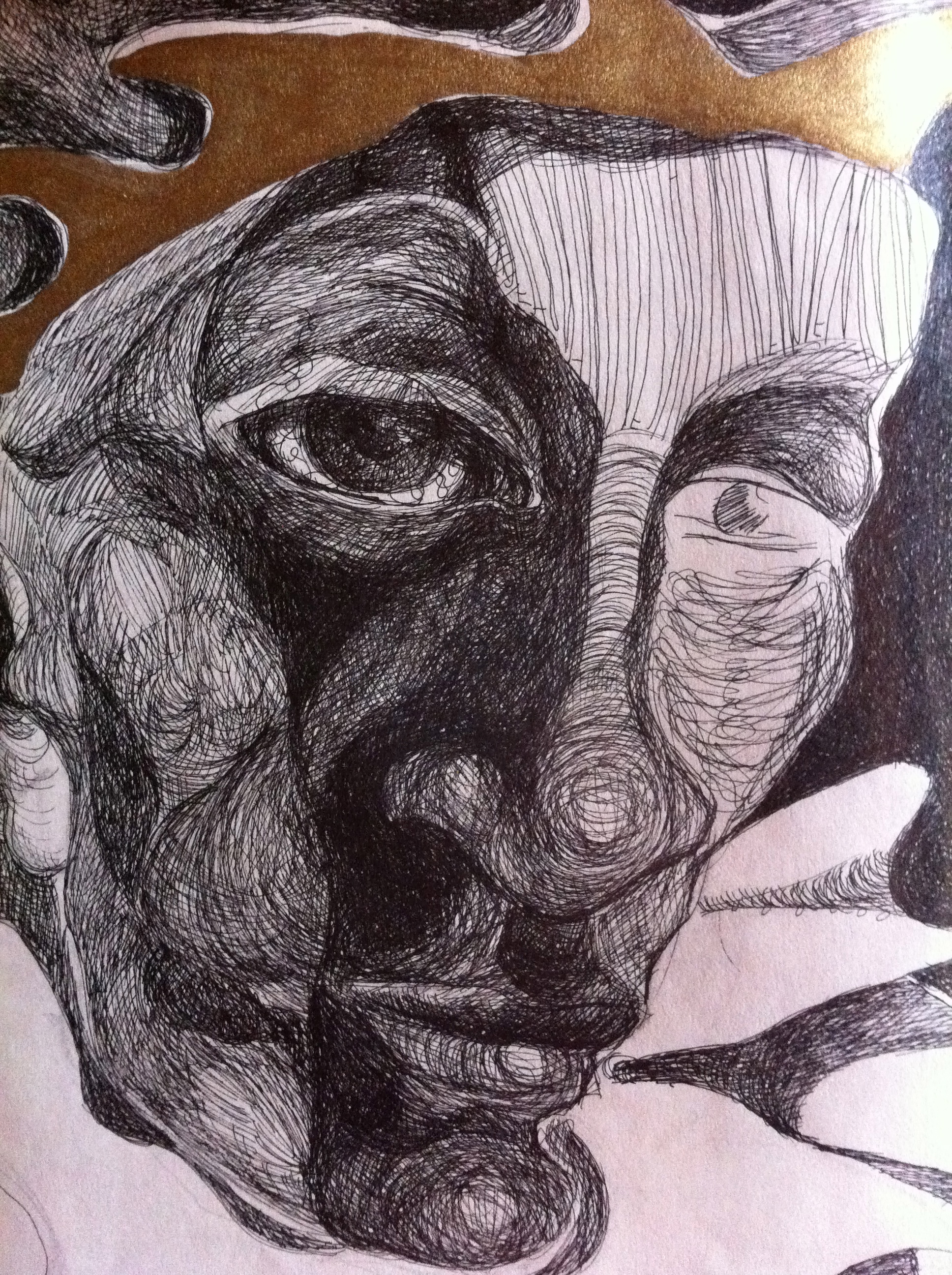
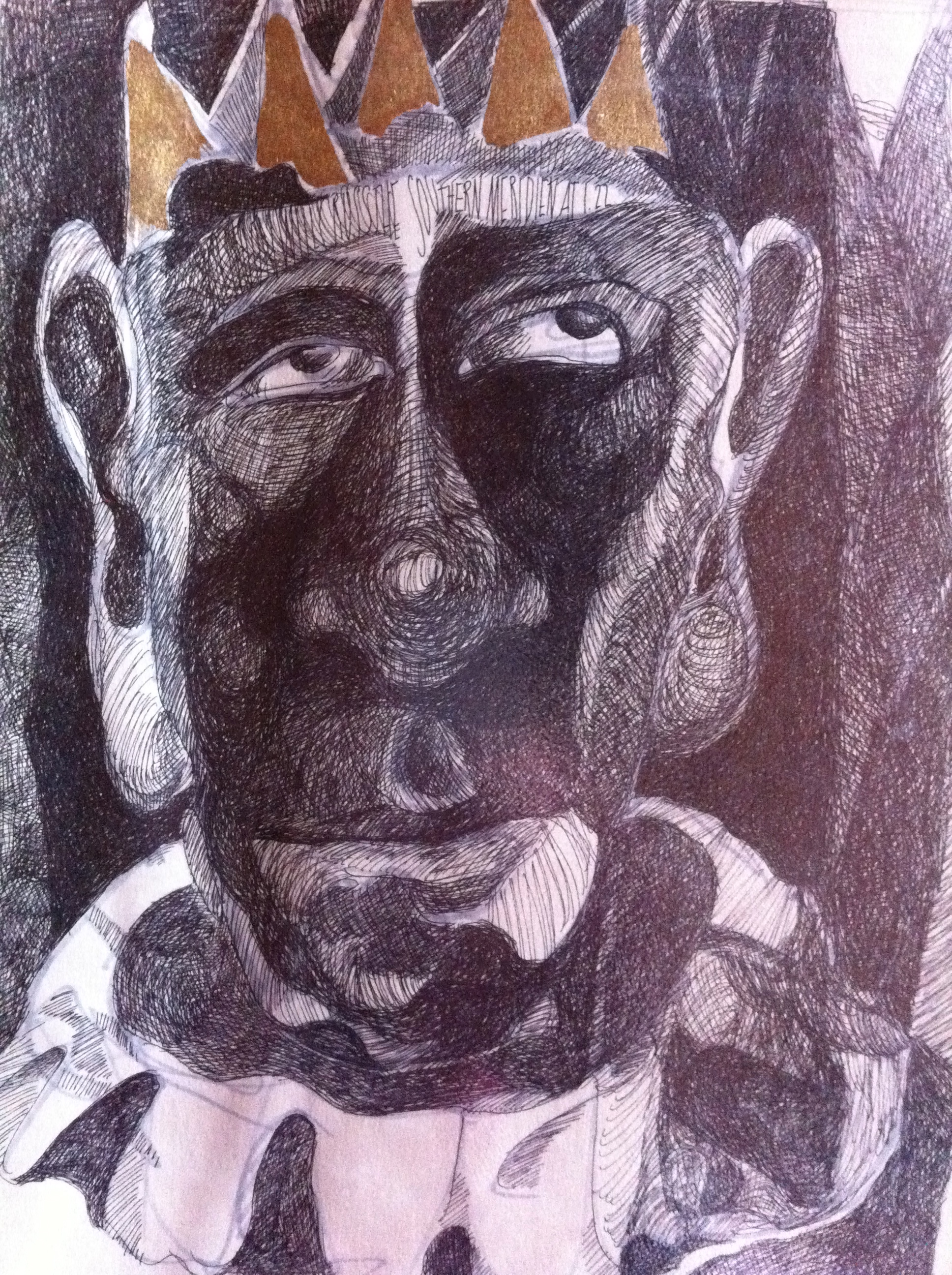
and at the seventh hour the demons arose, howling, and they were indeed fearsome to behold. but i laughed at their racket and answered: the likes of you I concoct with paper and paint from the home improvement store any day.