Page 4 of 25

phantastisches Lexikon der Meere – q

quallenhumanoide,q.h., eine aquatische spezies,die eine deutliche physiognomische ähnlichkeit mit menschen aufweist. anders als menschen verfügen q.h. allerdings weder über ein endo- noch ein ektoskelett und leben deshalb ausschliesslich in aquatischen biotopen, wo sie sich – ähnlich quallen – von den meeresströmungen tragen lassen. das einzelne exemplar scheint trotz seines humanoiden erscheinens über ähnlich reduziertes bewusstsein und intelligenz zu verfügen wie die bereits angeführten quallen. in der gruppe allerdings, insbesondere bei der jagd, zeigt der q.h. ein erstaunlich kooperatives sozialverhalten, das den anschein einer steuerung der gruppe durch eine externe intelligenz nahezulegen scheint. sichtungen der spezies sind extrem selten, im wesentlichen sind die bekannten fakten auf den fund von einzelnen exemplaren in den schleppnetzen der hochseefischerei zurückzuführen, wo sie offenbar recht elend durch das gewicht des fanges im netz unmittelbar zugrunde gehen. seeleute halten den fund eines solchen kadavers für ein äußerst schlechtes omen und sind selten (und nur nach erheblicher alkoholverabreichung) dazu zu bewegen, über diese funde zu sprechen. es steht zu vermuten, dass die meisten kadaver unmittelbar in das meer zurückgeworfen werden und die fanggründe für einige zeit vermieden werden. die wenigen taucher indes, welche das glück hatten, die (karnivoren) q.h. im wasser zu beobachten, berichten von einer unfassbaren, gelassenen anmut ihrer bewegungen, der schimmernden transluzenz ihrer haut und einer seltsam, verführerischen, floralen schönheit, die allerdings nicht zuletzt der anlockung von beute zu dienen scheint. es steht zu vermuten, dass die mythen von meerjungfrauen und anderen humanoiden meerwesen von sichtungen der q.h. angeregt worden sind.

Das Kartenspiel – Es regnet

IMG_0447

Am Abend des vierten Regentages entdeckte Anna ein Deck alter Spielkarten in der Kommode in ihrem Schlafzimmer. Sie hörte Daniel in der Küche hantieren und über die Ausstattung der Schränke fluchen wie schon an den anderen Abenden. Robert hatte sich bereit erklärt, ins Dorf zu fahren, um Streichhölzer und mehr Wein zu besorgen. Bestimmt waren ihm auch die Zigaretten ausgegangen. Er hatte Daniels Volvo genommen, der Wagen war noch nicht zurück. Anna setzte sich auf die Fensterbank und ließ die Karten in einem soliden Block aus ihrer leicht vergilbten Schachtel gleiten. Sie hatte den größten Teil des Nachmittag verschlafen, nur einmal war sie kurz erwacht, weil Daniel und Robert ihre Stimmen erhoben hatten, und sie hatte gelauscht, aber sie hatte nicht hören können, ob sie wieder gestritten, oder ob sie sich einfach über Politik oder Sport unterhalten hatten. Eigentlich kam es auf dasselbe heraus. Anna seufzte. Immerhin erwarteten sie nicht von ihr, Stellung zu beziehen. Sie überlegte, ob sie einfach in der Jeans und dem weißen T-Shirt, in denen sie den Nachmittag auf dem Bett gelegen hatte, zum Abendessen gehen oder noch duschen und sich umziehen sollte, und mit nassem Haar zum Essen erscheinen. Noch zwei Abende mit Daniel und Robert. Es war idiotisch, dass sie nicht in Betracht gezogen hatten, dass es auch regnen könnte. Das Haus verfügte, anders als jenes, das das Institut ihnen im Winter zur Verfügung gestellt hatte, über keine Bibliothek. Vor dem Einschlafen hatte Anna sich wieder in das einzige Buch versenkt, das sie mitgebracht hatte. „This is the story of how I fell in love with a woman who read me a specific story from Herodotus.“ Was für ein wunderbarer Satz, dachte sie,der Anfang einer Geschichte, der Anfang einer Liebesgeschichte, aber tatsächlich verborgen inmitten der Erzählung. Wie deutlich der Erzähler sofort vor Augen steht, ohne dass wir jemals mehr ueber ihn erfahren müssten. Nicht: „ … who read me a story by Herodotus“, sondern „ … who read me a specific story by Herodotus.“ Dieses eine Wort, “specific”, in seiner Reserviertheit, seiner Arroganz, beschreibt den Unterschied zwischen Gemeinplatz und Begehren, zwischen Roberts schnodderigem Alltagsrealismus und Daniels hedonistischer Phantasterei, wobei es Robert war, der Begehren in seinen Geschichten inszenieren konnte und Daniel, der ihm dieses Talent neidete und lange nichts mehr veröffentlicht hatte. Anna spielte abwesend mit den Karten und warf den Pack schließlich auf das Bett. Die Karten fächerten sich auf. Sie betrachtete sie nachdenklich. Ein Kartenspiel. Ein Kartenspiel, das die offene Frage entschied, die sie alle drei beschäftigte.

Not Praying in Auschwitz

April, 19th, The day of the Warsaw Ghetto uprising and April 27th, Holocaust Remembrance Day – in memory of Janusz Korczak, 1878, Warsaw – 1942, Treblinka. I also remember my friend Jacob Lofman, 1911-2002, a Polish-born photojournalist and an intellectual force who maintained a lifelong interest in Jewish history and culture, a man who was kind and generous enough to share some of his memories and wisdom with me, a German expatriate at the time we met (1997). Jacob would have liked this article “Not Praying in Auschwitz”. Thank you, Jacob, it was a true privilege to sit in your kitchen and have tea with you.

Recherche du temps perdu

Als K sich nach ihrem Lauf auf die Bank setzt, um ihre Schuhe wieder anzuziehen, sitzt dort die Vogelfrau. Zu ihren Füssen haben sich Tauben und graue Eichhörnchen versammelt, die sie mit kleinen glucksenden Lauten aus einer spitzen, braunen Papiertüte mit Vogelsaat füttert.

Es bedarf nur eines Grußes, einer freundlichen Frage, How are you today, Madame?, und die alte Dame, die selbst wie ein Vogel aussieht, lehnt sich weit in ihre Vergangenheit, erzählt aus ihren Tagen als Gouvernante für den Nachwuchs einer Botschafterfamilie in der Upper East Side, rezitiert beliebige Passagen aus Proust auf Französisch wie Stellen aus einer heiligen Schrift. Sie kann sich nie an K erinnern. Ihre Geschichte ist bereits vollendet, neuen Gestalten bleibt der Eintritt verwehrt. In der Gegenwart der Vogelfrau gibt nur noch die Vögel und die Eichhörnchen. Aber aus der Vergangenheit  erzählt sie mit feiner Dramatik und lebendigem Vokabular. Während sie aus der „Recherche du temps perdu“ rezitiert, scheint es, als lese sie fortwährend aus einem der Bände des Werkes, um an beliebiger Stelle eine Passage in flüssigem, eleganten Französisch mit einem Zuhörer zu teilen.

Heute steckt die kleine Dame zum Schutz gegen die Kälte tief in einem dicken, lammfellgefütterten Ledermantel, einem Ungetüm von Tierhaut, aus dem ihre dünnen Beine in Wollstrümpfen wie zwei Stöcke hervortreten. Wären da nicht die schweren Stiefel, die sie fest auf dem Boden verankern, würde das Gewicht des Mantels es ihr wahrscheinlich unmöglich machen, sich wieder von der Bank zu erheben. Ihr langer, selbstgestrickter Schal aus feinen, fusseligen Garnen organisiert sich zu einer Doppelhelix handgearbeiteter Erinnerungen. Ihre kindliche Pudelmütze indes ist wie ein einfaches Symbol für die Zeit, die vergeht, ohne dass man es je recht begreifen kann.

Ein jeder Mensch ein tiefer See flüssiger Zeit. Bei den meisten Menschen ist die Oberfläche durch die Gegenwart und das Ich getrübt, die endlose Geschäftigkeit. Aber bei der Vogelfrau liegt das Wasser jetzt klar und ruhig, und alles, was geschehen ist, und alles was ist, und alles, was geschehen werden wird, ist sichtbar. Für einen Augenblick überlegt K, dass die Vogelfrau unter ihrem schweren Mantel wohl einen Glaskörper verbirgt.

Heute lächelt sie der Vogelfrau nur freundlich zu und verabschiedet sich mit einem einfachen „Good bye, Madame. Have a lovely day!“, sobald ihre Schuhe gebunden sind. Es ist zu kalt zu bleiben, sie kann bereits spüren, wie der Schweiß auf ihrem Rücken eisig wird. Als K sich zum Gehen anschickt, antwortet ihr die kleine Dame – wie jeden Tag –mit einer Passage aus Proust. „J’implorais mes parents, qui, depuis la visite du médecin, ne voulaient plus me permettre d’aller à Phèdre. Je me récitais sans cesse la tirade: On dit qu’un prompt départ vous éloigne de nous … – au revoir, Mademoiselle.”

Potsdam, royal gardens

Foto 5on a green bench in the royal gardens in potsdam, the remnant of a shadow, watches pleased, very pleased indeed,  two fools talking the day away, urgently weaving their voices together, staring distractedly into the glimmering brook, laughing, disagreeing, reconciliation following suite like the sun breaking through clouds, ignoring the ticking of the small silver watch, but the remnant fingers his watch with a grin, time has no meaning and no hold for 11973 seconds and then, on fast forward, returns with a deafening rush.

Jacob Lofman

Er wartete in der geöffneten Tür, wobei er sich einige Momente gedulden musste. Der Hund bewegte sich ohne Leine und mit gesenkter Nase im Zick-Zack über den Gehweg. Endlich kamen alle drei zur Tür, und Jacob beeilte sich, sein vom Warten ein wenig erstarrtes Lächeln wiederzubeleben. Guten Abend, meine Herrschaften, sagte er, das milde Erstaunen in ihren Gesichtern genießend. Die Frau belohnte seine Anstrengung mit einem abwesenden Lächeln und einem leicht britisch gefärbten “Good evening” (als sähe sie freundlich über seinen faux-pas, sie auf Deutsch anzusprechen, hinweg), während der Mann, ebenfalls nur mäßig interessiert, den Gruß auf Deutsch erwiderte. „Guten Abend, Sie sprechen Deutsch“, nicht fragend, nicht ermutigend.

„Sie sind überrascht, nicht wahr“, sagte Jacob dennoch, „ja, Sie sind überrascht. Sie kommen doch aus Deutschland. Berlin, nicht wahr?“

„Ja“, bestätigte der junge Mann. – „Ich kenne Berlin“, sagte Jacob, „aber das ist lange her.“ „ Sie sind ja noch jung“, fügte er hinzu.

Er stand im Türrahmen. Der Hund drängte sich an ihn und wedelte mit dem Schwanz. Die Frau lächelte immer noch und übernahm die Tür. Jacob ignorierte die unausgesprochene Aufforderung, Platz zu machen, und lachte. „Ja, sie sind jung und wissen nichts, nicht wahr. Die jungen Leute von heute haben keinen Sinn für Geschichte, no time, no interest, right. Wissen Sie denn zum Beispiel, wo das Gründungstreffen der sozialdemokratischen Partei in Deutschland stattgefunden hat? Wissen Sie? Das müssten Sie doch eigentlich wissen als Deutsche“. „Eisenach“, erwiderte der Mann. Der Hund drängte sich ungestüm an Jacob vorbei in den Vorflur. Jacob gab nach und trat aus dem Weg. „Ja, sieh einer an“, sagte er, „sieh einer an“. Er folgte den jungen Leuten ins Haus. Zusammen standen sie für einen Augenblick schweigend vor dem Aufzug.

. „I saw the movers bring in your book shelves yesterday“, sagte Jacob schließlich, um das Gespräch wiederzubeleben. „You must have brought many books“. „All of them“, erwiderte die Frau, jetzt mit stärker ausgeprägtem, deutschem Akzent. „I wouldn’t want to be without them“. Sie schwiegen erneut. Der Aufzug kam und sie drängten sich umständlich hinein. Jacob drückte fünf und sieben. „Thank you“, sagte der Mann höflich. Jacob ließ sich durch die Förmlichkeit nicht aus der Ruhe bringen. Jetzt hatte er noch fünf Stockwerke, um etwas in Erfahrung zu bringen, das Madison noch nicht wusste. „Ich bin Jacob Lofman“, eröffnete er das Gespräch als sich der Aufzug mit einem schwerfälligen Ruck in Bewegung setzte. „Ich lebe hier seit vierzig Jahren. Wenn Sie was brauchen, müssen Sie mich fragen. Fünfter Stock. Ich habe immer Zeit. Meine Frau, Rivke, ist im letzten Herbst gestorben. Jetzt habe ich viel Zeit“. Er schwieg. Der Aufzug kam abrupt zum Stillstand. Die Metalltüren knirrschten zurück. Jacob öffnete die äußere Tür.

„I am sorry“, sagte die junge Frau, das tut mir wirklich leid. Jacob schluckte. „Ja“, sagte er langsam, unwillig die Tür gehen zu lassen, „jetzt müssen Sie mir aber auch Ihren Namen sagen, und wer ihr Lieblingsschriftsteller ist, wo Sie doch all diese Bücher mitgebracht haben“. „Heine“, erwiderte die Frau eine Nuance wärmer, „und mein Name ist Imogen, und das ist mein Mann Andreas“. Andreas nickte mit dem Kopf. Imogen überlegte einen Augenblick und fügte hinzu: „Und Nabokov, natürlich. Speak, Memory, I love Speak, Memory“. Der Mann, der als Andreas vorgestellt worden war, sah nicht aus, als wolle er seine literarischen Vorlieben mitteilen. Der Köter hechelte in der unklimatisierten Aufzugkabine. In einem anderen Stockwerk begann jemand, mit einem Schlüsselbund gegen die Aufzugstür zu klappern. „No time“, seufzte Jacob, „time is money for you young people, right?“ Er konzentrierte seine Bemühungen auf die junge Frau, Imogen. „Nabokov“, erwog er, das metallische Stakkato, das durch den Aufzugsschacht schepperte, ignorierend, „Nabokov is good, of course, very good, but Heine, why, meine Frau liebte Heine, meine Frau knew Heine by her heart. Heine, das ist ausgezeichnet“, strahlte er. Das Scheppern wurde dringlicher. „Sie müssen kommen“, drängte Jacob, „kommen Sie zum Tee. Jederzeit. Anytime. Auch allein. 5F“. Er lächelte, seine Augen hinter fetten Eulengläsern blitzten. Er hatte seine Niedergeschlagenheit vergessen. „Heine“, ausgezeichnet, lachte er zufrieden.

Jemand schlug mit der Faust gegen die Aufzugtür, dass es dumpf im Schacht hallte, und begann vernehmlich zu fluchen. Jacob seufzte. „No time, right“, murmelte er. „Ich lasse Sie jetzt gehen, Sie können ja nicht den ganzen Verkehr aufhalten. Kommen Sie lieber zu mir nach Haus, 5F, kommen Sie zum Tee“, rief er, während die Aufzugstür zufiel, und die Metalltüren zuknirschten.

„Heine, ganz ausgezeichnet“, rief Jacob in den leeren Hausflur und drückte auf den Knopf, um den Fahrstuhl zu zurückrufen und sich endlich auf seinen Abendspaziergang zu begeben. Vielleicht würde er dem alten Madison im Park begegnen.

The Declaration of Independence – excerpt from my new novel in writing

You mean, I said slowly, that you use your freedom to decide whether you want to be bound by the rules of your congregation?

Fiona looked at me strangely. She thought for a good moment, looking around in the tidy cottage of the church elder everyone respected. I know Aunt Melissy sometimes takes apprentices from the outside, she answered slowly and I realized that I had said “you” as if this congregation was – as it was – strange to me in custom. I didn’t answer but instead busied myself with pouring the boiling water over the herbs in the old teapot. My mind didn’t race. It was clear and slow as was the girl who observed my every move. When she realized that I wouldn’t comment she started talking again, carefully weighing her words. Freedom, she said, I guess at some point in history that meant to do whatever you want. Whenever you want to do it. I looked at her, dressed in her plain farmgirl Sunday best dress. She surprised me, too. Must be wonderful, Fiona said, to do as you wish only. Of course, out here it would leave you and others hang out to dry. We all depend on each other. Especially now. She talked much like a girl of my own time.

I considered what she had said. She didn’t really answer my question about the contract. But she had given me her own definition of freedom. It was very simple. Do as you wish whenever you feel like it. That was the measure of my time. And for good reason, too. Though it was not truly like that. I had to go to school in my time, too, no discussion. My mother had to pay the mortgage for our house, my outdoorsy father had to spend most of his life indoors in an office to make the kind of money he needed to support the life he thought he was expected to live and also fulfill his obligations towards his children, his ex-wife and his new wife. My parents could not just walk out on us kids without breaking some kind of social contract and “freedom” would not be accepted as an excuse. They could walk out on us in the same way Fiona’s mother could saddle a horse and take off but just like Fiona’s mother they wouldn’t do it. Personal freedom featured fairly low when it came to their life decisions. Yes, my father left the family and had married again. But he still went to that office and in some way nothing really had changed all that much as far as I cold see, just that he had exchanged some of the people in his life for others. It made me angry thinking of it but it didn’t change that he still cared for us. As for my mother, yes, she painted day and night but she was still preparing disgustingly healthy meals for us and made sure we in turn were keeping up with our duties. I mean, she phrased it differently but it meant just that. She wanted us to find out what was right for ourselves but if you took a wrong turn, she annoyingly already waited for you behind the corner. Freedom – what did that really mean even in my world?

I decided to try out something else on the girl. I set the mugs out in front of our places and slid into the bench right next to her. She had already cupped her hands around her mug and enjoyed the warmth of the ceramic. I did the same with my mug. The steam rose up to my face. Warmth in winter was a luxury in early 19th century Vermont. Then I recited into the steam just as I had in class: We hold these truths to be self-evident, that all men are created equal, that they are endowed by their Creator with certain unalienable Rights, that among these are Life, Liberty and the pursuit of Happiness. The Declaration of Independence. 1776. I looked into the dark ceramic mug. Then I added: “A free man is he that in those things which by his strength and wit he is able to do is not hindered to do what he hath the will to do”, Thomas Hobbes, another one of my father’s favorites. I took a sip, too hot, and I waited for Fiona to reply. This was the strangest conversation I had ever had. Two girls in farmdresses. Fiona looked at me. Exactly she answered. But freedom is not ‘A liberty for everyone to do what he likes, to live as he pleases, and not to be tied by any laws.’ Freedom is constrained by laws in both the state of nature and political society. Freedom of nature is to be under no other restraint but the law of nature. Freedom of people under government is to be under no restraint apart from standing rules to live by that are common to everyone in the society and made by the lawmaking power established in it.” I admit I stared at her. She laughed. My mother has permission to train me, she said. I didn’t know, Aunt Melissy did the same with you.

First Amendment questions, excerpt from my new novel in writing

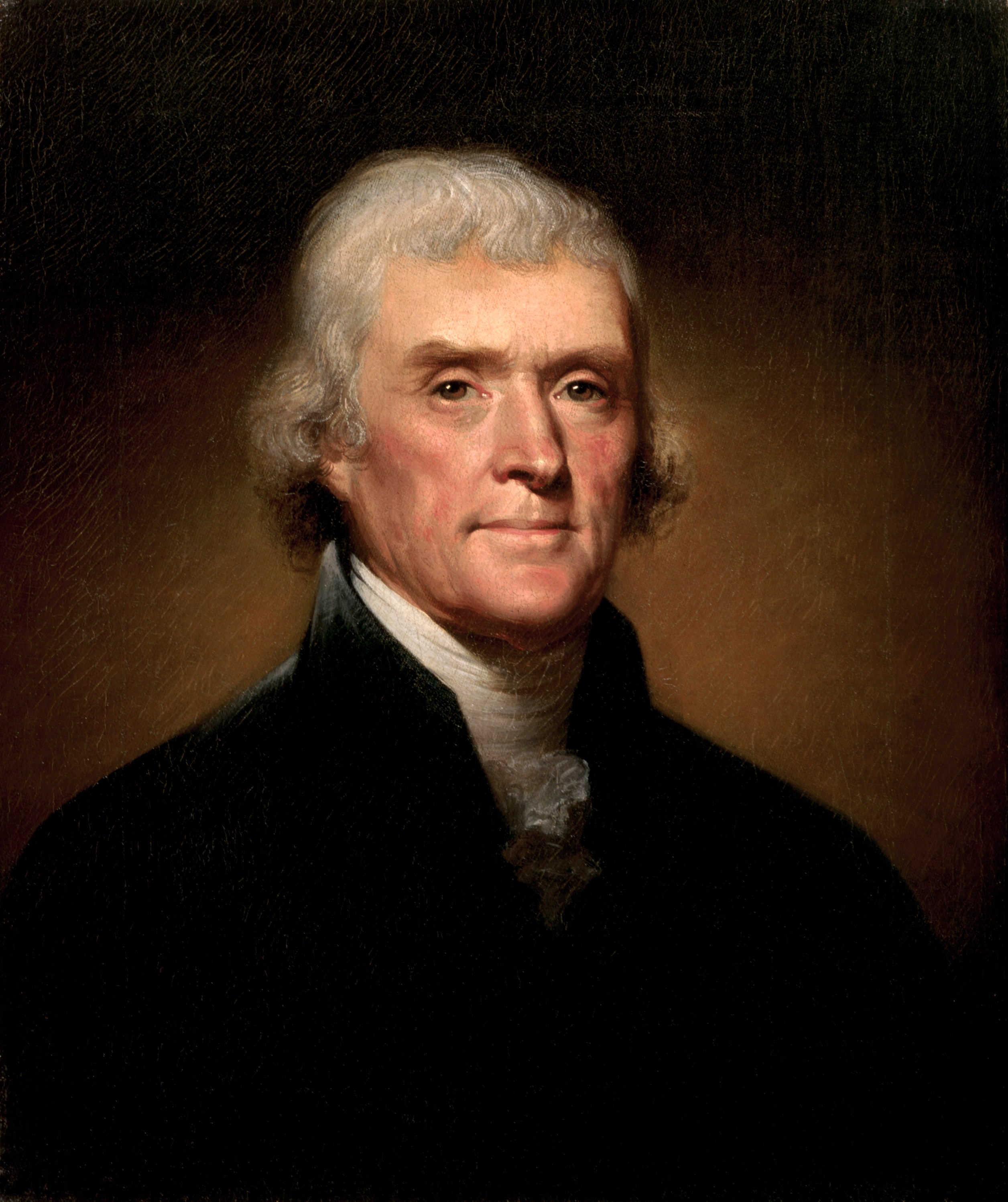
Thomas_Jefferson_by_Rembrandt_Peale,_1800“Why wouldn’t they?” Fiona retorted. “Doesn’t everybody crave freedom? Every single person? And especially those who are bound by a contract to obedience?” I gave this some thought. I wasn’t sure. That everybody craved freedom, was that really self-evident?

Freedom was a constitutional right where I came from, though if you had a closer look at it, the Constitution didn’t put it that way, it didn’t just say “freedom”, it was much more specific. I had struggled with unanswered questions about the First Amendment in school, questions my teachers had not been willing to address and other students not willing to discuss. The US Constitution was just part of our curriculum and it was as dull a topic in school as calculus. I understood that the First Amendment guaranteed political freedom. It didn’t address the question if freedom was attainable for the individual, it didn’t line out how we would have to imagine freedom and also not whether most people regarded freedom as high on their list of priorities as say convenience or security. Freedom as guaranteed by the First Amendment was an instrument to obtain the many different things people craved, the one instrument that made sure, people could pursue different goals in life unhindered by their government, ranging from money, to power, to self-expression. But if there existed such a thing as “freedom” in a way that was more profound than a kid’s wish never to be told no, that the constitution did not say. The First Amendment gave evidence that certain elements of what must constitute freedom had at some point gained enough political momentum to be written into stone. Congress shall make no law respecting an establishment of religion, or prohibiting the free exercise thereof; or abridging the freedom of speech, or of the press; or the right of the people peaceably to assemble, and to petition the government for a redress of grievances. We had had to learn this in school by heart and I recited it to the girl Fiona while I was putting the kettle on the range. I had refilled the kettle with fresh water this morning after tea as I did every morning. Ah, yes, said Fiona, but that is history, is it not. I was stunned. Sure, it was history, but it seemed to me that it was less history to Fiona in a time that was clearly just post-revolutionary than to me, who was born after the Civil Rights Act of 1964. Fiona continued still. We all know that the the only moral commercial transaction is one truly voluntary on the part of the buyer and the seller. And the same must be true for any personal contract we sign when we are asked to join the congregation. We all crave freedom, continued Fiona, but we must lead a moral life or else we have no hope. I thought that sounded like she had learned it by heart. I couldn’t tell whether she believed it, too. Or whether she had ever questioned that belief if she did. Her voice was almost neutral.

I recognized the Thomas Jefferson quote. My father had once cited that line by Thomas Jefferson. That was before the divorce and when my parents still loved fighting vehemently over politics instead of engaging in the bitter and rather quiet discussions of personal matters just before the end of their marriage. But my father had cited Jefferson in a completely different context than Fiona did. I put the leaves and herbes into the tea pot as Aunt Melissy had taught me and tried to sort out my questions. You mean, I said slowly, that you use your freedom to decide whether you want to be bound by the rules of your congregation?

I am a runner

the morning version

Inger-Kristina Wegener's avatarArt & Writing

Giuseppina_leoneI am a runner. I started running in fifth grade in the very first gym class in the new school when our gym teacher sent us running track and I discovered in that very moment that I loved nothing better than running, which I was to find out very soon applied to any kind of running really, track, hurdling, sprint, cross country running. It was an instant infatuation, like falling in love – only it lasted.

Kicking off my shoes and running – that to me is freedom!  An abstract concept it seems once you start talking about it, freedom – but it is a very specific if elusive feeling. Some say that humans can only know degrees of freedom or doubt there is such a thing at all, and yet, like love, you know it exists when you feel it. I feel it when I am running as fast…

View original post 646 more words

I am a runner

Giuseppina_leoneI am a runner. I started running in fifth grade in the very first gym class in the new school when our gym teacher sent us running track and I discovered in that very moment that I loved nothing better than running, which I was to find out very soon applied to any kind of running really, track, hurdling, sprint, cross country running. It was an instant infatuation, like falling in love – only it lasted.

Kicking off my shoes and running – that to me is freedom!  An abstract concept it seems once you start talking about it, freedom – but it is a very specific if elusive feeling. Some say that humans can only know degrees of freedom or doubt there is such a thing at all, and yet, like love, you know it exists when you feel it. I feel it when I am running as fast as I can, to this day, and though there is little accomplishment in kicking off your shoes and running, I don’t question freedom is at least possible when I run. Sometimes I am running from something, I won’t deny that, but more often I am running towards something. But I am always running by choice. It’s what I do.

I am not a strategic runner, I am an impulsive, adrenalin-driven, you might say – stupid – runner. I don’t run races, I just run until the road turns blue . It’s my very own personal race against the odds. I ran right up to graduation, I ran through law school and my law degrees, love and disappointments, pregnancies and the toddler years of my children and divorce. I always kept running. It served me well.

Reckless Steve Prefontaine, Pre, is one of my favorite runners of all time, his best running happened when he wasn’t running strategically but when he just ran as if there was no tomorrow. Unfortunately he also lived and died like that, but then again, can you run in any other way than in accordance your true self? Maybe you can, but not if you are either a dilettante like me (every weakness, every pretense of self-aggrandizement falling away as you are straining against your very own narrow limits) or a – seemingly – effortless talent. I did  so admire (and still do admire) Abebe Bikila, who, years before I was even born, won the Olympic Games running barefoot and who had the kind of dignity and faith that only few people are ever graced with. The comedian Robin Williams commented on Bikila’s barefoot running and hit the point as usual: “Bikila won the Rome Olympics running barefoot. He was then sponsored by Adidas. He ran the next Olympics; he carried the fucking shoes.” I am sure he would have carried Vibrams too instead of wearing them.

I also admired Jesse Owens, probably the most accomplished athlete in history, the track star who deflated Hitler’s madman vision of “Aryan superiority” by winning four medals in the 1936 Olympics, an undeniable individualist, a runner.

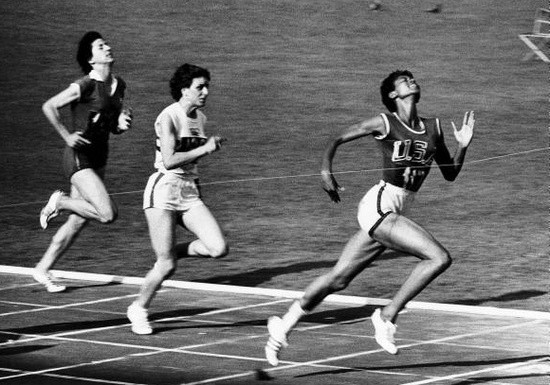
And as I was a nerdy teenager despite my love for running it goes without saying that I read all I could find (not easy to find all that much at our local library, the days before the advent of the internet) about Wilma Rudolph, la gazella nera as the Italians called her, winning the Olympics in 1960.

Rudolph had contracted infant paralysis as a result of polio at age four and went on to grow up to be the world’s fastest woman by sheer will power. Talk about overcoming hardship.A Wilma Rudolph’s quote – probably to some degree scripted I thought back then – taught me the one lesson that applies to running as well as to the rest of “it”, life. If you are a runner and you have a bad day, you run. If you are a runner and you have no strength, you run. If you are a runner and you are being told that you can’t run, for whatever reason, you go out and run. Even if it’s just a short distance. You go out there and you run. So simple. And you know in your hearts of hearts that if you can run this short distance despite whatever it is that attempts to keep you from running (most likely your own laziness) – you can somehow manage to do the rest, too. This is what Wilma Rudolph said: “I ran and ran and ran every day, and I acquired this sense of determination, this sense of spirit that I would never, never give up, no matter what else happened.“ And that is what made me run. Made me kick off my shoes and run,  just run. I am not a jogger. I am a runner.