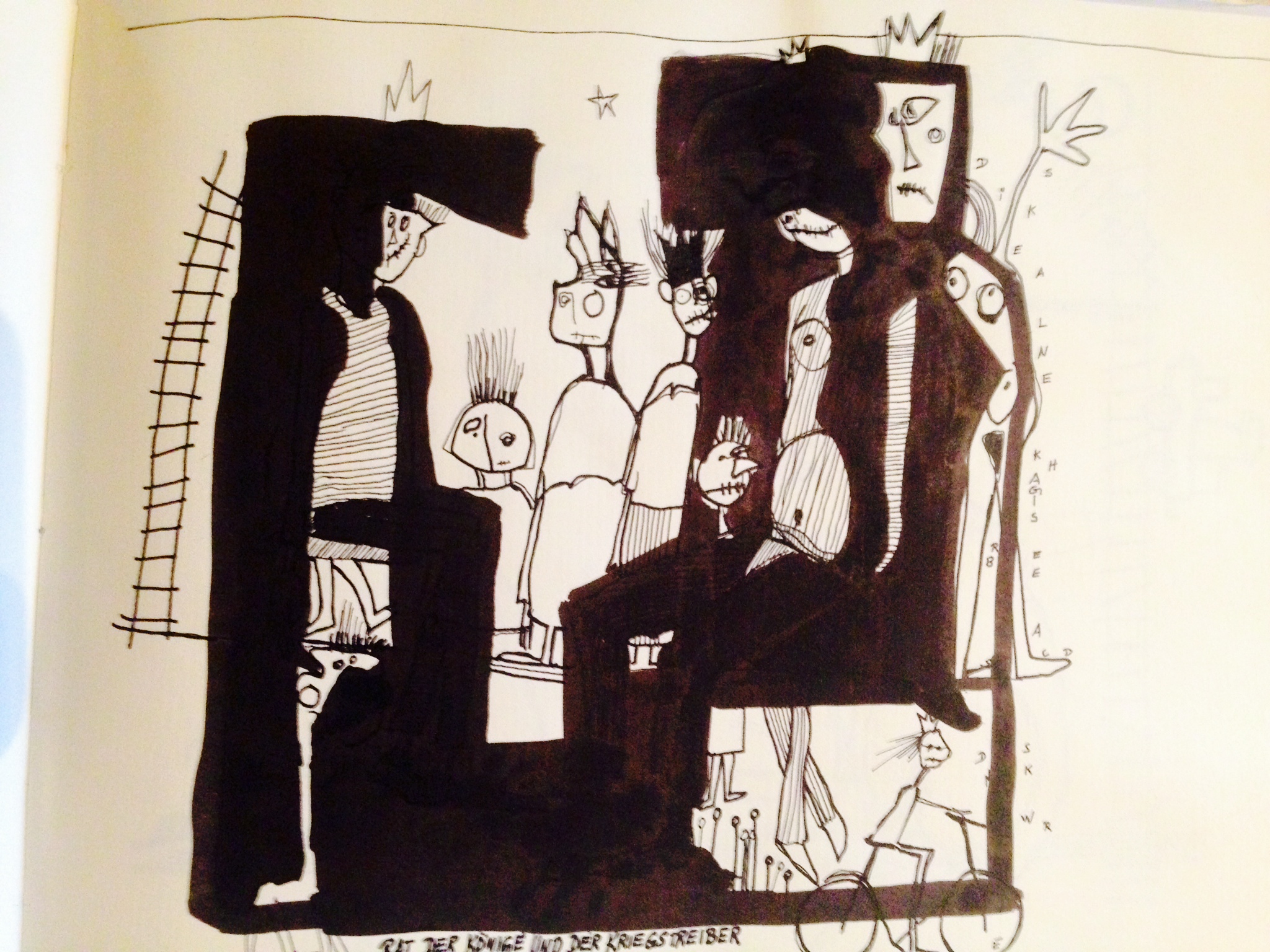
Once they realized that there was not one king or one queen, but a succession of kings and queens each of whom was “the” king or “the” queen regardless of their individual identity, so that in fact, the king or the queen was not only unconquerable but actually immortal, that times might change and ideas might change but “the” king or “the” queen” would not, so that one revolutionary, one upraising idea might threaten an individual queen or king and even overthrow them, garrote them, end them, but would have to accomplish this task within one lifetime, while “the” king or “the” queen had all the ages of the world to wait, witness and rise again, once they realized that “the” king or “the” queen might use this or that war monger to clear the way once time was good and ripe and yet would discard of the warmonger as easily as of the revolutionary as soon the need was satisfied, once they realized that this was so, they also realized that it was not their task to interrupt the fleeting council of kings and queen and warmongers but use their one lifetime to conjure up from the source, the holy grail, a people that were as unconquerable as the grail, giving a random gathering of people a binding, unifying reason to be, to defend their freedom against the usurper through all the ages and to recognize their freedom as not a consequence of liberation but as an unalienable right and quality.
The Sketchbook Project is a global, crowd-sourced art project and interactive, traveling exhibition of handmade books by the Brooklyn Art Library.
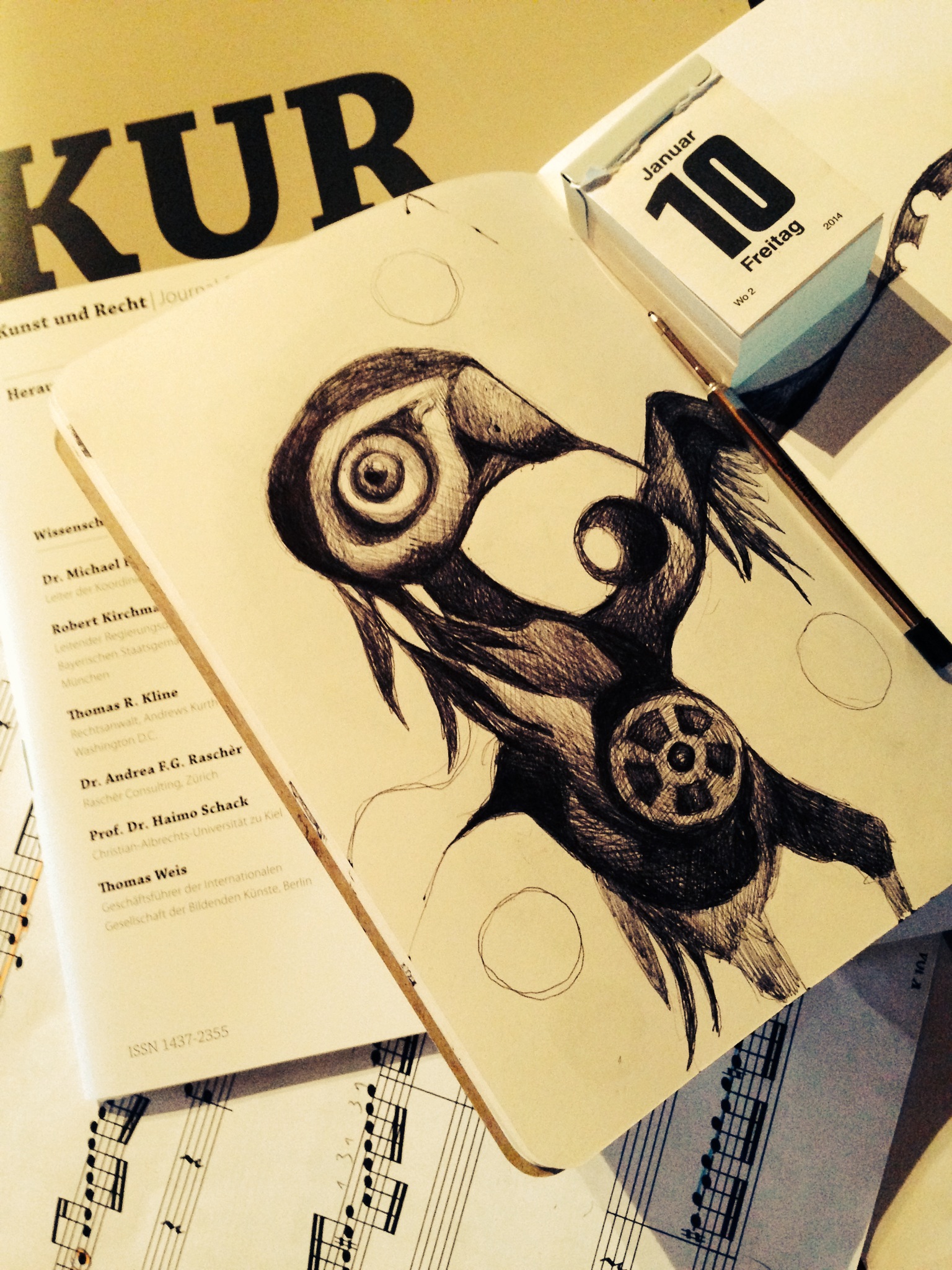
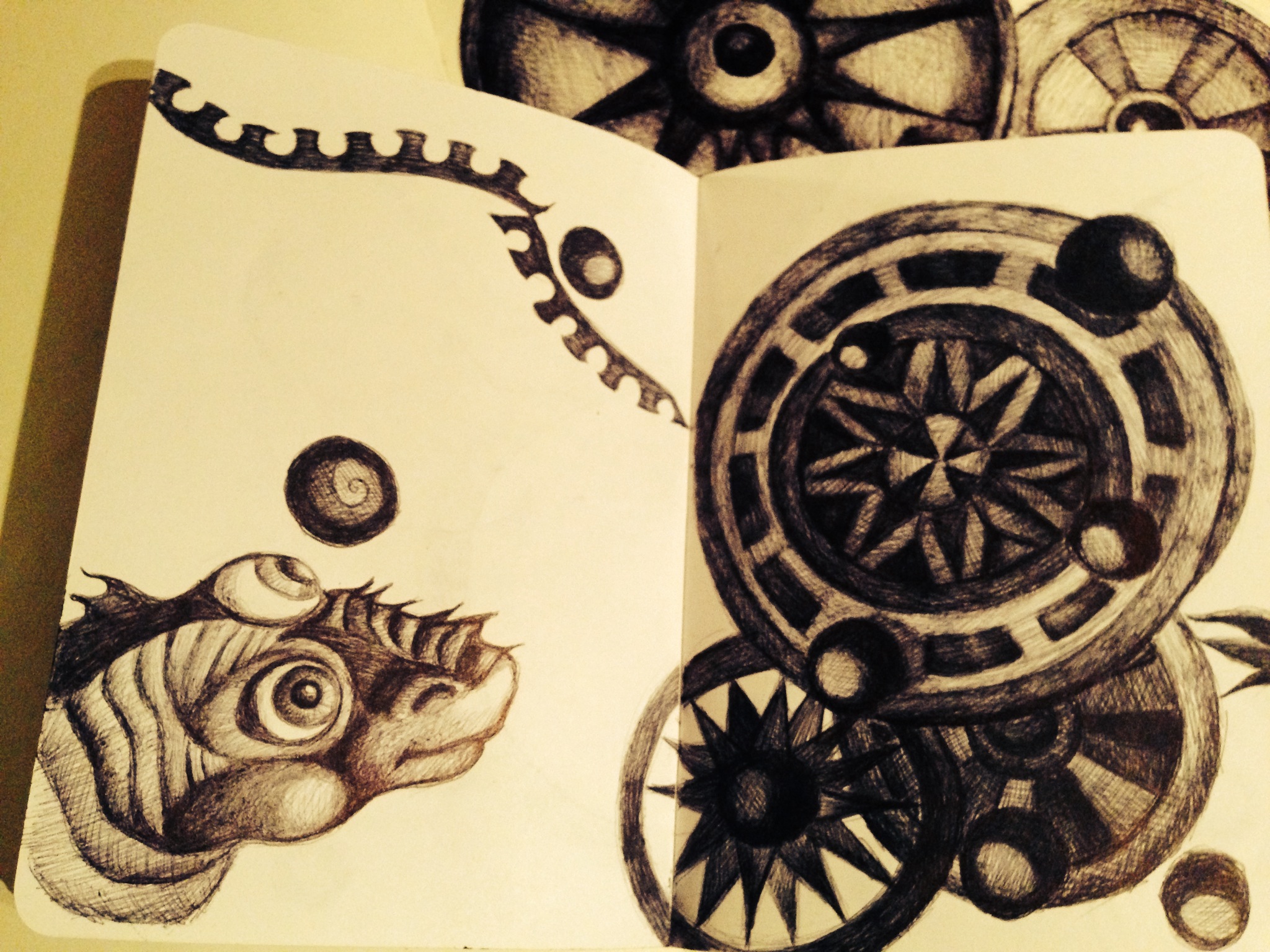
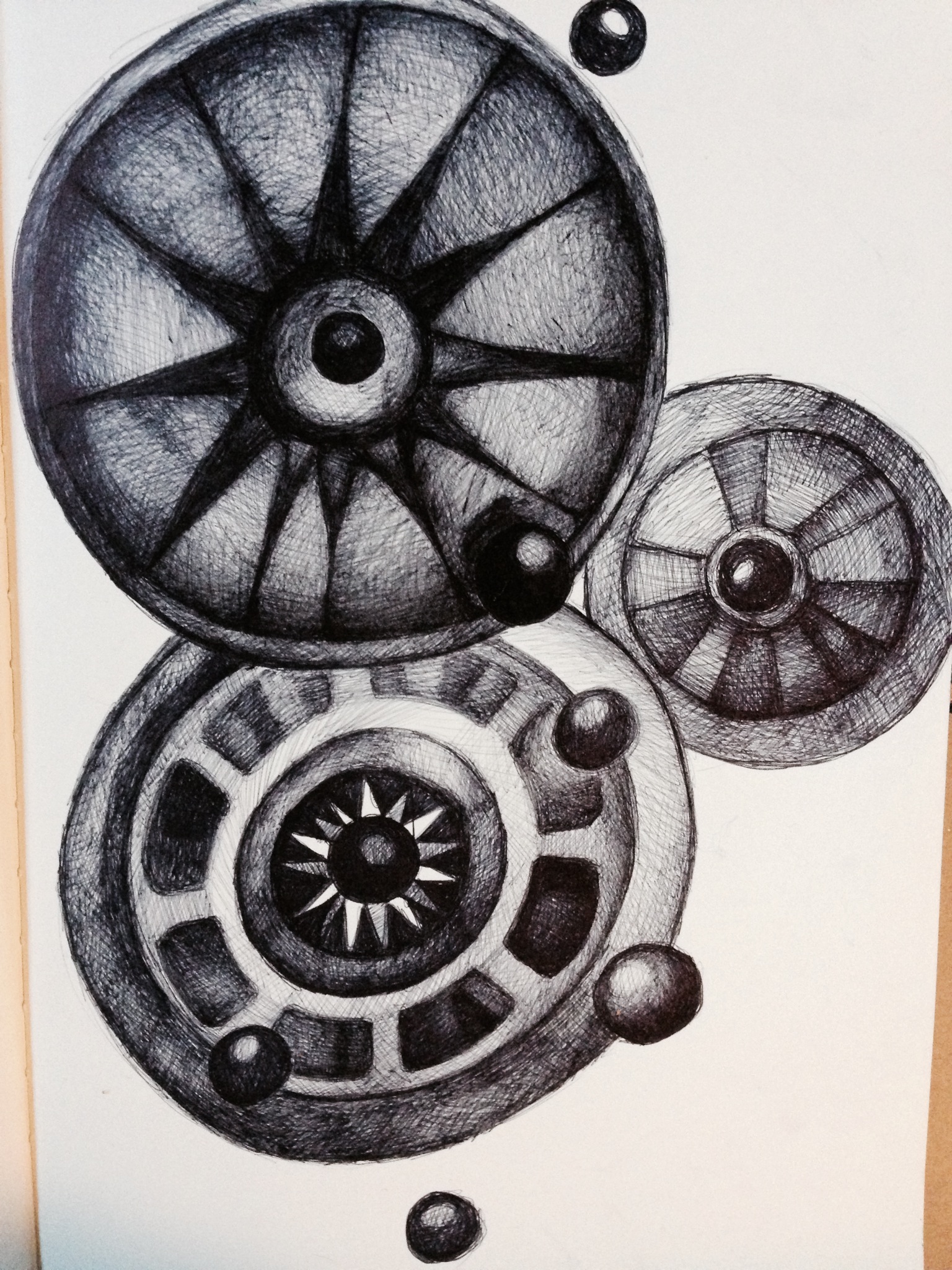
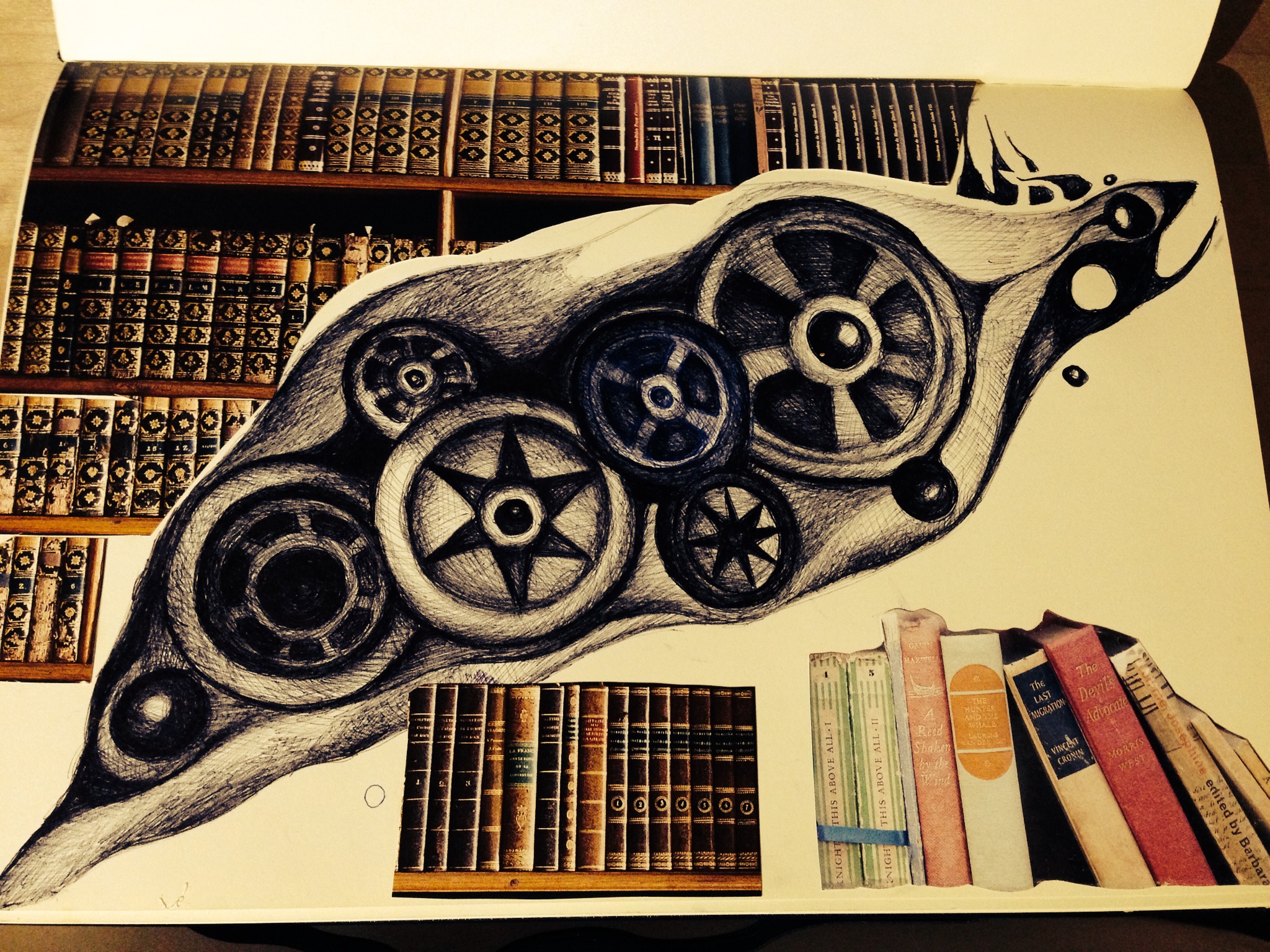
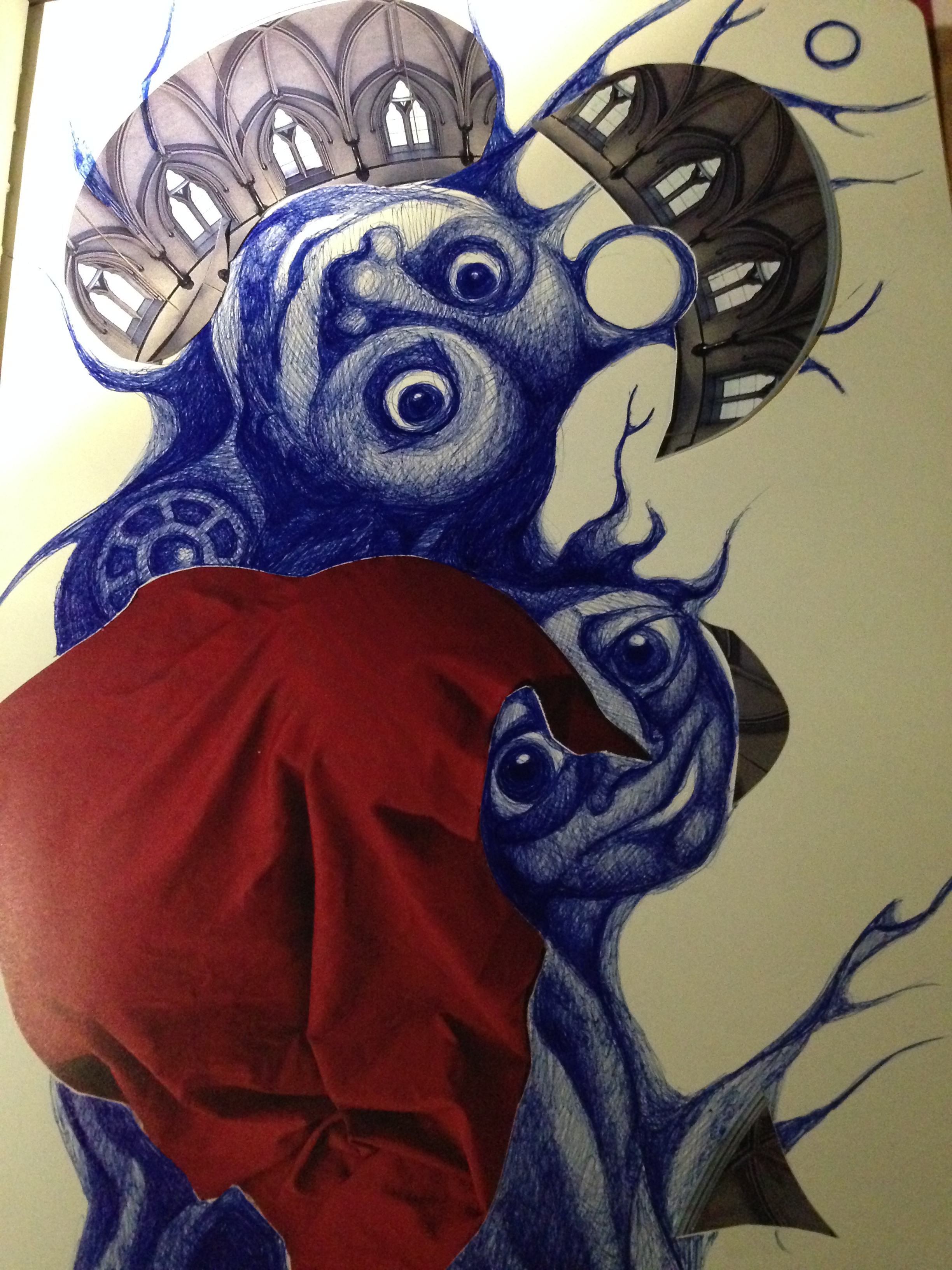
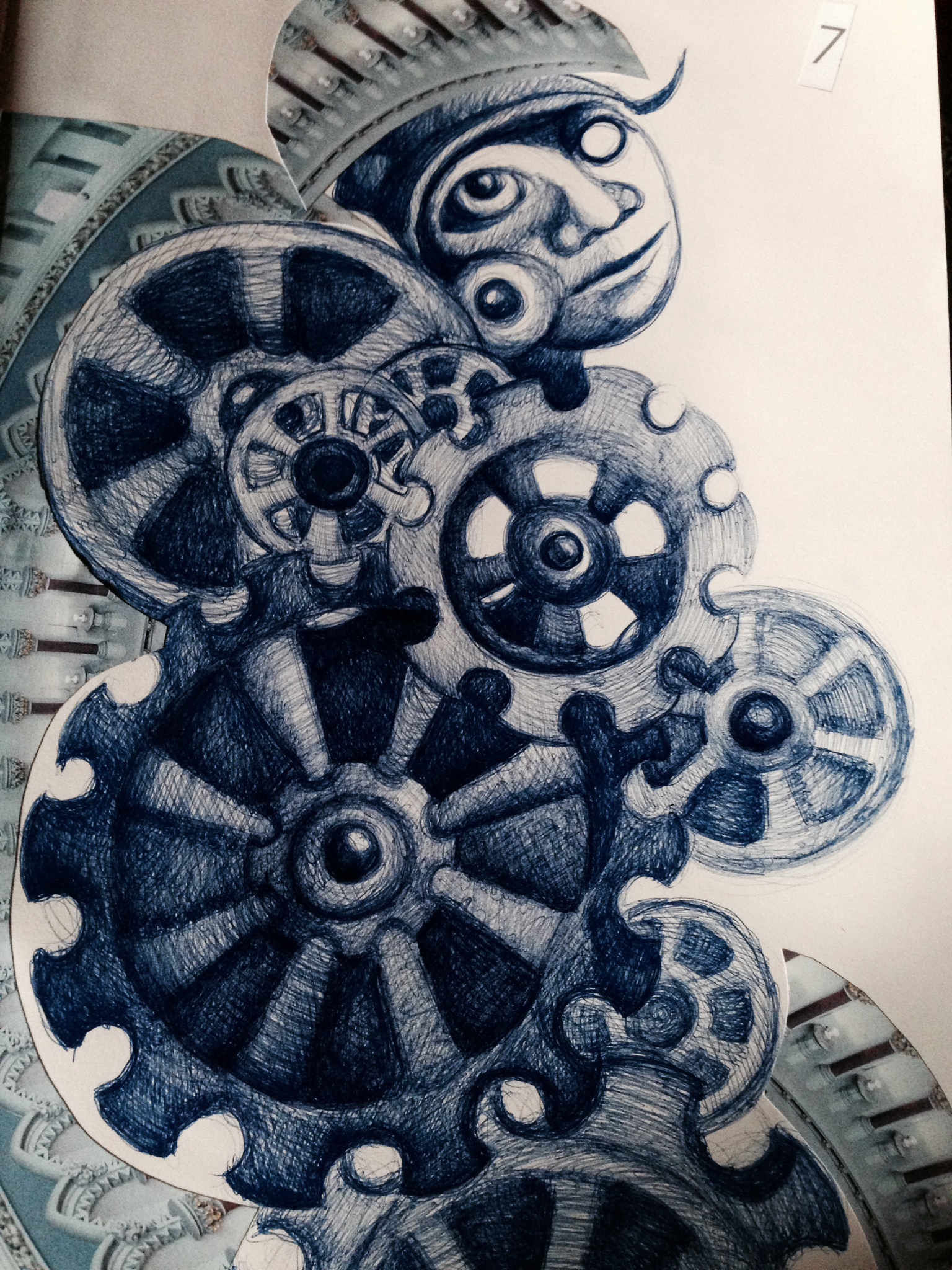
This sketchbook titled “The Mechanics of Longing” (working title) is going to be my second submission … to be postmarked by January 15th which actually means that I have to be finished by Sunday night. This submission is by far more ambitious than my previous selection to the Brooklyn Art Library, the simple childhood story “The Whisper”. I have come quite a distance, finally allowing myself to draw, to illustrate – the pages are in a narrative sequence, moving through time not just be the sequence of the pages turning which indicates the passing of time in almost any book but by the “time wheels” which on every page actually function as a clockwork of a fairly abstract idea of storytelling. The creatures still have a storybook like quality but are allowed to look much more sophisticated than before. To explain why that kind of art work seemed out of the question for me before is material for a separate blog post (I need to get back to drawing) but for now I am absolutely enchanted by the creatures appearing underneath my pen. I am still pushing my boundaries, exploring how far I think I can go without compromising artistic integrity. These don’t have to sell. They are allowed to breathe. So I can.
The title came as swiftly as the image and the artist obeyed both. The Mechanics of Longing.
This drawing concludes my twelve night drawing meditation. As the new year is already starting to make its demands, these drawings carry with them 12 nights of focus on a non-revealed question. Sometimes during those twelve nights I felt I could catch a glimpse of things yet to be. Now there will be time to look at these pieces for a while, maybe polish them a bit.I’ll keep you posted.
New artistic challenges are ahead for the year.
January 15th is the deadline for another Sketchbook Project of the Brooklyn Art Llibrary, check out the website if you haven’t yet. Their digital library is stunning.
My new book, a young adult science fiction novel, is about to be finished and another one waiting to be continued on my desk.
In Fall I hope to open an exhibition of 41 canvases, acrylic on raw jute canvas (aka coffee and chocolate bags) in Berlin, 30 of which are finished by now. The 12 nights have strengthened my will to continue living in multiple universes.
Thank you for following my blog, this certainly is the day to acknowledge that my readers are an important part of my creative discipline. It is a good thought that someone may be going to weigh the outcome of a night’s work and maybe find some use for it, if only in the fleeting way that art, all art, can enrich a moment.
I am wishing you, my readers, all the courage, health and gladness necessary to live a meaningful New Year and if you should be lacking any one of these for some of all of the time the will to give it your best shot anyways!
I’d like to think of drawing as of transforming raw data with my pen to “mean” a specific thing and not another though it is not in the nature of data to actually be one specific thing to the exclusion of all other possible “things” (meaning, manifested form, reality) in all their variations (written and unwritten) any more than a child’s building block used in a fleeting structure soon to be knocked over is identical with that intended structure’s purpose or “meaning”. A building block stays a building block, a zero stays a zero and a one stays a one no matter what it is used to communicate. It assumes a participating function in the meaning of one thing ( and not another ) but it also creates that one thing without adopting its separate ( separate from other possible thing’s) nature simply by describing it. The “thing” actually has no separate ( from other possible thing’s) nature – it is but a description of the configuration of the raw data (building blocks) at a specific moment from a specific perspective. So that, at any given moment, any thing, rearranged, could be (and is) any other thing, idea, let’s call it “book”, existing or non-existing, written and unwritten, in all possible variations. I assume that would upon further reflection have to be one of the conclusions drawn of the cosmology principle but I am getting a bit out of my depth here.
All we ever do in life is to assume a specific perspective to describe what is really a homogeneous distribution of raw data – each one of us is, with other words, but a specific, erratic close up view of that homogeneous distribution. We have no separate nature. The “separateness” of our nature not only of one thing to the exclusion of all other possible things but also of the experiencing “conscience”, the “I” to the exclusion of all other possible perspective’s (you, the other) is clearly illusional, possibly delusional.
It is Borges’ library that makes another appearance in this drawing meditation. One of the themes that is never far off my mind. How does our mind chooses the images that are essential for its own comprehension of the world? How come an image such as Borges library can be so powerful that it assumes an reality of its own, in an alternate universe not so far of our own house number? Just try a different key, open a small door you have never quite paid attention to before and beyond you will find the octagonal library with all possible version of all possible books, written and unwritten … my kind of paradise.
It can’t be helped, I guess, but once in the twelve nights Yggdrasil is bound to show up. I do not observe Ragnarök, I do not live by the old Norse Tales nor by their subscription into a modern version of a quasi religious substitute – and yet, how would one meditate on the twelve nights and not be prone to illustrate the one tree, that tree of the beginning of the world. That time might be like a tree, unfolding in a strictly, beautifully logical pattern, giving form to light, seems like a fitting observation of the old and well worth remembering. Incorporated in this drawing are the elements of an architecture unfolding by a beautiful, strictly logical pattern, giving form to an idea about time.
DEA (Data Encryption Algorithm) ex machina – one of the strange aspects about art is that it can be very specifically “about” something, yet address it in a way that common language would not. I worked on this drawing waiting for the New Year to arrive in Central Europe and the Eastern US. Interestingly the term “common language” also refers to lingua franca, a language systematically used for communication between two (or more) groups not sharing a mother tongue whereas I used it to express the idea of non-artistic, every day communication using words.
By trade I am a lawyer. Many lawyers do have a passion besides their original profession though, I happen to have three, if you count my love for children in general and my own children in particular. The other two are writing and art. I mention this because you will surely want to know how I am qualified to “teach art” or as I prefer to say: to work with and alongside young artists.
My grandmother used to say I have been born with a brush in one and in pen in my other hand – and as far as I can remember I have been scribbling and drawing on every appropriate surface – and some less suited. That I came to study law is strange, all things considered, but I guess I wanted to try out if I could succeed doing something else and law had always been intriguing to me. It turned out that I could succeed. I graduated with two law degrees – and came straight back to art. And at some point I started doing it both: art and law. Kids have always played a role. I have been teaching all kinds of classes, art and law, over the last ten years, and it has been a truly rewarding part of my life, not just my professional life. As you might imagine, I am never asked how I qualify to teach legal workshops, I am a lawyer after all, but often how come I teach art as well.
I do believe that art is not the esoteric, isolated endeavor that people sometimes take it to be. Artists are well advised to take notice of their world and have an understanding of it that transcends the visual. Beuys pointed out that every person is an artist, that artistic creation is at the center of human life. He went as far as demanding that every physician, scientist, philosopher be first trained in art. I will venture further by saying that the art world would profit if artists would first be trained in a trade that explores the practical aspects of their environment. Every artist is part of a tangible social reality. The training to become a lawyer might in the end not be either so far from or so detrimental to artistic process as is might seem at first.
Why I do love to work with young artists? Because it refreshing to leave the stereotypes that people retreat to as they become older. Every child I have ever had the pleasure to meet turned out to be an original artist (albeit sometimes a frustrated one …).
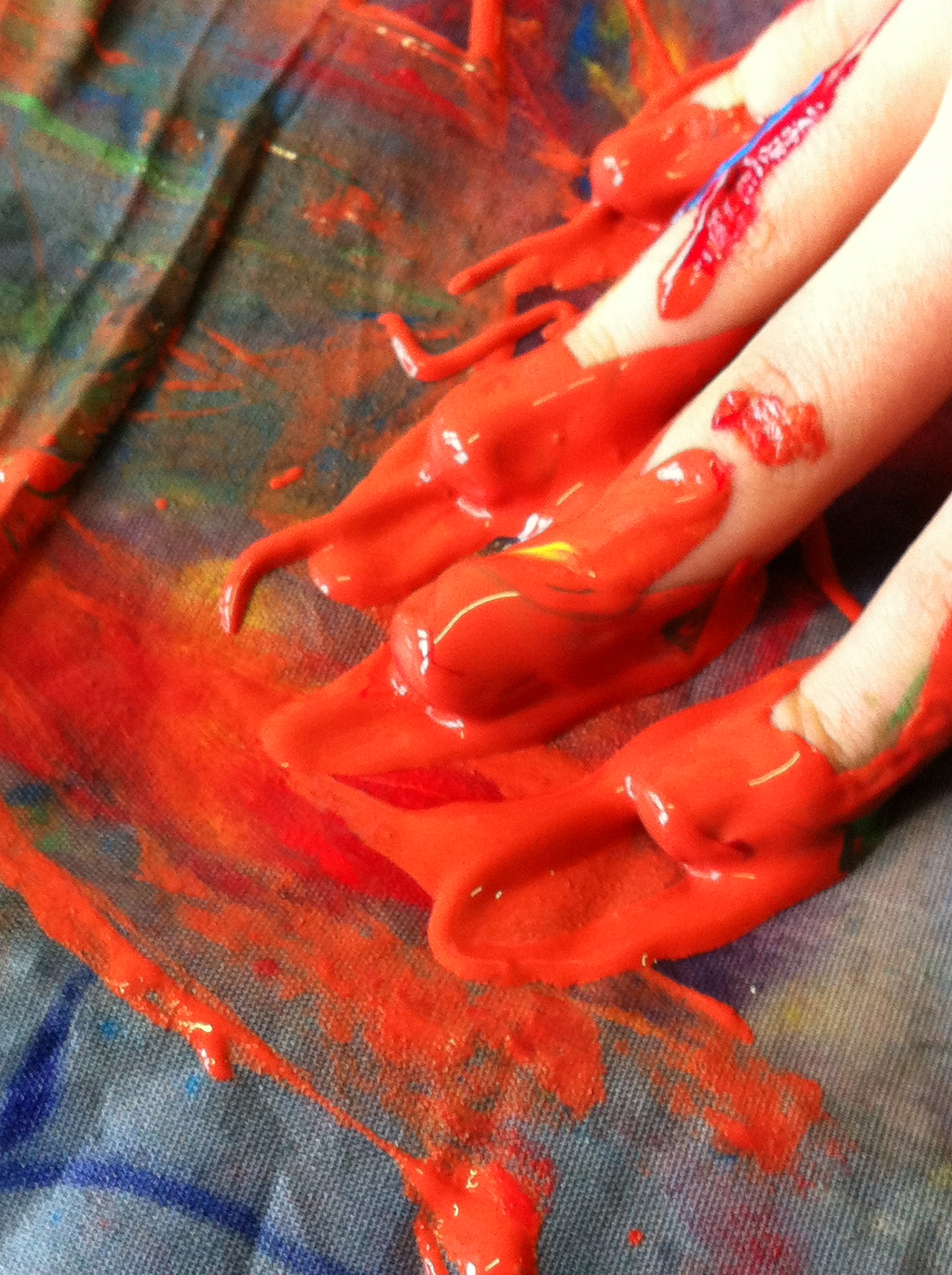
I respect the creative work children are capable of. As a first hand witness and as someone who still draws and paints, saws and glues every day: There is no time like childhood to experience the joy of art.
I had the good luck to be raised by a grandmother who had the wisdom of an older generation to pretty much let me do whatever I thought appropriate as long as I did not nail her good table linens onto a broomstick for a pirate sail (happened only once) or cut out my great grandmother’s lace to make curtains for fairy dwellings, also a one time never to happen again situation.
However I was allowed to make use of any tool that I would find in my grandfathers tool shed or in the kitchen without anyone trying to figure out if they were child appropriate. I was also allowed to make generous use of old newspapers and magazines, of the newsprint paper that my grandfather, who was publisher of a local newspaper, brought home, and in general of every piece of metal, screw, paper, feather, stone or yes, glass! that I would pick up on our long walks. It never occurred to my grandparents that I might pick up some dangerous germs on the way.
I brought everything home and assembled it very much the way every child will when you do not interfere. I do not know where our desire to “make” things has its origin but I do know that we already possess it as children, together with an instinct of how things fit together. If children are not allowed to roam as freely as I was, they will still build markers from pebbles and stones, they’d still use sticks to draw in sand, build strange, improvised gardens in mud, decorate prefabricated play structures with ritual signs.
To be creative is a basic desire of humans, all humans. It is a genuine expression of who we are even before we are defined by our social and economic circumstances. To teach a child to be creative therefore seems to me an elusive act. I look at children with a sense of awe, they are still there, right at the origin, and all I do as an art teacher is to take them on the same kind of long walk that I had been privileged to undertake with my grandparents and I simply allow them to discover their world and to collect at will what responds to their own desire of creating this world new. If we’d allow our children more freedom and time to explore their own world and provide them with materials that are not dedicated to specific purposes, we could cut back on many extracurricular activities. Let them venture out there and the artist that lives in every one of us but is acutely alive in our children is ready to meet all the great challenges of art right in our neighborhood.
To come back to the question of my own expertise: I do believe with visionary clarity that it is not my academic expertise that is relevant. It is my willingness to acknowledge and celebrate children as the artists they are. I do believe that art is not a matter of paper and ink, of perspective and shading, I do believe though art techniques can be taught art cannot, no more than breathing, walking, seeing. It is something that happens when things go right or when you have to make them come out right. Art is life.
To give an idea of the scale of the removal of designated “degenerate” art from german Museums and Institutions in 1937 Nazi Germany I’d like to refer to the MoMa web-site. It is interesting to know that the below mentioned auction of 125 works that were put up for auction in Lucerne in 1939 did not turn out nearly as profitable as Nazi Germany had hoped for as word had gotten about that profits would most likely fuel the German war machinery.
“By August 1937 the wide-scale confiscation of all works of art in museums designated ‘degenerate’ had already begun. According to records, a total of 15,997 works of fine art were confiscated from 101 German museums. This action was justified by the Law on the Confiscation of Products of Degenerate Art, passed belatedly on 31 May 1938. Works affected were those of classical modernity, works by artists of Jewish descent and works of social criticism. Only a few were retained and hidden through the brave manoeuvring of individual members of museum staff. The artists themselves, assuming they had not already left Germany, were forbidden to paint or exhibit. In addition to confiscation, destruction took place of murals and architectural monuments, among others. In May 1938 Goebbels instigated the establishment of the Kommission zur Verwertung der Beschlagnahmten Werke Entarteter Kunst. Confiscated works were stored in depots and from there sold to interested parties abroad (the Nazis hoped for a source of revenue for foreign currency, which was needed for the rearmament programme), and sometimes exchanged (Hermann Goering made exchanges with older works of art for his private collection). In 1939, 125 works were put up for auction in Lucerne, including works by van Gogh, Gauguin, Franz Marc, Macke, Klee, Kokoschka and Lehmbruck. The end of the Aktion entartete Kunst was signalled by the burning of 4829 art works in the courtyard of the Berlin Fire Brigade.
Heute hatte ich die Gelegenheit, mich als auf Kunstrecht spezialisierte Anwältin in einem Interview mit der online Redaktion des Magazins der Deutschen Anwaltauskunft des DAV zu dem Fall Cornelius Gurlitt, dem spektakulären Kunstfund in München-Schwabing, zu äußern. Neben den rein rechtlichen Erwägungen zu Fragen der Restitution, siehe: http://anwaltauskunft.de/magazin/gesellschaft/kultur-medien/158/das-thema-restitution-hat-weiter-bedeutung/, beschäftigt mich seit Tagen auch die komplizierte Biographie des Dr. Hildebrand Gurlitt. In Ergänzung des Interviews folgende, durchaus fragmentarische Anmerkungen:
Dr. Hildebrand Gurlitt, deutscher Kunsthistoriker, war einer aus der Liste handverlesener Kunsthändler und Auktionshäuser, die im Rahmen der von Herman Göring initiierten, der „Aktion Entartete Kunst“ folgenden „Verwertungsaktion“ mit dem Verkauf von Werken im Auftrag des Deutschen Reiches betraut worden waren. Die Komplexität auch der zu erwartenden Fragen nach der Provenienz der nunmehr zu beurteilenden Bilder aus dem Archiv des Sohnes Cornelius Gurlitt spiegelt sich in der Biographie des Vaters. Hildebrand Gurlitt selbst hatte als Leiter des König-Albert Museums in Zwickau zwischen 1925 und 1930 aktiv und fortschrittlich das Bauhaus und zeitgenössische Kunst gefördert.
Deutsch: Fanny Lewald (Photo credit: Wikipedia)
In Folge hatte er wegen seiner progressiven Einstellung als auch wegen des Umstandes, dass er jüdische Vorfahren hatte, unter anderem mit der jüdischen Schriftstellerin Fanny Lewald (1811-1889) verwandt war, seine Position als Leiter in Zwickau als auch in der Folge als Leiter des Kunstvereins Hamburg verloren, bevor er sich dem Kunsthandel zugewandt hatte. Viele der Bilder, die in der Schwabinger Wohnung gefunden wurden, könnten zu den Dr. Hildebrand Gurlitt zur „Verwertung“ übergebenen Bildern aus öffentlichen Sammlungen gehören.
Allerdings sind in den Presseberichten der letzten Tagen weitere Namen von Sammlern und Titel von Bildern bekannt geworden, die auf eine andere Provenienz, nämlich auf Raubkunst, verweisen und daher eine ganz anderen, verschärften Ansatzpunkt zur rechtliche Beurteilung von Notverkäufen und “Besitzaufgabe” geben: Bestätigt wurde etwa, dass Cornelius Gurlitt mit dem Bild „Löwenbändiger“ von Max Beckmann zumindest eine Arbeit aus der Liquidierungsmasse der Alfred Flechtheim GmbH im Jahr 1933 veräußert hat.
Alfred Flechtheim (Photo credit: Wikipedia)
Dem Avantgarde-Kunsthändler Alfred Flechtheim war 1933 die Aufnahme in die Reichskammer der bildenden Künste verwehrt worden, effektiv ein Berufsverbot, das den bekannten Kunsthändler in die Emigration trieb. Ebenfalls erwähnt wurden die Sammlers und Kunsthändlers Max Stern, der 1937 unter Liquidierung seiner Sammlung aus Deutschland emigrierte (siehe auch das Max Stern Art Restitution Project), und des Sammlers und Galeristen Paul Rosenberg, der vor dem Einmarsch der deutschen Truppen nach Spanien fliehen musste und seine Sammlung des Impressionismus und der Moderne zurückließ (vergleiche mit dem biographischen Bericht der Enkelin Rosenbergs, Anne Sinclair: deutsche Übersetzung: Lieber Picasso, wo bleiben meine Harlekine. Mein Großvater, der Kunsthändler Paul Rosenberg, Kunstmann, München, 2013, ISBN 978-3-88897-820-3 zitiert nach wikipedia).
Was sich in diesen knappen Ausführungen nur andeuten mag: die tatsächlichen betäubend paradoxen, barbarischen Umstände der Zeit, wie sie sich unter anderem in der Biographie dieses Mannes, Dr. Hildebrand Gurlitt, spiegelt. Dr. Hildebrand Gurlitt, dessen Expertise als Insider für Avantgardekunst dazu führte, dass er von eben jenem Regime, das für den Verlust der seinen akademischen Verdiensten entsprechenden Positionen verantwortlich war, mit der “Verwertung”, das heißt dem Verkauf von Werken der Art und Qualität betraut wurde, die er während seiner Zwickauer Zeit aktiv gefördert und für eine öffentliche Sammlung angekauft hatte. Nur angedeutet werden in derartigen Ausführungen die dramatischen Umstände, unter denen verfolgte Künstlerinnen und Künstler, Sammler und Kunsthändler sich von manchen jener Kunstwerke trennten, die sich wahrscheinlich nun auch in der Sammlung der sichergestellten Kunstobjekte des inzwischen betagtem Sohnes Cornelius Gurlitt befinden. Das ist keine historisierende Fantasie. Die Provenienz, die manches dieser Bild tragen wird, darf getrost und nüchtern als blutig bezeichnet werden. Nicht von ungefähr wurde der systematische Entzug jüdischer Vermögenswerte als Verbrechen gegen die Menschlichkeit nach der Alliierten (Londoner) Erklärung ausgewiesen, dies in Übereinstimmung mit der Haager Landkriegsordnung von 1907, der Grundlage des humanitären Völkerrechts.
Der Schwindel erregende Schätzungswert der Bilder, die in der Wohnung von Cornelius Gurlitt sichergestellt wurden, gewährt Einblick in den oftmals nur als impliziert verstandenen und kommunizierten Kontext jeglicher Diskussion über Restitution, einen Aspekt, der jegliche Verhandlung über Restitution zwangsweise beeinflussen wird, jenen der unfassbaren Wertsteigerung der Bilder heute als Haushaltsnamen bekannter Künstler der klassischen Moderne. Dabei lässt sich leicht vergessen, dass der im Zentrum des Restitutionsanspruches nicht das Bild, sondern das gegen seinen ursprünglichen rechtmäßigen Eigentümer verübte Verbrechen ist.
Das Max Stern Art Restitution Project formuliert exemplarisch, worum es im Zentrum bei dem Thema Restitution von sogenannter Raubkunst gehen sollte http://www.concordia.ca/arts/max-stern.html:
“As more details surfaced about this dark episode of Dr. Stern’s life in Nazi Germany and the circumstances that ultimately brought him to Canada during the Second World War, it was learned that he sought restitution of art works from his private collection seized by the Gestapo. While he had some success in recovering a few pieces, the majority of his property was never returned.
Committed to continuing where he had left off, the executors and university beneficiaries established The Max Stern Art Restitution Project. Knowing very well that this initiative would not be without its hurdles, it was agreed that the moral and financial imperatives underlining this cause were worth pursuing as long as necessary.
We hope that this website will be used both as a resource and an example for those government agencies, educational institutions, museums, collectors and members of the art trade who are committed to resolving the injustices caused by Nazi cultural policies.”
Restitution allein als die Wiederherstellung von als in Angesicht des Verlustgrundes ethisch verträglicher Eigentumsverhältnisse zu betrachten, greift entschieden zu kurz. Zu kurz greift letztlich auch die Washingtoner Erklärung von 1998 und die Handreichung zur Selbstverpflichtung der Bundesrepublik Deutschland.
Wiederherzustellen ist letztlich, wie die Erben Max Sterns es formulieren, der Zustand von Gerechtigkeit durch Anerkennung und Annullierung oder Rückgängigmachung der Umstände, die Verfolgten des Naziregimes widerfuhr. Das dies nur bedingt gelingen kann, liegt in der Natur des Verbrechens, entbindet aber nicht von einer ethischen Verpflichtung, es dort, wo es möglich scheint, auch zu unternehmen.
Es steht den Erben Sterns an, eine solche Gerechtigkeit, bis zur einer erschöpfenden Aufklärung der unter dem NS Regime erlittenen Verfolgung – einschließlich der Enteignung von Bildern – zu fordern. Es steht uns als beurteilenden Gutachtern der Rechtslage gut an, nicht zu vergessen, dass es immer noch um die Wiedergutmachung erlittenen, unsäglichen Unrechts geht.



 Art & Writing