Page 2 of 2

Coloring a map of the United States with Sennelier pastels
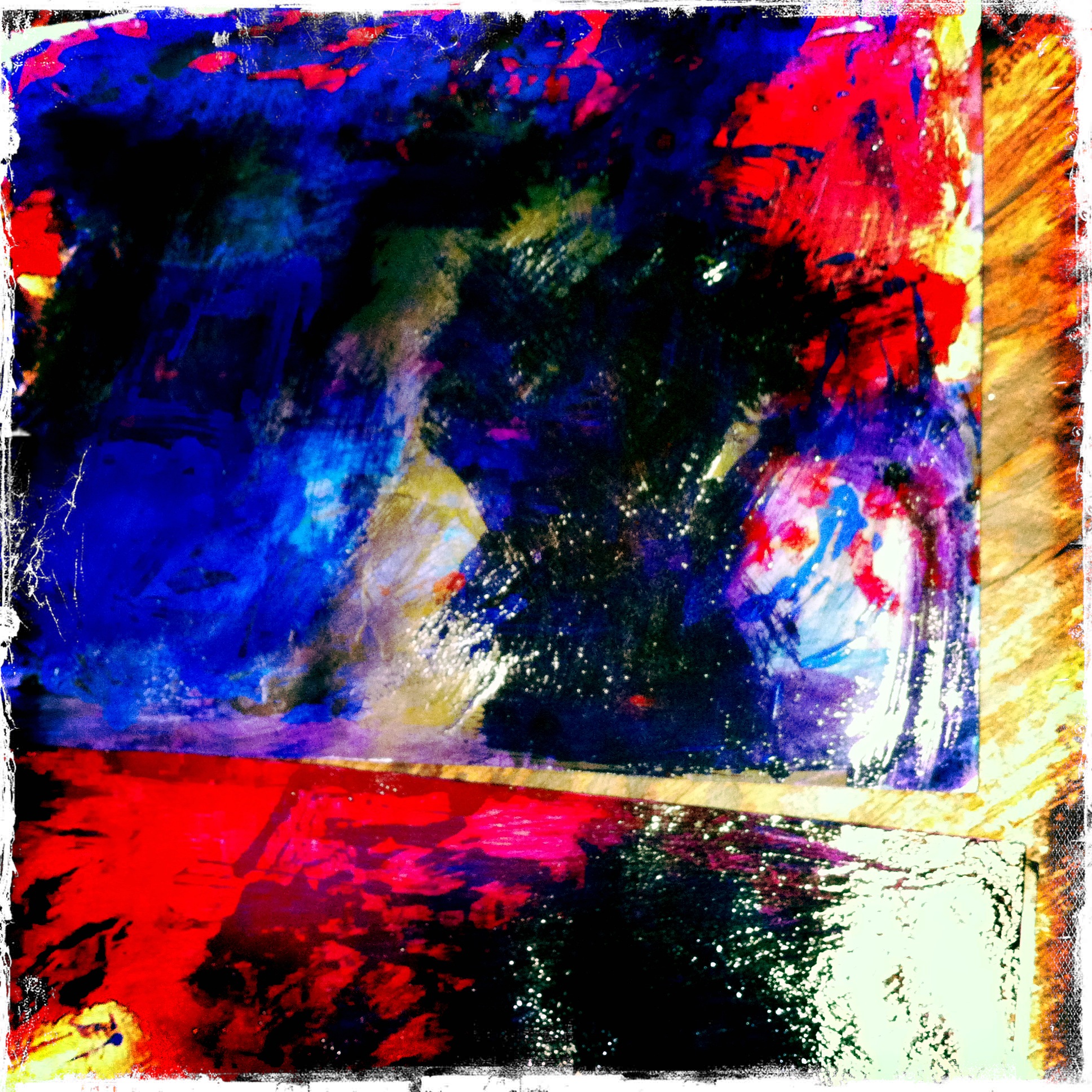
IMG_3159My mother was busy preparing dinner and answering questions my sister had while sitting at the big wooden table and doing her homework. This evening she was coloring and cutting out the states and gluing them in the right place on a map of the US. Both my sister and I hated coloring in worksheets and my mother had brought out her expensive Sennelier pastels to persuade my sister to employ some effort on the task. The map as far as it was completed looked like a beautiful velvet patchwork quilt. You can’t achieve that with your Crayolas. I wondered whether her teacher would be able to appreciate the difference.

Montana was already pasted in its proper place. It was colored in layers of gorgeous deep Indigo and now, with a vengeance, Phoebe was wasting pale Vermillion Orange on Idaho. I sat down at the table and watched her. There is something nice about a little kid coloring in even if she detests it. My mother walked past me and ruffled my hair in a distracted way. It was just as much part of her dinner routine as cleaning dishes right after using them. For a moment I was back in a comprehensible, friendly world. No opportunistic cannibalism, no aliens. Phoebe pasted Idaho on to her map and contemplated color choices for Washington State. “Why do they have to be different colors?” she complained but her heart wasn’t in it, you could see that she did enjoy choosing a new pastel stick. According to my mother you can never work with materials that are too good and you should always strive for beauty but I still felt a bit doubtful whether you actually needed art pastels to complete this kind of homework.

Phoebe still had the whole west coast and Alaska to color and paste and she grunted disapprovingly as she studied the worksheet after cutting out Washington State. Washington was going to be Cinnabar Green. I liked the way she held her tongue between her lips when she had to cut something out or color something in. She looked a lot like Plinius, our cat, after his dinner when he sits down on the table and probably contemplates dessert choices waiting outside in the dark beyond the kitchen door. Phoebe looked like that whenever she was focusing on something. Right now she smeared Cinnabar Green all over Washington. The pastel stick made a fat, smacking sound on the paper. At the kitchen bar behind us my mother cracked an egg. The splintering sound  was very clear and pleasing to me. I thought that recently I had been much more perceptive to small sounds. Only this morning on my way to school I had stopped to listen to the sparrows hopping over the path to the front door of our school, their tiny claws scratching the bricks. How much does a sparrow weigh? 35 g?

The woods are lovely …

Robert Frost, 1913.
Robert Frost, 1913. (Photo credit: Wikipedia)

It might just be true that there are some words that own us before we even truly know them.

A long time ago, I was a kid still, I watched a spy movie. I don’t even know the title of that movie now nor do I remember the plot.  I seem to remember the face of the main actress but do not know her name. I just recall that the story unfolded around a group of so called “sleepers”, people who were leading normal average US citizen lives until they were called – by phone – by a contact person who then “woke” them to perform a certain task by reciting a single line from a poem to them. And this single line from a very famous poem  stayed with me for years. Alas, neither did I know it was famous, nor did I initially know that it would haunt me for many years.

To make things more difficult, the movie was American synchronized to German. The time must have been late Seventies, I guess. None of these fragments of information enabled me to identify the movie.

The line as that came to haunt me was: “Des Waldes Dunkel zieht mich an, doch muss zu meinem Wort ich stehn und Meilen gehn’ bevor ich schlafen kann, und Meilen gehn, bevor ich schlafen kann.” I was immediately electrified. It was as if I had been woken up. The line stuck. After a few days I knew that I longed to  learn the whole poem.Eventually, and maybe only a lover of poetry gets this, I longed for the poem the line was taken from like I would learn to long for a certain person much later on – but just not quite then.

Alas, there was no mentioning of the title of the poem. Nor of the author. I didn’t know what it was that electrified me. It was well before one could start an internet search. So I had to nurse that longing. And marvelously I did. For years actually. I never forgot those lines. Even though they might be among the most famous last lines of any poem ever written, I didn’t find them for a long time. It might have been easier had they been first lines though.

The translation of these lines, of course, is: The wood are lovely, dark and deep, but I have promises to keep, and miles to go before I sleep. And miles to go before I sleep.

We finally found each other, that poem and I, some twenty years later. And I was as happy as if someone had revealed my fate to me. And the revelation of that fate would have been to know the poem. The woods are lovely. It took about three minutes to learn the rest of the poem when I found it. I knew I had known it before I had known it. I knew it when I found it.

And I have no answer as to how it can be that a poem, a poem not even in my then native language came to claim my allegiance. Came to claim me.

The poem was written by Robert Frost. I am a sober person but this poem was written into my genetic make-up. It seems that I had always known it, that it had been waiting for me, patiently, all these years, even testing me.

This is a kind of respectless approach to the great poet, forgive me, Mr. Robert Frost, respect less in the sense that, of course, this poem is not individual, and that is where its true beauty lies.

Robert Frost, a poet who died before I was even born. But not long after, in a small book store in the Upper, upper east side, around 95th street and Lex, I  had discovered a kid’s illustrated version of “Stopping by the woods”, stumbling upon it, virtually, I met an old photographer, a neighbor of mine on 95th Street and Columbus, Jacob Lofman. In his apartment there was a beautiful picture of Robert Frost that Jacob Lofman had taken years before. I know now that the picture was well known by the time I spotted it on the walls of the humble apartment in the Upper West Side when Jacob had invited me for tea.

Well known that foto might have been and still is, but it wasn’t to me back then. It was still not part of my culture. Robert Frost in New England. And so it came that I had the great pleasure to discover this image, the image of Robert Frost, in the apartment of a photographer who knew how to look at a man who by the time he met him was already legend and still to show something deeply personal about him.

I kept looking at the picture for a long time. Jacob made tea and I looked at the picture. I still can hear the water boiling, the tea cups cluttering. It made me happy to just look at the picture hanging on a wall in an apartment in the Upper West Side. In my ignorance I didn’t know that the man in the picture was famous. I knew by then, just for a few days, that he had written the poem I had searched for ever so many years. I don’t know why it was that poem by Robert Frost any more than you could answer why you love a certain person and not another.

I still don’t know why words have that kind of power. I just know by fortunate experience now that they do. I have rarely been as happy in my life as when I discovered those fragile bonds to a poem that had claimed me so many years ago. I know now, of course, that EVERBODY and their neighbors love “Stopping by the woods”. I guess that’s how it ended up in a spy movie. But without any cultural context, even without the context of the poem, just by a few lines in translation, spoken a few times, these lines had been truly powerful.

Life is strange, complex, opaque, but  still we can establish part of its truth. We just know it when we see it. Truth claims us. Words have that kind of sober, relentless, inconsequential power. They are an end in themselves, no further salvation promised or needed.

ART – creativity from down the rabbit hole …

the white rabbit's cardTo be creative is a basic desire of humans, all humans. It is a genuine expression of who we are even before we are defined by our social and economic circumstances. To teach a child to be creative therefore seems to me an elusive act. I look at children with a sense of awe, they are still there, right at the origin, and all I do as an art teacher is to take them on the same kind of  long walk that I had been privileged to undertake with my grandparents and I simply allow them to discover their world and to collect at will what responds to their own desire of creating this world new. If we’d allow our children more freedom and time to explore their own world and provide them with materials that are not dedicated to specific purposes, we could cut back on many extracurricular activities. Let them venture out there and the artist that lives in every one of us but is acutely alive in our children is ready to meet all the great challenges of art right in our neighborhood.

Working with young artists

IMG_5531Working with Young Artists

By trade I am a lawyer. Many lawyers do have a passion besides their original profession though, I happen to have three, if you count my love for children in general and my own children in particular. The other two are writing and art. I mention this because you will surely want to know how I am qualified to “teach art” or as I prefer to say: to work with and alongside young artists.

My grandmother used to say I have been born with a brush in one and in pen in my other hand – and as far as I can remember I have been scribbling and drawing on every appropriate surface – and some less suited. That I came to study law is strange, all things considered, but I guess I wanted to try out if I could succeed doing something else and law had always been intriguing to me. It turned out that I could succeed. I graduated with two law degrees – and came straight back to art. And at some point I started doing it both: art and law. Kids have always played a role. I have been teaching all kinds of classes, art and law, over the last ten years, and it has been a truly rewarding part of my life, not just my professional life. As you might imagine, I am never asked how I qualify to teach legal workshops, I am a lawyer after all, but often how come I teach art as well.

I do believe that art is not the esoteric, isolated endeavor that people sometimes take it to be. Artists are well advised to take notice of their world and have an understanding of it that transcends the visual. Beuys pointed out that every person is an artist, that artistic creation is at the center of human life. He went as far as demanding that every physician, scientist, philosopher be first trained in art. I will venture further by saying that the art world would profit if artists would first be trained in a trade that explores the practical aspects of their environment. Every artist is part of a tangible social reality. The training to become a lawyer might in the end not be either so far from or so detrimental to artistic process as is might seem at first.

Why I do love to work with young artists? Because it refreshing to leave the stereotypes that people retreat to as they become older. Every child I have ever had the pleasure to meet turned out to be an original artist (albeit sometimes a frustrated one …).
I respect the creative work children are capable of. As a first hand witness and as someone who still draws and paints, saws and glues every day: There is no time like childhood to experience the joy of art.

I had the good luck to be raised by a grandmother who had the wisdom of an older generation to pretty much let me do whatever I thought appropriate as long as I did not nail her good table linens onto a broomstick for a pirate sail (happened only once) or cut out my great grandmother’s lace to make curtains for fairy dwellings, also a one time never to happen again situation.

However I was allowed to make use of any tool that I would find in my grandfathers tool shed or in the kitchen without anyone trying to figure out if they were child appropriate. I was also allowed to make generous use of old newspapers and magazines, of the newsprint paper that my grandfather, who was publisher of a local newspaper, brought home, and in general of every piece of metal, screw, paper, feather, stone or yes, glass! that I would pick up on our long walks. It never occurred to my grandparents that I might pick up some dangerous germs on the way.

I brought everything home and assembled it very much the way every child will when you do not interfere. I do not know where our desire to “make” things has its origin but I do know that we already possess it as children, together with an instinct of how things fit together. If children are not allowed to roam as freely as I was, they will still build markers from pebbles and stones, they’d still use sticks to draw in sand, build strange, improvised gardens in mud, decorate prefabricated play structures with ritual signs.

To be creative is a basic desire of humans, all humans. It is a genuine expression of who we are even before we are defined by our social and economic circumstances. To teach a child to be creative therefore seems to me an elusive act. I look at children with a sense of awe, they are still there, right at the origin, and all I do as an art teacher is to take them on the same kind of  long walk that I had been privileged to undertake with my grandparents and I simply allow them to discover their world and to collect at will what responds to their own desire of creating this world new. If we’d allow our children more freedom and time to explore their own world and provide them with materials that are not dedicated to specific purposes, we could cut back on many extracurricular activities. Let them venture out there and the artist that lives in every one of us but is acutely alive in our children is ready to meet all the great challenges of art right in our neighborhood.

To come back to the question of my own expertise: I do believe with visionary clarity that it is not my academic expertise that is relevant. It is my willingness to acknowledge and celebrate children as the artists they are. I do believe that art is not a matter of paper and ink, of perspective and shading, I do believe though art techniques can be taught art cannot, no more than breathing, walking, seeing. It is something that happens when things go right or when you have to make them come out right. Art is life.

childhood

IMG_3109When did we forget to spin the dream, when did our world cease to hold small promises of meaning and adventure, a life time of stories still to be told? How did we grow up to forget the sensual richness of the world, the intense pleasure we can find only in simple things and moments? When did we cease to live today in order to reach for a tomorrow that we never truly know will exist – and if it does, it comes only to be given up and traded in for yet another tomorrow until there is no tomorrow left? When did we start squandering our present moments for squalid projections of who we could be if only? When did we tire of that what we have , right here and right now, the word, the discovery of nothing and everything, the breath of boredom and adventure alike?

Children’s books and art

photo-2

In my work I feel inspired by artists like Jim Henson, Maurice Sendak, Edvard Gorey, Tatjana Hauptmann, William Steig and Uri Shulevitz who are often underrated in their artistic merit due to the fact that they have published work for children. The archetypical quality of a simple story or image can be very powerful. More recently I have come to greatly admiring the work of German artists Albert Schindehütte (Hamburg) and Einar Turkowski (Kiel). Both of these artists also chose to illustrate what one could see as children’s books but I suspect their work is being  cherished by children as well as by artists and people who love art. Their illustrations hold an inexhaustible, dependable pleasure for me.