Page 3 of 10

Aristotle´s last gift

So that very night, as I pushed north, tired but alert, I finally reached the realm where the sky stays streaked with light even in the darkest hours. The engines ran monotonously, I had regulated the radiator down to avoid drowsiness and as a result was shivering ever so slightly. It would be time soon to steer the car off the road to sleep for a while but that moment had not quite come yet. It had been a while since I had turned the radio off but the last few lines of a jazz song by Nina Simone were still trapped in the cabin like some slovenly buzzing insect that would eventually die for want of food and would reduce itself to a parchment memory of itself. I rolled done the window ever so slightly and let the Nina Simone lyrics escape through the narrow slit into the summer night. I wondered briefly wether the wind would carry it away to one of the deserted villages or if it would gently rain down on the adjacent fields. My senses were acute and alert, registering the thick and slow movements of the farm animals on the fields, stoically waiting out the night, and the depth of the glowing darkness beyond. For a moment it was easy to imagine that in that immensity nothing could be lost. Aristotle would be sitting somewhere out there in the cabin by a carefully build fire, no other light in the room, and warmth radiating beyond the cabin walls, attracting lost things. Aristotle as I knew him, not that being reduced to shadows and ash, that I had been asked to identify days earlier. They had given me the small metal box with the ring and a key I had never seen before, and that looked like made from a smithy in an old children´s book. Maybe the matching lock was long since gone. I had put the key on a woven silk cord the color of fresh blood around my neck. He had promised to bring back some trinket from his trip after all. The last gift of Aristotle.

Ice fishing on Lake Willoughby, Sunday’s draft  

IMG_2386

So grandfather went out again in the morning and – coming back in from the cold -declared grimly that they should try and get some sleep

as the ice was sound enough now, and they would go ice-fishing at nightfall and stay out in the bitter cold until almost midnight. Burbot mainly feed at night and that is when they had to set their lines.
Grandfather in the meantime put on single hooks with a gap between point and shank larger than ¾ of an inch. He stored them carefully in two 5 gallon buckets, each large enough to carry many sets of lines made from dowels. For each line they had about 8-ounce sinkers. Because together these were too heavy for the buckets, they were packed separately in rough hemp sacks. He packed two sleds with supplies, one for himself and Joe and one for Will who was old enough now to do his own fishing at a hole about 70 ft, away from theirs. He packed rope, ice picks and augers, a spud bar, two horse blankets for each of them and extra mittens.

As fishing burbot is done with hooks flat on the ground so they did not walk too far from the shore because the reef at the shore of the lake, as you know, falls off steeply into the main lake basin, deeper than any line is long that has ever been cast down the lake. 300 ft. maybe more. Nobody knows what creatures might be living down there, in the abyss of darkness but I guess they would not be a welcome sight in our world.

Burbot spawn on the rocks and boulders in 2 to 20 feet of water, and that is fairly close to shore, on the reef and the first drop-off at the base of the reef. But staying close to the shore was dangerous, as the edges of the ice can be much thinner and shallow water in general changes temperature more readily and the ice is unstable. And even when the ice had formed to grandfather’s satisfaction, we were aware that sometimes, not too often, the ice somewhere out on the lake from the depth of the basin, could shatter with the sound of a whip or a scream and rip through the ice all the way to shore with deadly speed. If you heard the whip you were to make for shore, leave everything behind, not care for catch nor supplies, just run. That’s why you would never put a good knife down on the ice, while fishing, and why you kept the ice pick in your belt as well. These things were hard to come by – alas not as hard as two healthy sons. So even if, by any chance, you had left your tools where you were not to leave them, you were still expected to run.

It was dangerous to go out there, and both, grandfather and grandmother, were weary to let Joe and Will join in, but they needed the extra hands to make enough catch or else they would starve to death.

Will and Joe did not mind the danger, far from it, they could not wait to get out onto the ice. They were boys, locked in a cabin for many weeks, safe some small outings, and they were missing summer and their freedom. They even enjoyed the idea of danger as much as any boy would, and they trusted above all that grandfather, who could walk on ice as fine as a sheet of parchment, knew when the right time had come for them to go out.

And the adults in their own way also were impatient and found it hard to wait for the ice to get sound enough, for the best time to catch burbot is their spawning season, a time when there was not only burbot but also plenty of whitefish and pike to be caught, while after the season passed the lake could look like a desert and you wouldn’t spot another burbot until next winter for they lived in the depth.

The lake had glazed over and the ice had hardened and grown without any snow, making the safest ice you could hope for.

And the most beautiful, too, though it does get very dark at night at your fishing hole, the ice becomes like a window into the lake. And if you are patient , just before nightfall, and despite the cold hold your position on the ice without moving, you can watch the burbot trough the ice as about a dozen males and females form a writhing ball several feet in diameter and dance what looks like an agonizing devil’s dance under water, rolling over the bottom of the shallows and muddying the waters under the black ice.

Don’t forget, they are creatures of the deep. They have sharp teeth and they are mighty strong predators, skimming the shallows for crayfish, perch, minnows and even creatures almost their own size when it’s time to feed. Fearless they are. And they will fight back when they have fallen prey to your bait and hooks.

Ice fishing in Lake Willoughby, about 1790, new chapter, excerpt

Image
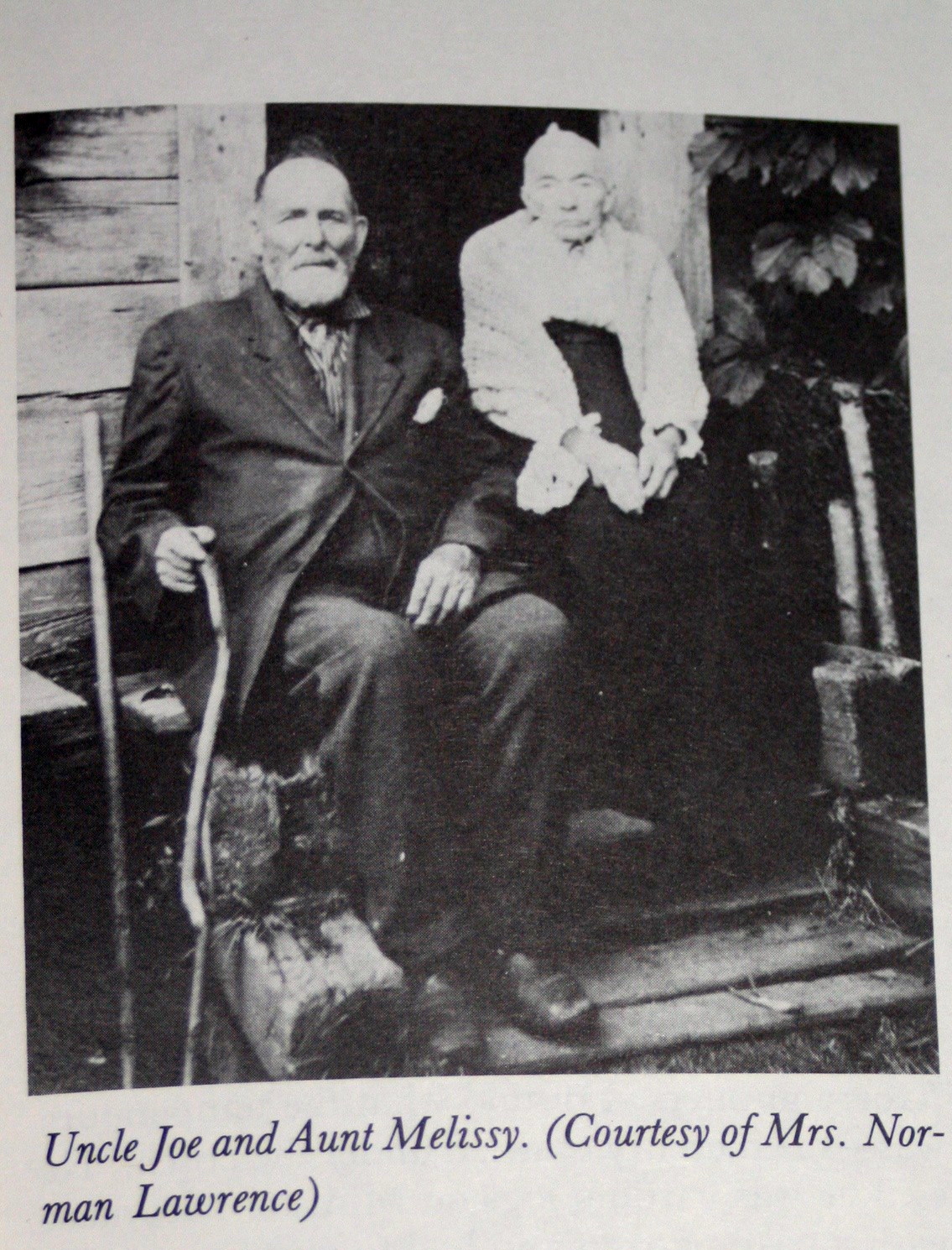
Aunt Melissy and Uncle Joe Hyde, Westmore, Lake Willoughby

“As you know the town was chartered by the authority of the State, Aug. 17th in the year of the Lord over 150 years ago.” I said, imitating Uncle Joe’s voice. Fiona smiled a bit. Encouraged, I continued:” It was then granted to Capt. Uriah Seymour, Abraham Sedgwick and their associates, being 65 persons in all, with the usual reservations and appropriations in the Charters or the grants by the Legislature. None of the original grantees or proprietors ever settled on their lands.”
All of Unce Joe’s stories started like a history lesson. Maybe to put Aunt Melissy’s suspicion over too wild a tale to rest only to sneak it in later. If Fiona was bored by the beginning, she did not let on. The patches on her dress now were of a saturated blue and orange, shining.
“There is no record of the exact time, nor by whom the first settlement was made.. But we do know that some six or seven families finally came to this town from Windsor and Orange Counties and made a settlement, among whom were Jabesh Hunter, Allen Wait, James Lyon, Jeremeel Cummings, Lot F. Woodruff, Dave Porter, Abel Bugbee and my grandfather, Joseph W. Hyde. The town had not been allotted at this time and they settled on such lands as best suited them, and others came too and made a beginning.”

Fiona listened contentedly. Stories were rare in our every day lives and even though I could by far not do it as well as Uncle Joe Hyde, who would pause artfully now and then, and whose blue eyes delighted in the fact that he had someone listening to his old stories gave it a special mellow flavor.

“But soon the cold season came and the Great War broke out between the Colonies and England. The settlers were surrounded by a howling wilderness a long distance from any other settlement, their numbers were few and not all were of kind disposition for you had to be rough at heart to survive on the land even though the soil is rich and productive and well suited to farming. The settlers were a hardy and industrious band of pioneers; like my grandfather they had come a long way into the wilderness, some single men on their own, some had made the way with young families. Each of them knew loss, especially loss of wee ones who passed on into the peace of the Lord before their first birthdays and left young wives sad and dreary.
Their labors on the land were not ordered and peaceful like today, but it was onerous work, with no time for rest, not even on the day of the Lord, their privations were many, but the hope of better times coming and faith in their Lord cheered them on and enabled them to endure the hardships until the War came. Some had even build commodious barns and comfortable dwellings but though all of their hearts were fierce and brave, most were still forced to abandon their homes not yet into the second generation and retreat. Their numbers were scattering, the frost destroyed their crops and the fear of the British and of hostile Indian tribes filled their hearts with fear. So they held a council to see what it was best to do in their perilous situation, and most families decided to surrender at discretion and most left very soon for some of the lower and more thickly settled towns in the State.”

Fiona embraced her legs and listened to me intently. I had given up imitating Uncle Joe but was still using his words. My history teacher in Summerville would have been fascinated as I spoke like a gazette from the early 19th century.
“It took over 30 years until the town was settled again. But my grandfather was among the few and scattered who stayed on, all these years. So did my grandmother who was a small, fearless woman and could hold her own among the men, and she worked like one, too. So my father was born, and was the only surviving child among 12 children who all perished before their 15th birthday. The family lived in a wee wooden cottage for all of the married life of the parents, sometimes with up to four or five children, from cradle to grave, right here on the old clearing where my father later built the stone house. Maybe it was because the cabin was so tiny and surrounded by dense woods, maybe it was because they respected the land they lived, didon very little farming, really just working a small garden patch, and made their living mostly on hunting and fishing, that the enemy overlooked them, and also the tribes who roamed the hills let them be, maybe they were just too insignificant to be noticed, and so they did survive the wild days and years when they had no company but each other.

My grandfather taught my father all there was to know about the lake and he knew as much about fishing and hunting as any Indian. They lived well enough on trout, rainbow smelt, burbot, yellow perch, longnose sucker, lake chub, common shiner and whitefish.

My grandfather took my father and his older brother Will out ice-fishing in winter. They mainly fished for burbot, a fish rich in cod-liver oil which my grandmother extracted and made the children swallow measured out by the spoonfull each morning. It left an ill, fishy taste crawling up from the stomach all day long, but she would not let them leave the house without it. You know, the liver of the burbot is huge. I was told my grandfather would cut it out of the fresh kill and eat it raw, but my father and his brother refused.

When Will died, last of all the brothers and sisters, just shy of his fifteenth birthday, my father became fearless. He said, Will had been his only friend, all others had died too young or had been too sick or had been girls and not fit for the rough hunting and fishing trips my grandfather took my father and Will along on. There had been babies who died before they ever learned to walk and talk, a sister – Abbe – who was funny and quick-witted and who had lived almost nine years and was still missed, but it had always been Joe and Will and they had taken each other’s company for granted even when all the others left them, some not leaving behind more than a shadow. Even when Abbe had taken sick with a high fever and passed on after having been delirious for two days and nights and then unconscious for another day before she faded at nightfall of the third night it had still been the two of them who brought Abbe flowers in summer and put them on her grave as they remembered that she had loved them, still the two of them who did not contract the fever and had lived once again.

Will had been his best and only friend, they had been thick as thieves and one knew what the other was thinking without ever saying it out loud. They shared a bed all their lives and woke up the same minute every morning, Over time they had grown sure that it was this bond that protected both of them from harm – and they had been their parents’ pride because bringing up two healthy, strong boys out 12 children was still an accomplishment in the wilderness by the lake.

Both loved fishing with their father, but ice-fishing they loved best of all. It took a while until the lake froze over in winter because it is so deep, and my grandfather went out every day to test if it was safe to walk on the ice after the frost had come to stay and the ice slowly glazed over. They knew that fresh burbot with its brown and green mottled skin was waiting for them under the ice, deep down, and as they were subsiding on dried fish and meats they could not wait for the fresh catch even if it meant fresh cod liver oil. They say, said Uncle Joe Hyde, that burbot tastes a lot like lobster and they call it the “poor man’s lobster” and, by the good Lord, (here Aunt Melissy would cast him a stern glance) I have never tasted lobster in my live but there is no fish as delicious as freshly fried burbot.

Note: This chapter is based on a historical article in the Vermont Historical Gazetteer, edited by Abby Maria Hennenway. Orleans County – Westmore Chapter: By Calvin Gibson and Alpha Allyn. Published by Claremont Manufacturing Co., 1877, pgs. 365 -373.

Denk ich an Deutschland in der Nacht, dann bin ich um den Schlaf gebracht

ImageIch erinnere. Ich träume. Ich erinnere. In einer fernen Stadt, einem fernen Kontinent träumte ich von einem längst verblühten Garten in Deutschland. “Die Veilchen nickten sanft, es war ein Traum.” Und von dem Gärtner, der diesen Garten mit Bauernhänden bewirtschaftete wie ein Feld.

Ich erinnere. Seine Hände, muskulöse, braun gefleckte Altershände, die Form dieser Hände, ihre erdschwere Stofflichkeit, ihren festen Griff, dem meine eigenen Hände kaum Kraft entgegenzusetzen haben. Ich erinnere eine unbeholfene, steife Umarmung, seine gedrungene Gestalt unter rauem Tweed, den von Zweifeln unberührten Klang seiner Stimme. Und einen Garten, seinen Garten.

Von Zeit zu Zeit träume ich von diesem Garten, in dem mein Bewusstsein sich entfaltet hatte wie fadiges Unkraut, träume von sauber geharkten Kieswegen, dem blank gescheuertem Betonboden der Terrasse, auf dem Ameisen in der Mittagsonne militärische Exerzitien halten, träume von der gnadenlosen Ordnung, die mein Großvater der Fülle des Sommers Jahr um Jahr abtrotzte, träume von mit Paketschnur abgesteckten Beeten, in denen er Gemüse und Blumen in geometrischer Ausrichtung hielt, sich Tag für Tag mit muskulösem Rundrücken hinabbeugend, um jedes zarte Blättchen keimenden Unkrauts unfehlbar auszureißen, sehe in Form gestochene Rasenflächen, kurz rasiert wie die Köpfe von Rekruten, giftgrüne Nylonnetze über Apfel-, Birnen-, Pflaumen- und Kirschbäumen, Stachel- und Johannisbeerbüschen, Erdbeerreihen und Himbeerranken.

Höre die genussvolle Litanei botanischer Ordnungsbegriffe, assoziiert mit flüchtigen Bildern. Solanum tuberosum, die Kartoffel, vier zartspinstige, weiße Blütenblätter, violettgesprenkelt wie die Triebe der gelagerten Knolle; Brassica oleracea var. capitata, der Weißkohl, im Wind tanzende, gelbe Bechersterne; Daucus carota, die Möhre, schäumend wie die Gischt der Schafgarbe in den Sommerwiesen; Cucumis sativus, die Gurke, sechsblättrig geteilter, weißer Schleier über fruchtig grünem Grund.

Bete ihm lautlos nach, dass Apfel (Malus communis pumila) Birne (Pyrus), Pflaume oder Zwetschke (Prunus domestica), Aprikose (Prunus armeniaca), die im nördlichen Klima nicht gedeihen wollte, Kirsche (Prunus avium), Erdbeere (Fragaria ananassa), Himbeere (Rubus idäus) und Brombeere (Rubus) allesamt Rosengewächse (rosaceä) seien.

Zierrosen, in Reih und Glied entlang des Rasens gepflanzt, liebte er als Sinnbild dieser üppigen und doch kultivierten Fruchtbarkeit, während er die Blumenbeete im Übrigen der Pflege meiner Großmutter anempfahl, der Blumengarten – Frauensache, nur hier und dort eine Korrektur, eine Rüge, ein schneller Schnitt.

Mit seinen Rosen sprach er, schmeichelte und schimpfte, streifte Maden einzeln von ihren Blättern und ertränkte sie in einem Eimer Laugenwasser. Drohte Frost, hüllte er jeden Rosenstrauch vorsichtig, bedacht, keinen Trieb, keine späte Knospe zu knicken, in Sackleinen, schüttete Torf und Schredderspäne an, kontrollierte jeden Morgen sorgenvoll, ob sie die Nacht gut überstanden hätten. Sein äußerstes an Zärtlichkeit gegenüber einem Geschöpf.

Mit annähernd religiöser Ehrfurcht war er seinen Rosen verbunden, das war selbst für ein Kind ersichtlich. Und doch war seine Liebe nicht von einfacher, tröstender Art, war sie nicht großmütig und mild, sondern streng, nicht annehmend, sondern fordernd. Niemals war es einer Rose erlaubt, in den Sträuchern zu überblühen, Rosenblätter, die sich aus den Blüten gelöst hatten, las mein Großvater täglich einzeln aus den Beeten. Aber auch Blüten, die nicht die gewünschte Größe erreichten, die den Augen meines Großvaters in irgendeiner Weise makelhaft erschienen, sei es durch fehlende Symmetrie, ein welkes Blütenblatt, unerwünschte Färbung, wurden abgeschnitten. Die welken Rosen, Rosenblätter und Zweige mischte er in einen gesonderten Komposthaufen, gemeinsam mit Apfelschalen und anderen Obstabfällen aus der Küche meiner Großmutter sowie dem Herbstlaub der Obstbäume. Die nährstoffreiche Erde, die er so produzierte, wurde im Frühjahr wieder in die Rosenbeete verteilt.

Was mein Großvater anstrebte, war nichts Geringeres als Perfektion. Er nannte es auch “Reinheit”. Seine Rosen glichen den Abbildungen in den Gartenkatalogen, in denen er im Winter blätterte. Ich besitze eine alte Fotographie aus den siebziger Jahren, in nunmehr vergilbten Kodakfarben, auf der eine einzelne Rose zu sehen ist, die in ihrer formalen Symmetrie beinahe unwirklich scheint. Die sommerliche Wildheit von Heckenrosen oder die lieblichen Zerstreutheit einer Bauernrose sprachen nicht zu meinem Großvater. Schönheit war für ihn gleichbedeutend mit Ordnung, alles musste von Ordnung durchdrungen sein, einer unbarmherzigen, unabwendbaren Ordnung, die es aufzudecken oder herzustellen galt. Seine Ordnung. Seine Ordnung. Ein unaufhörliches Mahlwerk.

autocorrect

IMGP1041When she was ready to write, the first word that presented itself was: nocolor. Autocorrect corrected it three times over. Autocorrect wrote: “No color”. The word as it needed to be was: nocolor. She knew what it meant. It was a good word to start with. She could see that autocorrect was struggling with the concept. She took a piece of transparent drawing paper o and instead of typing she drew the word with a radiograph pen, 0,35 mm: nocolor. The paper endured the non mistake.

Autocorrect was a mediocre little man in a grey woolen suit. She knew him. Raymond Chandler had known him, too. Common sense, autocorrect, is the little grey man who never makes a mistake in addition. But it is always someone else’s money he is adding up. Oh, I have met the little man in the grey suit many times over. Here he lingers. I am sure autocorrect wears a grey suit, but I know better than to pay attention to him. nocolor is a good word to start writing about the exits that are not accounted for. the little grey man wouldn’t know them if he stood facing one. He would insist there was no door. And he’d be right there is no door. Only there is.

Alternative pathways to the primary visual cortex

impeached kingHe turned around and looked in my direction, his dark glasses reflecting the library lights like distant stars. Then he smiled. Automatically I smiled back at him, but then I remembered that he was blind, and my smile froze. I was frantically searching to find an appropriate opening sentence in my vacant mind. He held his smile still as he was addressing me. “I think we have a mutual friend, Ms. Clarice,” he said kindly, not commenting on my rude behavior. I was now searching for his eyes behind the dark shades and instead encountered my own mirror image, small like a doll. “I am sorry,” I finally stammered, addressing the little doll more than the man, “I am really sorry, but how do you know who I am?” I was still being rude, I realized. The small person reflected in the distant mirror of his glasses I had taken for my own reflection made an unexpected move that startled me even more if that was possible. She took a mocking bow towards me and disappeared into one of the bright reflections of the lights above. “Things are not what they seem, Ms.” responded the old man, why don’t we sit down somewhere so you can ask your questions. My name is Dr. Aaron Hausner. And who might you be?”

Dr. Hausner dedicated a long time to me. He was soft-spoken and had an uncanny ability to predict my next question – yet, at the same time he did not once directly answer any one of my articulated questions. After we had occupied a spot in a somewhat secluded corner of the library – he had been leading the way without ever hesitating – he had again turned directly towards me and had started speaking with a soft voice. “The route from eye through the primary visual cortex the is not the only visual pathway into the cortex. Other pathways exist that bypass the primary visual cortex. A blind man like me can learn to trust those pathways though they do not stimulate a sense of optical vision. I do know whether there is an object in my way, approximately which size it occupies and whether it is mobile or fixed in place, of organic or inorganic nature. I also know whether a person directly faces me or wether I face a person and whether this person smiles at me. Scientifically this phenomenon is called blindsight.“ I felt like a fool. He answered. “Don’t feel bad, most people feel inhibited when they first address an apparently blind person. And to be honest, not all blind people know about this phenomenon either, though most blind people I have talked to could relate experiences that strongly point towards their ability to process some visual information even though not in the way they expect.” I was stunned. We were silent for a moment. Finally I found my voice: “My mother is an artist. She draws objects as an intricate net of lines, and though the object is not directly represented through these lines, with a bit of patience one can usually tell what the drawing is about. I mean, you can see the object though you clearly can’t.” I drew a deep breath. Dr. Hausner seemed to listen but he didn’t come up with a typical grown-up response like: How interesting of you to point out the similarities between an artist’s perception and a blind person’s perception.

loopholes and the art of legislation

Image - Version 2When we arrived at the cottage we were basically frozen. Courtesy demanded to offer someone who came to the cottage door a cup of tea – but I would have offered it regardless of etiquette because the girl was in need of one. She gladly accepted and entered the cottage. The old people were at the Sunday meeting still and so I got busy rekindling the hearth fire and put on a kettle with fresh water to boil. I knew Aunt Melissy would approve of the church elder’s daughters having tea with me.

The girl had readily slipped into the bench at the window and had pulled her sock feet up to wrap her long skirt around them to warm up. As long as the fire wasn’t going it wasn’t too warm in the cottage either, but it was nicer than outside, and my feet started thawing.

The girl had put her chin on her kneecaps and looked at me without much expression, a bit as if we had been friends for a while. After a moment she lifted her head a bit and said: “I’m Fiona. Don’t tell me your name. My mom says I shouldn’t know you. So, if you don’t tell me your name I don’t know you, right. “ Fiona grinned. “She didn’t say we couldn’t have tea.”

She hugged her legs tight, I could see she was still cold. But there was something on her mind. As long as we were alone. “It’s difficult, to make rules.” She added gravely. As if she was not the one looking for loopholes. Or maybe as if looking for loopholes was her special function in the system of making good rules. “I mean,” she added “to make rules that are to be followed to a point. Not to forget anything. Though you know they will be looking for a loophole. And you have to make the rule as tight as possible. But still workable.” She took a deep breath. I had no idea where she was coming from. Why she was telling me this?

“Why would they?”, I asked. “Why would they look for loopholes, I mean.” Maybe it was an ignorant question but it was the first thing that came to my mind. I didn’t even now who “they” were supposed to be. “Why wouldn’t they?” Fiona retorted. “Doesn’t everybody crave freedom? Just everybody? And especially those who are bound by a contract to obedience?”