Page 7 of 10

Where were you when Thompson hit that home run?

Brooklyn Dodgers
Brooklyn Dodgers (Photo credit: Wikipedia)

You see, writing that sentence to me is kind of scary, in fact, it requires quite a bit of courage. In a few words it describes all I know – and I do not know – about a culture I lived in and that I breathed in for thirteen years. And then some. If you think “13” you’ll understand how well suited I was to be in that place, because it seems to me that it is more important to have an association to the fact that Ralph Branca wore the 13 that day, way back then, in 1951, than to even have been born at the time when Thompson hit that home run and the Giants won the game 5-4.

A long time ago a friend taught me my first real American phrase. This was after years of English classes at school had rendered me a perfect fluent, neutral speaker of a language that is so rich in tones and associations that my lack of sensibility for the colors of a certain word might have invoked an association equivalent to a machine’s translation of, say, John Updike.

My first real American words were: “How about them Yankees?” And we practiced them for a few weeks. We lived in the same apartment  building on 95th Street at that time, and we would practice in the elevator upon chance meetings. Me: “Hi Joe! How – about – them – Yankees?” He: “Howabout’em?”. Eventually, I sounded somewhat more like I was asking what I was asking. Only, of course, I didn’t. Because I wasn’t. Asking. I had not the first clue about baseball. But I kind of started getting the gist of things.

Maybe you have guessed from the first paragraph what I am reading at present. I am still the academic speaker I was when I first lived in New York, fluent to a fault and with blank undertones to my speech. But then again, I have those in my original, my native language too, the blank undertones, speech that leaves no associations for the listener even if it seems rich with referrals and meaning to me.

But be that as it might, not for nothing have the years passed and have I entertained something that should be called, for lack of other words, an illegitimate affair with a language not my own but with a passion so strong that at least I feel like I have staked a small claim on a land that rightfully belongs to others.

And that claim should not be judged by my own ability to play the instrument,to speak the lingo, to actually ask about that homer, scary thought! – but by the fact that my ear is now catching all that it might have missed when I first listened to that tireless speech of the city, 95th Street, Columbus, Broadway. I read about the outfielder Bobby Thompson on that day in baseball history, Oct. 3rd 1951, in that landmark novel and I do not only think “Ralph Waldo Emerson” and “Shot heard ’round the world” from his Concord Hymn, something I might have done before (and something, fittingly, DeLillo never mentions, the “Shot heard ’round the world”).

I mean, I know this, but I can also actually picture the guys, J. Edgar Hoover with the torn newspaper and all, and I hear them as clear as I hear music from Mozart though I am separated from that in time and space and culture, too, and I get it. Or, let’s be honest and a bit humble, I think, I get it.  I think I know who they are, these guys and their wives, like  Nick and Marian, and where they come from and why it is inevitable that one of of them should head straight into cardiac arrest after the game, and I know that they are real and I might meet them out there one day and recognize them and smile at them. And they, in return, would not give a f- and would have no clue who that meager shadow was, passing by. Which would be just fine with me.

I get so much reading these pages and listening to them, so much detail that I didn’t get before that it delights and amazes me despite the fact that it is of no use to anyone including myself other than for its sheer entertainment value. Which is a result of half a lifetime of practice. There is something in there that tells you about how language connects us to a specific place and time and how obstinate and inefficient love insists on being.

I doubt I could pull it off, that question, asked leisurely in a conversation. As if it was something, one asked, conjuring up a feeling of common history, no matter where you stood.  And, sorry Joe, I still have to ask someone in the streets about them Yankees, but I know what it means when I hear someone doing it, and I hear the city and its history and its people and their loans and their marriages and their kids at college. So, let me get back to reading then. Underworld.
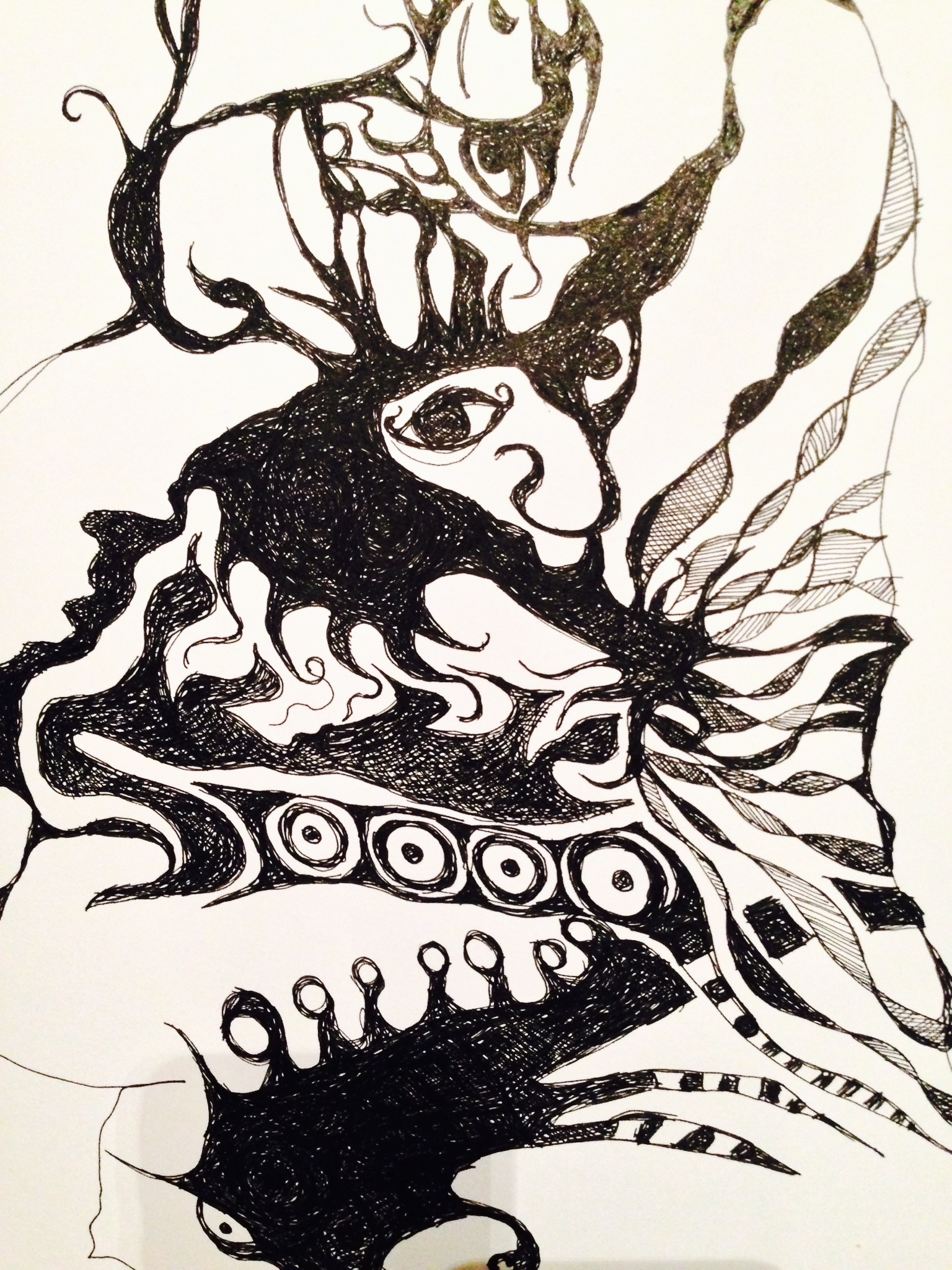

thou shall not confuse night with darkness

Image 1


After all those years of quiet desperation spent in the library it finally occurred to them that the meaning of the phrases they had taken to be metaphorical actually was to be understood literally. One of them said it, said it twice as if a discovery this horrendous and yet simple and elegant, had to be given a reflecting twin to cast light into the darkness of their ignorance. One of them instantly began to tear at the fine web of cross references and foot notes he had been weaving patiently for years and without ever questioning the worthiness of this pursuit, but they were like angel hair or glass wool and cut his hands with fine sharp lines out of which blood emerged like red pearls on a string. “I shall not be told convinced” he blurted out, not holding back now, “All those weeks, months, even years, sitting in the dark like a toad, with my skin starting to resemble the parchment  of the oldest books we had delivered from unknown depths of the library, all that knowledge I have assembled in my humble brain that has me compete with the most elaborate encyclopedias of this library, all this weaving and threading of letters, words, meaning, phrases is to be ridiculed by a simple, single and singular shining truth. What of the darkness that we have illuminated with stray thoughts of meaning, what of the wondrous glimmer of an insight long desired and yet so small that it is like a single candle flicker in a great hall. What of its beauty and possibilities? Look at your single truth that already shines into every corner now that you have unlocked its secret, that leaves no shadow, no desire, no discovery, no randomness and outshines all my small beautiful candles. How am I supposed to live with something so simple and shining when I have dedicated my whole life to the complex, hidden, wondrous discovery of paradox answers, when I love the darkness in which a single light shines, when i am a creature of the night and dedicated to a pursuit without hope? How am I to rise out of my darkness into this shining, merciless light?” And he began crying miserably, holding his bloodied hands out as if he was asking for a charitable donation, and the others looked on in silence.

Johari-Fenster, David Hockney, Carlos Castaneda – ein Zeitspiegel

IMGP1041Es mag sein, dass es wesentliche Diskrepanzen zwischen der Eigen- und Fremdwahrnehmung geben mag, aber das bedeutet nicht, dass die Fremdwahrnehmung notwendiger Weise eine von der Eigenwahrnehmung überhaupt unterscheidbare  Wahrnehmung einer Person ist. Joseph und Harry’s (Joseph Luft and Harrington Ingham’s) Theorie, dem sogenannten Johari-Fenster (Johari-window) mangelt es an Beweglichkeit. Das “Bild eines Menschen”, gleich ob Selbstbild oder Fremdbild, eine solche Vorstellung setzt bereits sprachlogisch einen Betrachter voraus. Ein Betrachter, der Natur der Betrachtung folgend, nimmt einen spezifischen Standort ein und sein oder ihr Urteil bezieht sich auf das von dieser Perspektive aus Ersichtliche, Sichtbare. Die Diskrepanz in der Betrachtung zwischen der betrachteten Person und dem Betrachter erklärt sich bereits aus dieser Unterschiedlichkeit des Standortes, ohne dass dies logischer Weise den Schluss zulässt, dass eines der Bilder zutreffender oder umfassender wäre. Es ist interessant: wenige Zeit später begreift der Künstler David Hockney, dass die statische Abbildung eines physischen Zustandes immer illusionär bleiben muss, Spiegelspiel – und deshalb bewegt er sich um den abzubildenden Gegenstand herum, während er ihn abbildet.Das Resultat ist eine Annäherung an den gesuchten Wert, ähnlich wie die Bestimmung der Fläche eines Kreises, und die unterschiedlichen Beobachtungen von unterschiedlichen Standorten gehen in eine organische Gesamtabbildung ein, deren wesentlicher Charakter eben das eine ist: Annäherung an einen gesuchten Wert. Zu etwa der gleichen Zeit steigt Carlos Castaneda aus seiner betrachtenden, von den Erfahrungen im englischen Common Wealth ebenso wie den Reisen des Alexander von Humboldt  immer noch geprägten objektiv-imperialistischen  Menschen- und Kulturbeschreibung seines Fachbereiches Anthropologie aus und versucht sich an einer ganz neuen, kreativen Art der Menschenerforschung ebenfalls von der Idee der Beweglichkeit und Veränderbarkeit des Standortes inspiriert. Ich wiederum meine, dass es keine Unterscheidbarkeit von Fremd- und Eigenbild gibt, sondern dass das Ich, ewig fragiler, elusiver Zustand, unterschiedliche Standpunkte einnimmt, und – soweit es um das Fremdbild, das von einem außerhalb seiner selbst liegenden Standort wahrgenommene, personenbezogene Bild geht –  tatsächlich eine Art holografischer Annäherungsprojektion ist.

Infinite Jest …

IMG_5726It only occurred to me some years after first meeting him that his brain had been on fire probably day and night, during waking moments and during sleep. He was, I could see that right away, back then, high wired, hyper intelligent, super sensitive, coy, cornered, cynical. In was apparent in the first conversation one would have with him that he was constantly computing any kind of informational offering of his environment for bits and pieces of useful knowledge, useful in his own sense, not ruling out the value of overheard conversations of strangers, visual clues of bill board advertisement, the color scheme of the dioxin polluted NJ marsh lands, conspiracy theories and their opposites, math, astronomy, information technology, Shakespeare, even the CNN news ticker. He was reading, forever reading, and then reading some more, his brain was speed feeding itself knowledge, and he could recover this knowledge with the casual speed of a trained illusionist. When I knew him better he showed me the encyclopedic if highly individual work he was dedicated to, a work in many volumes bound in blue linen as soon as a new one was considered completed. A friend who worked at a university library did this for him volume by volume, one for the shelf in his den, and a twin one that he archived openly secretely in said library, for everyone to see and no one to find in maybe another century. It was a work so biased and yet so beautiful that it was unquestionable that I had been admitted to a unique work of art though he preferred to call it a scientific study of random code.

And still, it was only years later when in the course of an increase of my English language skills I could not only read but  also hear all the different voices merging in “Infinite Jest” by David Foster Wallace that I realized I had actually met a man who is – if that is at all possible considered who Wallace was – the dark twin of David Foster Wallace, sharing his semantics, his obsession, his socioeconomic circumstances, his despair, his addiction, his near autistic ingenuity to gain access to ever deeper layers of information and information encoded within this information,and that he was the man who had to be expected to exist in the margins of literary history, never to be found, as we know that there is never just one genius at any given time, but often just one to emerge to public consciousness , maybe to his own destruction. so that, with other words, i know there to be one other living madman, or genius, or whatever you’d like to call a man with a brain on fire, to weave the net still, to still find the words, to write the chronic of what is and was and will be in all its Borgean implications, thereby freely accepting the responsibility of calling the world into existence.

moonflower

Canis Major as depicted in Urania's Mirror, a ...
Canis Major as depicted in Urania’s Mirror, a set of constellation cards published in London c.1825. Next to it are Lepus and Columba (partly cut off). (Photo credit: Wikipedia)

“Your fist like this”, she said, “covers about 10 degrees of the night sky.”  She moved my hand slowly over the dark water and spoke in her methodical way, no use to interrupt her. “20 degrees south-east of the belt of Orion, you see, there is the brightest star in the night sky, right in the constellation of Canis Major.” She waited for a moment for me to catch up with her. Our entwined hands travelled over the night sky and stopped. And there it was, deep underneath us, the brightest star of the night sky, as far as I could see. “Do you see this star?” she asked. “It is called Sirius. It is 23 times more luminous than our sun, twice the mass and the diameter of the sun. It is only 8.5 light years away.” The way she said “only 8.5 light years”, it sounded as if she was talking about a Sunday picnic destination. It sounded like: We could take the bike. It’s only 8.5 light years away. Before I had a chance to point that out to her, however, she had started talking again, and almost without warning, though in answer of my question, switched from her facts, from degrees between two points of light in the celestial sphere, luminosity and brightness, and mass of celestial objects, to a startling revelation.


huis clos

Jean-Paul Sartre (um 1950)
Jean-Paul Sartre (um 1950) (Photo credit: Wikipedia)

walking up some flights of stairs in the morning, taking one step at a time, my thoughts start drifting, and i continue walking, and i keep thinking, and my feet continue climbing up the first flight of stairs, one step at a time, one step at a time, and i continue dreaming pleasantly, and my feet continue walking until i grow aware that it is taking a rather long time to climb that one flight of stairs, 13 stairs at most, and while my feet are still climbing i see that i have reached the second to last step and still i climb and my feet continue to move obediently, my thoughts retracing my steps, until finally, and i can measure that time span of the last step, i have reached the first landing.

time perception of course, by its nature is subjective, but how long a dream can one dream climbing up one flight of stairs, i wonder. on the landing the grey light filtering through the milky hall way window does not admit to time passing and i almost dread climbing the next flight of stairs.

but, of course, i do, what else is there to do, but to continue. so i focus on the steps this time, 13 at most, and i am resolved not to allow my thoughts to drift.

i focus while i am walking, and i focus on my focus, and i see myself walking up that flight of stairs, 13 steps at most, while i am concentrating so hard on not dreaming, not drifting, on almost not thinking that my brain starts feeling cold.

and my feet keep moving, climbing up the steps, and i am carefully keeping my focus, and yet when i have mastered not even half the flight of stairs, i realize that once again the time it takes to climb these steps does not correspond to the number of steps i have been climbing and i freeze in the midst of climbing, one foot on the seventh step, one still on the sixth, and i have a hard look at that staircase but there is nothing out of the ordinary to be observed.

and yet i am sure of it, it takes too long to climb these stairs, and ideas start forming, offering themselves with deceptive playfulness, but i reject them because now all i want is to  be done with climbing that staircase and so i continue.

trying to regain that coveted state of unconsciousness with with which one climbs a step of stairs, not observing the act of climbing, not synchronizing mind time with physical time, i pitifully fail.

again i step up and step up and step up as if climbing that staircase was a specific task to fulfill, as if i was not mastering some flights of stairs but was struggling up a mountain to reach a monastery carved out of the mountain side, as if i was following a pilgrim’s path to enlightening. i couldn’t be more aware of every single neuron firing to accomplish this complex daily task though all i crave is unawareness towards it. and i continue climbing.

on the next landing i hardly pause to contemplate what i must do as there is no alternative to walking, and i simply walk up the next flight of stairs, i walk and  i walk, and by now i am not struggling against the perception of the walk that does not correspond to the space though i am not accepting it either.

on to the next. i know by now that this is and is not an ordinary staircase, that i will resume life once i reach the top but as of now my life is suspended and all that is asked of me is to walk up those steps, so i keep walking.

my unimaginative mind gets bored of this existential task, even slightly amused, rather than to be terrified, never mind that for all i know this stairway might be sartre’s huis clos and gabriel, ines and estelle might be right behind me, or i might be ines or estelle, but still my mind gets bored of this task of climbing some flights of stairs as if that was all there was to do for eternity.

when i am bored of being slightly amused by my own superior outlook on the terror of eternity i start swearing silently under my breath, but still  i am climbing, and at some point i am done swearing, too, or rather i run out of entertaining curses.

so when i am done swearing , i start wondering who is going to study my briefs today, or tomorrow for that matter, who is going to review my documents, conduct my research, draft my pleadings. and after climbing another flight of stairs, i start feeling pity for myself and i  sadly ask myself who is going to comfort my children and read my books and paint my paintings while i am climbing this endless staircase. and still i am climbing.

and this i do every morning. i tell you this just because you asked me whether i believe in eternity (or anything, really). sure i do.

every morning, rejecting the elevator, i do repent of my choices by climbing that eternal staircase and, for all i know, i never leave it, for all i know, i am forever walking up one flight of stairs after the other, because i do not remember ever reaching the top of it, i do not remember opening the door to exit the hallway and entering my office even though i won’t deny either that i am indeed sitting here, at my desk, drafting my briefs, conducting my research, writing my pleadings and trying to convince you if not myself that i am more than a speck of transient dust.


tesselation with 5-fold symmetry

My head still throbbed lightly and the smell of the new scrubby grey floor tiles did not help to improve it. I concentrated on the unusual pattern of the otherwise ordinary floor covering. The tiles were light and dark grey and laid out in an unexpectedly complex arrangement. Areas can be filled completely and symmetrically with tiles of 3, 4 and 6 sides, but it was long believed that it was impossible to fill an area with 5-fold symmetry though Kepler played with the idea. I knew this because my mother loved the work of M.C. Escher who was intrigued by mathematic patterns and used them in his illustrations. It did perplex me that the library floor tiles were cut out of so called kite and dart shapes which actually allow a surface to be completely tiled in an asymmetrical, non-repeating manner in five-fold symmetry with just two shapes based on phi. As a result the tessellation of the dense felt tiles in the lobby made it impossible to arrange my thoughts according to the floor pattern – a technique I had used since childhood to soothe anxiety. Instead I began to draw shifting lines through the pentagrid in my mind, preferably coming up with glowing triangle shapes. The forms danced in front of my eyes. I felt faint.

the what is the who

IMG_4323Once, when I was about seven years old, I had asked my mother whether she thought that the idea of me had existed before me, and who could had stored this kind of information and where and how (just to be complete), and she had looked at me with that dreamy look she always gets when she comes up with an idea for a new story. She hadn’t answered me but had rushed over to her desk and started scribbling. You probably know the wacky kids’ book “The What is the Who”. It ‘s still in print. She never answered my question, by the way. Maybe you have to find out some things by yourself.

digital sadness

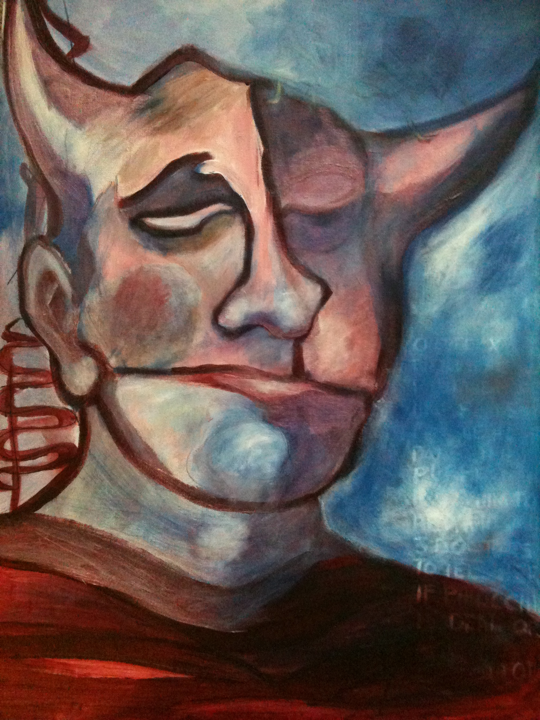
Bildthere were lights and colors washing down the cab window, there was the rain, transparent movement, the cab driving through the night, time suspended. i had memorized the painting that had been burned and now i let go of the image of the devilish creature and just looked out of the cab window, letting the city images pass by. All was said and done. My hands still carried an ashen smell.

I let go of my specific self, and I knew with quiet certainty that everything out there was coded in a simple, elegant way. The needlepoint lights of the far away office buildings were 1, and the red lights over there, the cab coming to a stop, those lights were 0, the raindrops running down the window pane like external tears were 011001, and the guy running down the street holding a soppy edition of the times over his head was, let me see, 1, for what he had just done, and 0 for his existence and another 1 for someone waiting for him with an unwelcome surprise, 101.

There was no sadness just then, no joy either, just a stillness in everything, an acceptance of now, the cab driver talking about night time driving, 100101001, and the drunken guy who had no money left to pay for the fare, 001, and the traffic and people coming from out of town, and my life was not measured by birthdays, one year like the other, my life was suspended too – and I was weightless against the dark

time, oscillating

Station Clock
Station Clock (Photo credit: Wikipedia)

In the meantime I discovered the places “where the seams come undone”, as my mother called it. Every classroom in my school had a clock on the wall right over the door, and all the clocks had identical clock faces, and every one of them showed a slightly different time.

I don’t know whether clocks in classrooms today are all connected to one central, totalitarian time piece as I suspect might be the case, though I hope it is not so. I always loved the way time oscillated between classes, obstinately refusing to be tamed. Officially, students had three minutes to walk to the next classroom after a period ended. But for the way from science to math, for example, you’d better made do with 1 minute and 29 seconds – the clock in Ms. Kirsch’s class was as fast as our teacher’s ability to conjure numbers out of the back entrance to Hilbert’s Hotel and as inexorable as her refusal to admit to time measured outside her class room.

On the other hand, you could afford to leisurely stroll to French after that, using not only the 1 minute and 31 leftover seconds from math but also the 40 seconds the French clock was late, giving you an ample 5 minutes and 11 seconds (not counted the additional minute or two Mme. Petite rustled with her papers, ignoring her students’ ongoing conversation). The clock in language arts had the peculiar and infamous habit of stopping at exactly 12.01 pm every couple of weeks and could only be persuaded back into service by Superintendent Segrob who, for that very reason, was particularly fond of it, and year after year insisted on repairing rather than replacing it.

Every day for a few moments just before noon instruction in language arts paused and everyone’s eyes followed the unhurried second hand making its way from 11.59.59 am to just after 12.01.02 pm. It was almost like a pagan ritual, these approximately sixty-three seconds of silence, as if we were paying our respects to the spirit of the clock, Time. Time, sputtering, fleeing, stopping, resuming its course, divided itself up over the 79 clocks in our school according to its own preference. With other words, it seemed to be on our side and refused to be institutionalized.

I know that the language art clock did not stop on that day. I don’t think it would have been possible for it to stop while I was willing it on. Apart from Time herself though nobody noticed that I counted every second of the school day, 24,000 seconds in all, stops, gains and losses, until, at last, the 2.47 pm bell wrapped it all up hurriedly and dropped the leftovers for the time dogs.