Page 9 of 10

Little Red Riding Hood – a cautionary tale?
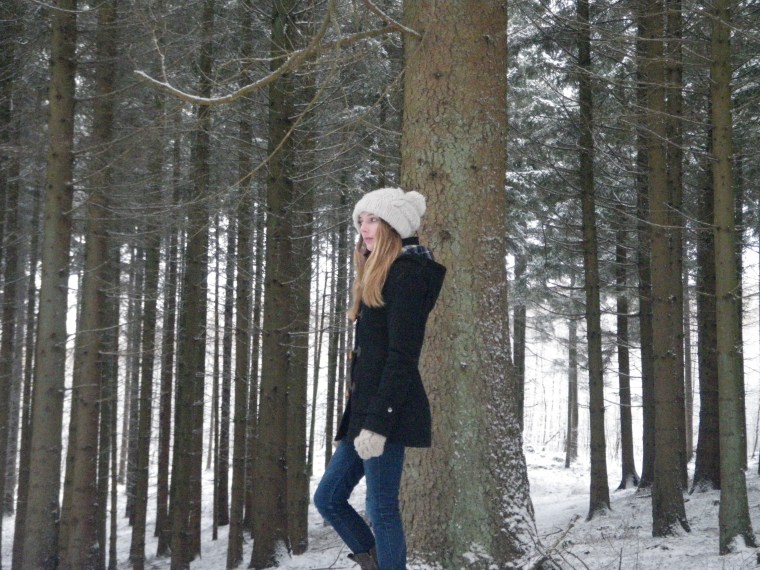
Little Red Riding Hood - a cautionary tale?

Dearest daughter,

in response to your letter in which you asked me very nicely to please allow you to walk into the wild woods by yourself:

remember Little Red Riding Hood? There was not a child more law abiding, sweet and obedient than her. A fact often overseen by those who refer to her story as a cautionary tale: the first third of it is entirely dedicated to how much everyone loved her due to her lovely and loyal disposition, truthfulness and dedication to her mother’s advice and guidance.

Do you think anyone hearing the story for the very first time – and being somewhat ignorant of the basic concept of morality in a fairy tale – do you think that such a person would expect her to forget about her mother’s advice the very first moment she encounters a challenge? Which is exactly what happens once she has wandered off happily with her basket filled with goods for her sick grandmother.

Well, we have to concede that she strays from the path of virtue for two reasons that somewhat make us stay sympathetic to her ordeal: first of all, she means well. A bunch of flowers from the wayside would surely be a welcome present for her grandmother? Never mind though that mother not only warned her against leaving the path but actually forbid her to do so! We see her put her own judgment without much quarrel with her conscience before her mother’s clear and concise directions. Let’s not forget we are talking about the most obedient girl in the village here!

The second aspect to exculpate her somewhat of course is that she is being seduced by a cunning conjurer of convincing tales. Can we really expect her to stick to those dry rules when confronted with the loveliness of the world beyond the right path as presented by a seasoned liar? The woods have never looked more inviting to her than after the wolf’s description of finely scented flowers growing in the shade of luscious trees! Shouldn’t we also blame her mother, by the way, who sends her into harm’s way? If there is a wolf lurking in those woods, as she well knows, why does she send her little girl on the errand? And you expect me to send you out into a world full of strange and unexpected temptations, equipped with just a few rules?

Here is the part of the story that has not been distributed widely but is worth considering. Prior to the whole walk in the woods scene Little Red’s mother had received a letter from her daughter. “Dearest Mother”, it read, “I am responsible and obedient. I would never do anything you told me not to! I have proven myself, now let me go!” Wouldn’t such a letter touch a mother’s heart just as yours’ touched mine? Wouldn’t it make her feel just a little guilty that she hasn’t entrusted Little Red Riding Hood with an important errand earlier already, Little Red Riding Hood, the best behaved, the loveliest, the most obedient girl in the village? You bet, it did. And we all know how the story ends!

Wait a minute, how does it end? If you think it has a bad ending, read again. Here we see her, sitting chipper at the table at her grandmother’s house, enjoying wine and cake in the company not only of her suddenly recovered grandmother but also in the company of a handsome huntsman?

Maybe this is not a moral warning tale about a girl who forgets the rules while she walks through the woods, ahem, to school on her own for the first time. Maybe it is a story about a girl who needs to make her own mistakes to find her own way, wolfs and all, and that despite all dangers there is a good chance for her to do just that. Maybe it is a story about a mother who needs to let her child go into the woods to find a way out again?

The more I think about it, the more I suspect that this is more a tale about the inevitable fact that mothers have to let their children go their own ways despite their fervent wishes to protect them against all evil and bad will, real and imaginary.

Go walk find your way through the wild woods as you must, my Little Red Riding Hood. But know that there is a wolf out there who will talk about moonflowers in the shades of the trees far off the beaten path …

With all my love,
Your Mother

fever and another barefoot stranger

fever and another barefoot stranger

The last winter before the completion of the new church he had an encounter with a stranger who had called upon him repeatedly and who was staying at the town’s only inn. He was dressed in simple, yet elegant clothes, cut out of fine, dark cloth. In a small town a stranger like this would normally have generated a great deal of curiosity. But he was so quiet and unassuming in his manner as to almost appear invisible. He went for daily visits to the rectory where he was served tea and would have long conversations with the pastor. The elegance of his appearance was so convincing that it took a while for the pastor to notice that the stranger wore but a kind of biblical footwear, close to being shoeless.

It was late fall. The trees were brilliantly red as if with religious fervor. The pastor felt alert, alive almost as if a lifetime of doubt and study suddenly held some promise, as if the dark aspects of his life were less weighing on him. Then the stranger came down with a severe flu which delayed his departure. High fevers made him delirious, and the doctor and priest both were called to soothe the rage which seemed to devour the man who had been a quiet guest until he came down with this fever. After three days he lost his consciousness and did not regain it. He died in the fourth night without the pastor at his side. The pastor himself was delirious in fever at this time and died only two days after the stranger.

time oscillating

IMG_5724

In the meantime I discovered the places where the seams come undone Every classroom in my school had a clock on the wall right over the door, and all the clocks had identical clock faces, and every one of them showed a slightly different time. I don’t know whether clocks in classrooms today are all connected to one central, totalitarian time piece as I suspect might be the case, though I hope it is not so.

I always loved the way time oscillated between classes, obstinately refusing to be tamed. Officially, students had three minutes to walk to the next classroom after a period ended. But for the way from science to math, for example, you’d better made do with 1 minute and 29 seconds – the clock in Ms. Kirsch’s class was as fast as our teacher’s ability to conjure numbers out of the back entrance to Hilbert’s Hotel and as inexorable as her refusal to admit to time measured outside her class room.

On the other hand, you could afford to leisurely stroll to French after that, using not only the 1 minute and 31 leftover seconds from math but also the 40 seconds the French clock was late, giving you an ample 5 minutes and 11 seconds (not counted the additional minute or two Mme. Petite rustled with her papers, ignoring her students’ ongoing conversation).

The clock in language arts had the peculiar and infamous habit of stopping at exactly 12.00 pm every couple of weeks and could only be persuaded back into service by Superintendent Segrob who, for that very reason, was particularly fond of it, and year after year insisted on repairing rather than replacing it.

Every day for a few moments just before noon instruction in language arts paused and everyone’s eyes followed the unhurried second hand making its way from 11.59.59 am to 12.00 pm. It was almost like a pagan ritual, these four seconds of silence, as if we were paying our respects to the spirit of the clock, Time. Time, sputtering, fleeing, stopping, resuming its course, divided itself up over the 79 clocks in our school according to its own preference. With other words, it seemed to be on our side and refused to be institutionalized.

I know that the language art clock did not stop on that day. I don’t think it would have been possible for it to stop while I was willing it on. Apart from Time herself though nobody noticed that I counted every second of the school day, 24,000 seconds in all, stops, gains and losses, until, at last, the 2.47 pm bell wrapped it all up hurriedly and dropped the leftovers for the time dogs.

The stone mason

The stone mason

He had seen them in the far off distance of the long street that moved towards the shop. Something in their movement had caught his attention. Two tall men moving oddly synchronically, not just the spacing and timing of the steps but all of their body movements seemed synchronized to exact, mechanical elegance. Both were dressed in black suits but wore no shirts. It was this odd detail that convinced him that they were coming to see him. Two men in black suits without shirts. Their faces were of a faint grey with sharp contours, very similar to each other like fraternal twins, their hair of the same shimmering raven black, held back with a tight ponytail. The suits accentuated their movements in the subtle way only an expensive fabric would and that could be mistaken for the confidence of its owner.
Both had light, almost dancing steps, yet one of them was clad in heavy, dusty work boots, the other in leather strap sandals. Upon entering his small front yard they parted ways and, abandoning their synchronical steps, started inspecting the sculptured that populated the yard, each on his own. He knew then that they had not come to commission a funerary stone. One of them bent over the mirror of the black granite and gravely studied his own reflection. Turned sideways and slightly stooped over, his shoulder blades protruded sharply under the fine fabric of his suit. His partner was reading the inscription on Linus Lindvall, as if he had been asked to pay special attention to it and was just now recording his impressions in his unfailing mind. The stonemason felt cold. He noticed that the sky had changed from a gay cerulean blue to a diffuse silver grey glare. He squinted his eyes.

shadows

IMG_5733

the shadows were moving slowly, swaying like branches in a light breeze or high buildings on a windy day. to detect purpose in these gentle movements required a slight degree of paranoia, and yet there was no apparent natural cause to explain the shift of the shadows away from their corresponding objects and towards the center of the village like water draining from upset glasses.

finally, there were just a bits of shadow left, like drops in a sink adhering to the enamel by their surface tension. these droplets of shadow were sparkling like rainbows, no grayness reflected. the air was still and non-expectant, noon in a depressed small town, and the realization that the world was without shadows had not yet sunk in. in a dirty jeep, parked close to the village center, a woman lit a marlboro.

even those who had dismissed the shadows as inessential, felt disconcerted when the birds ceased to sing. on the morning of the third day, after a dawn without luminosity had given way to dull day light, small insects began their crawling procession towards the centers that had swallowed the shadows.

and someone laughed at the gray man in his wrinkle free woolen suit who solicited signatures on retro-active insurance policies. “one day only”, he implored, “an amazing offer”, but they shooed him away while watching the myriad of tiny, scarlet colored spiders tie a living ribbon between the outskirts of the village and the shadow drain.

and yet, the spiders said, too easily do you accept that we form a living ribbon, and wander into oblivion. one by one. what to your eyes a living ribbon is, to ours is a band of pain, and joy, and hope against all odds.

Song of the Aelvor

Song of the Aelvor

i am luminous in my loneliness
there is no one else
to tell morning from evening
water from sky
light from shadow
no one to divide
idea and the symbol
representing it
the it from the i
and the i from the you
trying to find a bridge
back from nonexistence
reaching for stars
that burn in a distant sky
a sky that is a cold tent to dreams
conceived around hearth fires
we realize that
we cannot loose what is ours
and we cannot gain what is not.

Entdeckung – Ausschnitt aus den “Weidenkindern”

Sie waren auch erstmals verschieden in ihrer Begabung, etwas zu tun. Die anderen Kinder konnten Fuchs und Rabe, Eule und Wolf nicht unter der Oberfläche des Tons fühlen wie es der Rotschopf vermochte. Der Ton bewegte sich bereits, bevor das Mädchen ihn berührte, als sehne er sich nach ihren Händen, und die Kreaturen spielten in der dehnbaren Masse, die Rothaarige musste sie nur vorsichtig erfassen und hervorziehen. Kaum dass sie etwas an den Formen zu ändern schien, wenn die Figur erst einmal behutsam von dem Mutterblock getrennt worden war. Auch die anderen Kinder spielten gern im Ton, auch sie kneteten und modellierten kleine Kreaturen. Manche erwiesen sich dabei als geduldig und geschickt, andere mochten nicht lange still sitzen und ihren Händen die neue Fertigkeit abfordern und begnügten sich mit dem Kneten des Tons, um unvermittelt aufzuspringen und sich anderen Spielen zu widmen. Aber auch von den Kindern, die sich mit Ausdauer dem Ton widmeten, konnte sich keines mit dem Rotschopf messen. Ihre starken Finger befreiten nicht nur die Form, sondern auch den Geist des kleinen Abbildes aus dem Ton, sie zog Tiere und Kinder aus dem verdichteten Nichts.

perfection and love

When the boy was about five, old enough to overhear grown-up conversations, Iris had told him in carefully phrased sentences that she and her husband were not his biological parents. She told him that he belonged to them and that they considered themselves to be his parents just as if he would have been born to them. He had listened to her rehearsed words with an expression of inward contemplation. She had looked at his face while she was speaking, overwhelmed by the insufficiency of her own words, their stupidity even. How was he supposed to know what the term biological parents implied? When she had finished nervously and had braced herself for questions or tear or anger or resent (even though she could find no reason why he should feel resent against them learning that they had taken him in to be their son), he had stayed quiet for a while and they had looked at each other as two grown adversaries would, appraising the other’s strength and resources. Then, suddenly, his face had lost the frozen expression, and he had smiled at her, an overwhelmingly bright smile, and had asked her whether he could go outside to play with the mud people.
If they fullfilled their parental obligation towards him without ever truly finding the kind of love a parent might feel for a child, he did love them as a child loves his parents without contemplating nature, extent or meaning of his love. If he ever felt that he was missing something he never betrayed such a feeling through his behaviour or his words.
Sometimes there was a strained look in his eyes when his father left the room as if he recalled being left behind which of course was impossible as he had only been a few hours old when the custodian had found him. At other times Iris caught him looking at her inquiringly. But whatever question he was expecting her to answer he never put it in words. How could they have suspected that there were moments when sudden terror would overcome him, like a feeling of unmendable loss, how could they have known as those were moments when he was at his quietest, looking at a page in a book, an illustration, a word, waiting for the moment to pass. In time the random words he had stared at when the feeling had overcome him came to stand for the darkness. Solanum tuberosum. Common potatoe. Dampness and desperation. Polygala Alba. Milkworth. Sudden death. The word stood for the thing as much as the thing stood the word, even the spoken word. He saw the lines of letters when these words were spoken, and the letters formed the words in an inexorable logic and the words frightened him. The feeling never lasted for longer than a few seconds, seconds that questioned his whole existence and spelled extinction. It was not in his nature to display even this intense fear, he was separated from it as if it happened to another person, and the stillness in his own heart prohibited to revolt against the stranger who took over a five year old to feel what the child would have had no reason to feel himself. Unless memory holds those first few dramatic hours when it is decided whether we shall live or die before knowing even our parents. It was as if he had to carry a glass full of water without spilling a single drop – he literally held his breath while he lived ever so carefully. Only that he didn’t hold a glass but that it was himself who contained something that he was afraid to spill by sudden movement.
Maybe it was his composure that made it so difficult to love him. It didn’t help that he was completely self sufficient. Or that he did not seem to be aware of the extent of their generosity in accepting him as their son. And as it is difficult to love what is complete in itself and beyond the need for protection, it is equally challenging not to resent the person, even a child, who receives a gift with an air of leisure acceptance. He certainly did not behave as if they owed him any care but it was as if he accepted the gift of their being his parents as a favour and generosity towards them.
«But after all», Iris wrote in her journal «isn’t it quite normal that children are not grateful for their existence, and isn’t it indeed true that they are a gift to their parents? » And yet it felt as if there was a mistake in her observation. If there were none of the disturbances children will cause willfully or by the pure fact of their existence, there was little laughter either. Disturbances of the kind that children cause shake the core of life and make it vibrant. The average child will break the rules, not keep them, and this unwillingness to obey rules as much as it may annoy and exhaust a parent lies the true reason for love. We cannot love what follows us blindly, in our hearts we want to be reminded that there is life outside the prison of our self imposed rules. We do want to laugh at ourselves and at the world that we have build and have considered good while we knew better. And yet it is almost impossible to admit not to love someone due to the fact that they are – perfect.


reality is a shaky concept, really. if you have ever tumbled down the rabbit hole and come out to tell the tale you know. death and dreaming, and life, again. a circus show, your contribution an act of supreme will and despair, beauty, ten minutes of it. not more. then darkness. a cheap trick, a great, cheap trick. chapeau! i see your face in it and mine and lightning. darkness. a deck of playing cards, discarded bottle caps, laughter. and darkness. if you play it well it’s a game you are destined to loose gracefully. and bow. final curtain. glitter, flaky make-up and fading colors.too much of it to be tasteful, hopefully. then darkness. so glad i didn’t set out to win, or else i would not have kept company with you. chapeau.a rabbit in a waistcoat.a silver time piece. and darkness.