Mud people (excerpt from Gargoyle)
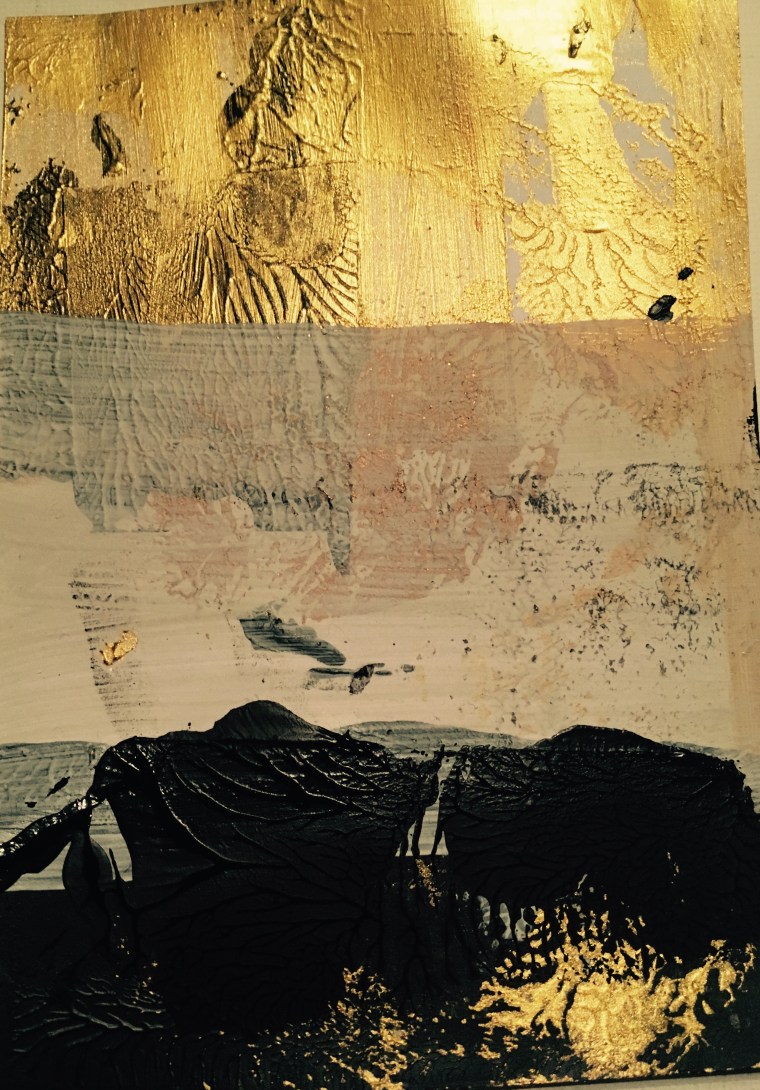
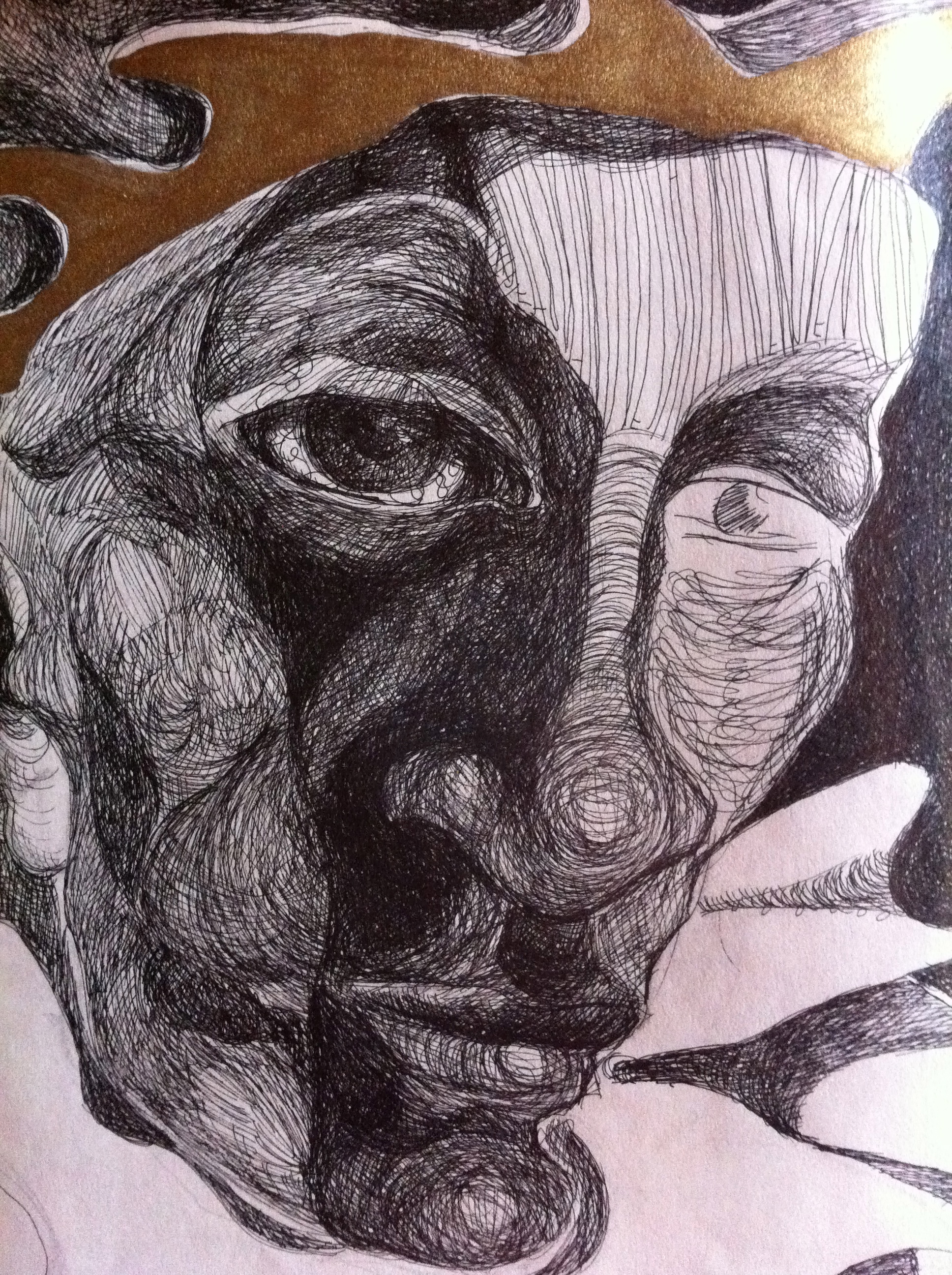
fullsizeoutput_b93 The shallow hole the boy had dug became deeper with time as he scooped out the red colored clay the ground was made of. He filtered it through his hands, taking out stones, sticks, decomposed leaves and roots. Punching and smoothing it he compacted the clay to one block, thus slowly building up a monolith from clay. He devoted great care to this process, making sure that he would have a structurally sound mass with which to work. Over the course of building hundreds of small people from mud he had gotten quite skilled at this craft. Only when he was content with the sound that a slap against the block produced, a deep, saturated thud, would he proceed to sculpt. With deliberate slowness he worked from the general form to the details. Many times a form had collapsed when he had tried to overemphasize a movement or had placed the limbs too far outside the center of gravity. In the beginning he had tried to use sticks to support an arm reaching out or a leg stepping forward and though technically that solution had worked he didn’t like that the figure now seemed to defy the laws of gravity that nature put on the material and form. It was thus almost impossible by the mere use of sticks and clay alone to sculpt an outreached limb that looked natural. So he had returned to work from the inner core of the material and to rather hint at a movement that – though invisible – the eye would project into the empty space. He was always intrigued by what he could see without seeing it. He liked the way his sculptures randomly related to one another, all he had to do was to quietly look at both sculptures and discover this relationship of forms. Something deep inside him stirred when he looked at his creations and their silent endurance. He could see the form of the space in between two physical forms, it was nothing and yet visible if one cared to look, it changed constantly, stretched and diminished, even disappeared. It was actually easier for him to comprehend the properties of this in between space than the form itself. You could get out of the trajectory of any moving object if you controlled that space. If you made that space in between adhere to your inner voice you did not need sticks to build a figure. Why, you barely needed your hands, all you had to do was to look long and hard, look at the clay monolith and make some slight adjustments. Soon his people were crouching, stretching, running, turning. He took great pleasure from this.

His father began to take notice too. One night when he had returned home from the workshop the little garden patch had first caught his attention. In the twilight the clay sculptures his son had build in the afternoon had a strange quality of perfection. There were seven fresh sculptures, six of them crouching on the ground, the seventh a small figure in flight, emerging out of a block of brick-colored earth, running.
From a distance it had seemed that all sculptures possessed distinct personalities and bore individual facial features. Something about these features seemed oddly familiar to the stonemason. Upon closer inspection he realized though that the impression of an actually sculpted face dissipated from a nearer perspective – but reinstated itself the moment he stepped back like a magical trick. The inability to confirm his initial finding, to come closer to the truth, was intriguing to him. He asked himself how a not yet six year old child could have created such a sophisticated illusion. He didn’t ever doubt that the impression was created deliberately. He studied the people his son had made for a long time. Inside the house the light from the boy’s bedroom shone dimly through the drawn curtains.
Time itself took notice of the unlikely creature

IMG_2513

“I  will be back.” Was it even meant to be a promise or rather the a mere, impulsive expression of an intent? The gargoyle pondered this question over many days, even weeks after the mason had left. He remembered the exact  sound of the words, their intonation, the expression of the mason’s face, the thoughtful gathering up of the tools, the turn of the head to once again rest his eyes upon the face of the stone creature, the final words – the gargoyle relived all of these moments and weighed them, day after day.

Every day up to midday he collected small reasons why chances were good that the man should appear this day, after midday he thought of excuses why he could not possibly have made it possible to come this day but would surely be able to fit it in tomorrow or at least before the week, the month , the season was over.

Perhaps the last gargoyle had been lonelier than he had cared to admit previously or maybe this obsession with the return of the mason was just yet another way to pass time.

Waiting for something to happen, somebody to appear, seemed to be far superior to just being, even if it infused his previously peaceful existence with a permanent sense of pain, a feeling that was so close to boredom that at times he would have been unable to distinguish it.

Boredom or pain both compromise our sense of regular time passing and whereas a day had just been a day, an hour just an hour before the advent of meaning and desire (now time had a direction, time existed so the mason could bridge it, so the gargoyle could subtract minutes from the greatest distance that separated him from the return, the moment when the mason had finally turned his back on him and left the roof), now a day could be excruciatingly long, especially if the gargoyle thought to have detected sounds coming from behind the closed roof door.

Expectation, gladness, desire, wishfulness, frustration, even despair were all variations on the same theme, waiting. Waiting in turn meant the refusal to accept time for what it was; it was like a progressing illness. It never occurred to the gargoyle to abandon his unreasonable expectation and to return to stone nature in order to gain the peace he longed for. Peace seemed attainable only if his curiosity about the reason for the return of the mason could be satisfied. Time passed and the mason did not return. Eventually the initially glad expectation turned into a numb pain, over time seemingly removed from any cause. A general disappointment  overcame the gargoyle, the most human of feelings, as if something that had been promised to him was now purposefully being withheld. It was as if his existence was gradually being tainted by something he could neither name nor really be completely sure of.

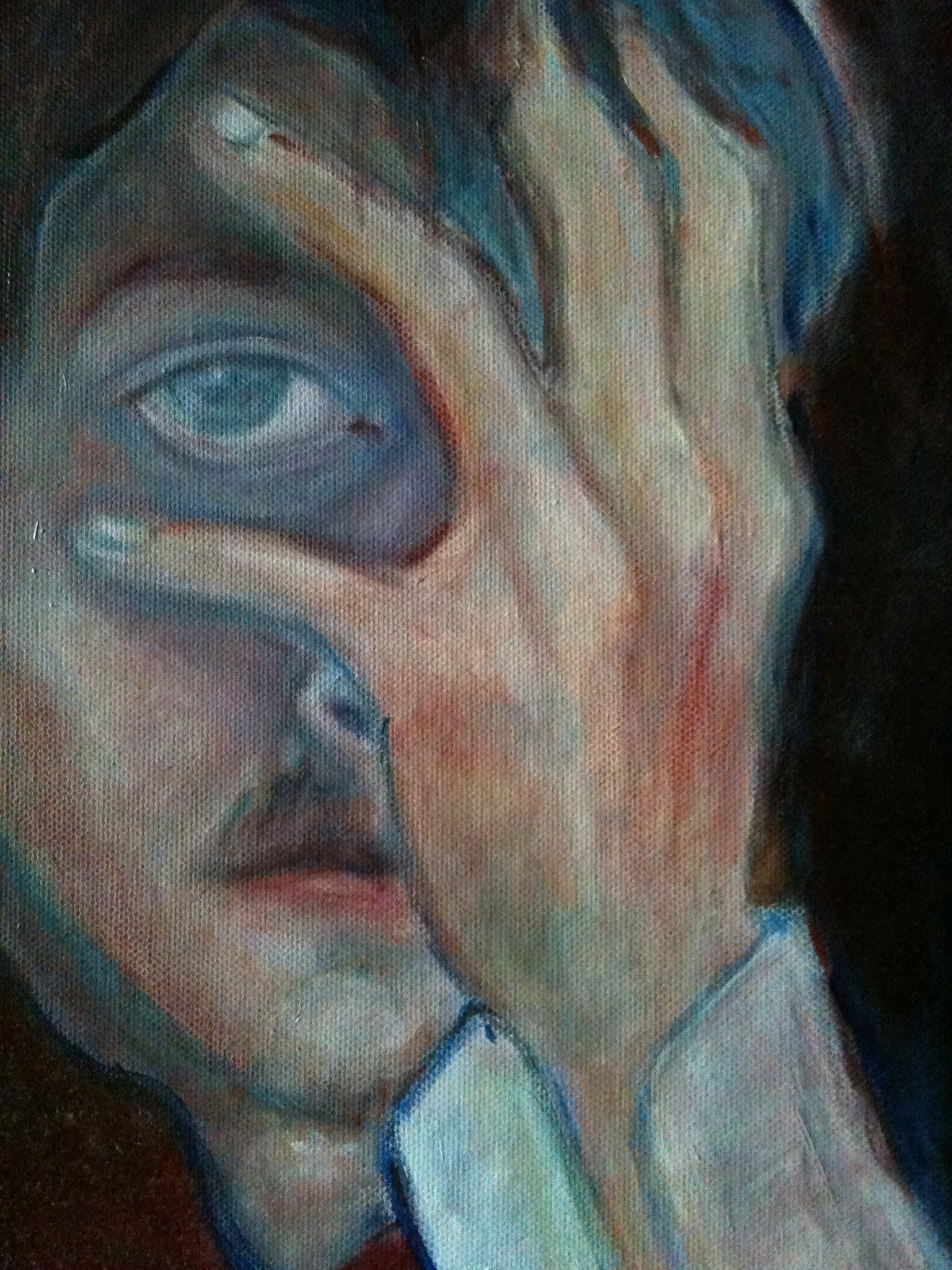
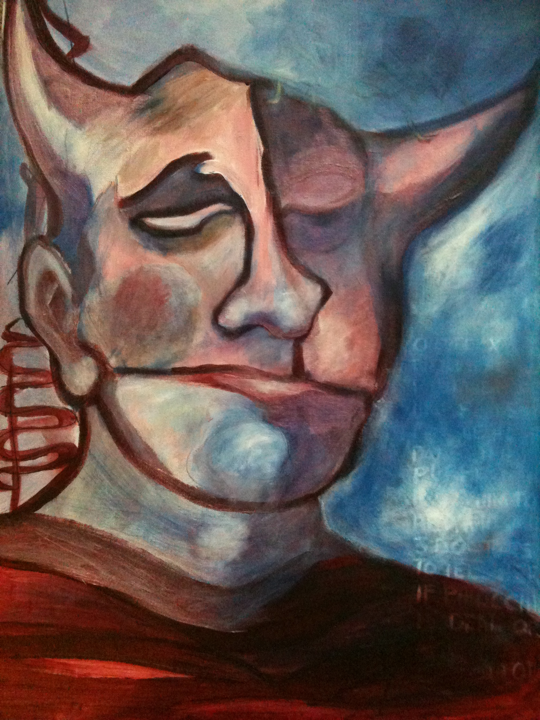
Time itself took notice of the unlikely creature and inexorably started gnawing at him with tiny teeth. The  gargoyle still formulated his thoughts in human phrases. But instead of patiently following a thought until it moved just out of grasp and then starting all over again like a child, he had taken to a summarizing his thoughts in a more generalist way, often colored by self-pity. A second rate stone poet he was now, defeated and ridiculous, utterly grown-up and utterly human. He felt contempt for himself, for his dependence, his passive waiting, his pathetic obsessiveness but he couldn’t help himself. There was no way to stop. No way to stop waiting. Tiny cracks were forming in the rough granite surface. Defeat was looming.

Transformative forces


IMG_0537

He  was but a gargoyle, a stone image.  How the gift of sentient observation had come to him he did not know any more than man knew where the soul originated. From his place on the roof he observed people, adults and children alike and marveled about the passage of time. After years and years of observation, of overheard fragments of conversation that the wind had carried up in the same unreliable and moody way he carried a fragrance like a caress or deposited leaves and debris in the gutter, from years of watching children grow up and age, he had concluded that humans were born with many gifts only to shed them with the years until nothing of value was left. Adults to him, the steadfast observer, were a manifestation of a process of  deterioration of their former promise.

There seemed something broken about adults to him, men and women alike, as if the original balance of their design had been spoiled. He liked children perhaps because they seemed unaware of the passage of time. He observed with pleasure as a seven year old girl straining under the weight of a watering can that she had been sent to fill up at the pump stopped in her tracks and put down the watering can only to pick up a small, white pebble to examine with great  interest and sincerity as if she had struck treasure. Another day he had observed  a young boy crouching on the path in an  immobile position for close to an hour, a long time in human count, to closely look at the street of ants entering the church underneath the granite slab step of the back door. It was the same ant street, as  wide as the arm of the local butcher,  that the custodian had failed to banish form the grounds even after many years of relentless and poisonous battle.

Every now and then, from his precarious precipice the gargoyle observed a kid  blinking up into the grey light of an early Northern spring day, scanning the gargoyle’s own dark silhouette against the diffusely bright clouds.  He had never seen any adult lift their head to actually study the structure and ornamentation of the church. It was children only, children  possessing the gift of timelessness by focussing on something small just outside their reach and holding on nonetheless, thereby transcending the moment that was forced upon them by wisdom or mere whim of the ruling adults in their lives. And all that time he was waiting just as they were waiting, existing in limbo, in a state of not knowing, waiting to be unbound, for his fate to be revealed to him, and yet dreading it, dreading it was but a process of diminishing, of deterioration just as the passage of time exemplified by human behavior seemed to indicate.  And yet, there were moments he still believed in the transformative forces of time and light.

A creature made from stone

defensive dreamerTime, unmoved by his suffering, resumed its course. We cannot keep close to our losses even if loss is all that remains of our loved ones. He had been bound to his companions by circumstance and habit, by outer design rather than inner necessity. Every day, month, week carried him further away from the experience of a shared existence. He had been utterly used to their conversations and rituals and had been almost overcome by grief during the first weeks after they had been taken from him – but now that they were gone he was slowly getting used to not being with them anymore. He also grew used to his even smaller view of the world, he kept in mind what he knew about the front steps, but he was content now with observing the smaller life of the back door – as in a way he had always been. There came a day when he felt that knowing about the life on Main Street had been but a youthful entertainment, almost an expression of vulgar curiosity, and that the quietness of the shadows on the roof was much more suitable for a creature made of stone than the strange mutation into language between the seven had been.

The little gargoyle

A picture taken by Charles Negre in 1853. Of H...
A picture taken by Charles Negre in 1853. Of Henri Le Secq near the ‘Stryge’ chimera on Notre Dame de Paris. (Photo credit: Wikipedia)

Embedded in the otherwise raw stone was the face of a little boy. The details were not worked out but still the image unmistakably was that of a child. His eyes were almost closed; he had round cheeks and a high, equally round forehead. The face was still and yet there was something disturbing in these childish, lovely features, a hint of pain not overcome.

After a protracted moment of meditation, like a period of silence between two people who do not know how to talk to each other but do not want to part ways just yet, the mason had taken up his tools and finished his work. Within the hour he had transformed the boy into a beast by adding spiked ears, pointed horns on his head, a hairy body, large hands and feet and a curled-up tail, all roughly fashioned. He then had put down his instruments, and without evaluating his just completed work again, had turned away from the boy and had left.

fever and another barefoot stranger

fever and another barefoot stranger

The last winter before the completion of the new church he had an encounter with a stranger who had called upon him repeatedly and who was staying at the town’s only inn. He was dressed in simple, yet elegant clothes, cut out of fine, dark cloth. In a small town a stranger like this would normally have generated a great deal of curiosity. But he was so quiet and unassuming in his manner as to almost appear invisible. He went for daily visits to the rectory where he was served tea and would have long conversations with the pastor. The elegance of his appearance was so convincing that it took a while for the pastor to notice that the stranger wore but a kind of biblical footwear, close to being shoeless.

It was late fall. The trees were brilliantly red as if with religious fervor. The pastor felt alert, alive almost as if a lifetime of doubt and study suddenly held some promise, as if the dark aspects of his life were less weighing on him. Then the stranger came down with a severe flu which delayed his departure. High fevers made him delirious, and the doctor and priest both were called to soothe the rage which seemed to devour the man who had been a quiet guest until he came down with this fever. After three days he lost his consciousness and did not regain it. He died in the fourth night without the pastor at his side. The pastor himself was delirious in fever at this time and died only two days after the stranger.

betrayal

betrayal

the death of his unborn son,
for the stonemason
it felt like a betrayal.

death was to be
a professional matter,
something to take place
in the realm of his customers,
who commissioned him
with carving memorial stones
for their dead,
not something to occur
in his own private life.

does not every profession
come with a privilege?
was it unreasonable
to expect a reprieve from death
as long as he carved memorials,
folded hands, lamenting angels?

he felt he had been let down
though by whom
he could not have said.

an atheist
in the service of the church,
loosing his unborn son
felt like a disciplinary measure
for his godlessness.

he had a system of inner convictions
unacknowledged rituals,
replacing religion.
he held on to the sacred
in the profane
he did not believe in a creator,
an organizer, a final judge,
and yet
he knew to have fallen from grace.

and no place to handle his complaint.

The stone mason

The stone mason

He had seen them in the far off distance of the long street that moved towards the shop. Something in their movement had caught his attention. Two tall men moving oddly synchronically, not just the spacing and timing of the steps but all of their body movements seemed synchronized to exact, mechanical elegance. Both were dressed in black suits but wore no shirts. It was this odd detail that convinced him that they were coming to see him. Two men in black suits without shirts. Their faces were of a faint grey with sharp contours, very similar to each other like fraternal twins, their hair of the same shimmering raven black, held back with a tight ponytail. The suits accentuated their movements in the subtle way only an expensive fabric would and that could be mistaken for the confidence of its owner.
Both had light, almost dancing steps, yet one of them was clad in heavy, dusty work boots, the other in leather strap sandals. Upon entering his small front yard they parted ways and, abandoning their synchronical steps, started inspecting the sculptured that populated the yard, each on his own. He knew then that they had not come to commission a funerary stone. One of them bent over the mirror of the black granite and gravely studied his own reflection. Turned sideways and slightly stooped over, his shoulder blades protruded sharply under the fine fabric of his suit. His partner was reading the inscription on Linus Lindvall, as if he had been asked to pay special attention to it and was just now recording his impressions in his unfailing mind. The stonemason felt cold. He noticed that the sky had changed from a gay cerulean blue to a diffuse silver grey glare. He squinted his eyes.

The Little Gargoyle


I’m looking for the face I had
Before the world was made.
Yeats, A Woman Young and Old

The little Gargoyle was sitting, the last of his kind, still as usual, listening to the faint sound of human voices from down below that the wind today seemed to be determined to carry in another direction. The Gargoyle sighed. Many days now he sat unmoved by the simple signs of social life the parish displayed on the little stage of his vision field. Sometimes he thought about the times when the others had contributed to his own observations with descriptions of what they could see. They all had had places of much greater exposition and had enjoyed a better view of the human spectacle down below. His own place in the shadows of the rear entrance suited the much less elaborate work that the artist had employed by carving him, basically not intending much more than creating a somehow sophisticated rainspout.
One might have thought that his first decades of existence must had been filled with envy or humiliation as his far more artistically executed companions had not failed to point out the aesthetic and social difference that clearly existed between his own simple self and their proud display. The truth was though that his nature was as simple and good willing as his face and that he had always preferred listening to talking and had been glad of their companionship despite their arrogance. Over time as boredom had led to an increasing tendency to quarrel among the more prominent members of the little society they chose him to confide in when their antagonists were drifting off to sleep, a deep, dreamless sleep, not unlike death, but the little gargoyle – clearly a failure in this respect as well as in his aesthetic execution – unable to retrieve his thoughts had been sitting alert and looking out into the night waiting for another morning that should restore his companions to him.
When they were all finally hovering quietly in their respective darkness he had often asked himself if the stonemason had known that he had been awakening the stone with his hammers and chisels and had he known would he still have chosen to give life and then abandon his creation? The little gargoyle of course had the patience and endurance of all stone creatures and one night, one week, one month of silence meant little to him. But he found that by never being able of sleeping he had lost some of his countenance, his stone nature, and during his long nights of silent thoughts while the others where embedded in an enviable state of coma had developed an inner life that didn’t seem quite suitable for a simple gargoyle.