the third night was bitter cold. eliminating useful words seemed an appropriate strategy to survive the moments that passed with uninterpreted certainty until about five minutes after midnight when the terror of the imaginative mind took over with an ease that betrayed its uncontested reign held even when the discipline of the mind seemed to have hold at bay the monsters lurking in the dark. the useless words i was left with after having eliminated the useful ones had painted beautiful, inconsequential shadows into meaningless days but the reign of the imaginative mind illuminated just a stretch of the way into the darkness, far enough to lead me further astray. but why should i have obeyed the categorical imperative and follow a chilling truth dedicated to a purpose i did not condone even if i couldn’t escape its gravity, a truth i won’t deny, not even now, a truth that with precision etches letters of sober inquiry into my mind but does not not compare to the shimmering beauty of my ordinary lies five minutes after midnight.
English: Immanuel Kant Deutsch: Immanuel Kant (Photo credit: Wikipedia)
Canis Major as depicted in Urania’s Mirror, a set of constellation cards published in London c.1825. Next to it are Lepus and Columba (partly cut off). (Photo credit: Wikipedia)
“Your fist like this”, she said, “covers about 10 degrees of the night sky.” She moved my hand slowly over the dark water and spoke in her methodical way, no use to interrupt her. “20 degrees south-east of the belt of Orion, you see, there is the brightest star in the night sky, right in the constellation of Canis Major.” She waited for a moment for me to catch up with her. Our entwined hands travelled over the night sky and stopped. And there it was, deep underneath us, the brightest star of the night sky, as far as I could see. “Do you see this star?” she asked. “It is called Sirius. It is 23 times more luminous than our sun, twice the mass and the diameter of the sun. It is only 8.5 light years away.” The way she said “only 8.5 light years”, it sounded as if she was talking about a Sunday picnic destination. It sounded like: We could take the bike. It’s only 8.5 light years away. Before I had a chance to point that out to her, however, she had started talking again, and almost without warning, though in answer of my question, switched from her facts, from degrees between two points of light in the celestial sphere, luminosity and brightness, and mass of celestial objects, to a startling revelation.
this knowing “you are on to something good” is exactly where the artist meets the scientist. only that in general the scientist will be patient and disciplined enough to acquire the skills necessary to actually explore and eventually understand that unfounded suspicion and the artist will just take a cursory inventory of the idea’s implications and then take to the type writer (or the canvas) like the monkey, ready to blindly shell out the sequence of letters to actually and surprisingly eloquently prove that “it” was always known.
My head still throbbed lightly and the smell of the new scrubby grey floor tiles did not help to improve it. I concentrated on the unusual pattern of the otherwise ordinary floor covering. The tiles were light and dark grey and laid out in an unexpectedly complex arrangement. Areas can be filled completely and symmetrically with tiles of 3, 4 and 6 sides, but it was long believed that it was impossible to fill an area with 5-fold symmetry though Kepler played with the idea. I knew this because my mother loved the work of M.C. Escher who was intrigued by mathematic patterns and used them in his illustrations. It did perplex me that the library floor tiles were cut out of so called kite and dart shapes which actually allow a surface to be completely tiled in an asymmetrical, non-repeating manner in five-fold symmetry with just two shapes based on phi. As a result the tessellation of the dense felt tiles in the lobby made it impossible to arrange my thoughts according to the floor pattern – a technique I had used since childhood to soothe anxiety. Instead I began to draw shifting lines through the pentagrid in my mind, preferably coming up with glowing triangle shapes. The forms danced in front of my eyes. I felt faint.
My books were still my books, but in the otherlight they belonged to a library long since destroyed, the great library of Babel, lost in time. In the grey otherlight yesterday was today and tomorrow. My books bore the name of great authors who during their lifetime had not been granted a chance to write. Who had existed like I did now, but had suffered from persecution, hunger, war, or had just had the misfortune to be born as women who had not been granted to even learn to read and write. I saw their names on the spines of the books in this library. And I was filled with a sense of gratitude to the stars of my own life, a feeling that was way too large to be contained in one person and so it just swiftly washed through me in the otherlight.
In the meantime I discovered the places “where the seams come undone”, as my mother called it. Every classroom in my school had a clock on the wall right over the door, and all the clocks had identical clock faces, and every one of them showed a slightly different time.
I don’t know whether clocks in classrooms today are all connected to one central, totalitarian time piece as I suspect might be the case, though I hope it is not so. I always loved the way time oscillated between classes, obstinately refusing to be tamed. Officially, students had three minutes to walk to the next classroom after a period ended. But for the way from science to math, for example, you’d better made do with 1 minute and 29 seconds – the clock in Ms. Kirsch’s class was as fast as our teacher’s ability to conjure numbers out of the back entrance to Hilbert’s Hotel and as inexorable as her refusal to admit to time measured outside her class room.
On the other hand, you could afford to leisurely stroll to French after that, using not only the 1 minute and 31 leftover seconds from math but also the 40 seconds the French clock was late, giving you an ample 5 minutes and 11 seconds (not counted the additional minute or two Mme. Petite rustled with her papers, ignoring her students’ ongoing conversation). The clock in language arts had the peculiar and infamous habit of stopping at exactly 12.01 pm every couple of weeks and could only be persuaded back into service by Superintendent Segrob who, for that very reason, was particularly fond of it, and year after year insisted on repairing rather than replacing it.
Every day for a few moments just before noon instruction in language arts paused and everyone’s eyes followed the unhurried second hand making its way from 11.59.59 am to just after 12.01.02 pm. It was almost like a pagan ritual, these approximately sixty-three seconds of silence, as if we were paying our respects to the spirit of the clock, Time. Time, sputtering, fleeing, stopping, resuming its course, divided itself up over the 79 clocks in our school according to its own preference. With other words, it seemed to be on our side and refused to be institutionalized.
I know that the language art clock did not stop on that day. I don’t think it would have been possible for it to stop while I was willing it on. Apart from Time herself though nobody noticed that I counted every second of the school day, 24,000 seconds in all, stops, gains and losses, until, at last, the 2.47 pm bell wrapped it all up hurriedly and dropped the leftovers for the time dogs.
She moved my hand slowly over the dark water and spoke in her methodical way, no use to interrupt her. “20 degrees south-east of the belt of Orion, you see, there is the brightest star in the night sky, right in the constellation of Canis Major.” She waited for a moment for me to catch up with her. Our entwined hands travelled over the night sky and stopped. And there it was, deep underneath us, the brightest star of the night sky, as far as I could see. “Do you see this star?” she asked. “It is called Sirius. It is 23 times more luminous than our sun, twice the mass and the diameter of the sun. It is only 8.5 light years away.” The way she said “only 8.5 light years”, it sounded as if she was talking about a Sunday picnic destination.
When I was five, my mother, an artist, told me that over time the use of the words “up” and “down” had been reversed through what she called “accumulated acts of lazy thinking”. Consequently, she told me, people had gotten used to seeing the world in a crooked way. With other words: where other people look up into the tangled branches of a tree, to the clouds, an airplane, the sky, my mother had trained herself to look down into the depths of the endless oceans of the universe.
The amazing thing is that the moment you try this, it feels just like the right way to look at things and you will feel like you have never truly seen the sky before. Stretching myself I reach deep down into the world whereas before, when I understood up and down in the usual way, the sky seemed more or less like a painted stage decoration.
Often, on late summer nights my mother, my sister and I would lay down flat on the lawn of our front yard and look down into the stars. The grass of our lawn was long and wavy, different from the short cut golf course front lawns of our neighbors, and woven through with moonflowers that smelled lovely in the warm, damp night air and in their whiteness actually glowed like little stars themselves.
I remember one night when I felt particularly light and small, and grateful to gravity for holding me securely to the surface of my own planet. The stars glittered in the distant depth. My mother giggled when she noticed that my little sister had fallen asleep right there on the lawn, her head nestled onto my mother’s shoulder.
Suddenly it seemed so unlikely to me that in all of the universe expanding before my eyes our planet should be the only one with life on it. I asked my mother, who had been silently holding my hand whether she thought that there was life out there. My voice sounded like a whisper. It was the kind of question to which you don’t really expect an answer.
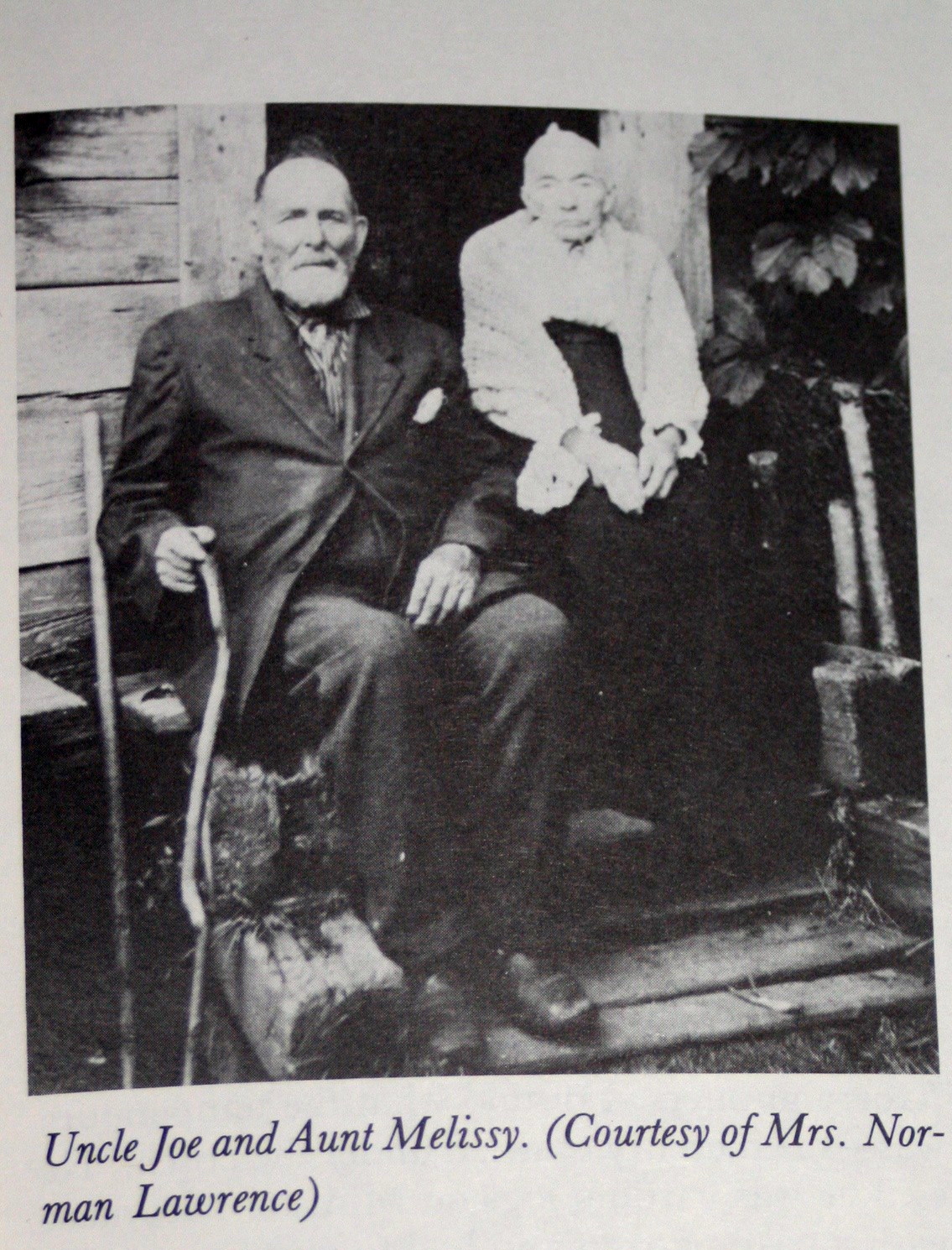
Uncle Joe was as talkative as his wife was quiet – but she had a quick wit, accentuating his stories with dry remarks that he returned with good natured smiles. “The smartest girl in the Northern County she was”, he would sometimes say, “and imagine, she agreed to marry me! But only after I cut my beard and swore off tobacco. She would not have had me otherwise, and I have become a better man for it. “
As I started to get stronger and could sit up in bed, still wrapped up in the blankets, Uncle Joe would entertain me with outrageously funny stories of his youth. He was given to enraptured fits of laughter triggered by his own jokes. When he got too carried away with his stories, Aunt Melissy would look up from her work – for she was never idle – and comment sternly: “Never be rash with your mouth, nor let your heart be quick to utter a word before God, for God is in heaven, and you upon earth; therefore let your words be few.” Then Uncle Joe smiled good-naturedly and continued his story with just as much zest while Aunt Melissy continued with her chores as if the words had not been spoken. Only on Sundays she did not tolerate his spinning of tales but insisted on bible study and quiet prayer and he obeyed her without complaint.
I have never again met a husband and wife who seemed so comfortable in their home and so content with their life and each other. Despite his stockiness Uncle Joe was quick to jump up like a cat when Aunt Melissy entered the cottage and eager to please her with some little errand or kindness. She returned his pleasantries with home baked goods and fragrant meals. Her only love besides Uncle Joe were the snow white chicken in her yard for which she was known in the county. Aunt Melissy and her white hens. Children they had none.
Often, on late summer nights my mother, my sister and I laid down flat on the lawn of our front yard and looked down into the stars. The grass of our lawn was long and wavy, different from the short cut golf course front lawns of our neighbors, and woven through with moonflowers that smelled lovely in the warm, damp night air and in their whiteness actually glowed like little stars themselves. I remember one night when I felt particularly light and small, and grateful to gravity for holding me securely to the surface of my own planet. The stars glittered in the distant depth. My mother giggled when she noticed that my little sister had fallen asleep right there on the lawn, her head nestled onto my mother’s shoulder. Suddenly it seemed so unlikely to me that in all of the universe expanding before my eyes our planet should be the only one with life on it. I asked my mother, who had been silently holding my hand whether she thought that there was life out there. My voice sounded like a whisper. It was the kind of question to which you don’t really expect an answer.
My Mother took my hand and pointed down at the three stars of the belt of Orion. “Your fist like this”, she said, “covers about 10 degrees of the night sky.” She moved my hand slowly over the dark water and spoke in her methodical way, no use to interrupt her. “20 degrees south-east of the belt of Orion, you see, there is the brightest star in the night sky, right in the constellation of Canis Major.” She waited for a moment for me to catch up with her. Our entwined hands travelled over the night sky and stopped. And there it was, deep underneath us, the brightest star of the night sky, as far as I could see. “Do you see this star?” she asked. “It is called Sirius. It is 23 times more luminous than our sun, twice the mass and the diameter of the sun. It is only 8.5 light years away.” The way she said “only 8.5 light years”, it sounded as if she was talking about a Sunday picnic destination. It sounded like: We could take the bike. It’s only 8.5 light years away. Before I had a chance to point that out to her, however, she had started talking again, and almost without warning, though in answer of my question, switched from her facts, from degrees between two points of light in the celestial sphere, luminosity and brightness, and mass of celestial objects, to a startling revelation: “My grandfather, your great-grandfather, believed that there is life in the Sirius system. The Dogon, an African tribe with very acute astrological knowledge, have believed for centuries that there is life out there as have the ancient Egypts and the Sumerians. According to the Dogon Sirius is accompanied by two other stars, a very small and incredibly dense star they call Po Tolo, which means “very little star”, and which modern astrology has confirmed to exist only recently and calls Sirius B. Indeed it has turned out to be a small star with an incredible density, heavier than the iron we know on earth. The Dogon also claim that the other star in the Sirius-System is lighter and larger than Sirius. They call it Emme Ya. And around Emme Ya they say there orbits the home planet of the Nommos, the children of Sirius and Emme Ya.“
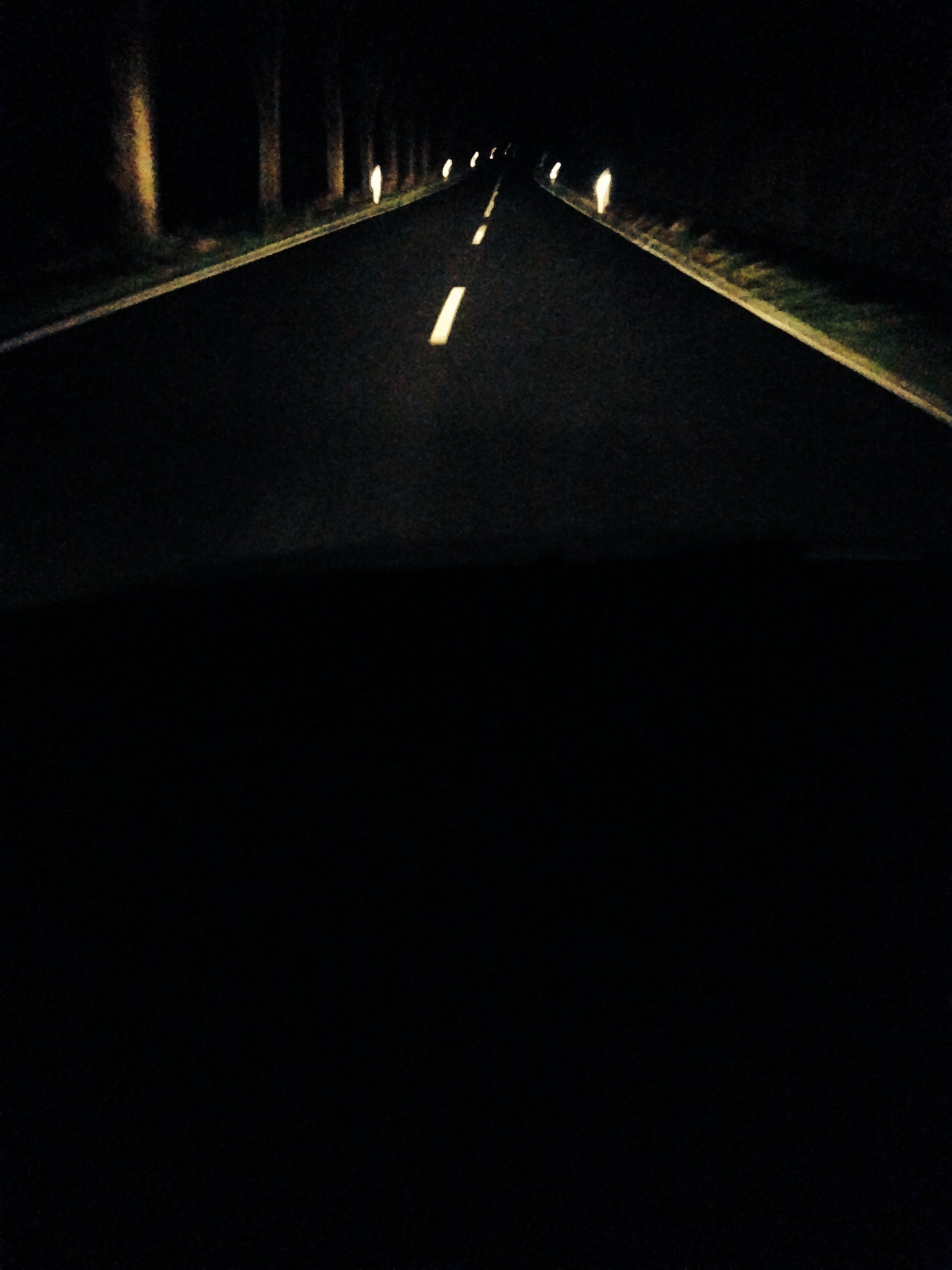 the third night was bitter cold. eliminating useful words seemed an appropriate strategy to survive the moments that passed with uninterpreted certainty until about five minutes after midnight when the terror of the imaginative mind took over with an ease that betrayed its uncontested reign held even when the discipline of the mind seemed to have hold at bay the monsters lurking in the dark. the useless words i was left with after having eliminated the useful ones had painted beautiful, inconsequential shadows into meaningless days but the reign of the imaginative mind illuminated just a stretch of the way into the darkness, far enough to lead me further astray. but why should i have obeyed the categorical imperative and follow a chilling truth dedicated to a purpose i did not condone even if i couldn’t escape its gravity, a truth i won’t deny, not even now, a truth that with precision etches letters of sober inquiry into my mind but does not not compare to the shimmering beauty of my ordinary lies five minutes after midnight.



 Art & Writing