Page 28 of 41

Woe to the unfortunate stranger who should come upon the gate they were keeping

For a brief moment also I did wonder now whether I was still dreaming. Yet the wet sand, the sea gulls of the lake circling overhead, the light on the water, the dark blue reflections of the two adjacent Mountains, Mount Hor and Mount Pisgah, in the misty mirror of the lake on the distant Southern shore, everything had a coherence that was not dreamlike. And yet the situation was surreal, not only because I had fallen asleep on my bed and woken up on a wet, cold beach hundreds of miles away from home. The sun, for example, was incredibly small, too small for our planet, planet earth. In the east the sharp crescent of a waxing moon, greeting the morning with disdain, was accompanied by a second crescent, a twin moon. And the surface underneath me was still breathing. And yet I knew the silhouettes of the twin peaks by heart. My mother used to tell us on warm summer nights, when the sun had already left the sky and only the patient outlines of the rock formations on both sides of the lake were still cutting into the advancing darkness, that the mountains were ancient guardians who were forgotten by their masters and not having been relieved of their duty had decided to keep their post to the edge of doom. Woe to the unfortunate stranger who should come upon the gate they were keeping. Lake Willoughby was an incredibly deep, glacial, water filled ravine, and there was some sparse folk lore about creatures living in the dark, about a connecting underground acquifer between the lake and its twin lake, Crystal Lake, to the West behind Mount Hor. It was a strange place, but being as remote had kept all stories at bay.

I sat still for a while, waiting for the scenery to change or disappear like dream images do, especially if you pay too much attention to the details, but the situation was as real as you can imagine, and not prone to change any more than Ms. Havenshire’s classroom during an especially tedious lecture on a philosophical concept that excited her. I stared around for a while, bravely ignoring the piercing cold, trying to take an inventory of everything. Except for the strange planetary constellations, the lake seemed real. I had never been up here in fall but I imagined it to look as lonely and cold as it did now. It is not exactly a lively place even in summer. And in winter, once the snow started, it would be one of those places that were cut off from the outside world for weeks on end, alas with the local people being prepared for it and not disconcerted by a few inches more or less of snow or even by massive boulders coming thundering down the mountains just like every winter. There was no skiing and therefore no seasonal dwellers in winter. Both, Mount Hor and Mount Pisgah were too steep and fully covered with trees.

I was shivering violently now, my clothes were as damp as if I had actually spent the night unprotected on the beach. When I finally stumbled up to my feet, it took me a moment to find my balance just as it would have on a big gym mat. I tried to disregard the breathing of the surface and made a few gingerly placed steps towards the water. What to do next? What to do if you are suddenly stranded in a place without any preparation or at least warning? Why was I here? In a dream, typically, events keep unfolding and you keep reacting but the lake was quiet with quick shadows dancing over the surface. I stopped at the water’s edge. Little waves arrived at the shore with a sweet sound. Light was dancing silver on the ripples. I was getting colder by the second, shaking most convincingly.

I had to find shelter. There was a colony of summer cottages at the North Beach, they would be boarded up for the winter, but maybe I could find a way in all the same to warm up and think. It seemed a reasonable plan, if you can at all call it reasonable that you have to think about finding shelter in a dream. Again I asked myself what I would do once I got inside. Maybe there would be a phone but even if there was, it probably would be disconnected for winter. Would it even make sense to call home and ask for someone to please come and rescue me? How ever to explain how I got here? And would it be possible to call home even if I found a working phone? I turned around to scan the tidy row of vacation cottages at the North Shore to find one that would suit my improvised plan and I faced an impenetrable row of trees. The cottages were gone.
Without opening my eyes, I carefully and with a sense of controlled terror extended my other hand…

I lay curled up like a cat and I could feel the curve of my spine, I could feel my knees against my chest and my hand underneath my cheek. Without opening my eyes, I carefully and with a sense of controlled terror extended my other hand to feel the surface of my quilt. I would know the stitching of its pattern, the softness of the filling having long since relaxed against the fabric. My fingers gently touched the surface. I hesitated. It felt grainy. Not grainy like cookie crumbles. Grainy, like sand. When I thought “sand”, I shoved my fingers deeper into the surface. They did not meet much resistance. I pushed easily into the sand like I would, aimlessly, on a beautiful day on the beach. All the while the surface underneath me was breathing. I had to open my eyes to find myself. I wondered whether I was still dreaming, and for a moment considered trying to drift back into nothingness, but I felt wide awake, too awake.

So I did. I opened my eyes. It was not dark at all as I had fully expected, yet the sun was pale, far away in the winter sky, just so illuminating the grey mists rising up from the water. I knew where I was. I was most definitely not on my bed in Summerville, NJ. I was curled up, like the sole survivor of a ship wreck, on the shore of a lake. I sat up, stunned, on the wet sand, numb with cold as much as with surprise. I knew the beach. It was small. I had spent many summers here with my family. I was sitting on the North Shore Beach of Lake Willoughby.

All things considered, it was strange that my mind accepted this truth so readily. I didn’t think: I must be dreaming. I didn’t look for an explanation.

the earth itself, underneath my body, was a breathing organism, like a gigantic whale you find yourself stranded on

How hard my mind had to work to keep control, to still try to make sense out of a wealth on information that had long stopped to be apprehensible by any rules I had been led to understand applied. But only submission to the world of grown-ups would have you believe that they were – in general – truthful about the world. I didn’t believe this anymore but tried to rely on my own senses instead. It was treacherous ground.

For example that night. As I lay in the dark, eyes closed though wide awake, the surface of my bed felt soft as was to be expected, but it felt soft in the way I had experienced and shied away from before. It seemed to be soft in an organic, breathing way. I tried to distinguish between my own breathing pattern and the breathing of that soft, pliable surface I felt underneath my body.  It was an uncanny feeling – but just ask yourself how many sensations you can really clearly distinguish besides soft and hard, warm and cold, pain and pleasure. Truth is, you constantly rely on additional sensations and context to tell you about the thing you are experiencing through just one of your senses to make sense of something.

What was it that I was feeling? Something that I feared, but I didn’t know why I feared it or whether I had reason to fear it in the first place as I was completely unaware of its nature. All I knew was that last time I checked my bed had not been breathing. As before it felt actually – and it made perfect sense to think those words as irrational as they might seem – that the earth itself, underneath my feet, my body, was a breathing organism, like a gigantic whale you find yourself stranded on. It didn’t make sense and I couldn’t explain to myself where that strange idea actually orginated. Nothing I had read or talked about lately had pointed in that direction. Remember, there was no internet and but little TV. None in our house, by the way.

And yet, I just felt it, right there and then, the surface underneath me belonged to something alive, and I knew I had to open my eyes to find out what was going on, but I was entirely too scared to live up to my own imaginative ability. All I could manage to do, pathetically,  was to continue breathing slowly just as I had done during those long ago nights when I had led some non-existing intruder to believe that I was asleep. And with each moment the sensation of a sighing, breathing surface underneath my body was getting stronger.

god and a decade ending with the brief and delirious ruling of acid freaks, post feminists and de-constructors of language

When I thought about the idea of god waking me (or not) I became afraid. There was a German lullaby by Brahms that my then ancient great-grandmother used to sing to me when I was really very little which ended with the words: “Tomorrow morning, if God wants so,
you will wake once again.…”  Our family life was altogether politically non-theistic, except for the great-grandmother who passed away when I was about four, but the idea of god deciding about my waking in the morning was still disconcerting. What if he did not want to? On a whim? Would I just sleep forever? Would I die? What if he plain forgot about me?

When I had asked my mother about the song she had explained to me that the lyrics dated to a time when it was understood that everything – everything – happened only with god’s consent and that these lines, by their content, did not deal primarily with the idea of god remembering to wake people or not.

I don’t know whether that explanation did much to put my anxiety to rest, I think probably not. But it certainly was with relief that one day I realized that I actively did not believe in god. That was an easy attitude to acquire in my family, by the way, and an easy attitude in that decade following the sixties, a decade ending with the brief and delirious ruling of acid freaks, post feminists and de-constructors of language which left a lasting impression on western societies and which was my intellectual parents’ undeniable contribution to a new cultural value system, a system that allowed for people like them to unfold their wings and discover entirely new horizons and ideas.  I don’t remember that we had ever attended any church service. Even wedding ceremonies in my parents’ circle of friends and family were civil ceremonies. No baptisms. Still, God remained a quaint distant relation who, after a history of misfortunes, had found asylum in old nursery rhymes and lyrics. All but forgotten and without charitable visitors, but hanging on.

My parents’ were avidly confessing atheists for many years until older age and the dawning sense of their own mortality softened their rhetoric. And yet, my childish sense of superstition, during the phase of their most decided and articulated stand on the topic, detected an ominous quality to the concept “god” and it took some years and my awakening intellect to overcome the threatening taste the fear of that forgotten but lingering god left in my mind. Maybe god explained and explored would have been easier to understand but I was pretty much left to my own devices to figure out what the idea of god stood for.  I vaguely feared god until I shed that fear pretty much like I had shed the fear of the nightly intruder eventually. Only much later did it occur to me that the elimination of god did not erase the randomness and with it the terror of the unpredictable nature of death.

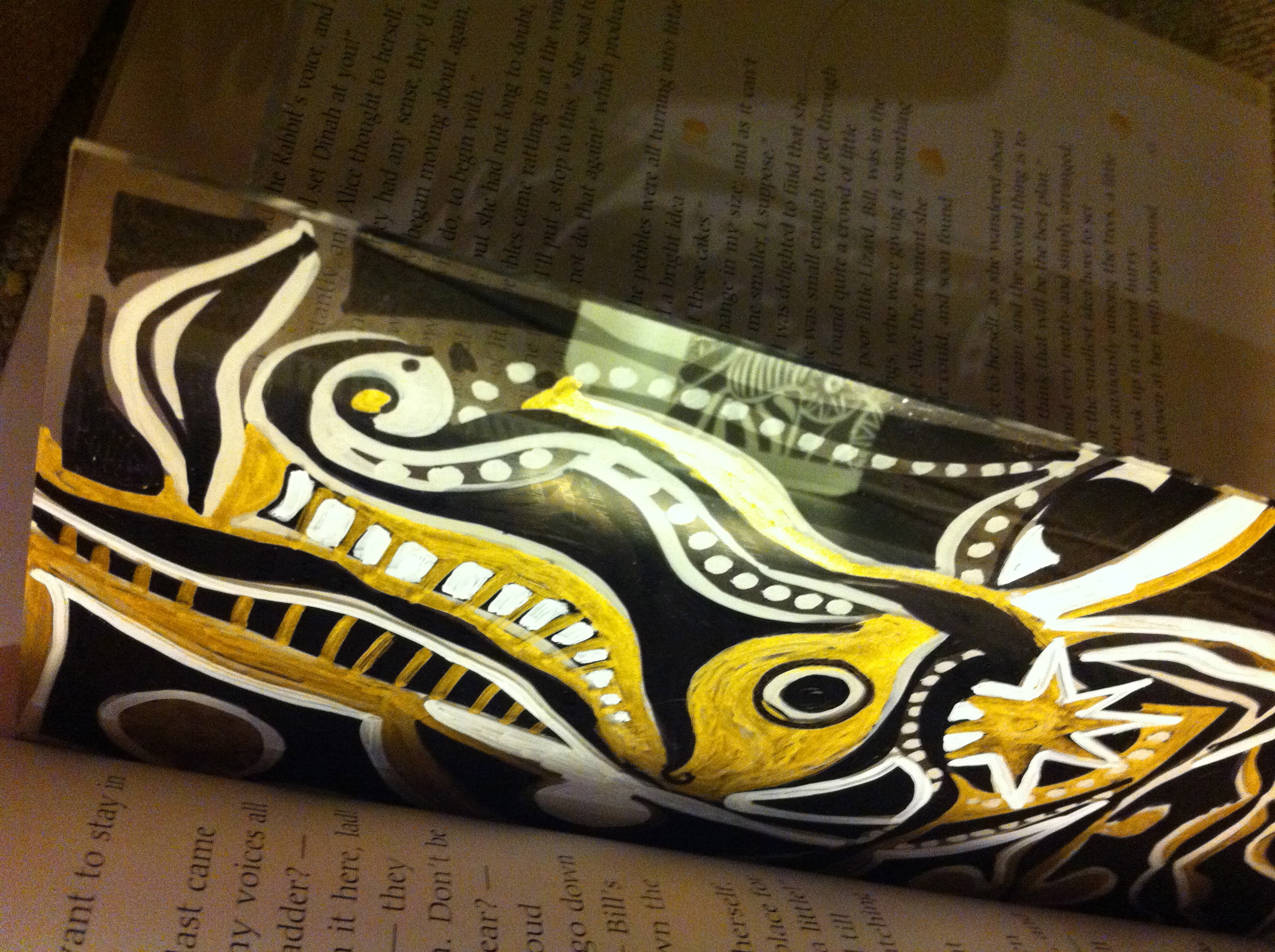
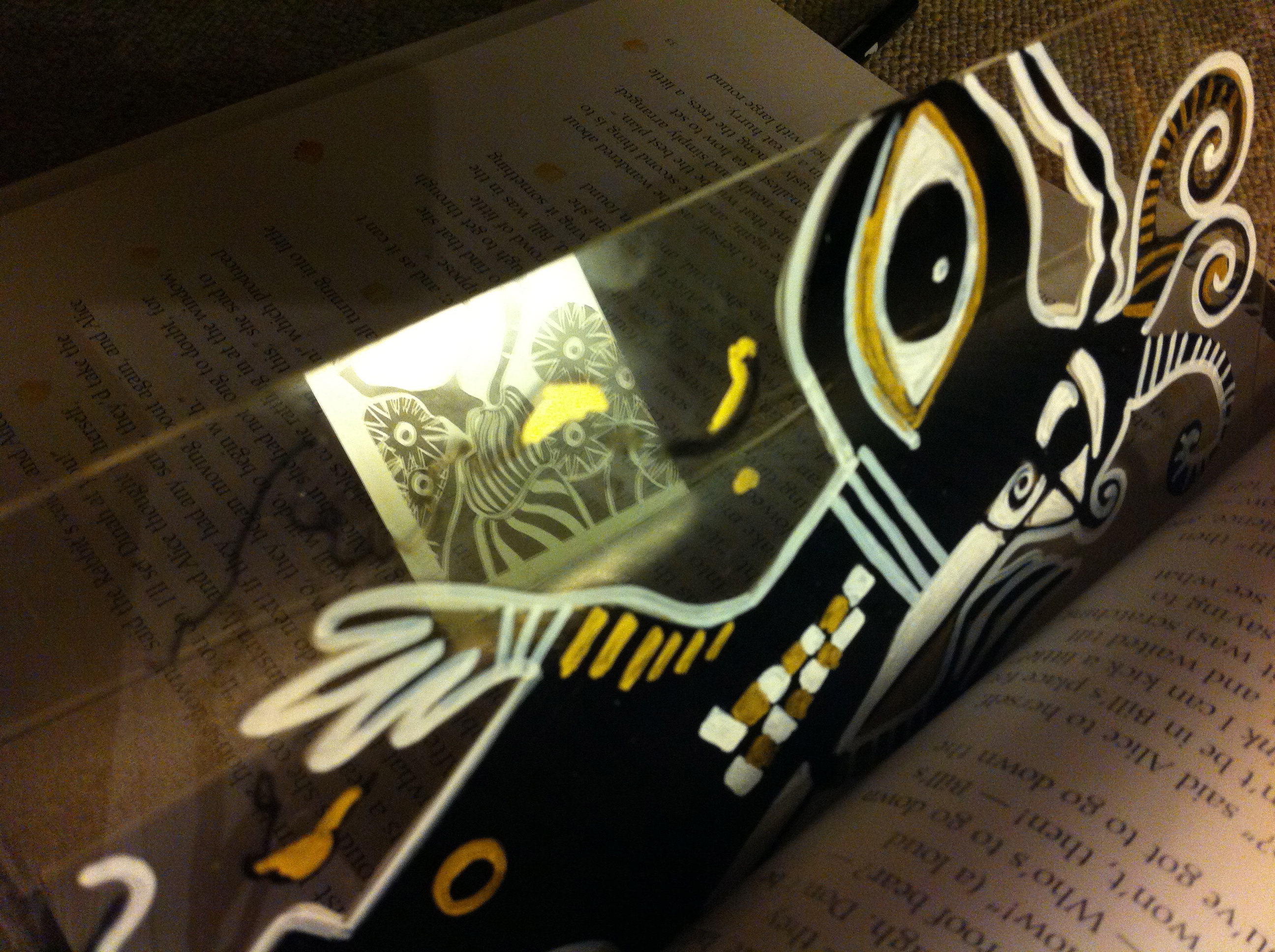
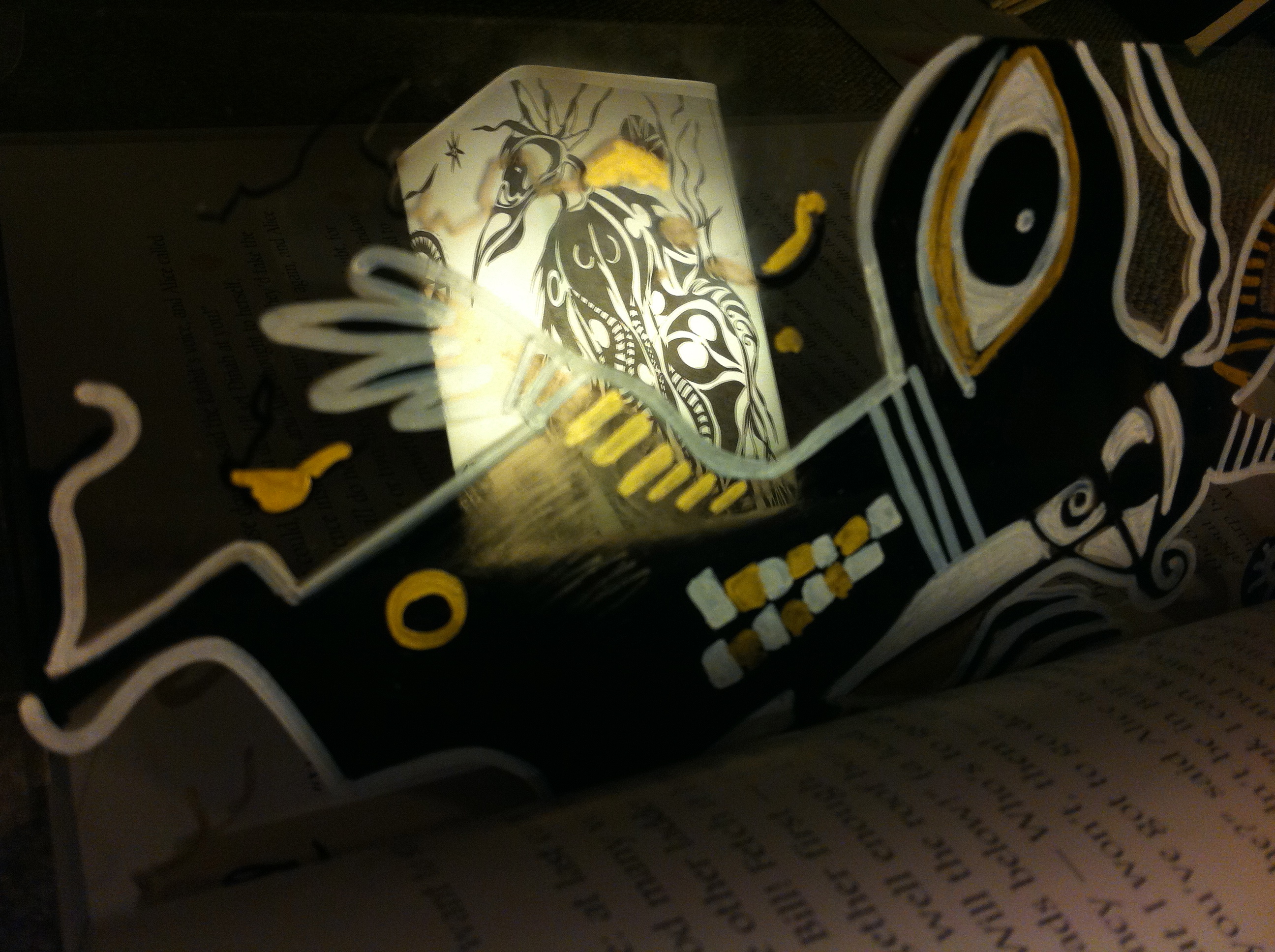
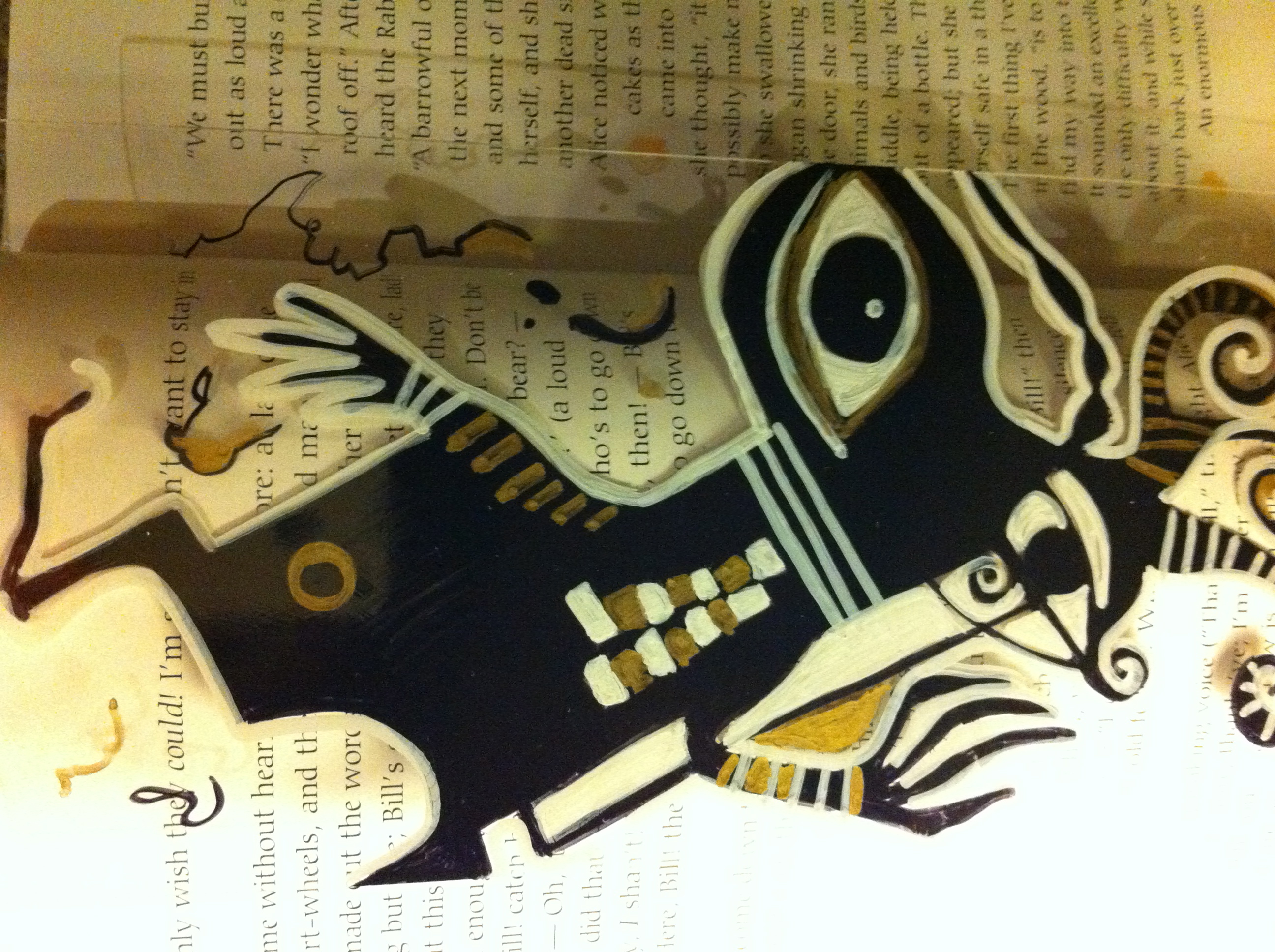
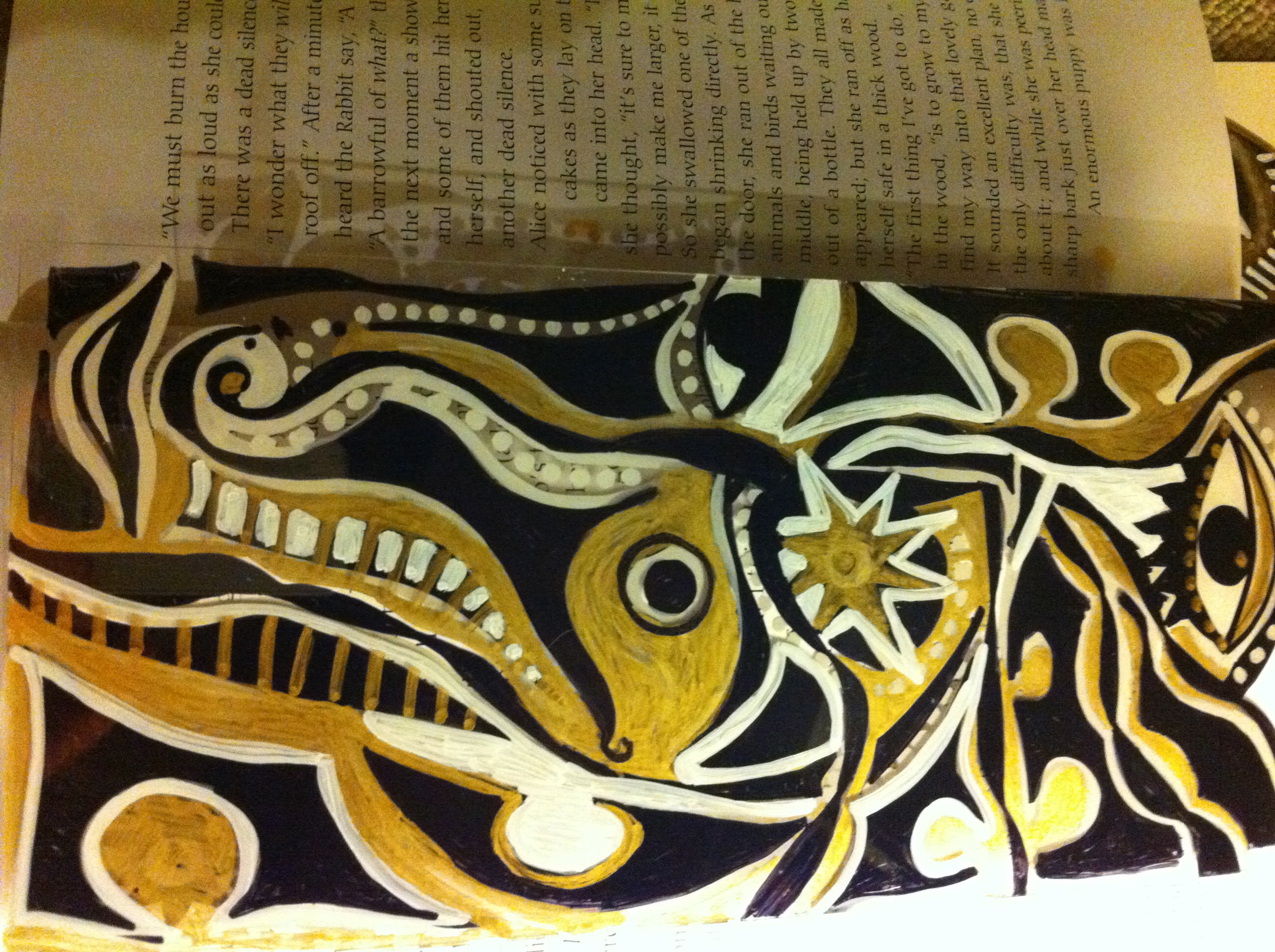
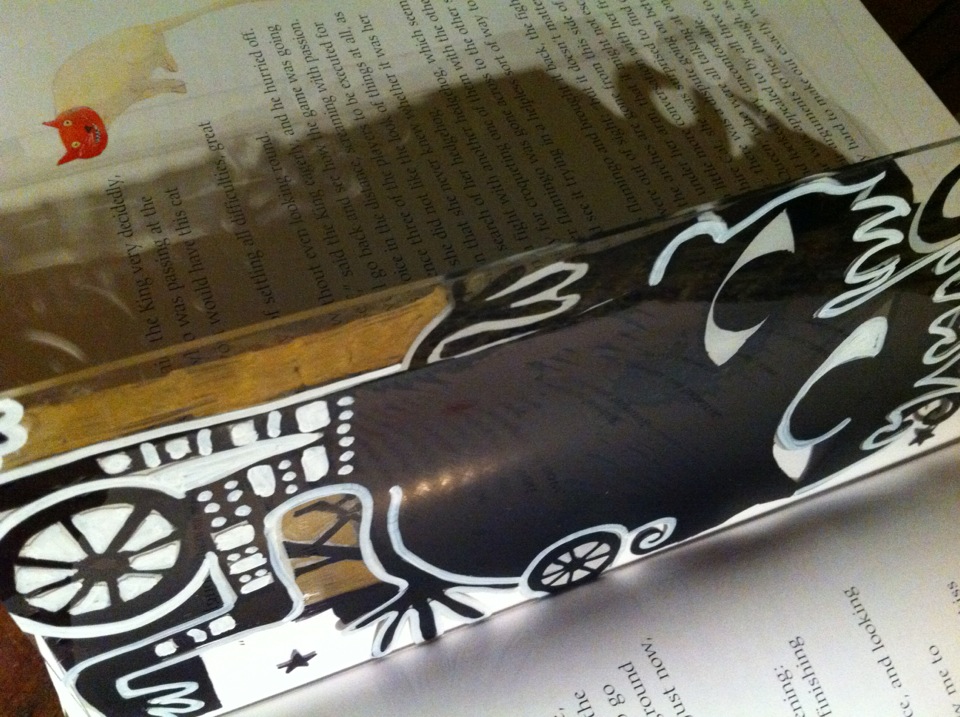
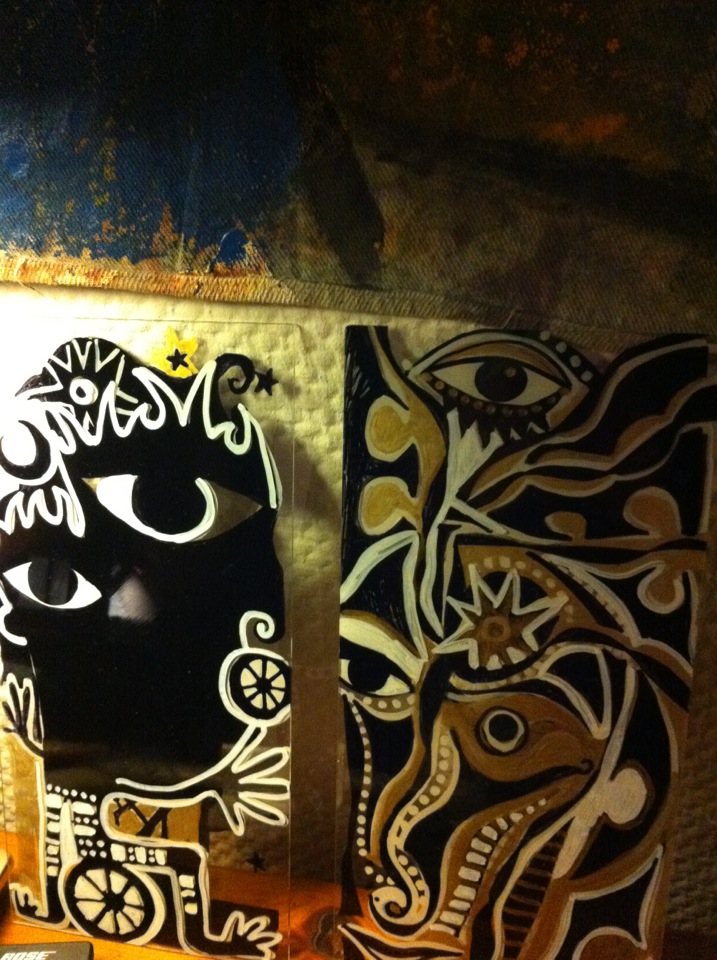
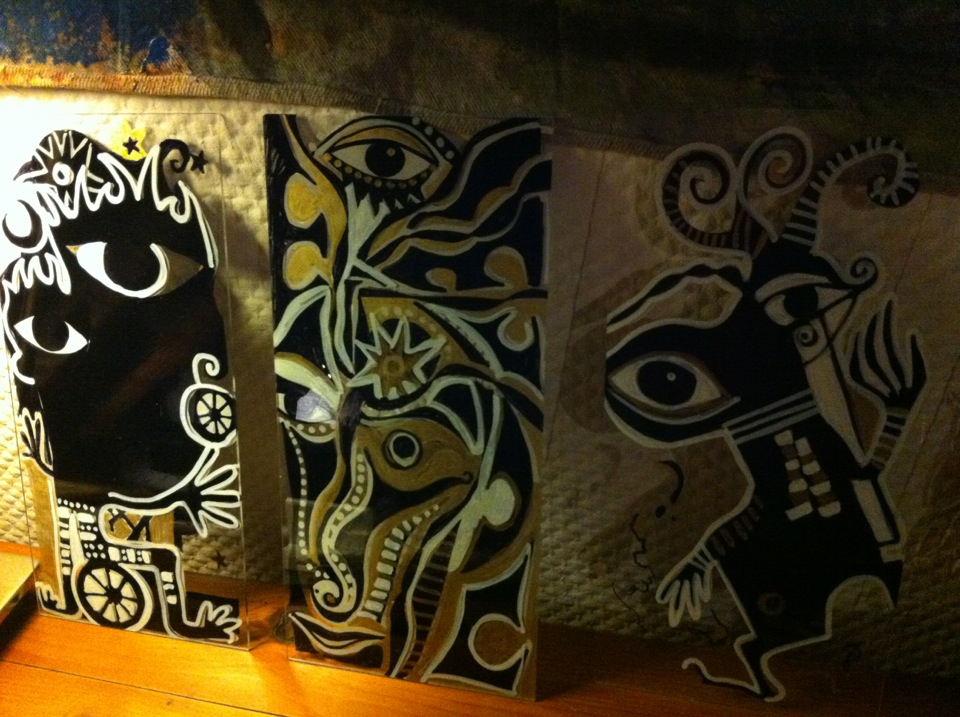
shadows rising, three-dimensional drawings on acrylic panes, not quite dancing – yet

After drawing meditation for 12 nights I wasn’t ready to let go just yet. Supposedly it was George Bernard Shaw who said that every fool can undertake fasting but only a wise can break it properly – and it might as well be applied to drawing meditation. Certainly I belong into the category of the fool, not that I had doubts about this before. The mind readily plows through grooves already established – and so the last few weeks after drawing meditation ended I have still been drawing most every night – and feeling kind of empty if I didn’t for once. I am not implying that drawing practice is a vice, but it is certainly not the result of an admirable discipline either that I have been sticking to it.

Certainly the nighttime indulges my overactive mind and allows the shadows – kept at bay during the day with the sober diet my legal enterprises as an attorney  offers – the nighttime allows these shadow a freedom that seems acceptable only as I catch them in some way. Paper seemed good enough during drawing meditation – though my paintings usually find spaces on raw, un-stretched materials like coffee sacks and sail cloths, wood and metal. Maybe it was just a question of time until the drawings too revolted against paper as a traditional medium.

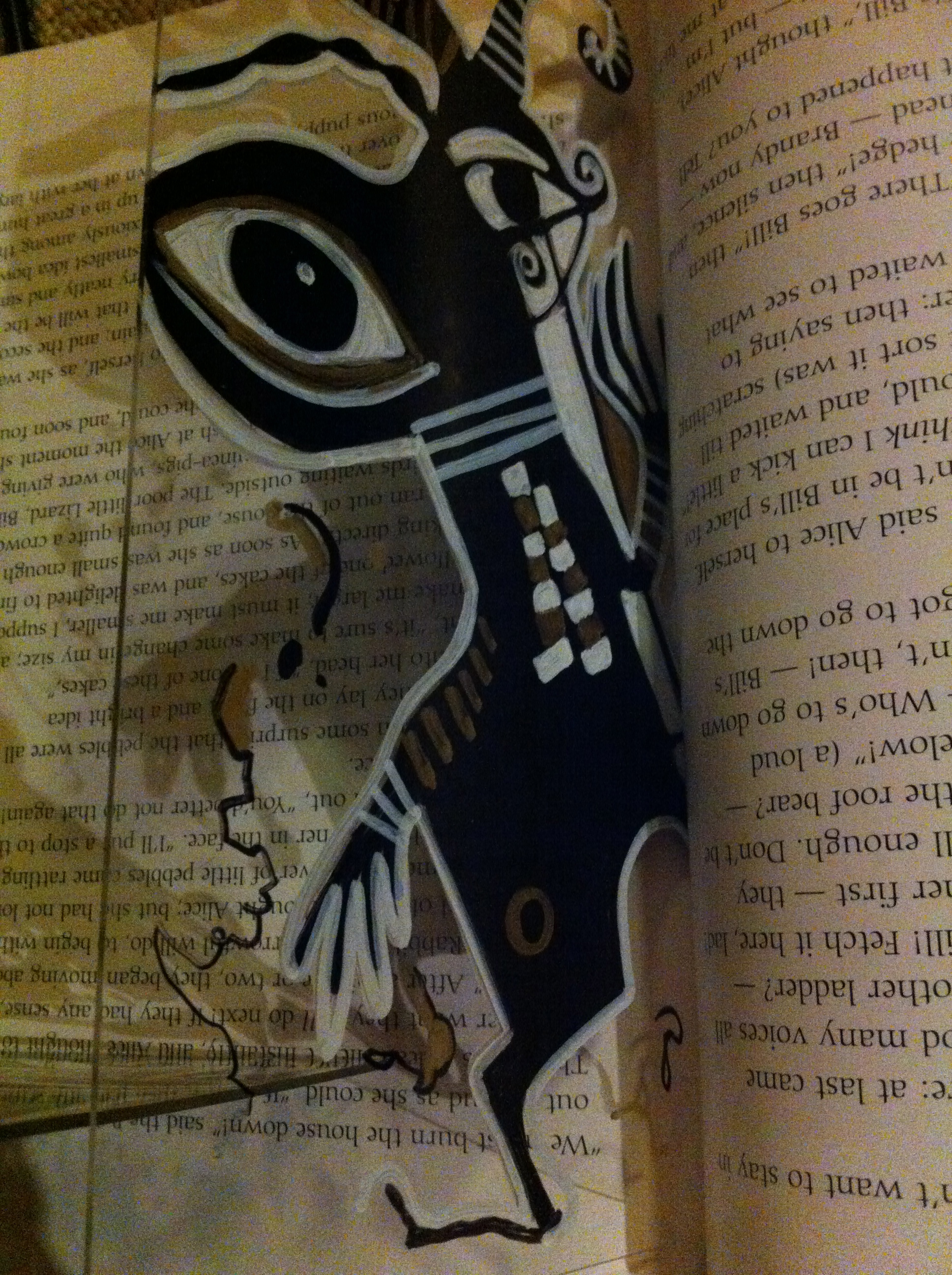
Also, I was looking for the third dimension of my drawing beyond the obvious addition of ink to paper which – of course – makes for a third dimensions if only one cares to look close enough. But how to make the shadows dance in the room? How allow them to leave the paper and let them emerge into space as line and shadow? The answer was simple, even quite elegant, if by no means original. For the last ten nights I have been drawing on acrylic glass panes, 12 x 25 cm each. Each one of the panes is support for one protagonist in this emerging theater of rising shadows. I am planning to hang them by nylon strings and place a light in front of them to project their moving shadows on a light surface behind. For now, I am not done drawing and I would like to try out adding larger acrylic glass panes. During the next few days I will post drawings on acylic glass panes in no specific order. Multiple images have required the title of “brain on fire – no heart” and that is what I will most likely call this series. Hope you enjoy it.

Die FDP muss neue Positionen zu gesellschaftspolitischen Themen finden oder: Immunität für Altherrenwitze?

Wenn wir politische Spitzenkandidaten genauer unter die Lupe nehmen als andere Leute, so hat das seinen guten Grund. Das Verhalten eines Spitzenkandidaten, zumal auf Bundesebene, gibt uns Aufschluss über die politische Kultur einer Partei und darüber, ob sich Wähler und Wählerinnen in dieser Kultur repräsentiert sehen und sich diese als Leitbild für ihre Gesellschaft wünschen. Die Entgleisung Brüderles war sicher kein Verbrechen, sondern eben dies: eine Entgleisung. Der Umgang der FDP mit dieser Entgleisung zeigt indes, dass es innerhalb der Partei kein Bewusstsein für den Umgang mit einem relevanten gesellschaftspolitischen Thema gibt. Ist ja vielleicht auch nicht das Anliegen dieser Partei. Dass eine Diskussion über ein solches Thema gleich als Kreuzzug bezeichnet werden sollte, leuchtet nicht ein. Es ist ebenfalls keine Zumutung aus frauenpolitischer Sicht, wenn Herr Brüderle weiter für seine Partei kandidiert. Man muss ihn ja nicht wählen. Aber dass er Immunität für seine Altherrenwitze eingeräumt bekommen sollte, scheint ein wenig weit gegriffen. Ich finde im übrigen das Foto, in dem sich Frau Leutheusser-Schnarrenberger ganz fürsorglich Herrn Brüderle zuneigt, wunderbar. Fehlt nur noch die Tasse warmer Tee. Gute Genesung dann.

Kristina Steiner, Fotografie – Gelebtes Kulturerbe Tango Argentino / Weil Pyramiden nicht tanzen

Gestern Abend war ich zu einer fantastischen Ausstellung der weit gereisten Fotografin Kristina Steiner in Hamburg eingeladen. Da es einige organisatorische Turbulenzen gab, habe ich mich gerne bereit erklärt, ein „back-up“ als Eröffnungrede für diese Ausstellung bereit zu halten, das natürlich nicht mit dem Charme und dem Feinsinn des argentinischen Botschafters konkurrieren möchte (und könnte), der dann – wie gehofft – die Ausstellung stimmungsvoll und angemessen eröffnen konnte. Also, dieses ist der Text, dem die Anwesenden so gerade entkommen sind. Ganz aufrichtig, in der mündlichen Version wäre das eine oder andere entfallen, um die Geduld der Zuhörer nicht zu erschöpfen, zumal die großformatigen Bilder ja für sich sprachen. Nicht entfallen wäre der Hinweis auf die künstlerische Kooperation zwischen der Autorin Liesbeth Meyer mit Kristina Steiner:

Tina Steiner Austellungseröffnung

Ausstellung im Local eV, Max-Brauer-Allee 207, Hamburg, 31.01.-04.02.2013


page 176 – still in the library

I took out my small compact powder out of my jacket pocket. I clipped it open and looked into the little mirror in the lid. My face glowed sickly pale under the fluorescent lights. Winter pale.  I clipped the lid down, got up from my chair and stepped into U – Z. As I had expected, there was no one there. Velasquez, Varese and The Venetian School, gigantic volumes, with soft, yellow pages lingered pompously yet with a limp attitude between smaller books, waiting to be released from the boredom of their shelf lives. This is what immortality means, I thought, sitting on a shelf as an afterthought to your own life. Maybe to be lifted down every few years to be perused briefly for some kids’ art assignment.  I touched the laminated, slightly deformed backs with my fingers. Books do not endure lamination well, a laminated book resembles a plastic covered sofa. One cannot enjoy it. I apologized to the volumes that were sighing with age and discontent …

I have been working on this novel for a while now. There are passages that I really love, snippets, impressions that convey the atmosphere I want to create. There is also, almost surprisingly, some real plot (unusual for me) and a couple of protagonists I can vividly picture like I can picture friends. The novel could be read as science fiction – or it could be an account of a delusion. I don’t quite know which one it is, but so far it could coherently be read as either and it will depend on the conclusion to point in one direction or the other. Any kind of science fiction could of course be an account of the protagonist’s delusions if one chose to read it like that. This is one reason I chose the genre for this particular coming-of-age story in the first place. Another one is that I have been craving for a playing field for my interest in ephemeral science and have been having a ball researching and reading up on all kinds of science projects with marginal news interest from marine bioluminescence to quantum physics to astronomy.


Library, U – Z / another excerpt

I stared at the girl. She stared back, then, inexplicably, she smiled regretfully, rose out of her chair and smoothly walked over to the bookshelves, turned the corner and was immediately out of sight. Before I could follow her into art books U – Z and ask her to wait, I heard voices. Two elderly women were approaching us through the middle aisle. One of them held a library catalogue card and they both scanned the shelves. “Agnes, Denes, D, don’t think we will find anything here, Marie. Might just as well look for Leon Levinstein, L. Won’t find anything on him either, I bet. It’s all van Gogh and Monet and Renoir, coffeetable stuff. We will have to go to the New York Public Library for Agnes Denes, I tell you.”  Marie grunted. “Now, “ she admonished her friend “we will not know until we look, will we? These libraries sometimes are better than their reputation. Librarians are strange people, and they are in charge. “ The ladies turned corners at “D – H”. Their voices were swallowed by the books. It was too late to try and follow the girl into U – Z.