Mud people (excerpt from Gargoyle)
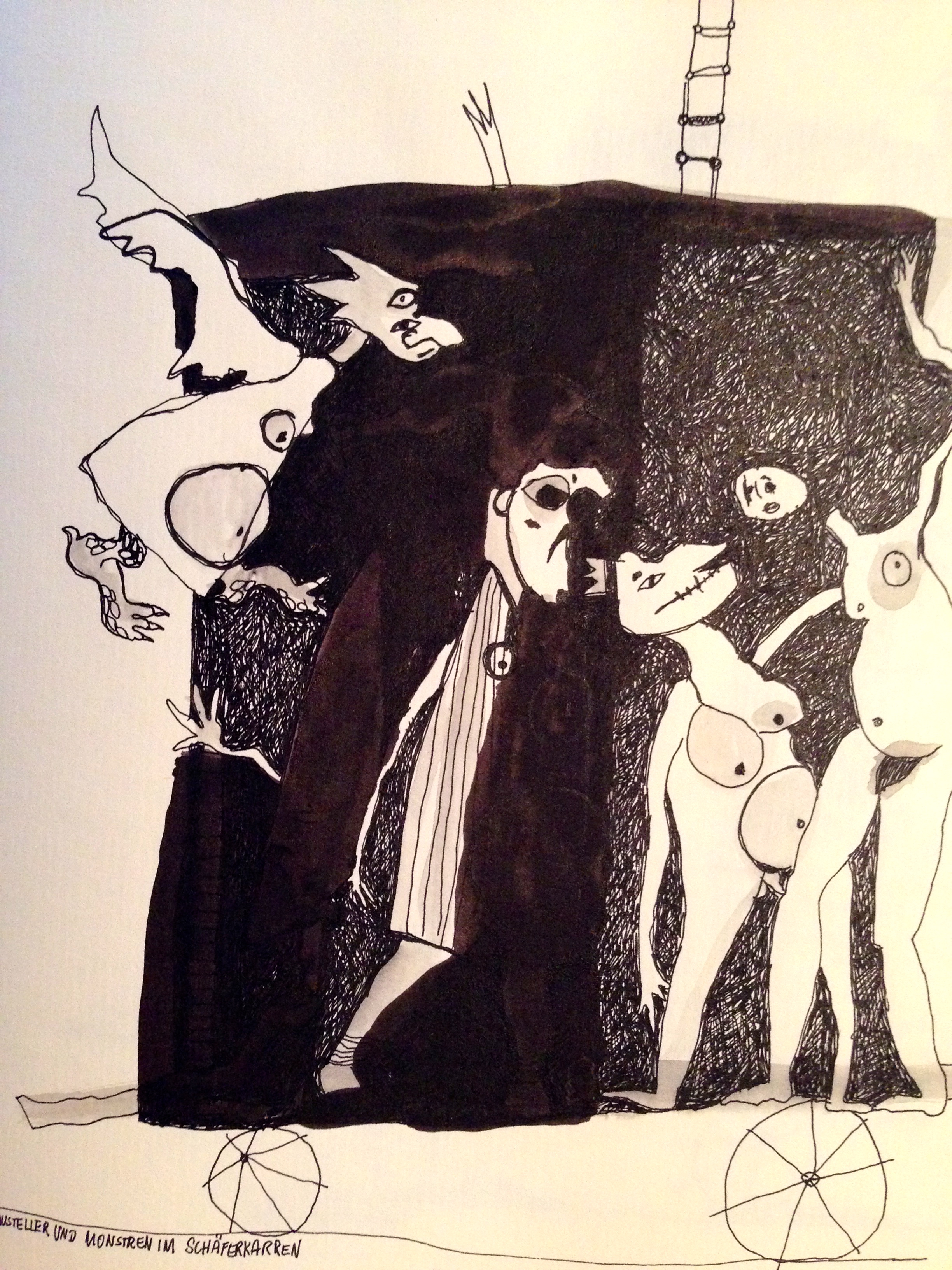
fullsizeoutput_b93 The shallow hole the boy had dug became deeper with time as he scooped out the red colored clay the ground was made of. He filtered it through his hands, taking out stones, sticks, decomposed leaves and roots. Punching and smoothing it he compacted the clay to one block, thus slowly building up a monolith from clay. He devoted great care to this process, making sure that he would have a structurally sound mass with which to work. Over the course of building hundreds of small people from mud he had gotten quite skilled at this craft. Only when he was content with the sound that a slap against the block produced, a deep, saturated thud, would he proceed to sculpt. With deliberate slowness he worked from the general form to the details. Many times a form had collapsed when he had tried to overemphasize a movement or had placed the limbs too far outside the center of gravity. In the beginning he had tried to use sticks to support an arm reaching out or a leg stepping forward and though technically that solution had worked he didn’t like that the figure now seemed to defy the laws of gravity that nature put on the material and form. It was thus almost impossible by the mere use of sticks and clay alone to sculpt an outreached limb that looked natural. So he had returned to work from the inner core of the material and to rather hint at a movement that – though invisible – the eye would project into the empty space. He was always intrigued by what he could see without seeing it. He liked the way his sculptures randomly related to one another, all he had to do was to quietly look at both sculptures and discover this relationship of forms. Something deep inside him stirred when he looked at his creations and their silent endurance. He could see the form of the space in between two physical forms, it was nothing and yet visible if one cared to look, it changed constantly, stretched and diminished, even disappeared. It was actually easier for him to comprehend the properties of this in between space than the form itself. You could get out of the trajectory of any moving object if you controlled that space. If you made that space in between adhere to your inner voice you did not need sticks to build a figure. Why, you barely needed your hands, all you had to do was to look long and hard, look at the clay monolith and make some slight adjustments. Soon his people were crouching, stretching, running, turning. He took great pleasure from this.

His father began to take notice too. One night when he had returned home from the workshop the little garden patch had first caught his attention. In the twilight the clay sculptures his son had build in the afternoon had a strange quality of perfection. There were seven fresh sculptures, six of them crouching on the ground, the seventh a small figure in flight, emerging out of a block of brick-colored earth, running.
From a distance it had seemed that all sculptures possessed distinct personalities and bore individual facial features. Something about these features seemed oddly familiar to the stonemason. Upon closer inspection he realized though that the impression of an actually sculpted face dissipated from a nearer perspective – but reinstated itself the moment he stepped back like a magical trick. The inability to confirm his initial finding, to come closer to the truth, was intriguing to him. He asked himself how a not yet six year old child could have created such a sophisticated illusion. He didn’t ever doubt that the impression was created deliberately. He studied the people his son had made for a long time. Inside the house the light from the boy’s bedroom shone dimly through the drawn curtains.
Ghost girl and Senegalese food

When Jawara arrived at the apartment the girl was home, greeting him with a melodious if distant „Hi, Jawara“, pronouncing his name with a slight American slur though she was European, actually German.
It was unusual for her to be home at this hour. She was sitting high up on the kitchen counter that separated the living area and the table from the built-in kitchen cabinets, holding on to an oversized mug with both hands as if she was trying to warm herself and smiling at him. The small space smelled intensely for coffee. She was wearing Jeans and a plain white T-Shirt. No shoes, no socks. Jawara liked that she had the good habit of slipping out of shoes and socks right at the door. He smiled back at her, grateful that he did not have to spend the evening alone but a bit worried about not being able to go to sleep on time.
He realized then that it was already past nine in the evening, and the girl was the first person this day to smile at him and mean it, meaning him, Jawara, rather than directing a grimace in his direction by mere reflex or politeness.
The realization made him sad, but it was a passing sadness, he had no resistance to it. Her smile was genuine and she looked directly at him, and after the sadness had receded, the gladness about some basic form of human company returned. – Hallo, you are home early, he said for a greeting while removing his own shoes and socks. She just nodded and kept smiling with an ease that showed him she meant it, there was nothing forced about it.
She did not not offer any explanation as to why she was home, but he took no offense. He had noticed before that there were days when she was barely present and he had realized it had nothing to do with him. She was not absent in relation to him in the way people were who usually ignored him even when they were placing their orders or accepting his soliciting smile at the food truck. It was more like she was absent from herself, and keeping company in a different sphere that was not accessible to his perception. More than once when meeting her he had had the eerie impression that the girl though being by herself had seemed like a person in company, acknowledging him as if she was tied up in a social situation but would really much prefer to talk to him than to her present company.
This impression she conjured up by her body movements and attention to spaces in the room that seemed out of focus of the actual things,  directed into an empty space but also consistently arrested at this point of not interest without staring, this impression was so eerily convincing that at times he had had the feeling he could actually see people gathering around her. For example, there was no apparent explanation as to why she would sit up on that kitchen counter as if she was actually facing a room full of people talking animately and had found herself a place to survey an informal gathering. She did not have a book or a file with her as she sometimes had on weekends, just that big mug of coffee.
She was sill sitting on the counter with her coffee when he returned from the bathroom accompanied by a strong scent of hand soap. He walked past her and into the kitchen and she gave herself a quarter spin and then another following his position in the room and now facing the kitchen front instead of the non-existent gathering. He started taking out food from the refrigerator. His neck tingled as he was feeling her in his back, sitting silently on the counter like a house ghost. She was a very quiet person.
He opened the fridge and methodically removed his food containers from his shelf. The evening before he had marinated chicken in a big glass jar that still had a shadow of a peeled off commercial label stuck to it. He had chopped onions and clover and had mixed them with salt and peanut oil and had poured this mixture over the chicken pieces stacked with lemon slices in the jar.
He usually precooked enough rice to serve him for several meals and kept the rice in a container in the fridge, too. He fished out some carrots from the vegetable drawer in the fridge and placed them on the kitchen counter right next to her, followed by a small cutting board and a knife and he started peeling and slicing carrots.
Are you hungry, he asked her politely, implicating that he could prepare food for the both of them but knowing ahead of time that she would decline. He had never actually seen her eat before though she did keep joghurt and fruit in the fridge. She shook her head, but playfully picked up a piece of carrot peel and curled it around her index finger like a bandaid. This irritated him for a split second but he did not flinch. Still, she unwrapped her finger as if he had commented on it and put he peel back to the growing pile of scraps which unnerved him even more because it heightened the vague impression she had on him, kind of like she was not a real person but really a creature from inside his own head thus knowing him as well as he dared to know himself. This must have had to do with her quietness.
New York was a place for strange people. It was certainly a good place for ghosts to live without drawing too much attention to themselves. Spirits and fox girls. He suspected without true conviction that he had been invited in by one.
Even if it was true: it was better, much better, to share a room with a pretty ghost girl than with the kind of loud and inconsiderate room mates he had had before. Still, he sometimes felt unnerved by her mind-reading ability. Maybe it was a female skill. His mother had had it too and there was nothing ghostly about his down-to-earth mother.
The smell of garlic in the frying pan when he roasted the chicken rooted him, and he gave the girl another smile before pouring the marinade over the browning chicken meat. She watched him when he picked up the cutting board from the kitchen counter. He pushed the carrot slices into the fragrant mixture and let the dish simmer before turning again and looking at her. Strangers in close proximity. – There is more coffee, she remarked. He considered her offer, but thinking about the few hours of sleep he needed, now it was his turn to shake his head. He noticed now that there were some almonds in a small ceramic dish next to her, half empty. Ghost food, he thought, and she tensed up immediately and stared at him for a moment, but then relaxed again.
He turned to the stove again and added some servings of rice to the chicken and carrot stew, and turned the heat on low. He filled two glasses with tap water that smelled of chlorine and he knew would taste like it, too. Walking over to the table he set the place for one but added the second glass for her. When he returned to the kitchen to check on his food, he ran into her legs. He was very hungry but for a moment he grew aware that she was not a ghost but actually a living breathing person, a girl. Then the food won. She slid down the counter and walked over to the table still carrying her coffee. He followed her with a metal coaster and the frying pan. It smelled like home.

Si a jure discedas vagus eris, et erunt omnia omnibus incerta

or: If you depart from the law, you will go astray …

Legal avatars were walking with me every night right up until dawn. Most of them were missing something, something that was living and breathing in the legal clients who had come to the law office and had told their story of need and desire to the attorney but that somehow had got lost when the client´s life subsequently had been translated to fit in a file. Every day for about 15 minutes after lunch time Mr. O´Leary gave me a short introduction to the new cases he had Ms. Cavendish put on my desk in the morning. He was a very good narrator, mentioning details about clients that a less practiced observer would have overlooked or found insignificant. He was incredibly generous with me, 15 minutes is a long time for a lawyer whether he gets paid by the hour or contingency fees, that I knew even back then. And yet, the gap between his narrative and the legal brief I was supposed to write was so wide. Not unbridgeable but wide enough to truly humble me.

I still remember seeing the avatars slipping out of the files and silently pacing the room waiting for me to finish up. It started one night at about the time when I had been practicing my hand at writing briefs for about three months, practicing day after day with the many different cases that appeared in sets of three or four on my desk in the morning.
In the beginning it me had taken me a really, really long time to come up even with a just-so acceptable brief. By the time I brought the file back to Ms. Cavendish, Mr. O´Leary´s formidable secretary, I had read and reread the case close to a hundred times until I felt that I had either identified all the relevant information that I needed to actually write the brief, including the issue, the facts, the holding, and the relevant parts of the analysis, or, more often, that I had arrived at that kind of sinking, sick feeling that you have when it´s still not good enough but you just cannot do any better. Perversely, I had liked studying law for just that reason: it had made me small and humble and human insofar as it made me fail over and over again and that was perfectly in sync with my Puritan upbringing. I had been raised an atheist Puritan who had the severe character fault of having a creative streak. So if there ever was a law student who should have studied something instead it was me. And yet I continued in a distracted, untechnical, unstructured but seemingly still just-so good enough manner, because „not quitting“ had been ingrained into my personal code since my terrible-twos, and it continued to be my great weakness well into grown-up life. I was too stubborn to quit law school even as I was painting and dreaming and visiting museum after museum, I just couldn´t quit, it was as simple as that.
Generally speaking, before I had decided to go to law school I had been seriously suffering from delusions about what I could do in life, like: really anything. I had been convinced that I could do just about anything that I would set my mind to, you name it, math, sciences, language arts, and I´d be brilliant at it, and yet here I was, a few years later and not even being a quite good enough lawyer.

I simply had no clue what people were like and why they acted the way they did. I had no clue what other people actually wanted from life. No clue whatsoever. And you just can´t be a good lawyer if you don´t get people – on both sides of the law. You need to understand what drives a person and you need to understand what makes the law want to rule that very person in or entitle it to do as desired, you need , with other words, to have a good grasp of societal goals and values. Or, in the absence of such an abstract understanding, you at least need to believe that there is an order to things, a somewhat natural state of being that you will recognize when you see it.
If, on the other side, you are a multifaceted, spacey kid who lets the winds that blow through the city grid take a hold of you and push and pull you into any which direction it pleases, if you are but a drifter, if you live in books and if you cry while reading Sylvia Plath and if you are stricken by a certain Yellow in a Miró painting as if your life´s meaning depends on it, Miró, of all painters, if you are completely content with the universe for the view of the tar beach on the roof of your rental building on a freezing but fiercely clear morning, still barefoot and in your PJs and with a mug of coffee hot enough to burn the skin between your thumb and index finger (your stereotypical European intern kid), if you are happy with cheap Asian food from the corner store for weeks on end, if you are content with sharing your cramped studio apartment with a guy who works crazy hours at a food truck  and crashes on a mattress underneath your dining table, if you get a kick just out of running around Central Park in worn-out-no-brand sneakers trying to keep up with the Mexican runners for a few minutes before collapsing on to the Great Lawn, if you feel insanely alive for a split-second just because the light over Manhattan illuminates the Avenues looking south with toxic quick silver, and if on top of being this incarnation of a European nerd you think that your kicks are what makes all people around you stop dead in their tracks for excitement, then you might be on to something great for life, but as a lawyer you know next to nothing. If you don´t get what actually makes people fight for their very own piece of Lexington Avenue, small or majestic as it may be, you will be but a pathetic excuse for a lawyer.
So night after night, after I had closed the last book, feeling exhausted and ready to loose myself in the city, the avatars were quietly slipping out of the files and following me down the long hallway, past the pale light of Mr. Letterman´s office, into the creaky elevator and down, through the marble tiled lobby and out into the night. As we left the building, the avatars and I, and I was walking out into the night, they were following me and I was to them like the one eyed king amongst the blind. Si a jure discedas vagus eris, et erunt omnia omnibus incerta.

Potsdam, royal gardens

Foto 5on a green bench in the royal gardens in potsdam, the remnant of a shadow, watches pleased, very pleased indeed,  two fools talking the day away, urgently weaving their voices together, staring distractedly into the glimmering brook, laughing, disagreeing, reconciliation following suite like the sun breaking through clouds, ignoring the ticking of the small silver watch, but the remnant fingers his watch with a grin, time has no meaning and no hold for 11973 seconds and then, on fast forward, returns with a deafening rush.

autocorrect

IMGP1041When she was ready to write, the first word that presented itself was: nocolor. Autocorrect corrected it three times over. Autocorrect wrote: “No color”. The word as it needed to be was: nocolor. She knew what it meant. It was a good word to start with. She could see that autocorrect was struggling with the concept. She took a piece of transparent drawing paper o and instead of typing she drew the word with a radiograph pen, 0,35 mm: nocolor. The paper endured the non mistake.

Autocorrect was a mediocre little man in a grey woolen suit. She knew him. Raymond Chandler had known him, too. Common sense, autocorrect, is the little grey man who never makes a mistake in addition. But it is always someone else’s money he is adding up. Oh, I have met the little man in the grey suit many times over. Here he lingers. I am sure autocorrect wears a grey suit, but I know better than to pay attention to him. nocolor is a good word to start writing about the exits that are not accounted for. the little grey man wouldn’t know them if he stood facing one. He would insist there was no door. And he’d be right there is no door. Only there is.

Alternative pathways to the primary visual cortex

impeached kingHe turned around and looked in my direction, his dark glasses reflecting the library lights like distant stars. Then he smiled. Automatically I smiled back at him, but then I remembered that he was blind, and my smile froze. I was frantically searching to find an appropriate opening sentence in my vacant mind. He held his smile still as he was addressing me. “I think we have a mutual friend, Ms. Clarice,” he said kindly, not commenting on my rude behavior. I was now searching for his eyes behind the dark shades and instead encountered my own mirror image, small like a doll. “I am sorry,” I finally stammered, addressing the little doll more than the man, “I am really sorry, but how do you know who I am?” I was still being rude, I realized. The small person reflected in the distant mirror of his glasses I had taken for my own reflection made an unexpected move that startled me even more if that was possible. She took a mocking bow towards me and disappeared into one of the bright reflections of the lights above. “Things are not what they seem, Ms.” responded the old man, why don’t we sit down somewhere so you can ask your questions. My name is Dr. Aaron Hausner. And who might you be?”

Dr. Hausner dedicated a long time to me. He was soft-spoken and had an uncanny ability to predict my next question – yet, at the same time he did not once directly answer any one of my articulated questions. After we had occupied a spot in a somewhat secluded corner of the library – he had been leading the way without ever hesitating – he had again turned directly towards me and had started speaking with a soft voice. “The route from eye through the primary visual cortex the is not the only visual pathway into the cortex. Other pathways exist that bypass the primary visual cortex. A blind man like me can learn to trust those pathways though they do not stimulate a sense of optical vision. I do know whether there is an object in my way, approximately which size it occupies and whether it is mobile or fixed in place, of organic or inorganic nature. I also know whether a person directly faces me or wether I face a person and whether this person smiles at me. Scientifically this phenomenon is called blindsight.“ I felt like a fool. He answered. “Don’t feel bad, most people feel inhibited when they first address an apparently blind person. And to be honest, not all blind people know about this phenomenon either, though most blind people I have talked to could relate experiences that strongly point towards their ability to process some visual information even though not in the way they expect.” I was stunned. We were silent for a moment. Finally I found my voice: “My mother is an artist. She draws objects as an intricate net of lines, and though the object is not directly represented through these lines, with a bit of patience one can usually tell what the drawing is about. I mean, you can see the object though you clearly can’t.” I drew a deep breath. Dr. Hausner seemed to listen but he didn’t come up with a typical grown-up response like: How interesting of you to point out the similarities between an artist’s perception and a blind person’s perception.

loopholes and the art of legislation

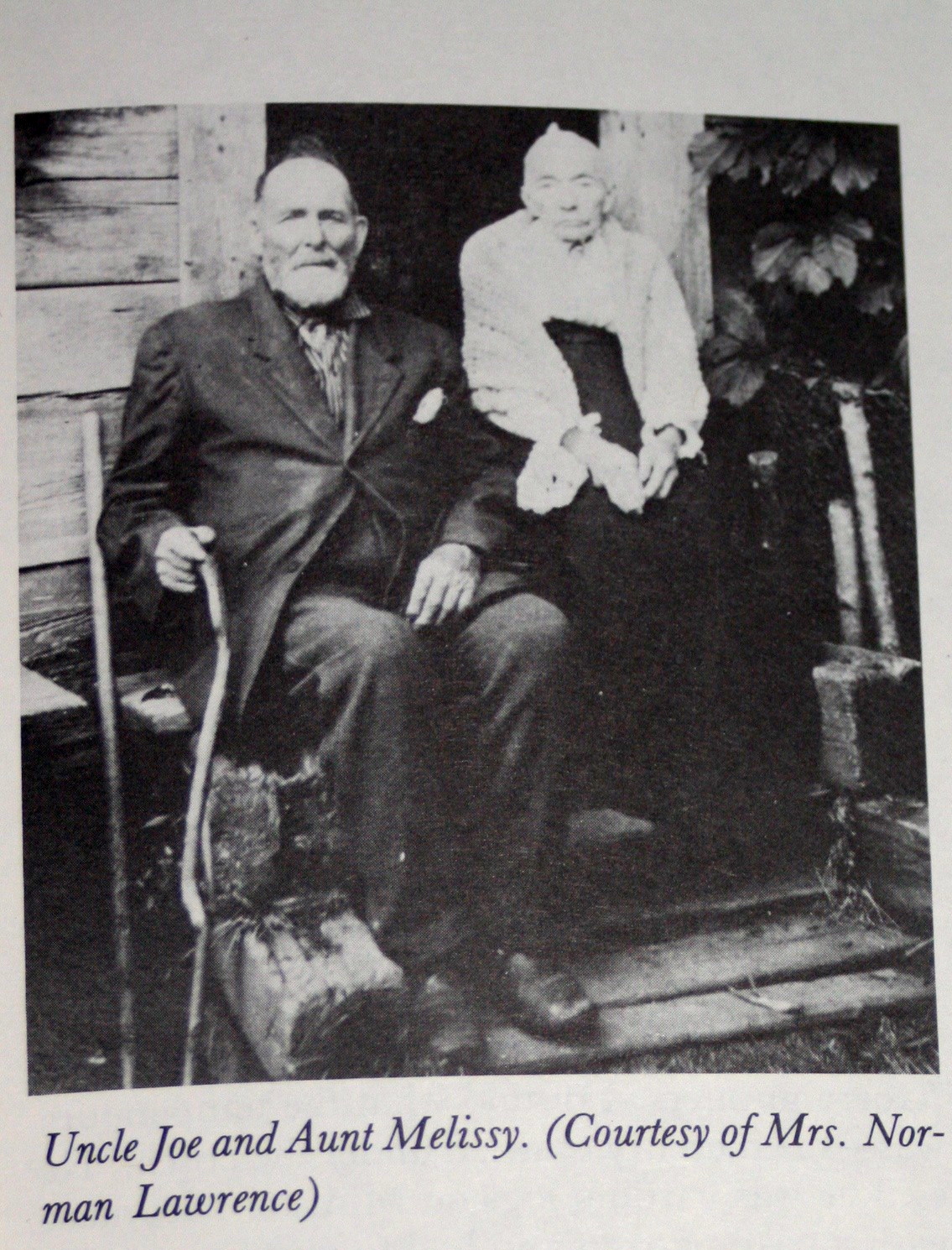
Image - Version 2When we arrived at the cottage we were basically frozen. Courtesy demanded to offer someone who came to the cottage door a cup of tea – but I would have offered it regardless of etiquette because the girl was in need of one. She gladly accepted and entered the cottage. The old people were at the Sunday meeting still and so I got busy rekindling the hearth fire and put on a kettle with fresh water to boil. I knew Aunt Melissy would approve of the church elder’s daughters having tea with me.

The girl had readily slipped into the bench at the window and had pulled her sock feet up to wrap her long skirt around them to warm up. As long as the fire wasn’t going it wasn’t too warm in the cottage either, but it was nicer than outside, and my feet started thawing.

The girl had put her chin on her kneecaps and looked at me without much expression, a bit as if we had been friends for a while. After a moment she lifted her head a bit and said: “I’m Fiona. Don’t tell me your name. My mom says I shouldn’t know you. So, if you don’t tell me your name I don’t know you, right. “ Fiona grinned. “She didn’t say we couldn’t have tea.”

She hugged her legs tight, I could see she was still cold. But there was something on her mind. As long as we were alone. “It’s difficult, to make rules.” She added gravely. As if she was not the one looking for loopholes. Or maybe as if looking for loopholes was her special function in the system of making good rules. “I mean,” she added “to make rules that are to be followed to a point. Not to forget anything. Though you know they will be looking for a loophole. And you have to make the rule as tight as possible. But still workable.” She took a deep breath. I had no idea where she was coming from. Why she was telling me this?

“Why would they?”, I asked. “Why would they look for loopholes, I mean.” Maybe it was an ignorant question but it was the first thing that came to my mind. I didn’t even now who “they” were supposed to be. “Why wouldn’t they?” Fiona retorted. “Doesn’t everybody crave freedom? Just everybody? And especially those who are bound by a contract to obedience?”

Artist’s logic: to a friend who just celebrated an important birthday, (isn’t any birthday?)

While I travel between two very different worlds, one might just as well say, universes, between the paper world of the lawyer backed up by the many stories and needs of my clients, as different from one another as one can imagine, and the turpentine world of art, the stark smells, the mess, the need to tangle that which has just before been neatly ordered, backed up only by my own perception of the beauty of randomness, my need to stretch beyond the confines of an individual biography and yet of course always landing face first back in, well  if not in the mud then at least in a bucket of paint like any other clown in business,

while I travel between these worlds I feel entirely grateful that for some random reason I have been given the gift of intense pleasure in all these fragments that might never amount to much, not make a front page but at any time give me a sense of wonder and awe of the wild twists and turns. How I wish you would, too, I mean, take intense pleasure in what is, not fear how much or how little there is to come. Take the deep breath and dare to live this imperfect, strange, angst-ridden, beautiful, funny, short, long, light, dark thing called a life. How I wish you’d get to be just you, not judge yourself nor let yourself be judged by others while you lay down, if only for a moment, the burden of your insight.

Here’s to the wild twists and turns, my friend, to moments of desperation followed by sudden outburst of unfounded optimism, to the great calm between the days of discontent and the fractured mirror of contentedness reflecting the light of other possible worlds.

IMG_3159


Po Tolo

IMG_2146

“My grandfather, your great-grandfather, believed that there is life in the Sirius system. The Dogon, an African tribe with very acute astrological knowledge, have believed for centuries that there is life out there as have the ancient Egypts and the Sumerians. According to the Dogon Sirius is accompanied by two other stars, a very small and incredibly dense star they call Po Tolo, which means “very little star”, and which modern astrology has confirmed to exist only recently and calls Sirius B. Indeed it has turned out to be a small star with an incredible density, heavier than the iron we know on earth. The Dogon also claim that the other star in the Sirius-System is lighter and larger than Sirius. They call it Emme Ya. And around Emme Ya they say there orbits the home planet of the Nommos, the children of Sirius and Emme Ya.“

My mother inhaled deeply. I knew she was thinking of her grandfather. She still missed him. He died some years before I was born but she had told us many stories about him.  I had always imagined him a very stern man, rarely smiling, expecting a great deal of my mother. I couldn’t picture him indulging in fantasies about alien life.