Page 3 of 3

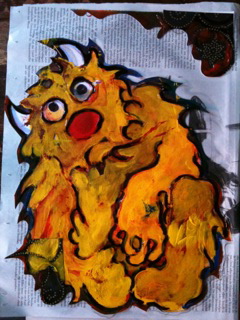
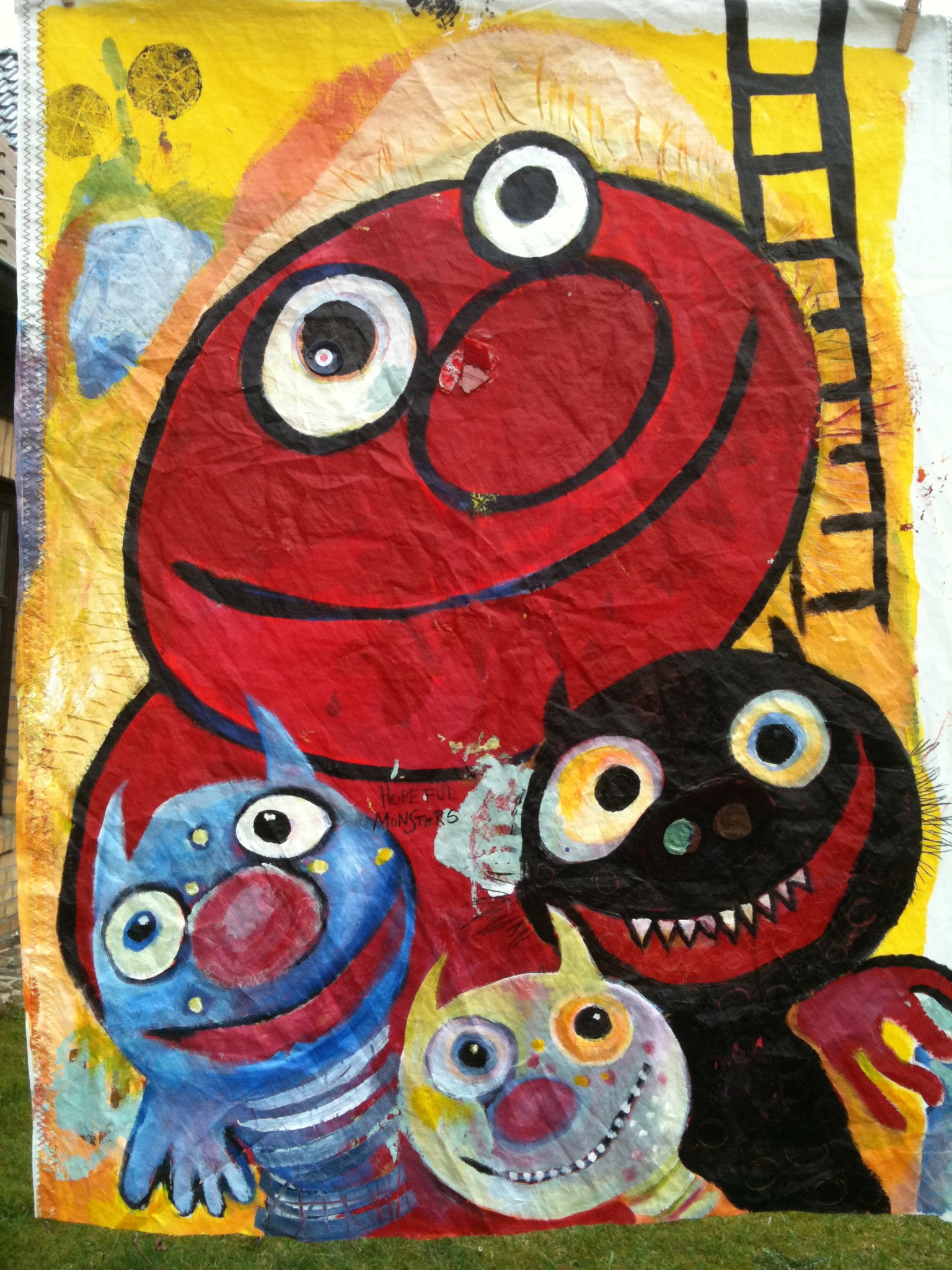
night watches

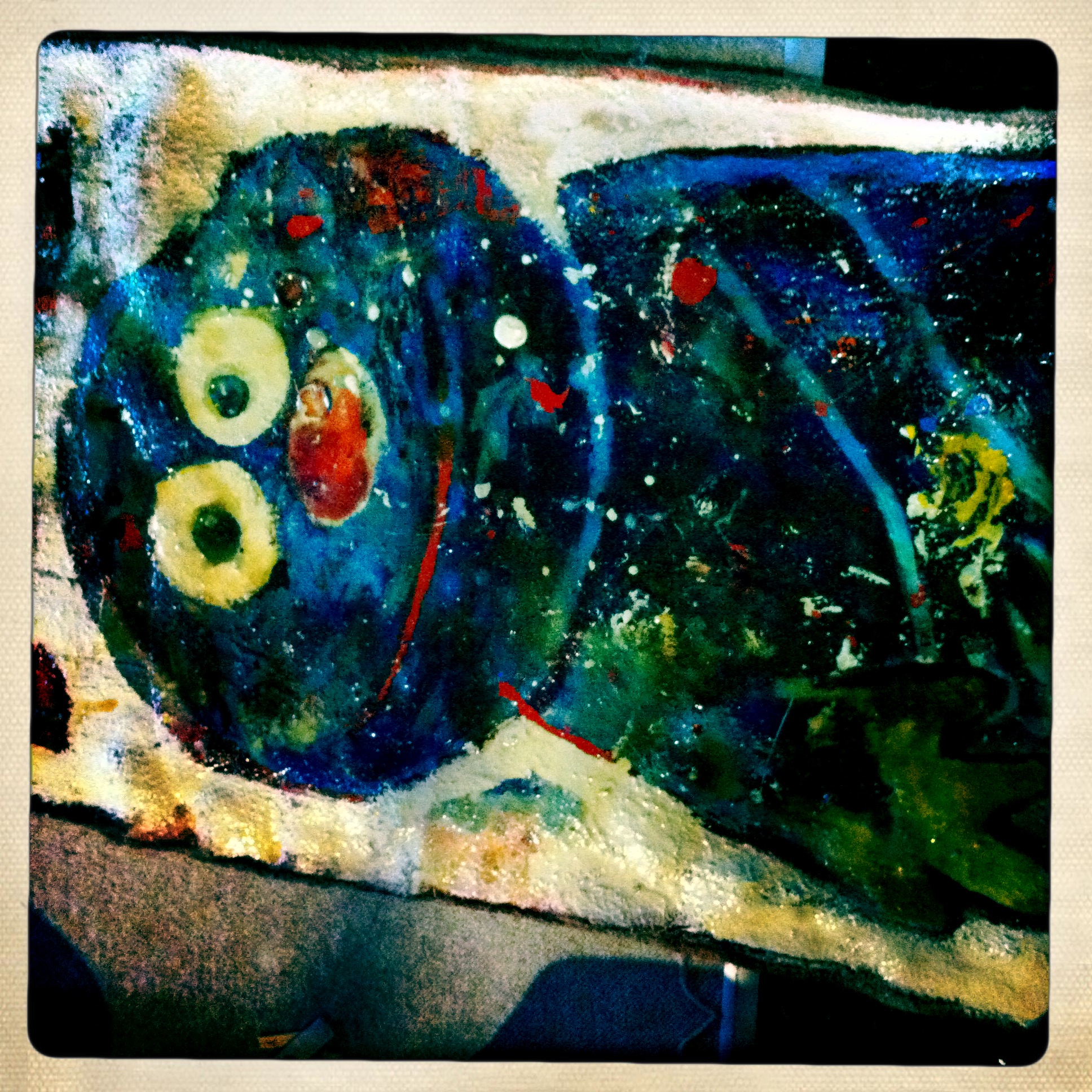
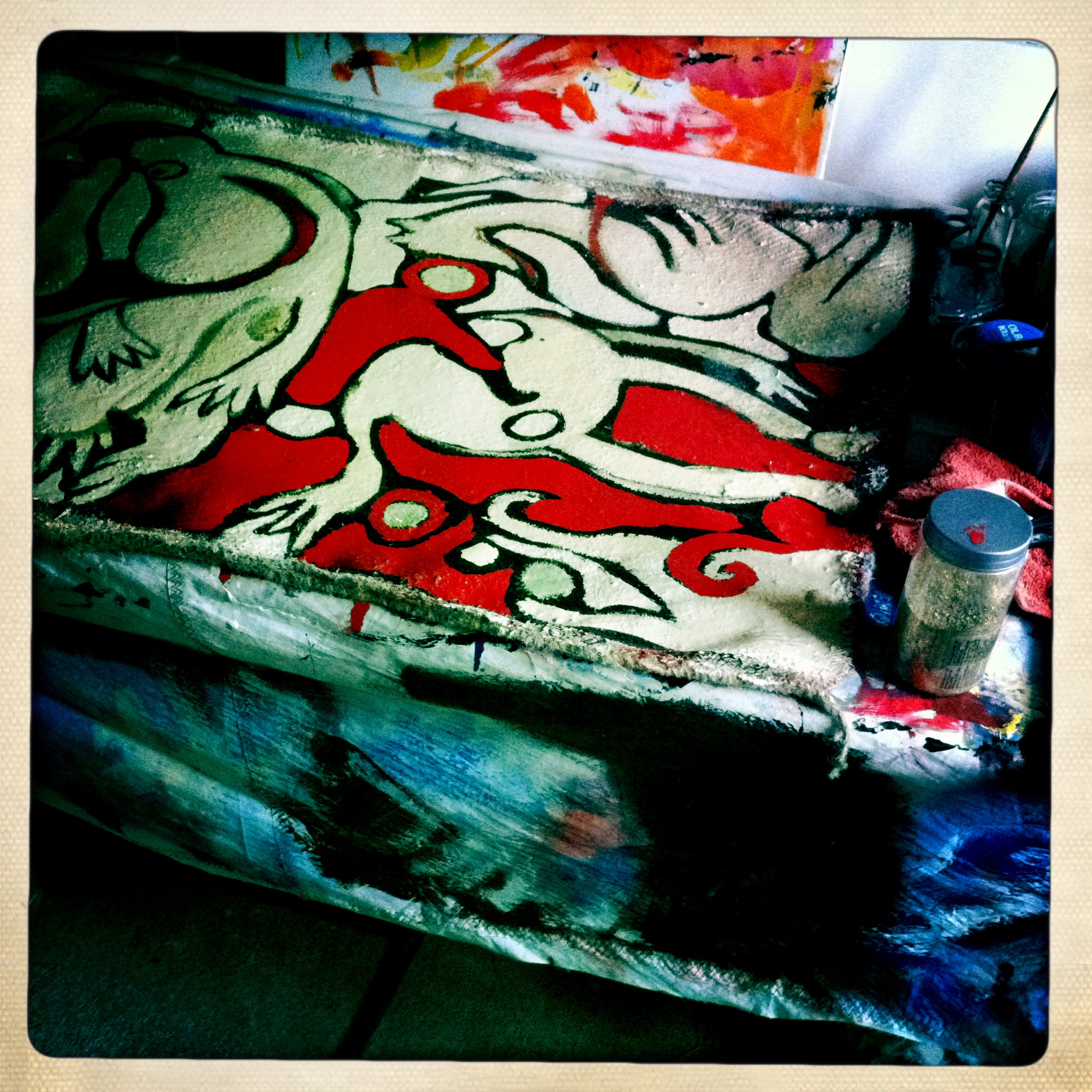
acrylic and mixed media on poster board, 2011

That night I kept watch. My journal lay open on my desk but I mainly just looked at the small breathing forms of the hatchlings. The rest of the aquatic doodle bugs continued their dance. I had switched off all but a small desk light, barely enough to illuminate the surface of my workplace. When I looked up the darkness in front of my window seemed impenetrable for a moment until my eyes adjusted to the night. The rook was still perched on a high branch of the acorn, solemnly keeping watch with me. I knew that my sister was probably asleep by now but that my mother would be painting until the early hours.
Keeping watch. It was strange to be quiet, just watching. It occurred to me that most of the time we are actively doing something, except for the few moments when we are waiting in between scheduled activities. But even waiting, to be precise, is a form of activity. It is seldom that we just empty our minds. I said I was keeping watch that night, and that was true, but I wasn’t really waiting for anything to happen. Of course I expected the hatchlings to start moving around in the tank at some point, but I was not impatient for that moment nor was my wish to see them swimming the reason for my sitting at the desk. There was a moment when I realized that I was not, indeed, waiting. There was something else I had to do. I had to try to comprehend the reality of what was happening right here, in my room, on my ordinary student desk, before my very eyes. And in order to understand that this was real, not a fantasy, not a dream, I needed to sit still and open my mind.
It is difficult to describe how time changes when you stop. Just stop. I thought then I knew that time was space, a blue space in which I was suspended like the mermaids in their green world. Time was a wide room with neither up nor down, neither front or back. As I sat in the night, the world that was not human started whispering in a multitude of voices. I thought of my little sister. Did she still hear these voices? Was she awake to all of this?
I listened to the slight hissing sound the radiator valves produced, to the occasional car engine, I listened to the night in front of my window, the rustling of branches, I thought I even heard the rook shifting feet in its watchful sleep. The red stone in my tank glowed silently, and even the silence had a sound to it because I was in the silence.
another map entry

We were almost entering the North River Tunnel that carries the train traffic underneath the Hudson River from Weehawken, New Jersey, to Penn Station, New York, when I grew aware of the man who was standing opposite of me. That is, I grew aware of his feet first. If you stand very close to strangers in a train car you avoid staring at them, even looking at them openly. The less space you have the more important it is to respect it, I guess. Apart from that, nobody – maybe with the exception of tourists – wants to engage in a conversation on the train. A greeting would count as a conversation in a commuting train. Sometimes a glance might.
So I saw his feet first. It was still February and cold. He was barefoot in a sort of biblical sandal. Strange coincidence. I looked up carefully and was shocked to look directly into the bluest eyes I had ever seen. These eyes belonged to a very old person, his skin was so thin as to be almost translucent, wrinkled like a map that had been folded and unfolded a thousand times and lined by the blue rivers of his blood vessels running close under the surface. He was wrapped in a fine blue woolen coat and scarf and his hand holding on to the rail opposite my own was dressed in an expensive looking leather glove. It was only his shoes that were entirely unusual. And yet he was the second person within the last few weeks I had seen wearing them. Dr. Aaronson, the blind expert on marine biology I had met at Summerville library also had also been wearing sandals in winter.

meadowlands

I had to switch trains in Newark. The train to the city left from the same track, and the platform was pretty full with commuting traffic already. There was an unsupervised group of teenaged kids with backpacks on the platform as well, chatting and laughing, and I kept in their vicinity and tried to blend in. A girl with a blue sweater eyed me curiously. We were separated while squeezing into the already full train to New York Penn Station. I got pushed against a window in the foyer and found a rail to hold on. People still wore their morning faces and it was surprisingly quiet on the train considered how many people were sharing the ride. I heard the kids from the platform somewhere in one of the adjoining cars but I couldn’t see them. As we were pulling out of the station I stared out of the window again.
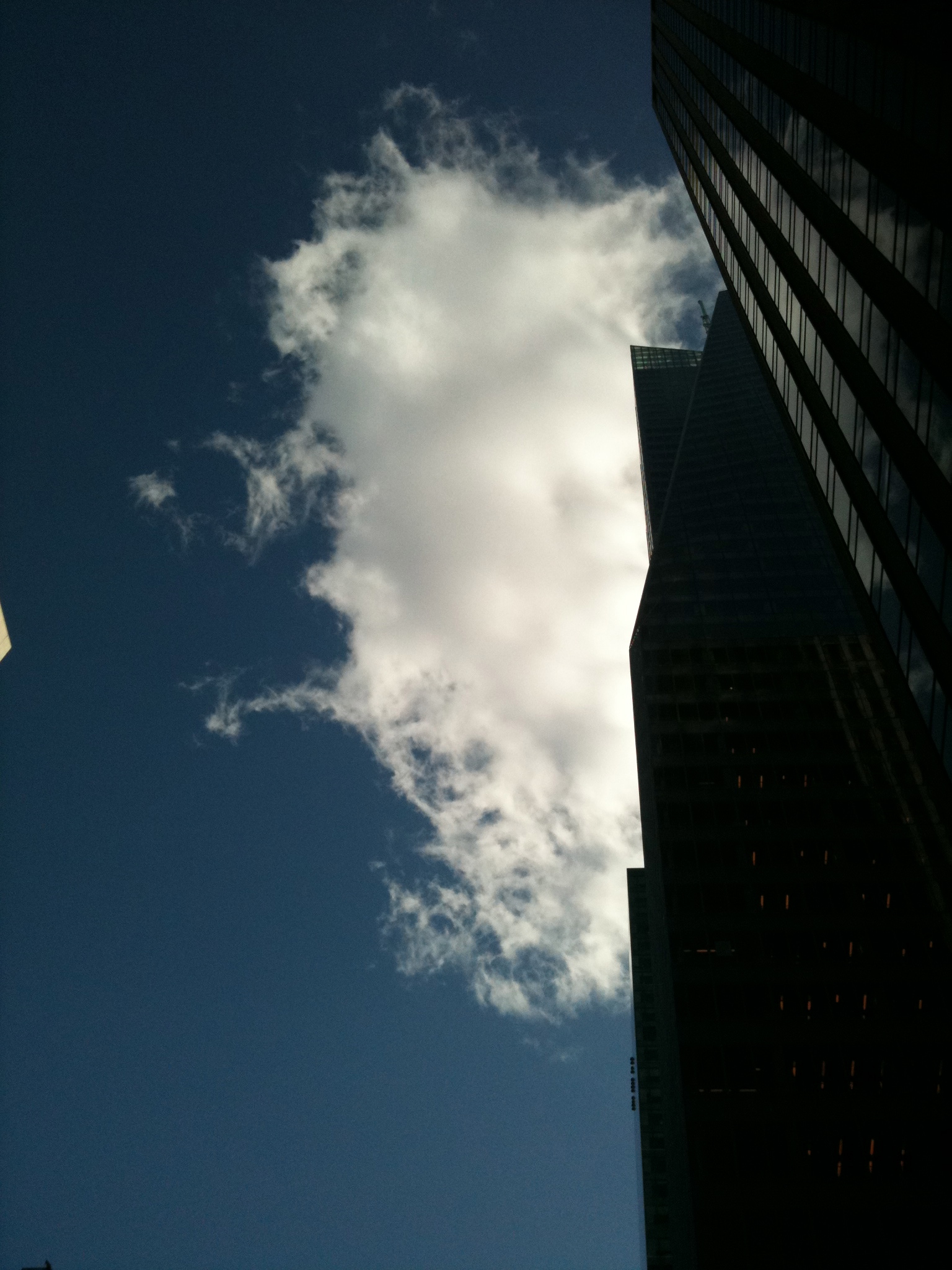
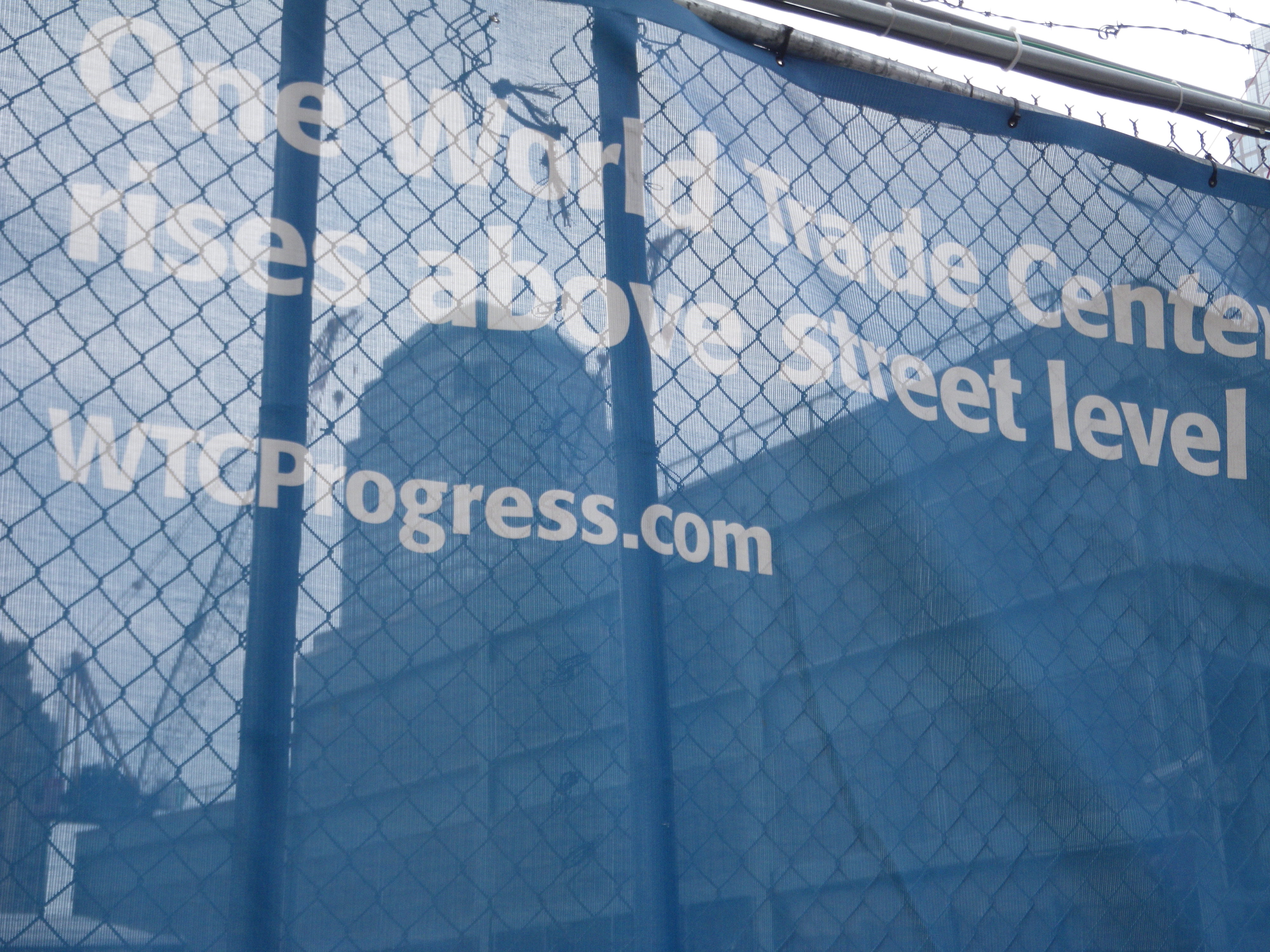
Morning sun was reflecting brightly off the water on the marshes of the meadowlands. Though part toxic industrial wasteland the marshes were home to countless species of birds. I loved this stretch of the commute to the city, the skeleton bridges’ dark structure against the luminous sky, silver glitter on tidal pools of water, herons fishing in dioxin contaminated estuaries, abandoned cars driven into the muck, parked utility trucks on well maintained dirt roads leading into nowhere, fast moving toy sized cars on elevated highways on the horizon, discarded metal scraps sticking out of the reeds like letters of a forgotten language, the wind caressing the rushes causing water like ripples, overhead electrical wires, seagulls circling in the lower skies, high voltage station feeding the catenary, finally the silhouette of the city and the new world trade center towers still rising in construction in the distance. Every time I was on the train I felt that the progression of scenes outside the window was like a silent movie on a screen of stray light. The meadowlands were beautiful, but against the lure of the silver light I remained aware that it was a poisonous landscape. I wondered how the herons survived here. I wondered if eventually our whole word would look like this.

Mount Hor

Lake Willoughby grated into plutonic rock by a deep glacier, is a 300 feet deep, water filled scar between two mountains with biblical names, Mount Hor to the West and the Eastern Mount Pisgah. If you stand on the North Shore of the lake, it actually has the appearance of a deep fjord, though there is no outlet to the sea. Instead there is said to be an underground aquifer connecting the basin of Lake Willoughby to that of another eerie body of water beyond Mount Hor, Crystal Lake.
In my dream the water acted like a mirror. The surface seemed to be like a sheet of glass of finest quality, separating the clearly visible underneath from the still world above, and the mirror image of this world like an incomprehensible fourth dimension in between both worlds. Again I saw the forms in the distance, gathering around precariously piled up, submerged boulders. Each winter these boulders avalanche down Mount Pisgah and roll into the lake to form the outline of an inaccessible stone city, creating an intricate mountainous terrain. I wondered how long it would take to fill the deep ravine of the lake with boulders and fleetingly thought of the old story about the small bird wearing away a mountain with his beak to mark the passing of the first second of eternity. In my dream I had this thought.