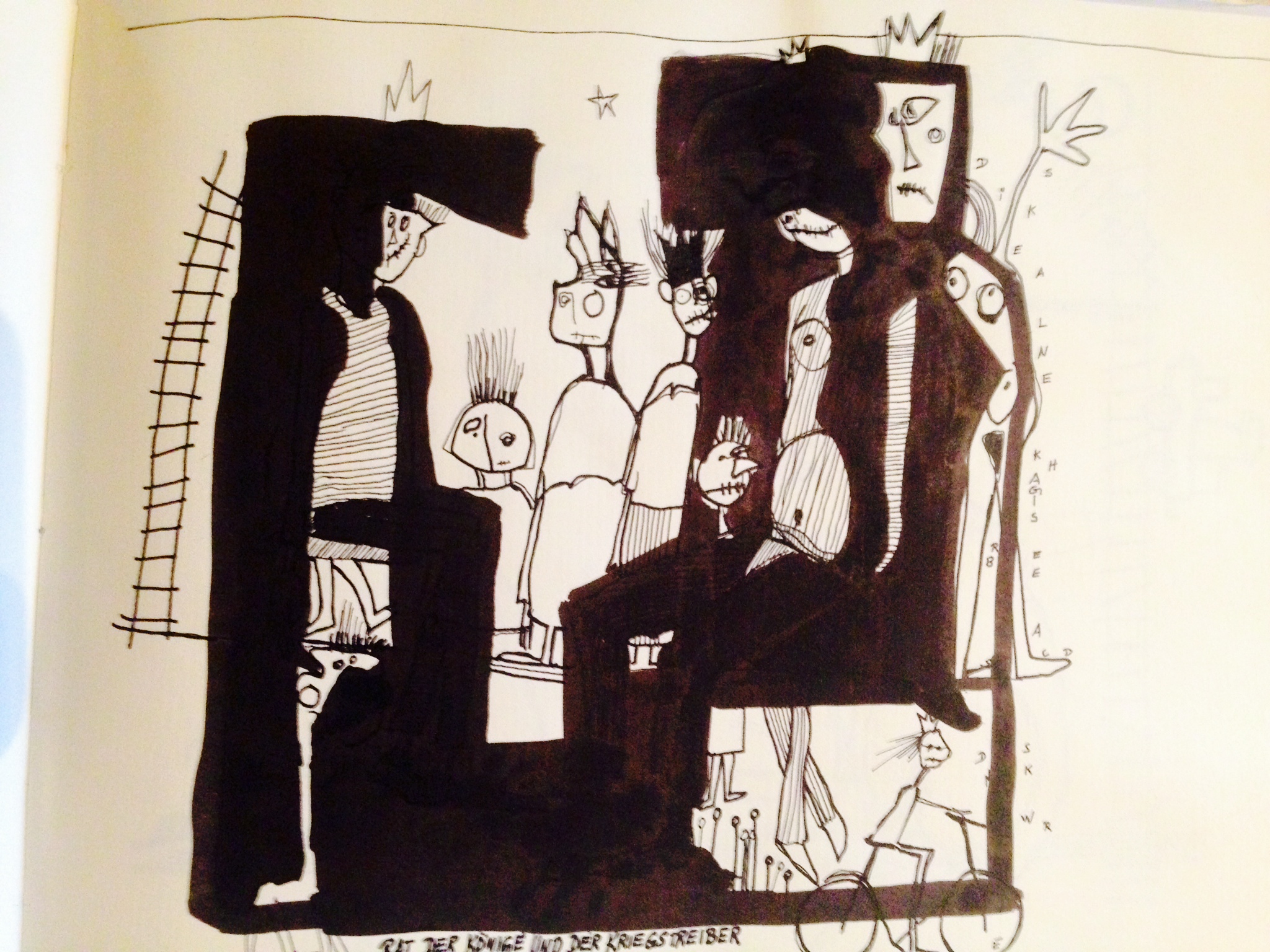
Zur Natur des Rats der Könige und Kriegstreiber – on the nature of the council of kings and warmongers


Once they realized that there was not one king or one queen, but a succession of kings and queens each of whom was “the” king or “the” queen regardless of their individual identity, so that in fact, the king or the queen was not only unconquerable but  actually immortal, that times might change and ideas might change but “the” king or “the” queen” would not, so that one revolutionary, one upraising idea might threaten an individual queen or king and even overthrow them, garrote them, end them, but would have to accomplish this task within one lifetime, while “the” king or “the” queen had all the ages of the world  to wait, witness and rise again, once they realized that “the” king or “the” queen might use this or that war monger to clear the way once time was good and ripe and yet would discard of the warmonger as easily as of the revolutionary as soon the need was satisfied, once they realized that this was so, they also realized that it was not their task to interrupt the fleeting council of kings and queen and warmongers but use their one lifetime to conjure up from the source, the holy grail, a people that were as unconquerable as the grail, giving a random gathering of people a binding, unifying reason to be, to defend their freedom against the usurper through all the ages and to recognize their freedom as not a consequence of liberation but as an unalienable right and quality.
Rat der Kuonige und Kriegstr

Art. 1 GG The dignity of a person shall remain untouchable.

Art. 1 GG The dignity of a person shall remain untouchable.

The first article of the German Constitution. Actually the wording in German (“ist unantastbar”, tranlslated: is untouchable) could be read in two different ways, one being “it cannot be touched”, the other “it shall not be touched”. Last week, in my legal class, I started a discussion with my students about whether human dignity can actually be denied or be broken (by the state, an authority, a group etc.), or whether there might be what could maybe be called a core of human dignity that remains untouched no matter which forces are used against it and under which circumstances a person is forced to live. No wrong answers, a strong discussion ensued.
It is a strange reality that humans are bound to such an abstract idea, dignity, something that is expressed in and through circumstances of their lives but also seems to reside deep within them, that they are bound to this in a way that life will seem desirable no longer once “it” – dignity – is effectively denied and that they, we, are incredibly inventive to defend at least a display of individual dignity in the face of even overwhelming adversity.
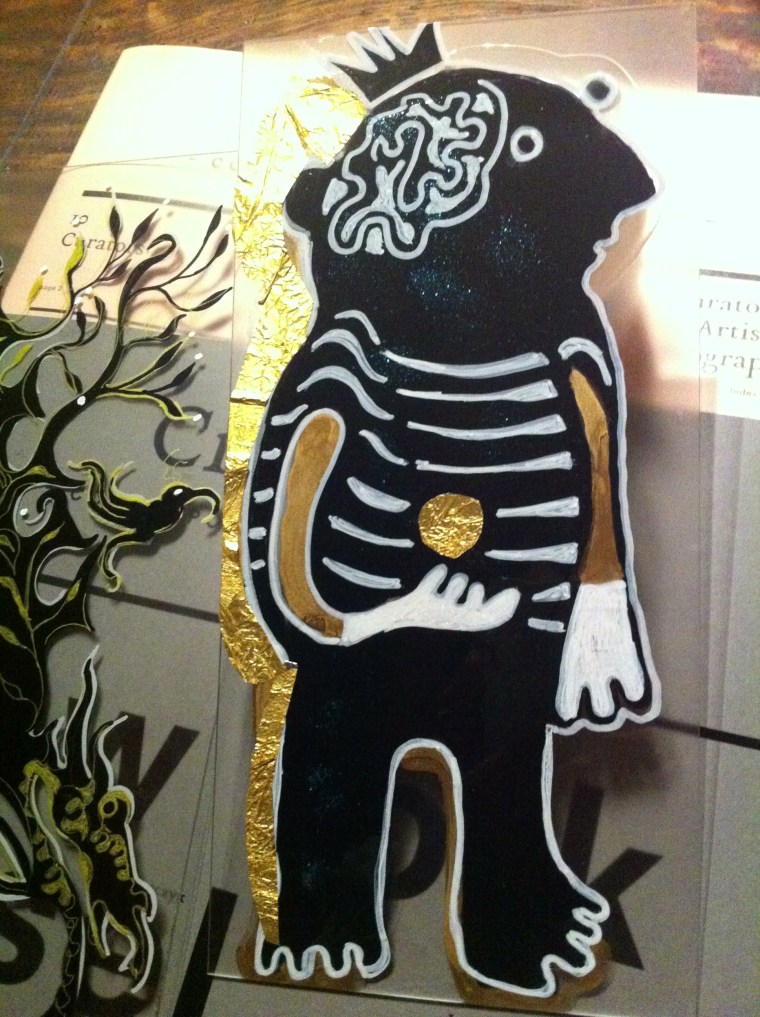
This illustration seems to lean towards the interpretation of human dignity actually being the unchangeable core of an idea, located in the brain but held by our hands (actions). I do know it can be denied like but I believe that it can’t be broken. The naive quality of the drawing insists on the relevance of the question in the face of a reality that is unforgiving and not as much in need of such contemplative studies and pretty pictures but of real change.