Mr. Letterman was the kind of man who found find intrinsic value in reflection and contemplation and had allowed this inclination to become the building structure of his life. This was why as an undergraduate student even with law school in mind he had chosen to study philosophy rather than economics and had concentrated on 17th-century philosophy which he found particularly intriguing because it answered to his own temperament. He had studied Descartes, Locke, and Newton, and had read Kant as well as Goethe, Voltaire, Rousseau, and Adam Smith. He cherished reason and individualism as the core values of enlightenment.
He knew quite well how difficult it was to actually live an individual life as he understood it, starting with an education that gave a student time to acquire the ability to distinguish individual choices from prefabricated ideas. He had been a keen observer all of his life, and since the late Eighties had noticed the changes imparted by a growing globalized market on American cultural habits which had been in fluid transformation of very different heterogene cultural movements since the late Sixties but now were anastomosing into more or less one all-emcompassing stream of consumer culture. Since then, or so he was convinced, increasingly suggestive marketing strategies had been skillfully reducing individual freedom more or less to the act of choosing between different consumer goods. According to the logic of the market commercial success was the gate to freedom as it allowed access to consumer products, and striving for the possession of consumer goods had been accepted as the ultimate meaningful pursuit in life. People now spend most of their time working and earning money to spend on such consumer goods and if their work in itself happened not be meaningful, there was little time left to construct meaning from whatever was left over to their private discretion. Consumer goods as carriers of a lifestyle that few could integrate into their everyday routines were tailored to fill the void of the un-lived life while at the same time creating the desire to acquire even more goods, more things to throw into the abyss of time.
Mr. Letterman knew that poverty enslaves families, condemning generation after generation to a living on low wages and social security, that people as intelligent as he considered himself to be had to forego higher education and work hard, repetitive jobs, wasting their potential, that he himself, due to fortuitous social circumstances, had been allowed to develop. He knew that in low incomehouseholds – among other things – there was indeed also a lack of needed consumer goods from food to clothing to furniture to kitchen appliances to books. But he also knew that it was not the lack of consumer products that was most painful consequence of low incomes but the lack of education and access to the many sources of meaning that were reserved for those who knew how to decipher the code. Higher education was an expensive privilege. He was not fighting for social justice per se even though he was representing a fair share of pro bono cases. But he kept aware that he did not earn the privilege of an education that was denied to others and he kept a special kind of contempt for people with access to this kind of privilege who nonetheless proved incapable of making individual and intelligent choices.
For him, prerequisite to a mindful life was reading. And the prerequisite to reading well was education. He visited the New York Public Library during late lunch, sometimes just to sit down in the reading room for a while. Since childhood he had loved the gigantic stone lions who guarded the entrance to the Library, Patience and Fortitude. He loved the many different book stores of New York´s neighborhoods.He chose his books with care following his established interests and toyed with the idea to write a book himself if he should ever find the time, a book about the many stories that clients brought to him daily and which were a kaleidoscope of the many brilliant pieces of NYC of but like any passionate reader he was also curious about books and authors yet unknown to him. He loved to rediscover new as well as almost forgotten authors and frequently visited used book stores. He was a regular at Strand´s.
Saturday mornings he liked to stop by at Crawford & Doyle booksellers, a small old-fashioned independent bookstore on Madison Avenue between 81st and 82nd street close to the MetMuseum. After his visit to the book store he walked straight over to the Met where he spend whatever was left of Saturday afternoon, sitting in one of the courts and reading a new book while tourists and New Yorkers walked past him.
Crawford & Doyle booksellers catered to a eclectic reading tastes, offering a selection of the New York Times bestseller list and the annually published most notable book list yet always keeping the discriminating reader in mind, and offering a plethora of topics including fiction, history, philosophy, biography, religion, politics, lyrics, social studies, art, children´s books and a fine selection of crime novels on the first floor of a space hardly larger than a spacious living room. The store was beautifully stacked with old dark wooden shelves and lower showcases and booktables stacked with books, leaving only small alleyways to pass through and two very narrow benches to sit down.
There was a gallery on the second floor which was, in fact, a book store within a book store, with collectible and rare books, concentrating on first editions of primarily American and British fiction. Mr. Letterman had found first editions of Frost and Yeats upstairs and a small volume of the Dubliners which he treasured and always carried with him as it fit perfectly in the pocket of his overcoat.
Crawford & Doyle was dependable and friendly like an old acquaintance. Customers were entering and leaving the store on Saturday mornings in a lively flow without interrupting the reader in the corner; they politely accommodated one another in the narrow passageways between the displays and conducted short, quiet conversations among themselves or livelier ones with the knowledgeable staff at the register. It was a store dedicated to the art of reading and thus to an enlightened public, readers like himself, in search of the path that was as individual as the reader, leading from one book to the next, choosing one, leaving out another equally deserving one, following an instinct that had formed over a lifetime of reading.
As many customers were regulars Mr. Letterman would see familiar faces on Saturday mornings and got to know the taste and habits of people who remained strangers to him yet at the same time were like family to him, serious readers like himself. A Saturday morning regular for example was the small lady whose features were so delicate and who moved so lightly that she reminded him of a small bird. She had a special taste for all kinds of political fiction and quite obviously a voracious reading appetite. She would assemble sizable stacks of books to take home, carrying The Reader by Bernard Schlink on top of The History of the Siege of Lisbon by Jose Saramago, followed by Anthony Burgess last novel Byrne, postwar German author Heinrich Böll with a short story collection titled The Mad dog, and on top of this formidable stack The Three-Arched Bridge by Ismail Kadare who had just recently become a lifetime member of the Academy of Moral and Political Sciences of France.
Mr. Letterman loved to cast a sideway glance at the birdlady´s finds and sometimes he let himself be inspired by her choices. It was through her that he discovered his love for Kadare. He read Ura me tri harqe, The Three-arched Bridge, first published in 1978 because he had spied it on top of her stack, and had continued with Përbindëshi, The Monster, an even earlier work from 1965, which took him some time to find and that he finally discovered in the used-book section of Crawford-Doyle´s just like before the reasure of an author-signed version of Nata me hënë, Moonlight, first published in 1985.
And then there was the girl mainly lingering in the art book section but sometimes straying to children´s books. She was mostly dressed in faded Jeans and an NYU-sweatshirt, wearing her straight dark blonde hair open and pushed back on just one side behind her ears. He had never paid too much attention to her because he did read little on the visual arts, and had no interest in children´s books but he had indeed noticed the girls just as he did notice the other regulars and had inscribed her on his inner map of a particular Saturday morning.
Then one Saturday, something strange had happened. Instead of in her usual spot in the arts he had encountered her in the non-fiction area between philosophy and history. She had taken a somewhat awkward turn to let him pass, misjudging the space between their passing bodies and with an abrupt countermovement had just so prevented herself from running the art volume into his rips . The abrupt movement almost made her drop both of her books, the art book on top of which she had opened another book, using the larger book like a small reading desk. This other book he recognized at once because he owned an earlier edition of it and was familiar with the new one she had been studying before he had interrupted her. After he had passed her unharmed, answering her apologies with a polite apology of his own, she went right back to reading. The book was „The Hedgehog and the Fox“ by Isaiah Berlin. Mr. Letterman considered this an unexpected choice for a girl who would spend most of her time in the arts and children´s book section. Isaiah Berlin had commented on this collection of essays, bearing the title of a fragment from the archaic Greek poet Archilochus. Berlin has said: „I never meant it very seriously. I meant it as a kind of enjoyable intellectual game, but it was taken seriously.“ which struck Mr. Letterman as an appropriate motto for his own well intentioned life that was meant to be light and unattached to convention but that had also turned out a bit different than he had foreseen. A little lonelier than anticipated for example.
The girl looked like the serious kind of girl who preferred reading to going out, maybe a bit too serious for young men´s taste, he thought. She was pale and almost pretty and she squinted her eyed as if she was in need of glasses while reading.
He liked the The Hedgehog and the Fox . It too was an intellectual game in which Berlin divided writers into two categories: hedgehogs, who – like Plato – view the world through the lens of a single defining idea, and foxes – like Shakespeare – who draw on a wide variety of experiences and who pursue multiple ideas simultaneously that were all but incompatible with each other but coherent in themselves, representing Berlin´s irreducibly pluralist ethical ontology. Mr. Letterman suspected that he himself – unfortunately and despite his curiosity – was more of a hedgehog really, not least due to a certain shyness and his need to keep a steady view of life while the value pluralism that Berlin was able to embrace gave his own ethical system a spinning sensation.
He had been curious if the girl would actually purchase the book or had just been attracted by the whimsical title. It was a hardcover edition though and bound to be expensive, probably around sixty Dollars, and so, even if she decided against it, it might not necessarily tell him much about her intellectual preferences. Still, his curiosity was aroused, also she seemed vaguely familiar, and so he gave her a sidewards glance every once in a while.
After a while she closed the Hedgehog and the Fox carefully, but did not put it back. Instead she pulled out yet another book from the shelf, this one slender with a marbled green-greyish paper cover over a frayed soft cardboard binding and a light green title tag glued to the front like an old fashioned school notebook. There was no dust cover.
The first thing he thought as he looked at the small book was that he must have overlooked it (because he knew all the books in that shelf and noticed new books right away when he got to it), the second thought was that it must have been displaced because quite obviously it belonged in the used book section. The girl put the art book and the Hedgehog and the Fox down on top of the fairly low shelf and gently opened the marbled book in order to spare the book spine from damage. By the way she handed the book he could tell that she was used to handling books.
He stepped a bit closer, randomly pulling out a book of his own and looking over to her again, smiling in case she should meet his gaze but she didn´t. She was fully concentrated on her book and did not look up or showed any other sign of awareness of his presence. He therefore dared to move a little closer still in order to identify the book and saw that the volume did indeed not belong in this shelf. The gilt letters on the title, partly obscured by her hands he deciphered as Ri- – o-nn- – Orph – -s and concluded that she had found a treasure, Rilke´s Sonnets to Orpheus. He knew the publishing house´s signature marble cover, a German Publisher called INSEL, the Island.
The girl became even more interesting to him now as she seemed transfixed by this new book, caressing the paper while turning the pages. Quite suddenly she looked up as if she had grown aware of his observing look. She looked directly at him and smiled. For a moment he was startled by her sudden awareness, but then he returned her smile. I am German, she said, it´s strange to read Rilke in English translation. She said this as if they had been meeting before and this was just one out of many remarks that had already passed between them. Well, he answered, I envy you, my German is very limited and I would not be able to read Rilke if his work hadn´t been translated. That is a nice edition you found. Someone must have placed it in the wrong shelf.
She smiled again, lowered her voice and then continued the conversation with an even more personal tone. -Will you keep a secret if I recited some lines from my favorite Rilke poem in German to you? Her English was excellent with only a slightly rough edge that gave away the German native speaker. He considered the question. He was curious and so he nodded. She briefly closed her eyes and, reopening them, looked straight at him again and started with a clear if still quiet voice, not at all like a schoolchild reciting a poem by heart, as he had half expected. Though clearly in verse it did not sound like a recitation of a poem at all, more like an intimate confession. He could make out single words, colors like Grün and Blau and simple words like Sommer and Sonne und Frau, and names of places places like Venice and Kasan, Rome and Florence, Kiev and Moscow, but the rest to him was like a strange music, beautiful and raw.
Und du erbst das Grün vergangner Gärten und das stille Blau
zerfallner Himmel
tau aus tausend Tagen
die vielen Sommer, die die Sonnen sagen
und lauter Frühlinge mit Glanz und Klagen
wie viele Briefe einer jungen Frau
Du erbst die Herbste, die wie Prunkgewänder
in der Erinnerung von Dichtern liegen,
und alle Winter, wie verwaiste Länder,
scheinen sich leise an dich anzuschmiegen.
Du erbst Venedig und Kasan und Rom,
Florenz wird dein sein, der Pisaner Dom,
die Troïtzka Lawra und das Monastir,
das unter Kiews Gärten ein Gewirr
von Gängen bildet, dunkel und verschlungen, –
Moskau mit Glocken wie Erinnerungen, –
und Klang wird dein sein Geigen, Hörner, Zungen,
und jedes Lied, das tief genug erklungen,
wird an dir glänzen wie ein Edelstein.
Es geht noch weiter, she said, after a pause, then realized that she had spoken German, repeated: – This is not where it ends, but I think this is good for now. He smiled warmly and bowed to her. She gave a small laugh and answered: – Now for my secret. He replied: – But that would be two gifts then, implying that the poem had been a gift and he had appreciated it, but she did not pay attention to him as if she was in need of depositing her secret whatever it might be with someone, just anyone, maybe the first person she met who liked Rilke.
He felt a bit uneasy, because the encounter had become personal and he did not know whether he wanted to be burdened with a private detail. – You see, she commented as if she had been following his thoughts, – the second one is not a gift, it is a fair and square deal. But don´t be afraid, it´s just an insignificant small thing I am going to tell you, quite childish really, and he felt ashamed that he had been nervous.
She continued with a hushed voice and in a slightly pedantic tone, her German accent now more apparent that she had recited the Rilke poem, – I cannot afford to buy this book, it´s really quite expensive. It´s a first edition, published in 1923, and it is absolutely beautiful. I do spend money on books as you can see, but this one´s out of my reach. So I took it from the rare book section down here and placed it in social studies because I figured chances are that most people interested in social theories and politics and history would not much care for poetry and so it would be awhile until it either found a buyer or the clerks put it back where it belongs and until then I can look at it. These editions normally go very fast. Now, there it is, my secret, and I am going to put the book back on the shelf right next to Isaiah Berlin because he was fluent in German and would be good company to Rilke. I hope you will keep my secret because then I will be able to enjoy this a little longer and all the more now because it is a shared secret now.
Mr. Letterman watched her shelving the book neatly, holding on to his own books tightly to steady himself. He was feeling troubled. He did not know whether he felt disapproval or interest in the girl or both he was at the same time curious and uncertain as to how the situation would continue, asking himself whether she would expect him to answer to her confession and what to say, and whether he was to be her accomplice in the crime or give her some fatherly advice. Surely this was not a grave violation of ethics, not as bad even as hiding a book at the law library to prevent other students from finding specific titles that were relevant for a semester assignment as was a bad habit of some of his fellow students at law school. Surely, there was something intriguing about a girl her age who knew Rilke by heart and seemed to know a bit about Isaiah Berlin as well, already knew this before she opened The Hedgehog and the Fox. Surely, he did not normally seek out young girls for literary conversations and confessions, and he felt at insufficient and uneasy and overall insufficiently prepared for such a situation, which in turn made him feel irritated and at a loss for words. But she just turned around, smiled at him once more, but now in a polite and distant way that betrayed nothing of the intimacy they had shared just a moment ago and with a small nod of the head, walked over to the register to pay for her two books. He looked at the shelf where the small grey-green volume nestled up to its neighbor, like an ordinary, out of the ordinary secret, a secret quite different than the ones he was entrusted with every day save Saturday and Sunday as a lawyer. When he looked up again the girl had left the store leaving him behind with their shared secret. Should he take the book out of the shelf like a good schoolboy and carry it back to the rare book section? But nobody had made him the guardian of the books after all and the clerks, as she had said, were bound to find it sooner or later, so there was no harm done, really. After giving this some consideration he still didn´t feel right about it, and he still felt angry with her for leaving him with choices that would put him in the wrong no matter whether he decided it one way or the other. Finally he turned his back on Rilke and Berlin and started browsing in the opposite shelf, in History. He pulled out Herodotus who was shelved properly and leafed through the pages until he found his favorite part, the story of Candaules and Gyges. When he had finished reading it and Candaules had been killed and succeeded by Gyges, he had successfully willed himself to forget about Rilke, and about the secret and about the girl. Or so he thought. Thus he kept the secret. Thus the trouble began.
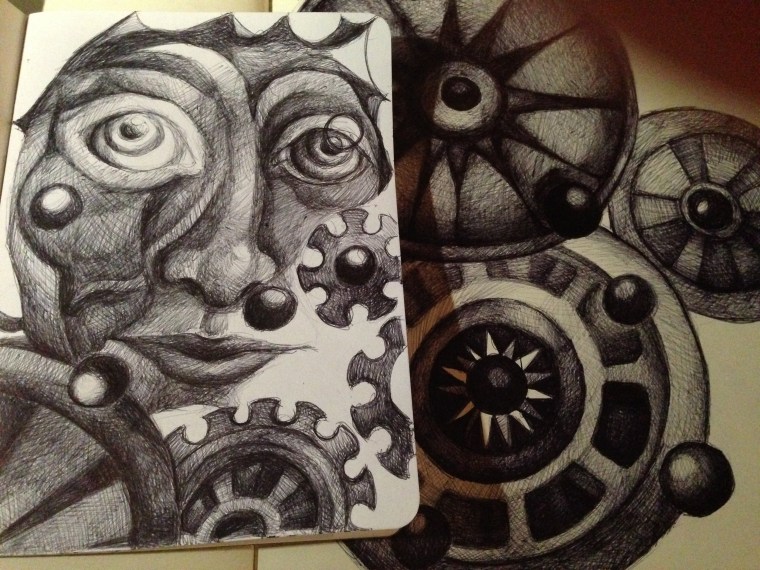 He had lived in the rectory for over 35 years. When he had arrived to take care of the parish, people had soon introduced him to their daughters for he was young, unmarried, of a well known family. But he had kept to himself, had dedicated his time to his parish and his academic studies. He was especially interested in the work of a catholic lawyer, philosopher and counter-revolutionary, Joseph de Maistre, mainly his Essai sur le principe générateur des constitutions politiques et des autres institutions humaines (“Essay on the Generative Principle of Political Constitutions and other Human Institutions,”). He was intrigued by de Maistre’s doctrine that war and the shedding of blood were necessary for the expiation of sin. Also that sin was inevitable, that physical evil is the necessary corollary of moral evil, expiated and lightened through prayer and sacrifice only. These ideas resonated with him in a very deep and personal way, he was severe and unforgiving and so were his sermons. He had to redress these ideas to make them acceptable to the views of his own church, and it hurt him personally to offer forgiveness for mere remorse in the name of Christ. Over time, as he became older and his severity started to show in the deep lines in his face and the emaciated appearance of his body, people started to fear him and went out of his way where possible. There were no more attempts to introduce him to an unmarried daughter or niece and less invitations to other social events, which was a welcome development in his eyes, as it provided him with more time for his studies. He suspected himself to be prone to a weakness that both churches would have condemned and was relieved that in consequence of his social isolation there was only limited temptation to give in to his desires. If one of his young male students would catch his attention in this unwelcome manner, he treated the boy with special unkindness to keep at a safe distance. While his philosophical comprehension and reasoning deepened over the years, recorded in countless journals, he did not manage to overcome his burden, and realized that he actually suffered more severely from it the older he got. This in turn supported his views on the inevitability of evil, for as evil he regarded his infliction, but also as unavoidable, as nothing he had done to purge himself from it had been successful. His life was complicated and joyless for the most part.
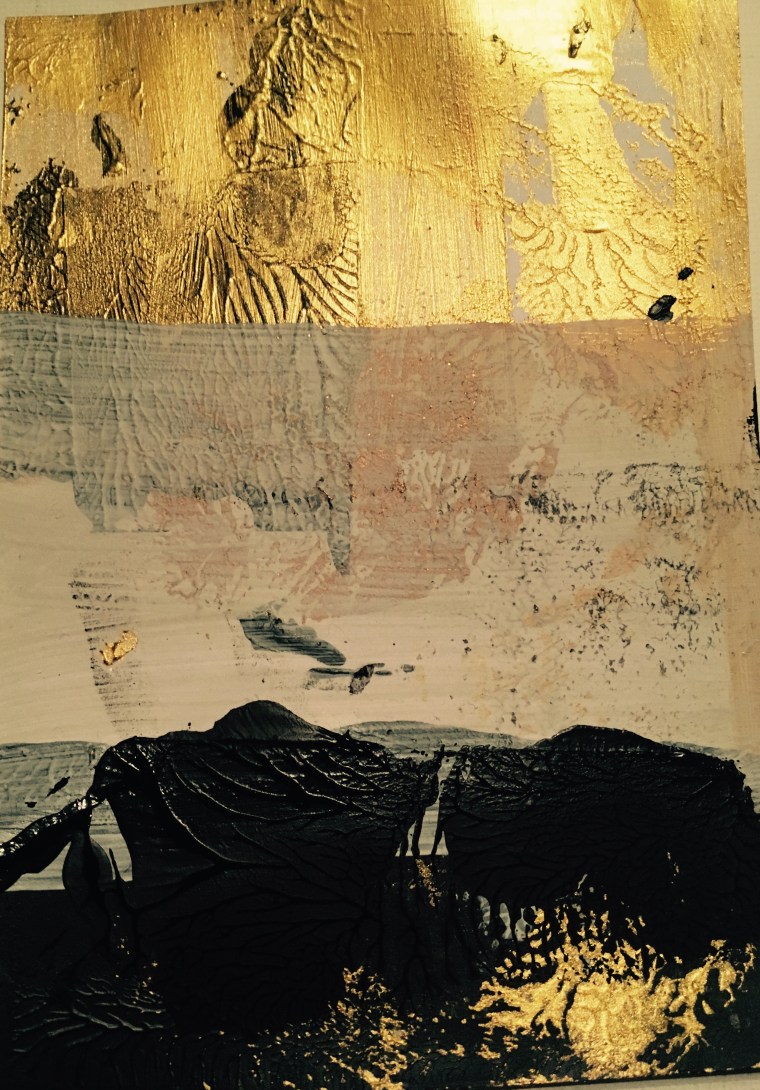 The shallow hole the boy had dug became deeper with time as he scooped out the red colored clay the ground was made of. He filtered it through his hands, taking out stones, sticks, decomposed leaves and roots. Punching and smoothing it he compacted the clay to one block, thus slowly building up a monolith from clay. He devoted great care to this process, making sure that he would have a structurally sound mass with which to work. Over the course of building hundreds of small people from mud he had gotten quite skilled at this craft. Only when he was content with the sound that a slap against the block produced, a deep, saturated thud, would he proceed to sculpt. With deliberate slowness he worked from the general form to the details. Many times a form had collapsed when he had tried to overemphasize a movement or had placed the limbs too far outside the center of gravity. In the beginning he had tried to use sticks to support an arm reaching out or a leg stepping forward and though technically that solution had worked he didn’t like that the figure now seemed to defy the laws of gravity that nature put on the material and form. It was thus almost impossible by the mere use of sticks and clay alone to sculpt an outreached limb that looked natural. So he had returned to work from the inner core of the material and to rather hint at a movement that – though invisible – the eye would project into the empty space. He was always intrigued by what he could see without seeing it. He liked the way his sculptures randomly related to one another, all he had to do was to quietly look at both sculptures and discover this relationship of forms. Something deep inside him stirred when he looked at his creations and their silent endurance. He could see the form of the space in between two physical forms, it was nothing and yet visible if one cared to look, it changed constantly, stretched and diminished, even disappeared. It was actually easier for him to comprehend the properties of this in between space than the form itself. You could get out of the trajectory of any moving object if you controlled that space. If you made that space in between adhere to your inner voice you did not need sticks to build a figure. Why, you barely needed your hands, all you had to do was to look long and hard, look at the clay monolith and make some slight adjustments. Soon his people were crouching, stretching, running, turning. He took great pleasure from this.
 Where do you live when you live in a mattress under a dining table as a roommate to a legal intern? What is your legal address? Do you even have one? You are not freezing at night. You do not go hungry by day. You are alive to the world, breathing, thinking, feeling, and you have a history that walks by your side as you walk past the store fronts on Madison on your way to the subway on 96th Street after your boss has taken off with the food truck towards Queens. His day is not over yet. He still has to drive the truck out, clean and unload it in order to comply with food regulation rules, to keep the truck running that provides both of you with a livelihood but in your case just so.

 Art & Writing