Transformative forces
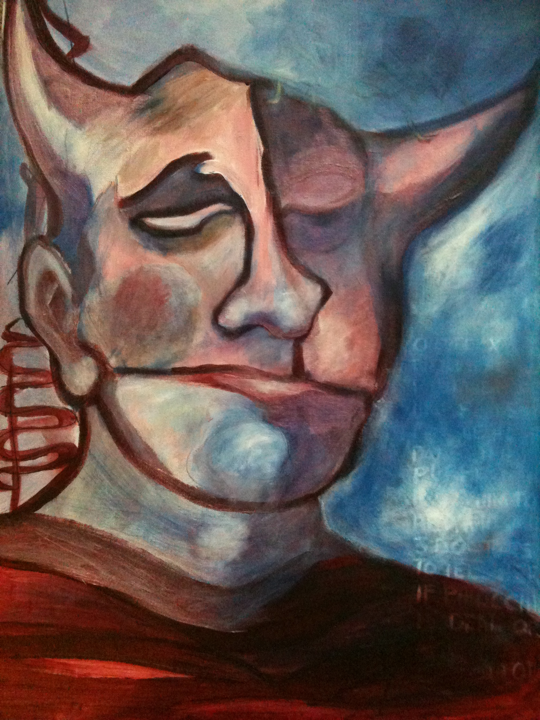
He was but a gargoyle, a stone image. How the gift of sentient observation had come to him he did not know any more than man knew where the soul originated. From his place on the roof he observed people, adults and children alike and marveled about the passage of time. After years and years of observation, of overheard fragments of conversation that the wind had carried up in the same unreliable and moody way he carried a fragrance like a caress or deposited leaves and debris in the gutter, from years of watching children grow up and age, he had concluded that humans were born with many gifts only to shed them with the years until nothing of value was left. Adults to him, the steadfast observer, were a manifestation of a process of deterioration of their former promise.
There seemed something broken about adults to him, men and women alike, as if the original balance of their design had been spoiled. He liked children perhaps because they seemed unaware of the passage of time. He observed with pleasure as a seven year old girl straining under the weight of a watering can that she had been sent to fill up at the pump stopped in her tracks and put down the watering can only to pick up a small, white pebble to examine with great interest and sincerity as if she had struck treasure. Another day he had observed a young boy crouching on the path in an immobile position for close to an hour, a long time in human count, to closely look at the street of ants entering the church underneath the granite slab step of the back door. It was the same ant street, as wide as the arm of the local butcher, that the custodian had failed to banish form the grounds even after many years of relentless and poisonous battle.
Every now and then, from his precarious precipice the gargoyle observed a kid blinking up into the grey light of an early Northern spring day, scanning the gargoyle’s own dark silhouette against the diffusely bright clouds. He had never seen any adult lift their head to actually study the structure and ornamentation of the church. It was children only, children possessing the gift of timelessness by focussing on something small just outside their reach and holding on nonetheless, thereby transcending the moment that was forced upon them by wisdom or mere whim of the ruling adults in their lives. And all that time he was waiting just as they were waiting, existing in limbo, in a state of not knowing, waiting to be unbound, for his fate to be revealed to him, and yet dreading it, dreading it was but a process of diminishing, of deterioration just as the passage of time exemplified by human behavior seemed to indicate. And yet, there were moments he still believed in the transformative forces of time and light.


 Art & Writing