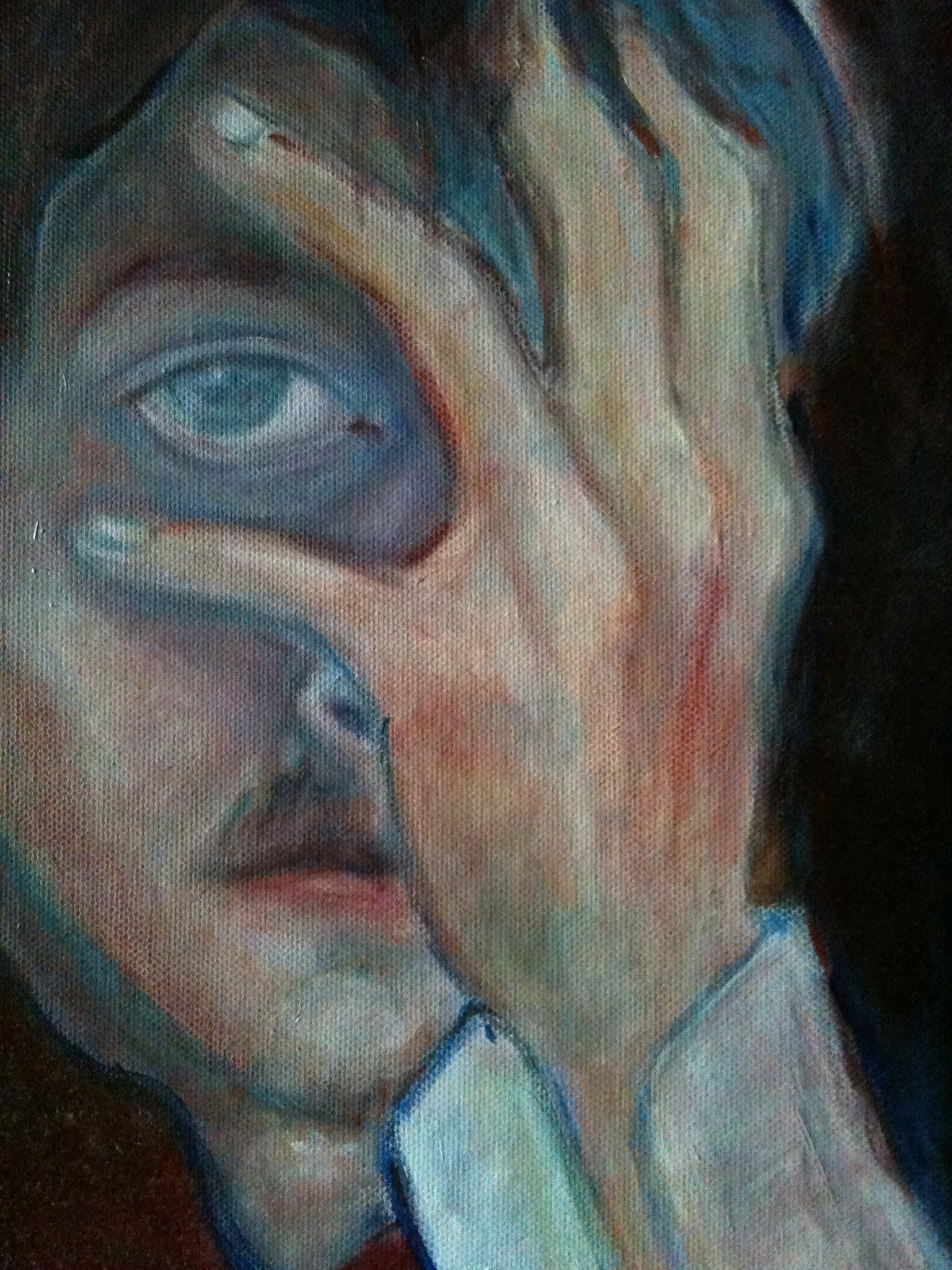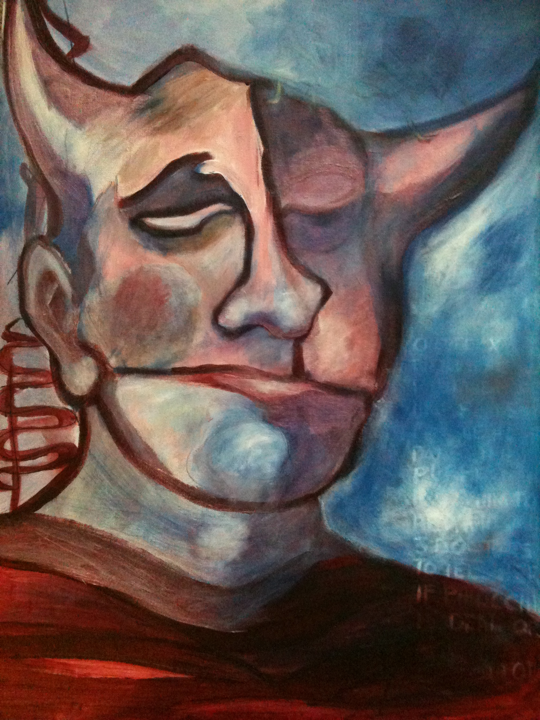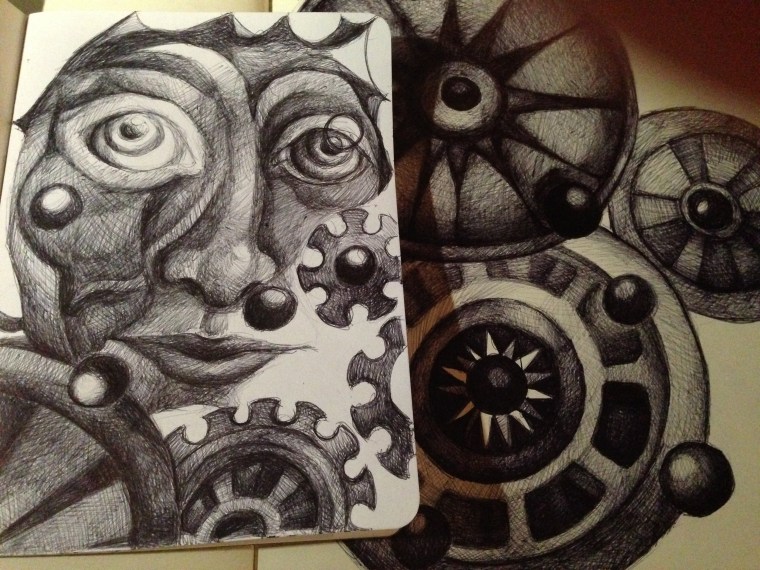
The Priest – 1861


FotoHe had lived in the rectory for over 35 years. When he had arrived to take care of the parish, people had soon introduced him to their daughters for he was young, unmarried, of a well known family. But he had kept to himself, had dedicated his time to his parish and his academic studies. He was especially interested in the work of a catholic lawyer, philosopher and counter-revolutionary, Joseph de Maistre, mainly his Essai sur le principe générateur des constitutions politiques et des autres institutions humaines (“Essay on the Generative Principle of Political Constitutions and other Human Institutions,”). He was intrigued by de Maistre’s doctrine that war and the shedding of blood were necessary for the expiation of sin. Also that sin was inevitable, that physical evil is the necessary corollary of moral evil, expiated and lightened through prayer and sacrifice only. These ideas resonated with him in a very deep and personal way, he was severe and unforgiving and so were his sermons. He had to redress these ideas to make them acceptable to the views of his own church, and it hurt him personally to offer forgiveness for mere remorse in the name of Christ. Over time, as he became older and his severity started to show in the deep lines in his face and the emaciated appearance of his body, people started to fear him and went out of his way where possible. There were no more attempts to introduce him to an unmarried daughter or niece and less invitations to other social events, which was a welcome development in his eyes, as it provided him with more time for his studies. He suspected himself to be prone to a weakness that both churches would have condemned and was relieved that in consequence of his social isolation there was only limited temptation to give in to his desires. If one of his young male students would catch his attention in this unwelcome manner, he treated the boy with special unkindness to keep at a safe distance. While his philosophical comprehension and reasoning deepened over the years, recorded in countless journals, he did not manage to overcome his burden, and realized that he actually suffered more severely from it the older he got. This in turn supported his views on the inevitability of evil, for as evil he regarded his infliction, but also as unavoidable, as nothing he had done to purge himself from it had been successful. His life was complicated and joyless for the most part.
He did take an avid interest in the building of the new church that was to replace the old wooden steeple. It’s neo-gothical style resonated with his ideas about a purer world and society. He contributed generously to its building cost out of his inheritance as had other wealthy landowners in the parish. The new church was a symbol at the same time of their moral purity and economical wealth. His contribution was so significant that he was chosen to model for the statues that were to be put on the roof and overlook the parish. The idea of watching over the life of the parish from a far distance appealed to him. The last winter before the completion of the new church he had an encounter with a stranger who had called upon him repeatedly and who was staying at the town’s only inn. He was dressed in simple, yet elegant clothes, cut out of fine, dark cloth. In a small town a stranger like this would normally have generated a great deal of curiosity. But he was so quiet and unassuming in his manner as to almost appear invisible. He went for daily visits to the rectory where he was served tea and would have long conversations with the pastor. The elegance of his appearance was so convincing that it took a while for the pastor to notice that the stranger wore but a kind of biblical footwear, close to being shoeless.
It was late fall. The trees were brilliantly red as if with religious fervor. The pastor felt alert, alive almost as if a lifetime of doubt and study suddenly held some promise, as if the dark aspects of his life were less weighing on him. Then the stranger came down with a severe flu which delayed his departure. High fevers made him delirious, and the doctor and priest both were called to soothe the rage which seemed to devour the man who had been a quiet guest until he came down with this fever. After three days he lost his consciousness and did not regain it. He died in the fourth night without the pastor at his side. The pastor himself was delirious in fever at this time and died only two days after the stranger.

previous chapter – next chapter
Mud people (excerpt from Gargoyle)

fullsizeoutput_b93 The shallow hole the boy had dug became deeper with time as he scooped out the red colored clay the ground was made of. He filtered it through his hands, taking out stones, sticks, decomposed leaves and roots. Punching and smoothing it he compacted the clay to one block, thus slowly building up a monolith from clay. He devoted great care to this process, making sure that he would have a structurally sound mass with which to work. Over the course of building hundreds of small people from mud he had gotten quite skilled at this craft. Only when he was content with the sound that a slap against the block produced, a deep, saturated thud, would he proceed to sculpt. With deliberate slowness he worked from the general form to the details. Many times a form had collapsed when he had tried to overemphasize a movement or had placed the limbs too far outside the center of gravity. In the beginning he had tried to use sticks to support an arm reaching out or a leg stepping forward and though technically that solution had worked he didn’t like that the figure now seemed to defy the laws of gravity that nature put on the material and form. It was thus almost impossible by the mere use of sticks and clay alone to sculpt an outreached limb that looked natural. So he had returned to work from the inner core of the material and to rather hint at a movement that – though invisible – the eye would project into the empty space. He was always intrigued by what he could see without seeing it. He liked the way his sculptures randomly related to one another, all he had to do was to quietly look at both sculptures and discover this relationship of forms. Something deep inside him stirred when he looked at his creations and their silent endurance. He could see the form of the space in between two physical forms, it was nothing and yet visible if one cared to look, it changed constantly, stretched and diminished, even disappeared. It was actually easier for him to comprehend the properties of this in between space than the form itself. You could get out of the trajectory of any moving object if you controlled that space. If you made that space in between adhere to your inner voice you did not need sticks to build a figure. Why, you barely needed your hands, all you had to do was to look long and hard, look at the clay monolith and make some slight adjustments. Soon his people were crouching, stretching, running, turning. He took great pleasure from this.
His father began to take notice too. One night when he had returned home from the workshop the little garden patch had first caught his attention. In the twilight the clay sculptures his son had build in the afternoon had a strange quality of perfection. There were seven fresh sculptures, six of them crouching on the ground, the seventh a small figure in flight, emerging out of a block of brick-colored earth, running.
From a distance it had seemed that all sculptures possessed distinct personalities and bore individual facial features. Something about these features seemed oddly familiar to the stonemason. Upon closer inspection he realized though that the impression of an actually sculpted face dissipated from a nearer perspective – but reinstated itself the moment he stepped back like a magical trick. The inability to confirm his initial finding, to come closer to the truth, was intriguing to him. He asked himself how a not yet six year old child could have created such a sophisticated illusion. He didn’t ever doubt that the impression was created deliberately. He studied the people his son had made for a long time. Inside the house the light from the boy’s bedroom shone dimly through the drawn curtains.

Ghost girl and Senegalese food

When Jawara arrived at the apartment the girl was home, greeting him with a melodious if distant „Hi, Jawara“, pronouncing his name with a slight American slur though she was European, actually German.
It was unusual for her to be home at this hour. She was sitting high up on the kitchen counter that separated the living area and the table from the built-in kitchen cabinets, holding on to an oversized mug with both hands as if she was trying to warm herself and smiling at him. The small space smelled intensely for coffee. She was wearing Jeans and a plain white T-Shirt. No shoes, no socks. Jawara liked that she had the good habit of slipping out of shoes and socks right at the door. He smiled back at her, grateful that he did not have to spend the evening alone but a bit worried about not being able to go to sleep on time.
He realized then that it was already past nine in the evening, and the girl was the first person this day to smile at him and mean it, meaning him, Jawara, rather than directing a grimace in his direction by mere reflex or politeness.
The realization made him sad, but it was a passing sadness, he had no resistance to it. Her smile was genuine and she looked directly at him, and after the sadness had receded, the gladness about some basic form of human company returned. – Hallo, you are home early, he said for a greeting while removing his own shoes and socks. She just nodded and kept smiling with an ease that showed him she meant it, there was nothing forced about it.
She did not not offer any explanation as to why she was home, but he took no offense. He had noticed before that there were days when she was barely present and he had realized it had nothing to do with him. She was not absent in relation to him in the way people were who usually ignored him even when they were placing their orders or accepting his soliciting smile at the food truck. It was more like she was absent from herself, and keeping company in a different sphere that was not accessible to his perception. More than once when meeting her he had had the eerie impression that the girl though being by herself had seemed like a person in company, acknowledging him as if she was tied up in a social situation but would really much prefer to talk to him than to her present company.
This impression she conjured up by her body movements and attention to spaces in the room that seemed out of focus of the actual things,  directed into an empty space but also consistently arrested at this point of not interest without staring, this impression was so eerily convincing that at times he had had the feeling he could actually see people gathering around her. For example, there was no apparent explanation as to why she would sit up on that kitchen counter as if she was actually facing a room full of people talking animately and had found herself a place to survey an informal gathering. She did not have a book or a file with her as she sometimes had on weekends, just that big mug of coffee.
She was sill sitting on the counter with her coffee when he returned from the bathroom accompanied by a strong scent of hand soap. He walked past her and into the kitchen and she gave herself a quarter spin and then another following his position in the room and now facing the kitchen front instead of the non-existent gathering. He started taking out food from the refrigerator. His neck tingled as he was feeling her in his back, sitting silently on the counter like a house ghost. She was a very quiet person.
He opened the fridge and methodically removed his food containers from his shelf. The evening before he had marinated chicken in a big glass jar that still had a shadow of a peeled off commercial label stuck to it. He had chopped onions and clover and had mixed them with salt and peanut oil and had poured this mixture over the chicken pieces stacked with lemon slices in the jar.
He usually precooked enough rice to serve him for several meals and kept the rice in a container in the fridge, too. He fished out some carrots from the vegetable drawer in the fridge and placed them on the kitchen counter right next to her, followed by a small cutting board and a knife and he started peeling and slicing carrots.
Are you hungry, he asked her politely, implicating that he could prepare food for the both of them but knowing ahead of time that she would decline. He had never actually seen her eat before though she did keep joghurt and fruit in the fridge. She shook her head, but playfully picked up a piece of carrot peel and curled it around her index finger like a bandaid. This irritated him for a split second but he did not flinch. Still, she unwrapped her finger as if he had commented on it and put he peel back to the growing pile of scraps which unnerved him even more because it heightened the vague impression she had on him, kind of like she was not a real person but really a creature from inside his own head thus knowing him as well as he dared to know himself. This must have had to do with her quietness.
New York was a place for strange people. It was certainly a good place for ghosts to live without drawing too much attention to themselves. Spirits and fox girls. He suspected without true conviction that he had been invited in by one.
Even if it was true: it was better, much better, to share a room with a pretty ghost girl than with the kind of loud and inconsiderate room mates he had had before. Still, he sometimes felt unnerved by her mind-reading ability. Maybe it was a female skill. His mother had had it too and there was nothing ghostly about his down-to-earth mother.
The smell of garlic in the frying pan when he roasted the chicken rooted him, and he gave the girl another smile before pouring the marinade over the browning chicken meat. She watched him when he picked up the cutting board from the kitchen counter. He pushed the carrot slices into the fragrant mixture and let the dish simmer before turning again and looking at her. Strangers in close proximity. – There is more coffee, she remarked. He considered her offer, but thinking about the few hours of sleep he needed, now it was his turn to shake his head. He noticed now that there were some almonds in a small ceramic dish next to her, half empty. Ghost food, he thought, and she tensed up immediately and stared at him for a moment, but then relaxed again.
He turned to the stove again and added some servings of rice to the chicken and carrot stew, and turned the heat on low. He filled two glasses with tap water that smelled of chlorine and he knew would taste like it, too. Walking over to the table he set the place for one but added the second glass for her. When he returned to the kitchen to check on his food, he ran into her legs. He was very hungry but for a moment he grew aware that she was not a ghost but actually a living breathing person, a girl. Then the food won. She slid down the counter and walked over to the table still carrying her coffee. He followed her with a metal coaster and the frying pan. It smelled like home.

Literary avatars,Jawara´s story, excerpt

IMG_5726Where do you live when you live in a mattress under a dining table as a roommate to a legal intern? What is your legal address? Do you even have one? You are not freezing at night. You do not go hungry by day. You are alive to the world, breathing, thinking, feeling, and you have a history that walks by your side as you walk past the store fronts on Madison on your way to the subway on 96th Street after your boss has taken off with the food truck towards Queens. His day is not over yet. He still has to drive the truck out, clean and unload it in order to comply with food regulation rules, to keep the truck running that provides both of you with a livelihood but in your case just so.

From the window displays on Fifth and Madison distant galaxies of human existence are reflecting. The entry to these worlds is being jealously guarded by slim young men in well cut suits with cold stares. You don´t even desire the kinds of goods that are hiding behind those faraway windows though you are also not ignorant of them, there is simply no meaning in the acquisition of things that furbish and decorate for events that are not even on your far horizon.

You do desire books though and a place to sit and work quietly. At this moment all you need is a few minutes for yourself, to be a free man and a free agent of your fortune, maybe pretending there was indeed a place for you to go to, not here in the Upper East side, maybe somewhere in Queens like your boss, a place with friends and family waiting for you like back at home. You correct yourself: like it used to be at home.

You stop in front of the book store on Madison Avenue, Crawford & Doyle. You have never once been here during opening hours but you love the window display and the old-world storefront. Your time is ticking, and you are incredibly tired, but you take a few minutes to let your eyes rest on the new arrangement of books. You love book design. Your mother was born in in Saint-Louis, Senegal, where she grew up before moving to Dakar to finish her secondary schooling and becoming a book designer. You know book design because she loves it. You miss her, but you know she approves of you being here and giving it your best shot. And so you feel ashamed that your best shot does not go so very far as you are exhausting yourself working at the food truck so you don´t have to live in the street. Any other city you might be having your own place but here it is all but impossible, all you can afford here is the mattress under a dining room table of a legal intern who is too poor to afford that place on her own.

The studio apartment you share is really small like a doll´s house, which explains why the only place for your mattress is under the table. The intern herself owns next to nothing – but she does own this table that is like a small hut. A table like a boat, like the Arche Noah she once said. New York could drown and all she´d have to do is turn the table over and float out of there. The both of you share the upper part of that table and the kitchen and the bathroom. She has made her own bedroom in a walk-in-closet which accommodates her own mattress underneath the clothes hangers. The arrangement works remarkably well. You are rarely at home when she is, time´s maybe overlapping a few hours at night. She comes in late, often after midnight, you have to get up at 3.30 am to meet your boss set up the food truck in time for the morning crowd of office workers. Both of you try to be mindful of the other´s sleep. Neither one of you brings a lover home though you have once seen her with this tall guy on Bank Street, artist looking type. He would not have fit in that closet. Such a strange thing though to know there is a girl in the closet while you are brushing your teeth. Sometimes she´s talking in her sleep from deep within that closet. New York is a strange place.

All of this you think as you let your eyes travel unseeing over the books displayed in the windows at Crawford & Doyle. You should be writing a book and have it displayed in this book store´s window for people to see and buy, you are a good narrator and a good writer, and you have a story to tell. But even in real life no one here seems to care about your story, you are all but invisible. People ask you for a bottle of Peach Snapple or Newman´s Lemon Ice Tea, they ask for coffee to go, they ask you for a donut with cream cheese or a pretzel with salt which you carefully wrap in a napkin and hand out to your customer, but not before you have carefully counted the change. People don´t care for you touching the pretzel with your hands, they are afraid of touch and life and smell, though the city is full of touch and life and smell, but it is like a playground to them with their own set of rules, it is their playground but your jungle, and they know close to nothing about you and they don´t want to either. You are not their problem, you hand out snacks and food and sugared drinks and coffee in a sanitary, non-threatening, polite way so they can forget about you the moment they bite into their pretzel, you are like an extra to their own, legitimate story while you keep invisible, keep in your place. Your head is so full of life and stories that all you want to do is sit down and start writing, tell a story, only you can´t because you are so tired and lonely and tired again,  so tired you almost hear your thoughts and they are so loud that they are almost painful and the blood rushes to your face, and what you really have to do is to go home and wash the dust off and crawl on to your mattress under the table in order to be able to get up in a few hours to start working again, so you will still have that mattress under the table and water and enough food to survive, and so this will be another night when you don´t start your book. Maybe tomorrow night. Try again. You have not given up quite yet. And you slowly start walking toward the subway station on 96th and your life´s avatars drag behind a bit, still clinging to that beautiful window display.

Si a jure discedas vagus eris, et erunt omnia omnibus incerta

or: If you depart from the law, you will go astray …

Legal avatars were walking with me every night right up until dawn. Most of them were missing something, something that was living and breathing in the legal clients who had come to the law office and had told their story of need and desire to the attorney but that somehow had got lost when the client´s life subsequently had been translated to fit in a file. Every day for about 15 minutes after lunch time Mr. O´Leary gave me a short introduction to the new cases he had Ms. Cavendish put on my desk in the morning. He was a very good narrator, mentioning details about clients that a less practiced observer would have overlooked or found insignificant. He was incredibly generous with me, 15 minutes is a long time for a lawyer whether he gets paid by the hour or contingency fees, that I knew even back then. And yet, the gap between his narrative and the legal brief I was supposed to write was so wide. Not unbridgeable but wide enough to truly humble me.

I still remember seeing the avatars slipping out of the files and silently pacing the room waiting for me to finish up. It started one night at about the time when I had been practicing my hand at writing briefs for about three months, practicing day after day with the many different cases that appeared in sets of three or four on my desk in the morning.
In the beginning it me had taken me a really, really long time to come up even with a just-so acceptable brief. By the time I brought the file back to Ms. Cavendish, Mr. O´Leary´s formidable secretary, I had read and reread the case close to a hundred times until I felt that I had either identified all the relevant information that I needed to actually write the brief, including the issue, the facts, the holding, and the relevant parts of the analysis, or, more often, that I had arrived at that kind of sinking, sick feeling that you have when it´s still not good enough but you just cannot do any better. Perversely, I had liked studying law for just that reason: it had made me small and humble and human insofar as it made me fail over and over again and that was perfectly in sync with my Puritan upbringing. I had been raised an atheist Puritan who had the severe character fault of having a creative streak. So if there ever was a law student who should have studied something instead it was me. And yet I continued in a distracted, untechnical, unstructured but seemingly still just-so good enough manner, because „not quitting“ had been ingrained into my personal code since my terrible-twos, and it continued to be my great weakness well into grown-up life. I was too stubborn to quit law school even as I was painting and dreaming and visiting museum after museum, I just couldn´t quit, it was as simple as that.
Generally speaking, before I had decided to go to law school I had been seriously suffering from delusions about what I could do in life, like: really anything. I had been convinced that I could do just about anything that I would set my mind to, you name it, math, sciences, language arts, and I´d be brilliant at it, and yet here I was, a few years later and not even being a quite good enough lawyer.

I simply had no clue what people were like and why they acted the way they did. I had no clue what other people actually wanted from life. No clue whatsoever. And you just can´t be a good lawyer if you don´t get people – on both sides of the law. You need to understand what drives a person and you need to understand what makes the law want to rule that very person in or entitle it to do as desired, you need , with other words, to have a good grasp of societal goals and values. Or, in the absence of such an abstract understanding, you at least need to believe that there is an order to things, a somewhat natural state of being that you will recognize when you see it.
If, on the other side, you are a multifaceted, spacey kid who lets the winds that blow through the city grid take a hold of you and push and pull you into any which direction it pleases, if you are but a drifter, if you live in books and if you cry while reading Sylvia Plath and if you are stricken by a certain Yellow in a Miró painting as if your life´s meaning depends on it, Miró, of all painters, if you are completely content with the universe for the view of the tar beach on the roof of your rental building on a freezing but fiercely clear morning, still barefoot and in your PJs and with a mug of coffee hot enough to burn the skin between your thumb and index finger (your stereotypical European intern kid), if you are happy with cheap Asian food from the corner store for weeks on end, if you are content with sharing your cramped studio apartment with a guy who works crazy hours at a food truck  and crashes on a mattress underneath your dining table, if you get a kick just out of running around Central Park in worn-out-no-brand sneakers trying to keep up with the Mexican runners for a few minutes before collapsing on to the Great Lawn, if you feel insanely alive for a split-second just because the light over Manhattan illuminates the Avenues looking south with toxic quick silver, and if on top of being this incarnation of a European nerd you think that your kicks are what makes all people around you stop dead in their tracks for excitement, then you might be on to something great for life, but as a lawyer you know next to nothing. If you don´t get what actually makes people fight for their very own piece of Lexington Avenue, small or majestic as it may be, you will be but a pathetic excuse for a lawyer.
So night after night, after I had closed the last book, feeling exhausted and ready to loose myself in the city, the avatars were quietly slipping out of the files and following me down the long hallway, past the pale light of Mr. Letterman´s office, into the creaky elevator and down, through the marble tiled lobby and out into the night. As we left the building, the avatars and I, and I was walking out into the night, they were following me and I was to them like the one eyed king amongst the blind. Si a jure discedas vagus eris, et erunt omnia omnibus incerta.

Denk ich an Deutschland in der Nacht, dann bin ich um den Schlaf gebracht

ImageIch erinnere. Ich träume. Ich erinnere. In einer fernen Stadt, einem fernen Kontinent träumte ich von einem längst verblühten Garten in Deutschland. “Die Veilchen nickten sanft, es war ein Traum.” Und von dem Gärtner, der diesen Garten mit Bauernhänden bewirtschaftete wie ein Feld.

Ich erinnere. Seine Hände, muskulöse, braun gefleckte Altershände, die Form dieser Hände, ihre erdschwere Stofflichkeit, ihren festen Griff, dem meine eigenen Hände kaum Kraft entgegenzusetzen haben. Ich erinnere eine unbeholfene, steife Umarmung, seine gedrungene Gestalt unter rauem Tweed, den von Zweifeln unberührten Klang seiner Stimme. Und einen Garten, seinen Garten.

Von Zeit zu Zeit träume ich von diesem Garten, in dem mein Bewusstsein sich entfaltet hatte wie fadiges Unkraut, träume von sauber geharkten Kieswegen, dem blank gescheuertem Betonboden der Terrasse, auf dem Ameisen in der Mittagsonne militärische Exerzitien halten, träume von der gnadenlosen Ordnung, die mein Großvater der Fülle des Sommers Jahr um Jahr abtrotzte, träume von mit Paketschnur abgesteckten Beeten, in denen er Gemüse und Blumen in geometrischer Ausrichtung hielt, sich Tag für Tag mit muskulösem Rundrücken hinabbeugend, um jedes zarte Blättchen keimenden Unkrauts unfehlbar auszureißen, sehe in Form gestochene Rasenflächen, kurz rasiert wie die Köpfe von Rekruten, giftgrüne Nylonnetze über Apfel-, Birnen-, Pflaumen- und Kirschbäumen, Stachel- und Johannisbeerbüschen, Erdbeerreihen und Himbeerranken.

Höre die genussvolle Litanei botanischer Ordnungsbegriffe, assoziiert mit flüchtigen Bildern. Solanum tuberosum, die Kartoffel, vier zartspinstige, weiße Blütenblätter, violettgesprenkelt wie die Triebe der gelagerten Knolle; Brassica oleracea var. capitata, der Weißkohl, im Wind tanzende, gelbe Bechersterne; Daucus carota, die Möhre, schäumend wie die Gischt der Schafgarbe in den Sommerwiesen; Cucumis sativus, die Gurke, sechsblättrig geteilter, weißer Schleier über fruchtig grünem Grund.

Bete ihm lautlos nach, dass Apfel (Malus communis pumila) Birne (Pyrus), Pflaume oder Zwetschke (Prunus domestica), Aprikose (Prunus armeniaca), die im nördlichen Klima nicht gedeihen wollte, Kirsche (Prunus avium), Erdbeere (Fragaria ananassa), Himbeere (Rubus idäus) und Brombeere (Rubus) allesamt Rosengewächse (rosaceä) seien.

Zierrosen, in Reih und Glied entlang des Rasens gepflanzt, liebte er als Sinnbild dieser üppigen und doch kultivierten Fruchtbarkeit, während er die Blumenbeete im Übrigen der Pflege meiner Großmutter anempfahl, der Blumengarten – Frauensache, nur hier und dort eine Korrektur, eine Rüge, ein schneller Schnitt.

Mit seinen Rosen sprach er, schmeichelte und schimpfte, streifte Maden einzeln von ihren Blättern und ertränkte sie in einem Eimer Laugenwasser. Drohte Frost, hüllte er jeden Rosenstrauch vorsichtig, bedacht, keinen Trieb, keine späte Knospe zu knicken, in Sackleinen, schüttete Torf und Schredderspäne an, kontrollierte jeden Morgen sorgenvoll, ob sie die Nacht gut überstanden hätten. Sein äußerstes an Zärtlichkeit gegenüber einem Geschöpf.

Mit annähernd religiöser Ehrfurcht war er seinen Rosen verbunden, das war selbst für ein Kind ersichtlich. Und doch war seine Liebe nicht von einfacher, tröstender Art, war sie nicht großmütig und mild, sondern streng, nicht annehmend, sondern fordernd. Niemals war es einer Rose erlaubt, in den Sträuchern zu überblühen, Rosenblätter, die sich aus den Blüten gelöst hatten, las mein Großvater täglich einzeln aus den Beeten. Aber auch Blüten, die nicht die gewünschte Größe erreichten, die den Augen meines Großvaters in irgendeiner Weise makelhaft erschienen, sei es durch fehlende Symmetrie, ein welkes Blütenblatt, unerwünschte Färbung, wurden abgeschnitten. Die welken Rosen, Rosenblätter und Zweige mischte er in einen gesonderten Komposthaufen, gemeinsam mit Apfelschalen und anderen Obstabfällen aus der Küche meiner Großmutter sowie dem Herbstlaub der Obstbäume. Die nährstoffreiche Erde, die er so produzierte, wurde im Frühjahr wieder in die Rosenbeete verteilt.

Was mein Großvater anstrebte, war nichts Geringeres als Perfektion. Er nannte es auch “Reinheit”. Seine Rosen glichen den Abbildungen in den Gartenkatalogen, in denen er im Winter blätterte. Ich besitze eine alte Fotographie aus den siebziger Jahren, in nunmehr vergilbten Kodakfarben, auf der eine einzelne Rose zu sehen ist, die in ihrer formalen Symmetrie beinahe unwirklich scheint. Die sommerliche Wildheit von Heckenrosen oder die lieblichen Zerstreutheit einer Bauernrose sprachen nicht zu meinem Großvater. Schönheit war für ihn gleichbedeutend mit Ordnung, alles musste von Ordnung durchdrungen sein, einer unbarmherzigen, unabwendbaren Ordnung, die es aufzudecken oder herzustellen galt. Seine Ordnung. Seine Ordnung. Ein unaufhörliches Mahlwerk.

autocorrect

IMGP1041When she was ready to write, the first word that presented itself was: nocolor. Autocorrect corrected it three times over. Autocorrect wrote: “No color”. The word as it needed to be was: nocolor. She knew what it meant. It was a good word to start with. She could see that autocorrect was struggling with the concept. She took a piece of transparent drawing paper o and instead of typing she drew the word with a radiograph pen, 0,35 mm: nocolor. The paper endured the non mistake.

Autocorrect was a mediocre little man in a grey woolen suit. She knew him. Raymond Chandler had known him, too. Common sense, autocorrect, is the little grey man who never makes a mistake in addition. But it is always someone else’s money he is adding up. Oh, I have met the little man in the grey suit many times over. Here he lingers. I am sure autocorrect wears a grey suit, but I know better than to pay attention to him. nocolor is a good word to start writing about the exits that are not accounted for. the little grey man wouldn’t know them if he stood facing one. He would insist there was no door. And he’d be right there is no door. Only there is.

Alternative pathways to the primary visual cortex

impeached kingHe turned around and looked in my direction, his dark glasses reflecting the library lights like distant stars. Then he smiled. Automatically I smiled back at him, but then I remembered that he was blind, and my smile froze. I was frantically searching to find an appropriate opening sentence in my vacant mind. He held his smile still as he was addressing me. “I think we have a mutual friend, Ms. Clarice,” he said kindly, not commenting on my rude behavior. I was now searching for his eyes behind the dark shades and instead encountered my own mirror image, small like a doll. “I am sorry,” I finally stammered, addressing the little doll more than the man, “I am really sorry, but how do you know who I am?” I was still being rude, I realized. The small person reflected in the distant mirror of his glasses I had taken for my own reflection made an unexpected move that startled me even more if that was possible. She took a mocking bow towards me and disappeared into one of the bright reflections of the lights above. “Things are not what they seem, Ms.” responded the old man, why don’t we sit down somewhere so you can ask your questions. My name is Dr. Aaron Hausner. And who might you be?”

Dr. Hausner dedicated a long time to me. He was soft-spoken and had an uncanny ability to predict my next question – yet, at the same time he did not once directly answer any one of my articulated questions. After we had occupied a spot in a somewhat secluded corner of the library – he had been leading the way without ever hesitating – he had again turned directly towards me and had started speaking with a soft voice. “The route from eye through the primary visual cortex the is not the only visual pathway into the cortex. Other pathways exist that bypass the primary visual cortex. A blind man like me can learn to trust those pathways though they do not stimulate a sense of optical vision. I do know whether there is an object in my way, approximately which size it occupies and whether it is mobile or fixed in place, of organic or inorganic nature. I also know whether a person directly faces me or wether I face a person and whether this person smiles at me. Scientifically this phenomenon is called blindsight.“ I felt like a fool. He answered. “Don’t feel bad, most people feel inhibited when they first address an apparently blind person. And to be honest, not all blind people know about this phenomenon either, though most blind people I have talked to could relate experiences that strongly point towards their ability to process some visual information even though not in the way they expect.” I was stunned. We were silent for a moment. Finally I found my voice: “My mother is an artist. She draws objects as an intricate net of lines, and though the object is not directly represented through these lines, with a bit of patience one can usually tell what the drawing is about. I mean, you can see the object though you clearly can’t.” I drew a deep breath. Dr. Hausner seemed to listen but he didn’t come up with a typical grown-up response like: How interesting of you to point out the similarities between an artist’s perception and a blind person’s perception.

Time itself took notice of the unlikely creature

IMG_2513

“I  will be back.” Was it even meant to be a promise or rather the a mere, impulsive expression of an intent? The gargoyle pondered this question over many days, even weeks after the mason had left. He remembered the exact  sound of the words, their intonation, the expression of the mason’s face, the thoughtful gathering up of the tools, the turn of the head to once again rest his eyes upon the face of the stone creature, the final words – the gargoyle relived all of these moments and weighed them, day after day.

Every day up to midday he collected small reasons why chances were good that the man should appear this day, after midday he thought of excuses why he could not possibly have made it possible to come this day but would surely be able to fit it in tomorrow or at least before the week, the month , the season was over.

Perhaps the last gargoyle had been lonelier than he had cared to admit previously or maybe this obsession with the return of the mason was just yet another way to pass time.

Waiting for something to happen, somebody to appear, seemed to be far superior to just being, even if it infused his previously peaceful existence with a permanent sense of pain, a feeling that was so close to boredom that at times he would have been unable to distinguish it.

Boredom or pain both compromise our sense of regular time passing and whereas a day had just been a day, an hour just an hour before the advent of meaning and desire (now time had a direction, time existed so the mason could bridge it, so the gargoyle could subtract minutes from the greatest distance that separated him from the return, the moment when the mason had finally turned his back on him and left the roof), now a day could be excruciatingly long, especially if the gargoyle thought to have detected sounds coming from behind the closed roof door.

Expectation, gladness, desire, wishfulness, frustration, even despair were all variations on the same theme, waiting. Waiting in turn meant the refusal to accept time for what it was; it was like a progressing illness. It never occurred to the gargoyle to abandon his unreasonable expectation and to return to stone nature in order to gain the peace he longed for. Peace seemed attainable only if his curiosity about the reason for the return of the mason could be satisfied. Time passed and the mason did not return. Eventually the initially glad expectation turned into a numb pain, over time seemingly removed from any cause. A general disappointment  overcame the gargoyle, the most human of feelings, as if something that had been promised to him was now purposefully being withheld. It was as if his existence was gradually being tainted by something he could neither name nor really be completely sure of.

Time itself took notice of the unlikely creature and inexorably started gnawing at him with tiny teeth. The  gargoyle still formulated his thoughts in human phrases. But instead of patiently following a thought until it moved just out of grasp and then starting all over again like a child, he had taken to a summarizing his thoughts in a more generalist way, often colored by self-pity. A second rate stone poet he was now, defeated and ridiculous, utterly grown-up and utterly human. He felt contempt for himself, for his dependence, his passive waiting, his pathetic obsessiveness but he couldn’t help himself. There was no way to stop. No way to stop waiting. Tiny cracks were forming in the rough granite surface. Defeat was looming.

Transformative forces


IMG_0537

He  was but a gargoyle, a stone image.  How the gift of sentient observation had come to him he did not know any more than man knew where the soul originated. From his place on the roof he observed people, adults and children alike and marveled about the passage of time. After years and years of observation, of overheard fragments of conversation that the wind had carried up in the same unreliable and moody way he carried a fragrance like a caress or deposited leaves and debris in the gutter, from years of watching children grow up and age, he had concluded that humans were born with many gifts only to shed them with the years until nothing of value was left. Adults to him, the steadfast observer, were a manifestation of a process of  deterioration of their former promise.

There seemed something broken about adults to him, men and women alike, as if the original balance of their design had been spoiled. He liked children perhaps because they seemed unaware of the passage of time. He observed with pleasure as a seven year old girl straining under the weight of a watering can that she had been sent to fill up at the pump stopped in her tracks and put down the watering can only to pick up a small, white pebble to examine with great  interest and sincerity as if she had struck treasure. Another day he had observed  a young boy crouching on the path in an  immobile position for close to an hour, a long time in human count, to closely look at the street of ants entering the church underneath the granite slab step of the back door. It was the same ant street, as  wide as the arm of the local butcher,  that the custodian had failed to banish form the grounds even after many years of relentless and poisonous battle.

Every now and then, from his precarious precipice the gargoyle observed a kid  blinking up into the grey light of an early Northern spring day, scanning the gargoyle’s own dark silhouette against the diffusely bright clouds.  He had never seen any adult lift their head to actually study the structure and ornamentation of the church. It was children only, children  possessing the gift of timelessness by focussing on something small just outside their reach and holding on nonetheless, thereby transcending the moment that was forced upon them by wisdom or mere whim of the ruling adults in their lives. And all that time he was waiting just as they were waiting, existing in limbo, in a state of not knowing, waiting to be unbound, for his fate to be revealed to him, and yet dreading it, dreading it was but a process of diminishing, of deterioration just as the passage of time exemplified by human behavior seemed to indicate.  And yet, there were moments he still believed in the transformative forces of time and light.