Aunt Melissy and Uncle Joe
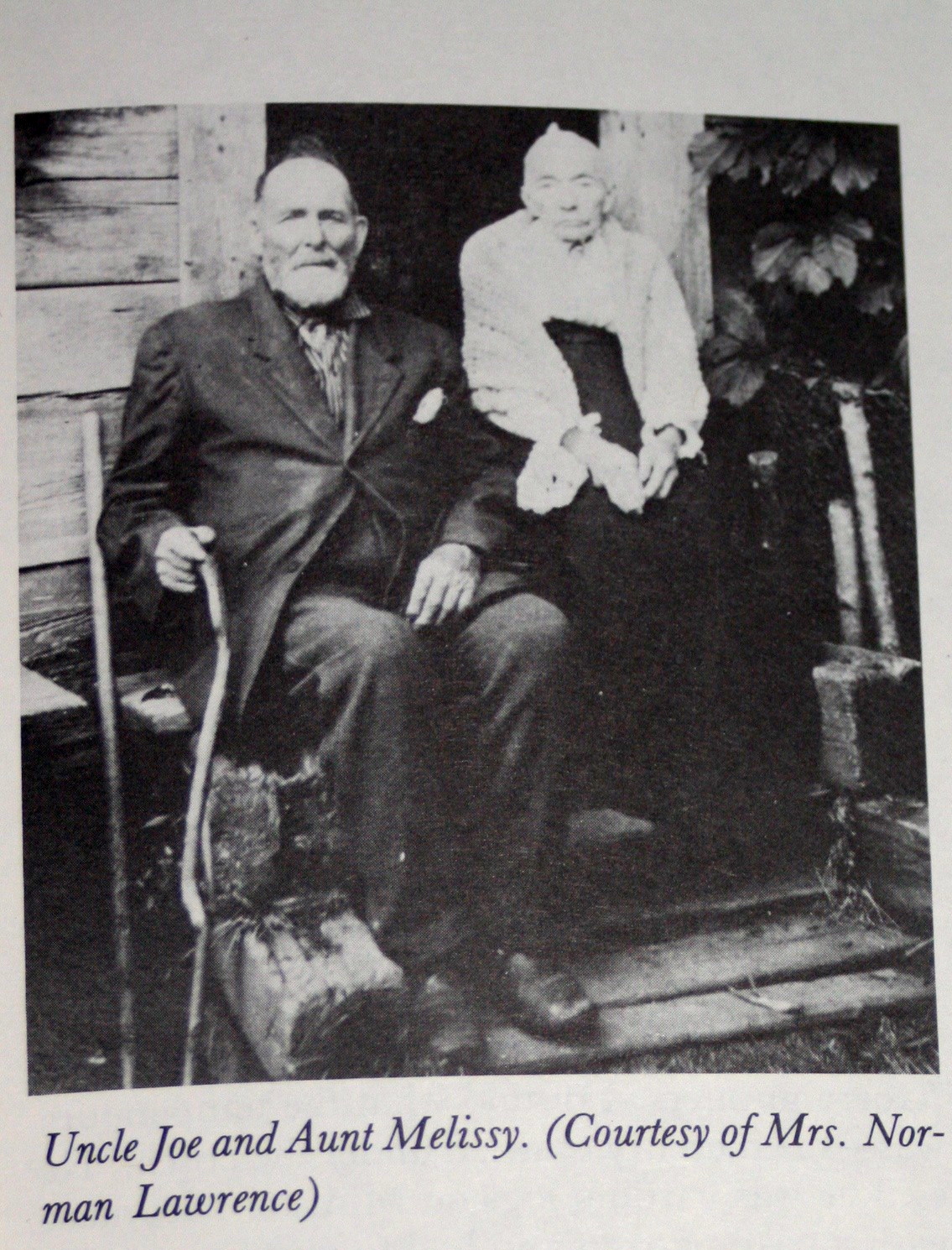
Image - Version 2

Uncle Joe was as talkative as his wife was quiet – but she had a quick wit, accentuating his stories with dry remarks that he returned with good natured smiles. “The smartest girl in the Northern County she was”, he would sometimes say, “and imagine, she agreed to marry me! But only after I cut my beard and swore off tobacco. She would not have had me otherwise, and I have become a better man for it. “

As I started to get stronger and could sit up in bed, still wrapped up in the blankets, Uncle Joe would entertain me with outrageously funny stories of his youth. He was given to enraptured fits of laughter triggered by his own jokes. When he got too carried away with his stories, Aunt Melissy would look up from her work – for she was never idle – and comment sternly: “Never be rash with your mouth, nor let your heart be quick to utter a word before God, for God is in heaven, and you upon earth; therefore let your words be few.” Then Uncle Joe smiled good-naturedly and continued his story with just as much zest while Aunt Melissy continued with her chores as if the words had not been spoken. Only on Sundays she did not tolerate his spinning of tales but insisted on bible study and quiet prayer and he obeyed her without complaint.

I have never again met a husband and wife who seemed so comfortable in their home and so content with their life and each other. Despite his stockiness Uncle Joe was quick to jump up like a cat when Aunt Melissy entered the cottage and eager to please her with some little errand or kindness. She returned his pleasantries with home baked goods and fragrant meals. Her only love besides Uncle Joe were the snow white chicken in her yard for which she was known in the county. Aunt Melissy and her white hens. Children they had none.

god and a decade ending with the brief and delirious ruling of acid freaks, post feminists and de-constructors of language

When I thought about the idea of god waking me (or not) I became afraid. There was a German lullaby by Brahms that my then ancient great-grandmother used to sing to me when I was really very little which ended with the words: “Tomorrow morning, if God wants so,
you will wake once again.…”  Our family life was altogether politically non-theistic, except for the great-grandmother who passed away when I was about four, but the idea of god deciding about my waking in the morning was still disconcerting. What if he did not want to? On a whim? Would I just sleep forever? Would I die? What if he plain forgot about me?

When I had asked my mother about the song she had explained to me that the lyrics dated to a time when it was understood that everything – everything – happened only with god’s consent and that these lines, by their content, did not deal primarily with the idea of god remembering to wake people or not.

I don’t know whether that explanation did much to put my anxiety to rest, I think probably not. But it certainly was with relief that one day I realized that I actively did not believe in god. That was an easy attitude to acquire in my family, by the way, and an easy attitude in that decade following the sixties, a decade ending with the brief and delirious ruling of acid freaks, post feminists and de-constructors of language which left a lasting impression on western societies and which was my intellectual parents’ undeniable contribution to a new cultural value system, a system that allowed for people like them to unfold their wings and discover entirely new horizons and ideas.  I don’t remember that we had ever attended any church service. Even wedding ceremonies in my parents’ circle of friends and family were civil ceremonies. No baptisms. Still, God remained a quaint distant relation who, after a history of misfortunes, had found asylum in old nursery rhymes and lyrics. All but forgotten and without charitable visitors, but hanging on.

My parents’ were avidly confessing atheists for many years until older age and the dawning sense of their own mortality softened their rhetoric. And yet, my childish sense of superstition, during the phase of their most decided and articulated stand on the topic, detected an ominous quality to the concept “god” and it took some years and my awakening intellect to overcome the threatening taste the fear of that forgotten but lingering god left in my mind. Maybe god explained and explored would have been easier to understand but I was pretty much left to my own devices to figure out what the idea of god stood for.  I vaguely feared god until I shed that fear pretty much like I had shed the fear of the nightly intruder eventually. Only much later did it occur to me that the elimination of god did not erase the randomness and with it the terror of the unpredictable nature of death.