The Twelve Nights of Christmas – die zwölf rauen Nächte
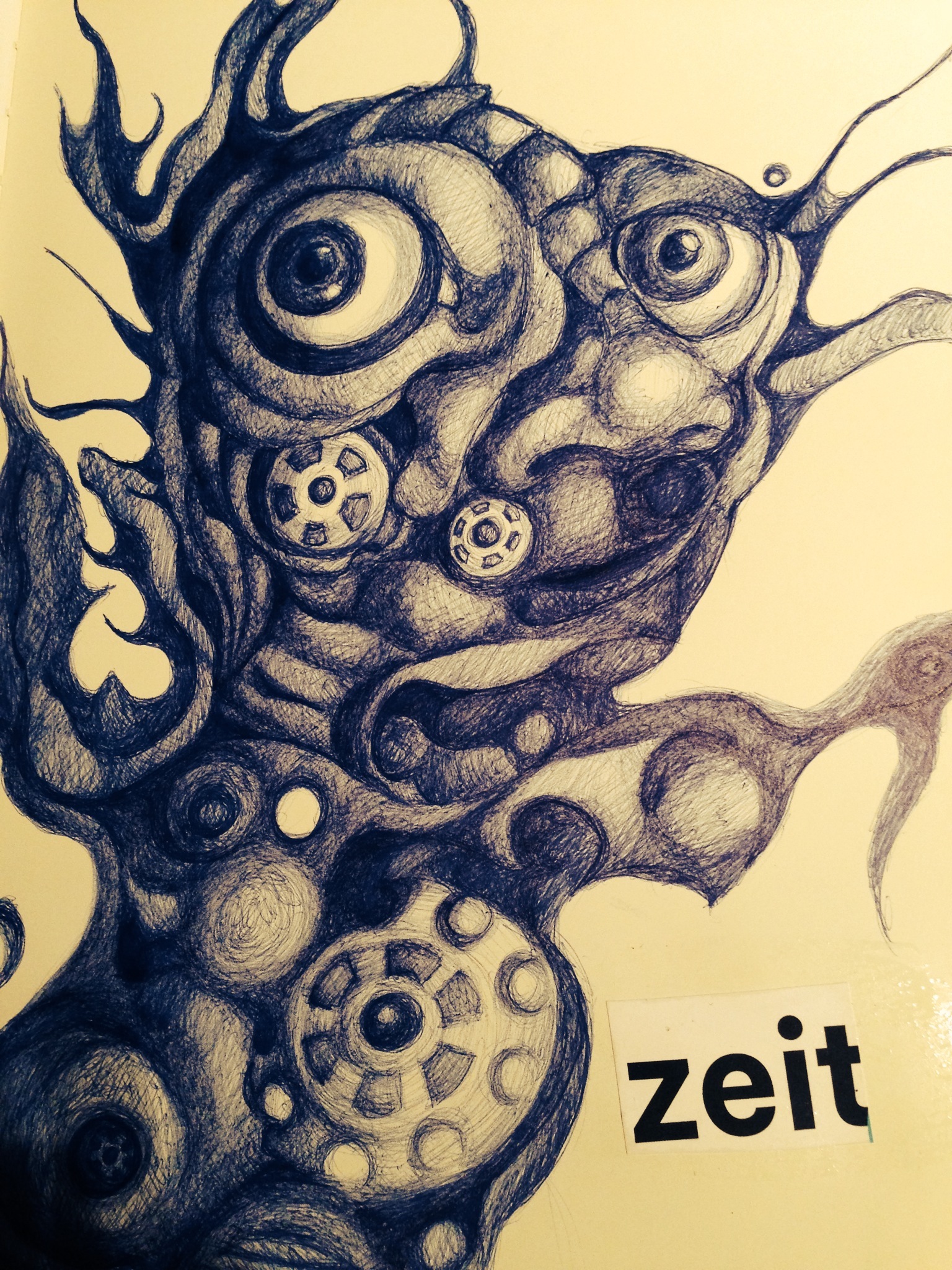
Image 2The raw nights are the twelve nights of an older Christmas than the one people might remember today, pointing back to traditions and rituals even older. The modern annual ritual of shopping seems somewhat pale in comparison.

These December nights are the darkest nights in the year here up north. Just after winter solstice when the North pole is tilted 23,5 degrees away from the sun and all places with a latitude above 66,5 degrees North (Arctic Polar Circle) are in complete darkness, even in locations down at, let’s say, 54 degrees North, day light is scarce and valued. It was common knowledge to the old ones that they were at their weakest in this part of the reoccurring cycle of the year, prone to sudden grave illness and mental darkness. A dangerous time for the oldest and youngest of the communities, a common cold potentially turning to raging fevers and death within hours. Short the days and short a life!

Dating bad 4000 years, celebrations held during this time of year, lasting days, twelve days, ranged from drunkenness, carnival, debauchery to watchfulness, soberness and contemplation. How to address your own mortality or that of those dear to you, how to defend your mind against the equally luring and threatening  darkness, how to celebrate the return of the sun, how to trust the old covenant that there will indeed be another year? From Saturnalia to Christmas to northern pagan winter solstice traditions – the quest between forgetfulness to prayer to sober acceptance – cultures and people have proven to handle the same basic human fear very differently. But in the darkness up North, the projection of fearful images of the mind into the impenetrable darkness of the night has led to its own tradition of keeping the demons at bay. Making visible the creatures of darkness through watchful contemplation while guarding the night is a time tested way to navigate through the twelve days of the ascending sun light hours, defending what you love and believe in against the already receding tide of darkness.

This is what I have chosen to do for years now with the raw nights: defending what I believe in against the already receding tide of darkness by illustrating, making visible the creatures the darkness projects into the mind. The modern mind, as the Romanian philosopher and historian Mircea Eliade pointed out in his book “The Sacred and the Profane”, may be but a thin veil to the archaic mind that is still bound in fear and intuitive defenses against the danger lurking in the dark even if the dark may be no more than the fear of monsters hiding under the bed in a well tempered room today. But I feel that reenacting  the custom of the night watches by picking up pen and paper for 12 nights is more a sober and mindful transformation of old human knowledge into my own experience of time than a regression into the archaic mind.
betrayal

betrayal

the death of his unborn son,
for the stonemason
it felt like a betrayal.

death was to be
a professional matter,
something to take place
in the realm of his customers,
who commissioned him
with carving memorial stones
for their dead,
not something to occur
in his own private life.

does not every profession
come with a privilege?
was it unreasonable
to expect a reprieve from death
as long as he carved memorials,
folded hands, lamenting angels?

he felt he had been let down
though by whom
he could not have said.

an atheist
in the service of the church,
loosing his unborn son
felt like a disciplinary measure
for his godlessness.

he had a system of inner convictions
unacknowledged rituals,
replacing religion.
he held on to the sacred
in the profane
he did not believe in a creator,
an organizer, a final judge,
and yet
he knew to have fallen from grace.

and no place to handle his complaint.

Monsters everwhere

Monsters everwhere

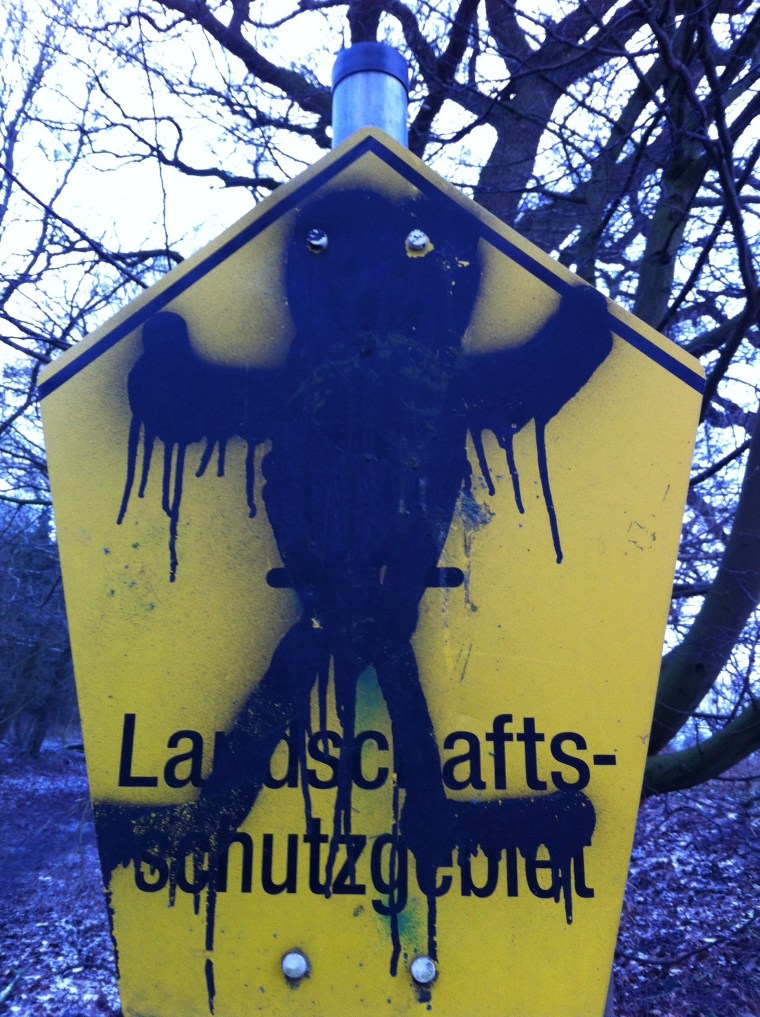
While taking walks I usually pay attention to the marginal ways people express themselves in public. “Marginal” in the sense that one cannot identify a specific purpose to an expression nor the reason somebody had to feel compelled to make such a public, albeit anonymous statement. This picture was taken in a wooded area near to Hamburg. The original sign reads “nature preserve” (Landschafts-Schutzgebiet) and the symbol chosen to communicate the idea is a stylized black owl. I have noticed that these signs seem to be attracting alterations wherever they are displayed. It’s funny, considered that they are only found pretty much out of the sight of urban traffic.

It’s a bit mysterious to me. What is it that the sign communicates (despite the sober, original administrative message)? What triggers the desire to change it? Is it the way the owl stares at the viewer with yellow (paper-cut like) eyes?

The changes mostly interpret or exaggerate the original monster like quality of the cut out owl. Here someone actually spray painted a monster on top of the owl, completely obscuring the original symbol. It seems not too far fetched to state that the simple anthropomorphic quality of the monster points back to the very origin of art, the moment when humans started to express themselves with symbols.

As Mircea Eliade has observed in his work “The Sacred and the Profane”, even in the modern world we pay witness to a deeply ingrained “mythical” comprehension of the world by reacting to triggers. The world through human eyes is “fraught” with religious value, or at least with “meaning” in the sense of an offer of communication not necessarily only between people but also between people and nature, people and the inanimate world, people and the perceived reality of an order of their world that they must adhere to to give their own lives value and meaning.

Could it be that the character of this sign inadvertently triggers such a response? And that the response is rendered in just the same language? Artist’s musings, for sure …

I have often been asked why monsters are a recurring theme in my work. Obviously there is not one answer to that question. Sometimes it’s their naivety and friendly, childlike celebration of the world that attracts me. But I have done other more serious monsters. And I feel that one underlying theme might be a response not unlike these anonymous signs. Though I do not paint on traffic signs …

Just to round this up: I have also seen the signs and the little owl creature changed through weather and sunlight, resulting in faded or partially peeling paint. And in the midst of these beautiful alterations the little owl changes character, always peeking out at the world and talking about time and change … Seems that nature itself takes pleasure in participating in this game …