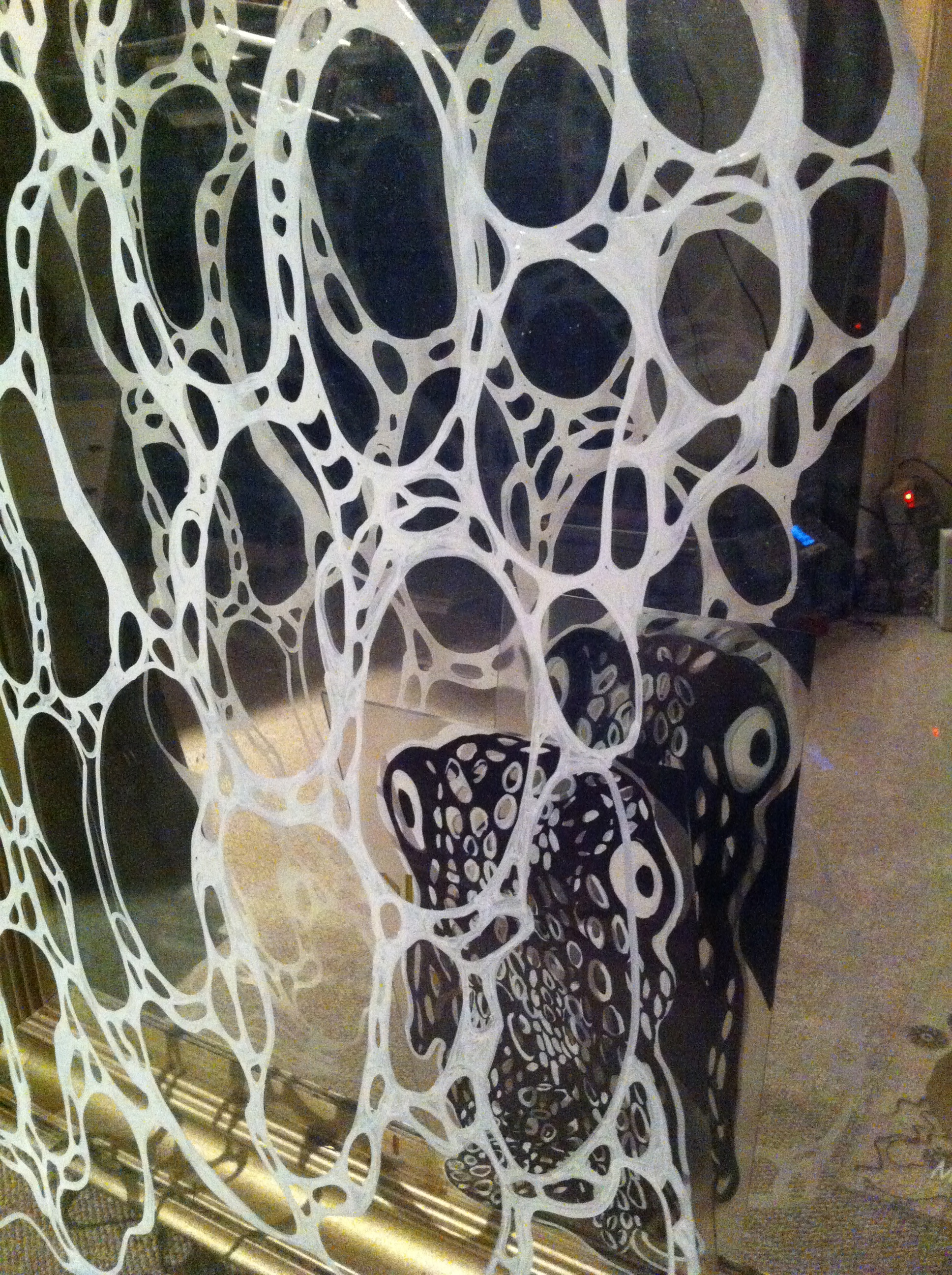
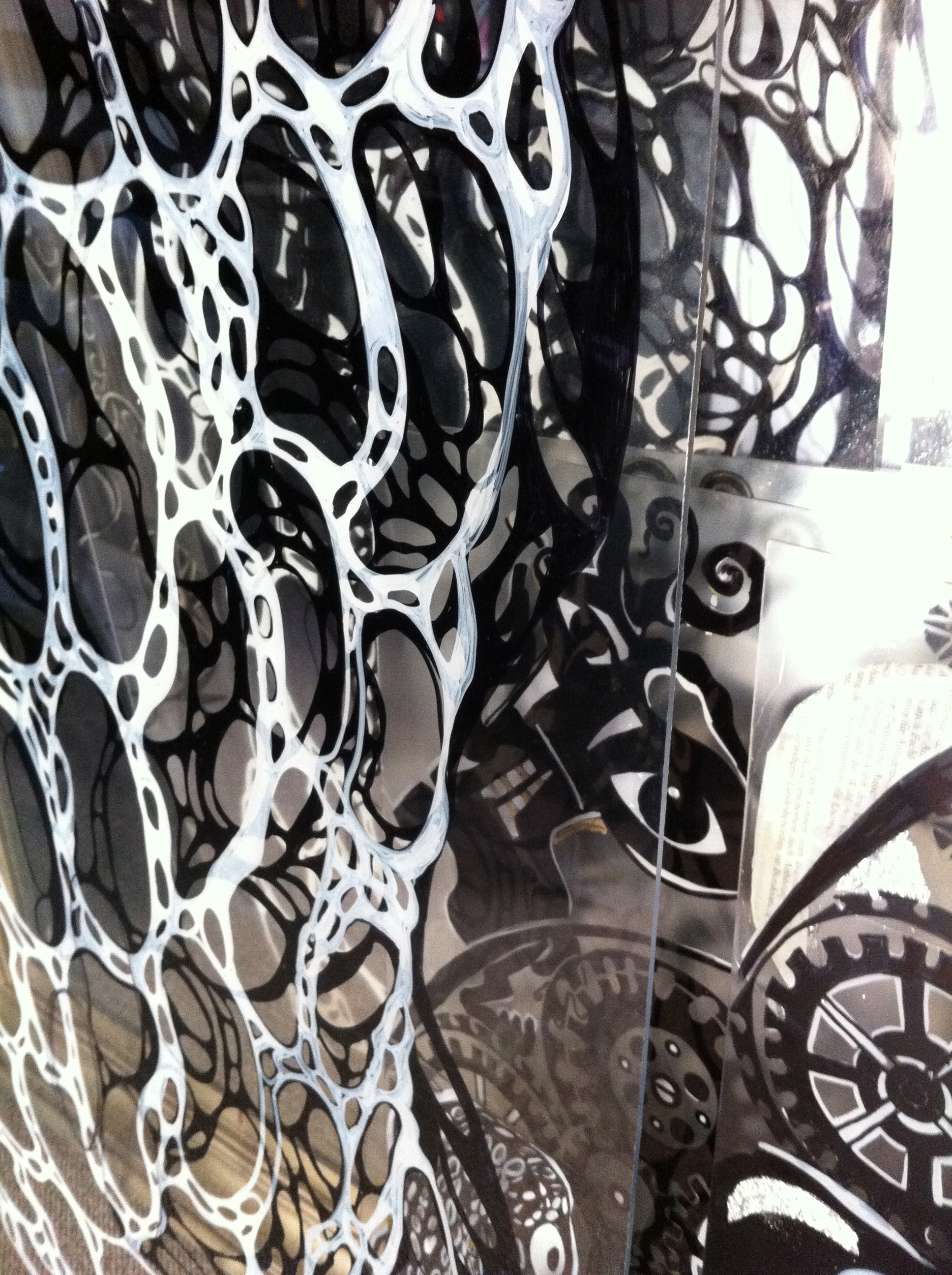
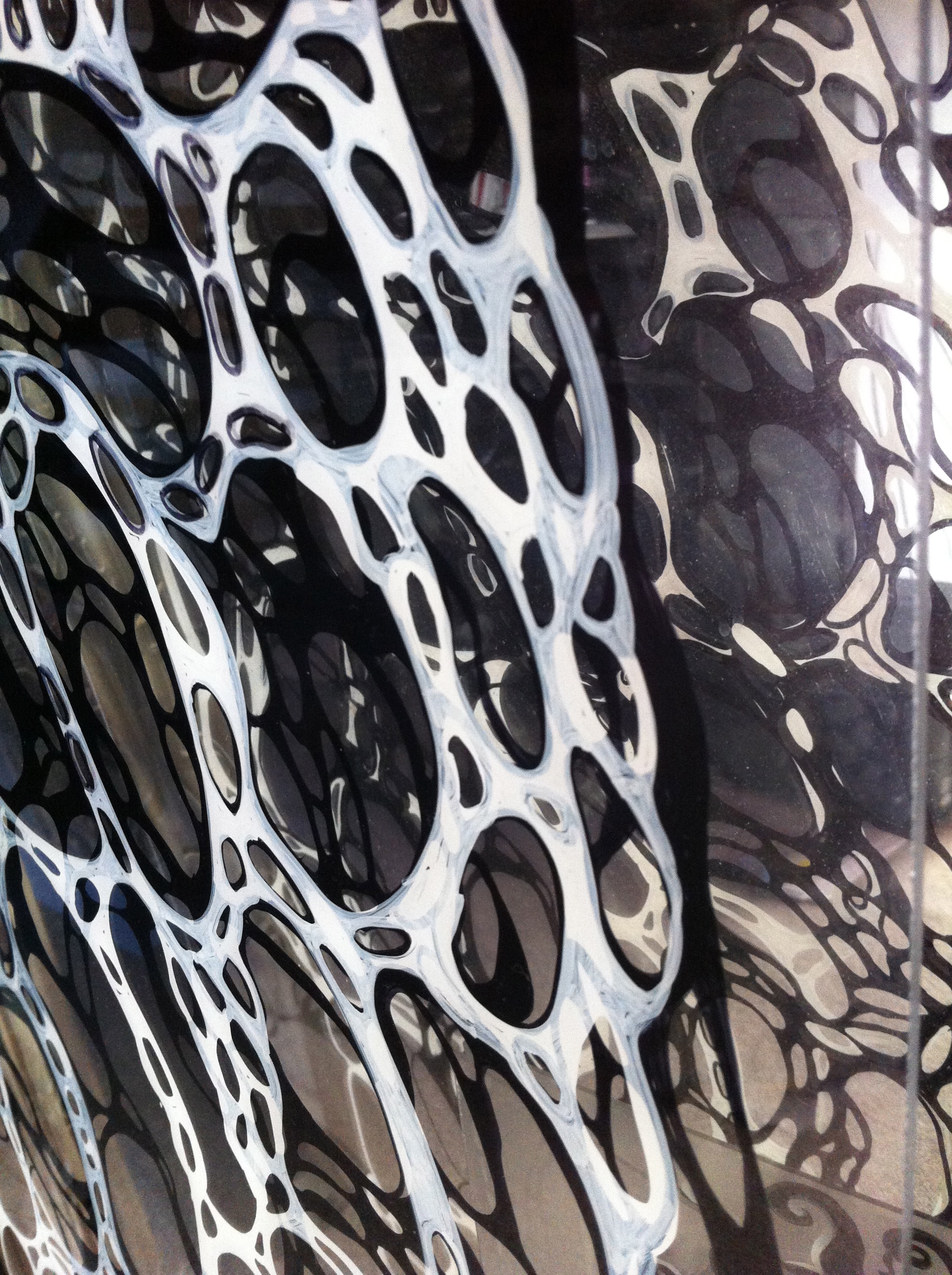
multiplying y – creating depth
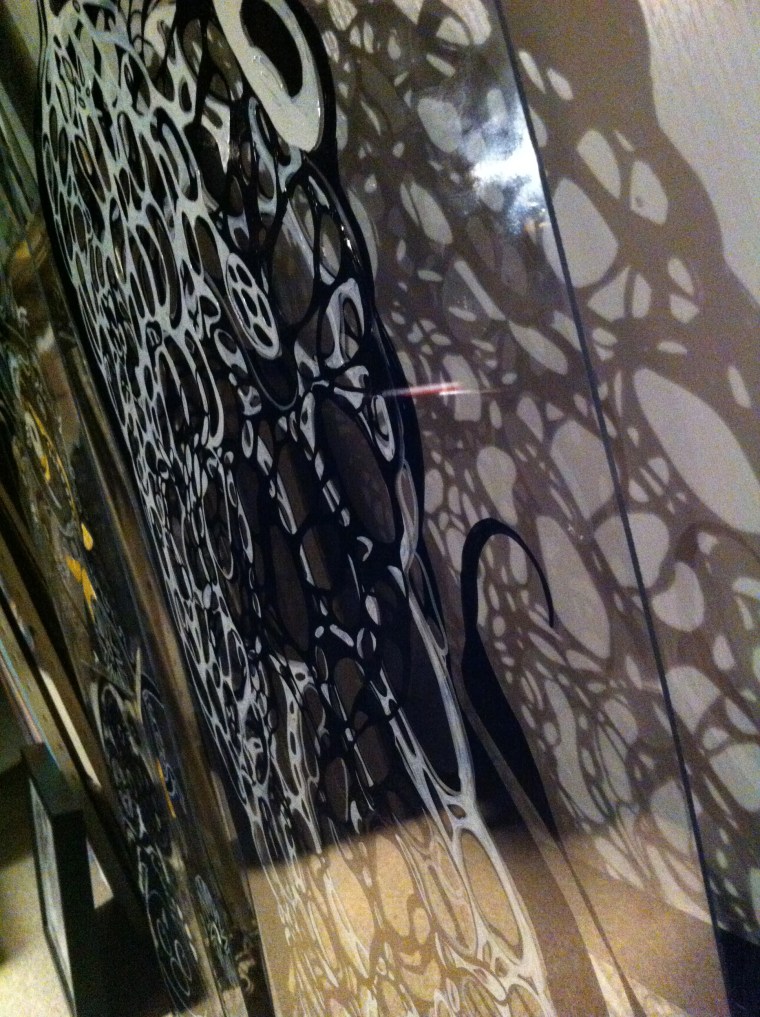
multiplying y - creating depth

I thought it would take at least two more nights to finish this acrylic sheet but as I couldn’t stop drawing I finished it last night. I drew five layers altogether until I felt more lattice pattern would obscure the interlacing layers (which I drew on both sides).

It’s intriguing that working on a transparent sheet creates a drawing that feels at the same time tangible and elusive.

I think it would be great to multiply “y” further but this time not by adding more layers but by creating additional pieces in the same format. Five to ten sounds good for starters. I have always had a taste for the non-identical multiples in art. By the way, each sheet is about 1,30 m high. But I could also start by using up all the small panes I still have (about eight), drawing layered monsters, then proceed to the larger sheets.

Back to home depot it is …
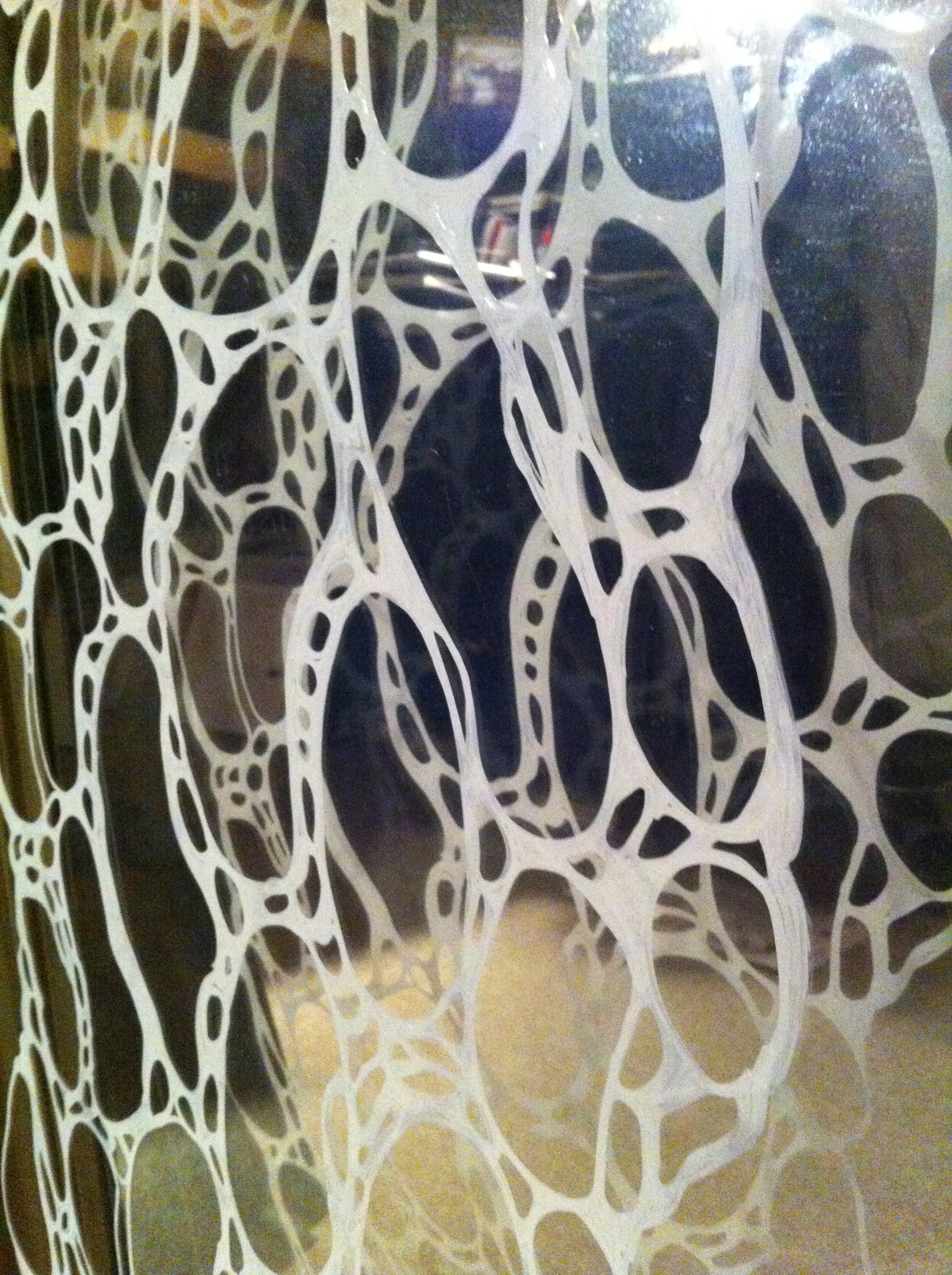
multiplying y – the next night

IMG_5722 IMG_5723 IMG_5724 IMG_5725 IMG_5726 IMG_5727So I started multiplying y. Drawing the net pattern on the larger glass panes allows the rhythm of the pattern to emerge. I started with white on one side of the acrylic sheet and drew a loose knit-like pattern. Then I layered black organic lace-work on top. I drew about five hours, then I called it a night. But not before playing a bit with my new building block system of drawings, creating deep, three-dimensional images by arranging and rearranging different elements in front of a big mirror. You can see that the combination of smaller drawings getting “caught” in the net-pattern of the larger pane really works well. I have to finish the larger drawing, I think it will be another two to three nights. After that I want to try a wilder, more impulsive web of lines on a large sheet. What if …

state machines and databases

the particular state machine that my brain might be runs in and on one human life time. the declarative nature of the statement x like “dna computation is a likely development” quite naturally is not based on intuition but is the result of the different moves of a game i taught myself in the hours my brain was idling. moves which could not be called strictly logical in the sense that they are sequenced in an if-then statement, if that makes any sense, but in the visual study of apparent patterns and a prediction that is based upon that study. surprisingly, these moves do resemble the description of computation very accurately, especially in so far as i would actually call them a mere transformation of data. metamorphosis. though it would cause semantic discontent to state that “everything is a database”. to distinguish data requires to locate specific particles in a specifically assigned space, excuse the non-technical terminology. i am aware of the finite number of particles in an infinite universe – with the simple but intriguing result that the set of all possible states of data, no matter how one is to specify its dimensions, is incredibly large yet finite and bound to endless repetition. this in itself of course is no counter argument to the statement but it strongly pointing towards the idea that the very idea of extractable data is just based upon the inability to take the integrating concept into consideration or simply put: that one might mistake one’s myopic point of view for reality.