Page 2 of 5

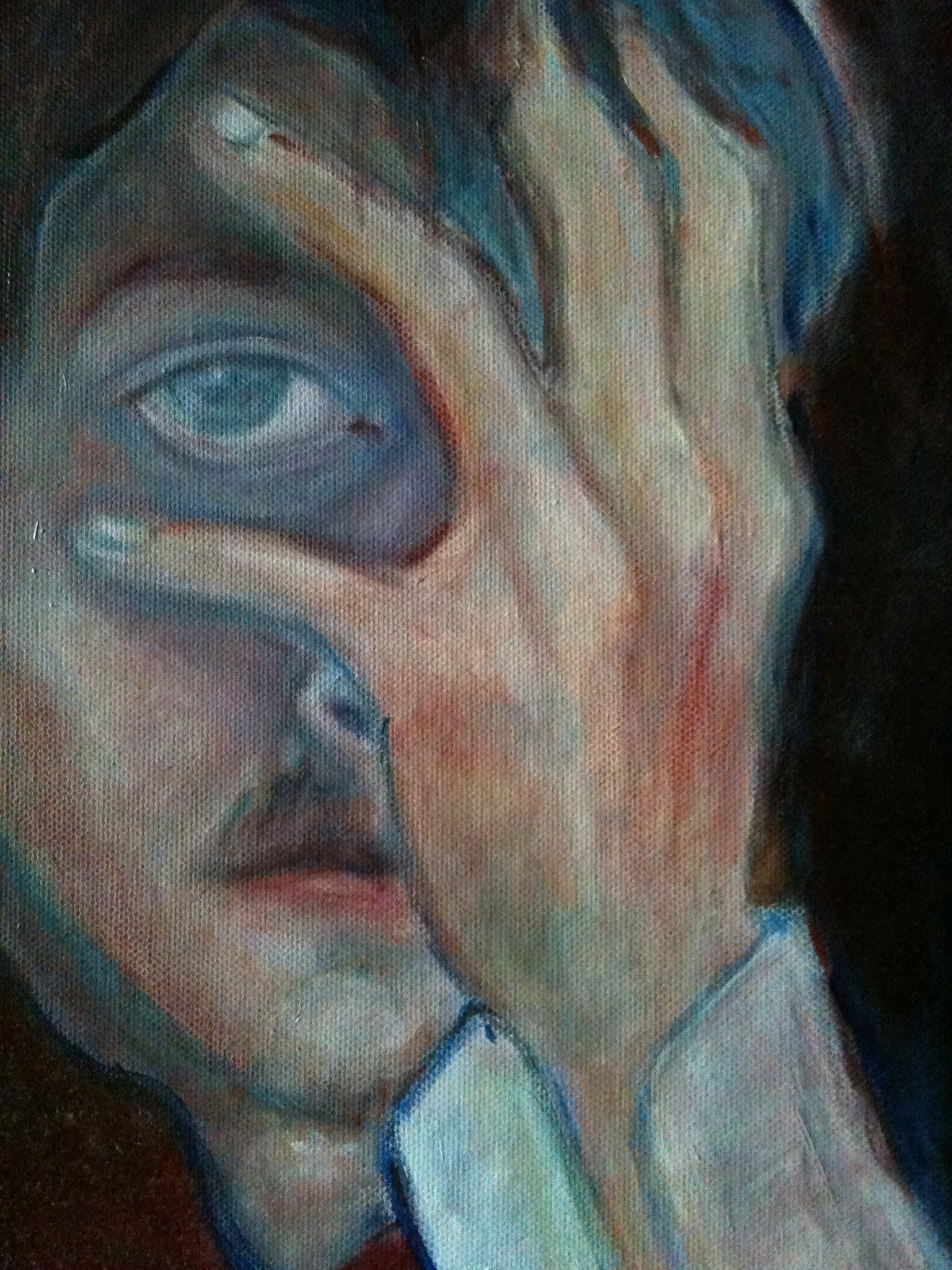
Time itself took notice of the unlikely creature
IMG_2513

“I  will be back.” Was it even meant to be a promise or rather the a mere, impulsive expression of an intent? The gargoyle pondered this question over many days, even weeks after the mason had left. He remembered the exact  sound of the words, their intonation, the expression of the mason’s face, the thoughtful gathering up of the tools, the turn of the head to once again rest his eyes upon the face of the stone creature, the final words – the gargoyle relived all of these moments and weighed them, day after day.

Every day up to midday he collected small reasons why chances were good that the man should appear this day, after midday he thought of excuses why he could not possibly have made it possible to come this day but would surely be able to fit it in tomorrow or at least before the week, the month , the season was over.

Perhaps the last gargoyle had been lonelier than he had cared to admit previously or maybe this obsession with the return of the mason was just yet another way to pass time.

Waiting for something to happen, somebody to appear, seemed to be far superior to just being, even if it infused his previously peaceful existence with a permanent sense of pain, a feeling that was so close to boredom that at times he would have been unable to distinguish it.

Boredom or pain both compromise our sense of regular time passing and whereas a day had just been a day, an hour just an hour before the advent of meaning and desire (now time had a direction, time existed so the mason could bridge it, so the gargoyle could subtract minutes from the greatest distance that separated him from the return, the moment when the mason had finally turned his back on him and left the roof), now a day could be excruciatingly long, especially if the gargoyle thought to have detected sounds coming from behind the closed roof door.

Expectation, gladness, desire, wishfulness, frustration, even despair were all variations on the same theme, waiting. Waiting in turn meant the refusal to accept time for what it was; it was like a progressing illness. It never occurred to the gargoyle to abandon his unreasonable expectation and to return to stone nature in order to gain the peace he longed for. Peace seemed attainable only if his curiosity about the reason for the return of the mason could be satisfied. Time passed and the mason did not return. Eventually the initially glad expectation turned into a numb pain, over time seemingly removed from any cause. A general disappointment  overcame the gargoyle, the most human of feelings, as if something that had been promised to him was now purposefully being withheld. It was as if his existence was gradually being tainted by something he could neither name nor really be completely sure of.

Time itself took notice of the unlikely creature and inexorably started gnawing at him with tiny teeth. The  gargoyle still formulated his thoughts in human phrases. But instead of patiently following a thought until it moved just out of grasp and then starting all over again like a child, he had taken to a summarizing his thoughts in a more generalist way, often colored by self-pity. A second rate stone poet he was now, defeated and ridiculous, utterly grown-up and utterly human. He felt contempt for himself, for his dependence, his passive waiting, his pathetic obsessiveness but he couldn’t help himself. There was no way to stop. No way to stop waiting. Tiny cracks were forming in the rough granite surface. Defeat was looming.
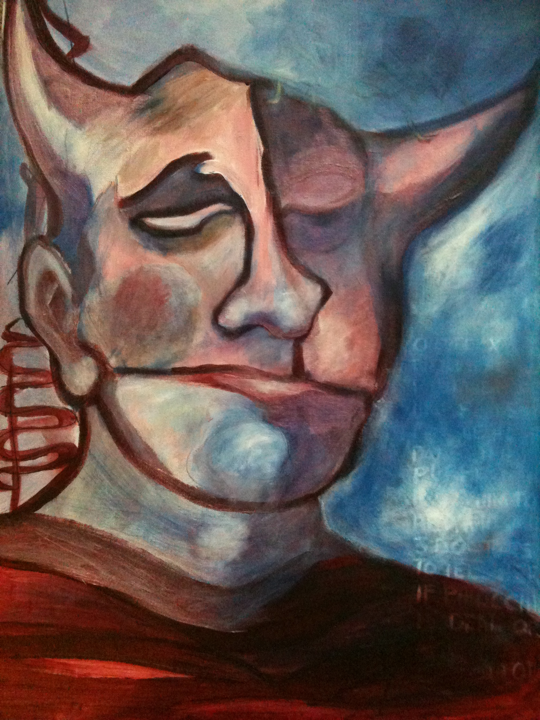
Transformative forces


IMG_0537

He  was but a gargoyle, a stone image.  How the gift of sentient observation had come to him he did not know any more than man knew where the soul originated. From his place on the roof he observed people, adults and children alike and marveled about the passage of time. After years and years of observation, of overheard fragments of conversation that the wind had carried up in the same unreliable and moody way he carried a fragrance like a caress or deposited leaves and debris in the gutter, from years of watching children grow up and age, he had concluded that humans were born with many gifts only to shed them with the years until nothing of value was left. Adults to him, the steadfast observer, were a manifestation of a process of  deterioration of their former promise.

There seemed something broken about adults to him, men and women alike, as if the original balance of their design had been spoiled. He liked children perhaps because they seemed unaware of the passage of time. He observed with pleasure as a seven year old girl straining under the weight of a watering can that she had been sent to fill up at the pump stopped in her tracks and put down the watering can only to pick up a small, white pebble to examine with great  interest and sincerity as if she had struck treasure. Another day he had observed  a young boy crouching on the path in an  immobile position for close to an hour, a long time in human count, to closely look at the street of ants entering the church underneath the granite slab step of the back door. It was the same ant street, as  wide as the arm of the local butcher,  that the custodian had failed to banish form the grounds even after many years of relentless and poisonous battle.

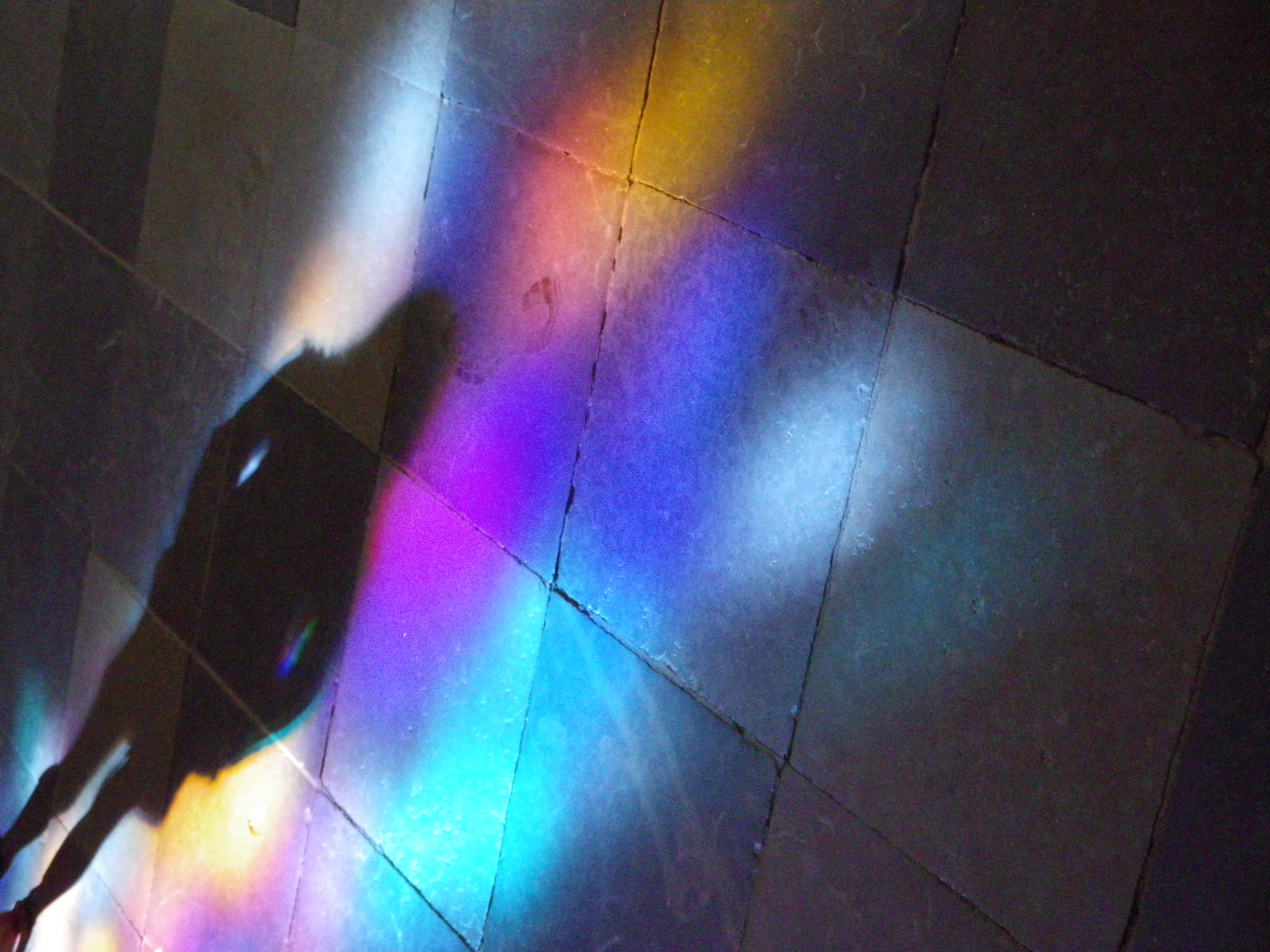
Every now and then, from his precarious precipice the gargoyle observed a kid  blinking up into the grey light of an early Northern spring day, scanning the gargoyle’s own dark silhouette against the diffusely bright clouds.  He had never seen any adult lift their head to actually study the structure and ornamentation of the church. It was children only, children  possessing the gift of timelessness by focussing on something small just outside their reach and holding on nonetheless, thereby transcending the moment that was forced upon them by wisdom or mere whim of the ruling adults in their lives. And all that time he was waiting just as they were waiting, existing in limbo, in a state of not knowing, waiting to be unbound, for his fate to be revealed to him, and yet dreading it, dreading it was but a process of diminishing, of deterioration just as the passage of time exemplified by human behavior seemed to indicate.  And yet, there were moments he still believed in the transformative forces of time and light.

One second of eternity at Lake Willoughby

IMGP1041Lake Willoughby, grated into plutonic rock by a deep glacier, is a 300 feet deep, water filled scar between two mountains with biblical names, Mount Hor to the West and the Eastern Mount Pisgah. If you stand on the North Shore of the lake, it actually has the appearance of a deep fjord, though there is no outlet to the sea. Instead there is said to be an underground aquifer connecting the basin of Lake Willoughby to that of another eerie body of water beyond Mount Hor, Crystal Lake. In my mind that acquifer had the form of a water filled cathedral, in my mind I saw swimmers gliding swiftly through a space abandoned by a people even older than they were. There was an incredible, inexplicable light the way I imaged this. You have to keep in mind that I imagined this within a dream without actually seeing it, two steps down and under. Even though my sober mind took offense with the inexplicability of the light.

While I was thinking and conjuring up images within the dream I stood at the waters edge of the lake as I had done many summers and the water exactly like the water of lake Willoughby as I remembered it acted like a mirror. The surface seemed to be like a sheet of glass of finest quality, separating the clearly visible underneath from the still world above, and the mirror image of this world like an incomprehensible fourth dimension in between both worlds. Again I saw the forms in the distance, gathering around precariously piled up, submerged boulders. Each winter these boulders avalanche down Mount Pisgah and roll into the lake to form the outline of an inaccessible stone city, creating an intricate mountainous terrain. I wondered how long it would take to fill the deep ravine of the lake with boulders and fleetingly thought of the old story about the small bird wearing away a mountain with his beak to mark the passing of the first second of eternity. In my dream I had this thought.

Po Tolo

IMG_2146

“My grandfather, your great-grandfather, believed that there is life in the Sirius system. The Dogon, an African tribe with very acute astrological knowledge, have believed for centuries that there is life out there as have the ancient Egypts and the Sumerians. According to the Dogon Sirius is accompanied by two other stars, a very small and incredibly dense star they call Po Tolo, which means “very little star”, and which modern astrology has confirmed to exist only recently and calls Sirius B. Indeed it has turned out to be a small star with an incredible density, heavier than the iron we know on earth. The Dogon also claim that the other star in the Sirius-System is lighter and larger than Sirius. They call it Emme Ya. And around Emme Ya they say there orbits the home planet of the Nommos, the children of Sirius and Emme Ya.“

My mother inhaled deeply. I knew she was thinking of her grandfather. She still missed him. He died some years before I was born but she had told us many stories about him.  I had always imagined him a very stern man, rarely smiling, expecting a great deal of my mother. I couldn’t picture him indulging in fantasies about alien life.


Fall from Grace / excerpt from a new novel, working title: the stone mason

Foto

For the stonemason in particular the death of his stillborn son felt like a betrayal. It was as if he had livd in the never acknowledged faith that his profession granted him some kind of special reprieve from death, that someone had agreed to that it was not to occur in his private life as long as he continued to carve memorials for the dead, and that this someone now had let him down. He was an atheist in the service of the church and loosing his unborn child felt like a disciplinary measure for his godlessness. Like many atheists he had a system of inner convictions that replaced religion. He did not believe in a creator, an organizer, a final judge, and yet he felt like he had fallen from grace.

Iris quietly  lived in the shadow of their loss, simply mourning and nourishing the inconceivable thought that they should now never know him, their son, certainly not by the way of a new pregnancy as friends and relatives suggested. These well-meaning people did not realize that the depth of her grief was rooted in the very circumstances that they thought would alleviate the loss – the fact that neither she nor anybody else had ever seen this child alive; that it had in fact never been born in the true sense as he had died in utero. Her grief was that her child had lived, if ever so briefly, unknown to her, and that she would never know it. She sat at the kitchen table with her encyclopedia and with a three hair sable brush paint stamp-sized paintings on miniature panels of oak wood while thinking about all the small things she would not ever know about her son. She wouldn’t know his face. She wouldn’t know the sound of his voice. She would never hear him laugh. She would never hold him in her arms. And yet he had lived.

A creature made from stone

defensive dreamerTime, unmoved by his suffering, resumed its course. We cannot keep close to our losses even if loss is all that remains of our loved ones. He had been bound to his companions by circumstance and habit, by outer design rather than inner necessity. Every day, month, week carried him further away from the experience of a shared existence. He had been utterly used to their conversations and rituals and had been almost overcome by grief during the first weeks after they had been taken from him – but now that they were gone he was slowly getting used to not being with them anymore. He also grew used to his even smaller view of the world, he kept in mind what he knew about the front steps, but he was content now with observing the smaller life of the back door – as in a way he had always been. There came a day when he felt that knowing about the life on Main Street had been but a youthful entertainment, almost an expression of vulgar curiosity, and that the quietness of the shadows on the roof was much more suitable for a creature made of stone than the strange mutation into language between the seven had been.

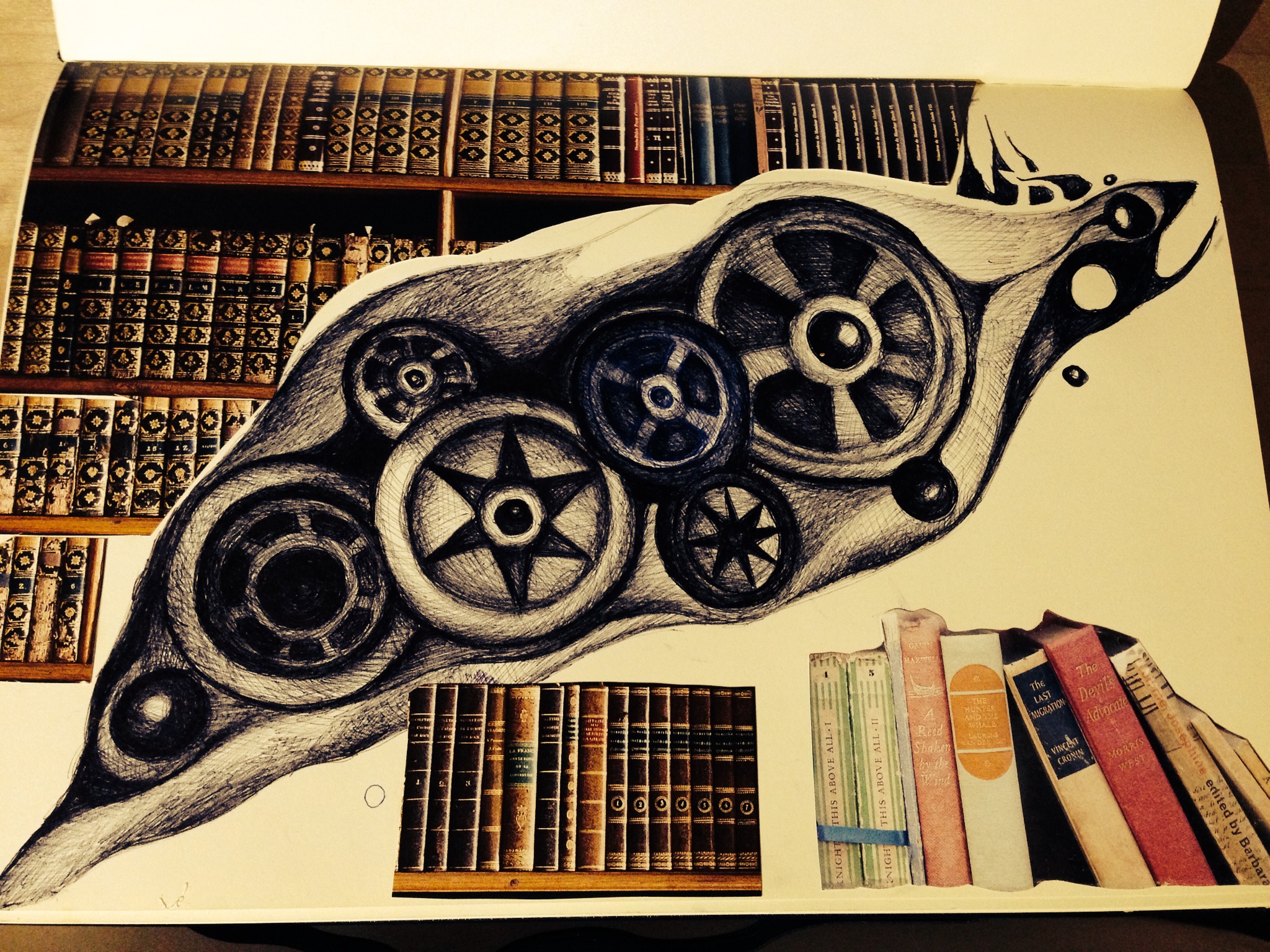
The Twelve Nights of Christmas, the journey concluded: Night 12, the Mechanics of Longing

Foto

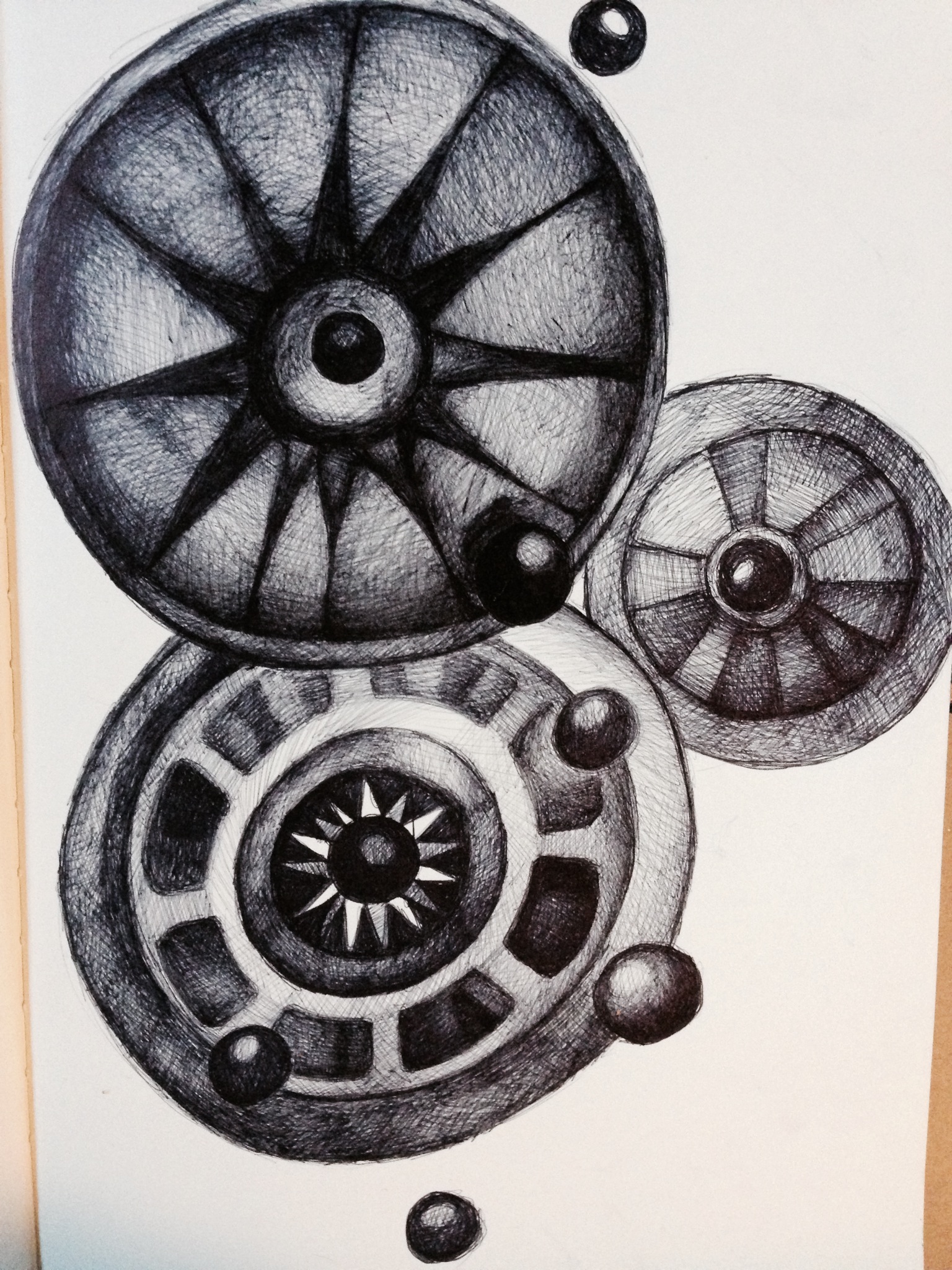
The title came as swiftly as the image and the artist obeyed both. The Mechanics of Longing.

This drawing concludes my twelve night drawing meditation. As the new year is already starting to make its demands, these drawings carry with them 12 nights of focus on a non-revealed question. Sometimes during those twelve nights I felt I could catch a glimpse of things yet to be. Now there will be time to look at these pieces for a while, maybe polish them a bit.I’ll keep you posted.

New artistic challenges are ahead for the year.

January 15th is the deadline for another Sketchbook Project of the Brooklyn Art Llibrary, check out the website if you haven’t yet. Their digital library is stunning.

http://www.sketchbookproject.com/library/13754 The link will take you to my previous year contribution “The Whisper”, a simple, wistful story about a childhood memory.

My new book, a young adult science fiction novel, is about to be finished and another one waiting to be continued on my desk.

In Fall I hope to open an exhibition of 41 canvases, acrylic on raw jute canvas (aka coffee and chocolate bags) in Berlin, 30 of which are finished by now. The 12 nights have strengthened my will to continue living in multiple universes.

Thank you for following my blog, this certainly  is the day to acknowledge that my readers are an important part of my creative discipline. It is a good thought that someone may be going to weigh the outcome of a night’s work and maybe find some use for it, if only in the fleeting way that art, all art, can enrich a moment.

I am wishing you, my readers, all the courage, health and gladness necessary to live a meaningful New Year and if you should be lacking any one of these for some of all of the time the will to give it your best shot anyways! 

The Twelve Nights of Christmas, Night Eleven: Nevermore …

Once upon a midnight dreary, while I pondered weak and weary,
Over many a quaint and curious volume of forgotten lore …

Foto

I couldn’t make this the twelfth night theme. “Nevermore” is not the note I’d choose to conclude this season’s “Twelve Nights”. But on the eleventh night it brings together further elements of reading, words, images evoking coherent comprehension beyond words, night time, magic realism, dreams, illusions, delusions, sleep deprivation, time, meditation, past, progression,automatons, determinism, choice, knowledge, intuition, desperation, endurance …

Two weeks ago  I listened to a musician on DRKultur (radio) talking about time and about the experience of time during extemporaneous composition and performance  on the piano. He talked about experiencing eternity not as an endless repetition of events in a space of time never ending but about as an experience of time being suspended. I think about art  – writing, painting and illustrating – as taking place in just that space of time being suspended, a space that I can enter and where I can linger at will.

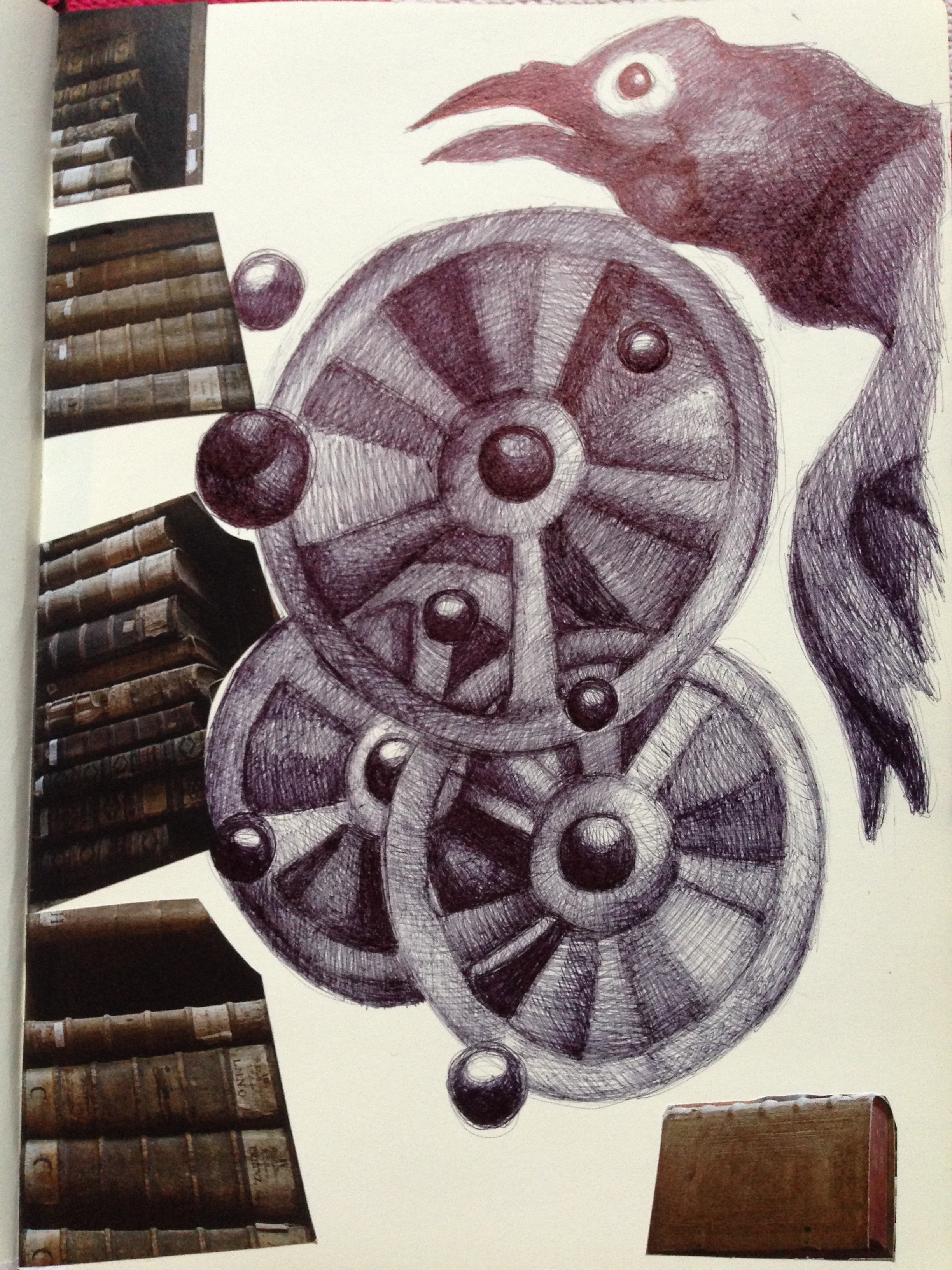
The Twelve Nights of Christmas, night ten: Raw data or further reflections on the nature of Borges Library

ImageI’d like to think of drawing as of transforming raw data with my pen to “mean” a specific thing and not another though it is not in the nature of data to actually be one specific thing to the exclusion of all other possible “things” (meaning, manifested form, reality) in all their variations (written and unwritten) any more than a child’s building block used in a fleeting structure soon to be knocked over is identical with that intended structure’s purpose or “meaning”. A building block stays a building block, a zero stays a zero and a one stays a one no matter what it is used to communicate. It assumes  a participating function in the meaning of one thing ( and not another ) but it also creates that one thing without adopting its separate ( separate from other possible thing’s) nature simply by describing it.  The “thing” actually has no separate ( from other possible thing’s) nature – it is but a description of the configuration of the raw data (building blocks) at a specific moment from a specific perspective. So that, at any given moment, any thing, rearranged, could be (and is) any other thing, idea, let’s call it “book”, existing or non-existing, written and unwritten, in all possible variations. I assume that would upon further reflection have to be one of the conclusions drawn of the cosmology principle but I am getting a bit out of my depth here.

All we ever do in life is  to assume a specific perspective to describe what is really a homogeneous distribution of raw data – each one of us is, with other words, but a specific, erratic close up view of that homogeneous distribution. We have no separate nature. The “separateness” of our nature not only of one thing to the exclusion of all other possible things but also of the experiencing “conscience”, the “I” to the exclusion of all other possible perspective’s (you, the other) is clearly illusional, possibly delusional.

The Twelve Nights of Christmas, night 9: A rip in the fabric of the universe reveals the true nature of time

It is Borges’ library that makes another appearance in this drawing meditation. One of the themes that is never far off my mind. How does our mind chooses the images that are essential for its own comprehension of the world? How come an image such as Borges library can be so powerful that it assumes an reality of its own, in an alternate universe not so far of our own house number? Just try a different key, open a small door you have never quite paid attention to before and beyond you will find the octagonal library with all possible version of all possible books, written and unwritten … my kind of paradise.
Foto