Page 2 of 4

8.5 light years

8.5 light years

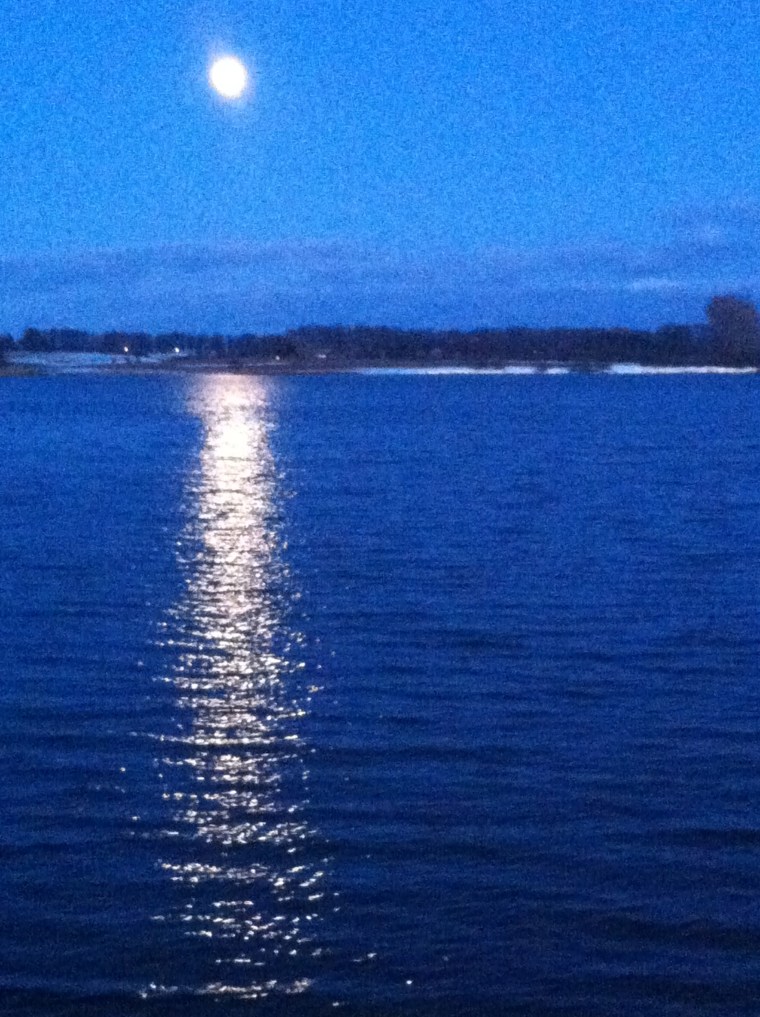
She moved my hand slowly over the dark water and spoke in her methodical way, no use to interrupt her. “20 degrees south-east of the belt of Orion, you see, there is the brightest star in the night sky, right in the constellation of Canis Major.” She waited for a moment for me to catch up with her. Our entwined hands travelled over the night sky and stopped. And there it was, deep underneath us, the brightest star of the night sky, as far as I could see. “Do you see this star?” she asked. “It is called Sirius. It is 23 times more luminous than our sun, twice the mass and the diameter of the sun. It is only 8.5 light years away.” The way she said “only 8.5 light years”, it sounded as if she was talking about a Sunday picnic destination.

looking down at the stars

looking down at the stars

When I was five, my mother, an artist, told me that over time the use of the words “up” and “down” had been reversed through what she called “accumulated acts of lazy thinking”. Consequently, she told me, people had gotten used to seeing the world in a crooked way. With other words: where other people look up into the tangled branches of a tree, to the clouds, an airplane, the sky, my mother had trained herself to look down into the depths of the endless oceans of the universe.

The amazing thing is that the moment you try this, it feels just like the right way to look at things and you will feel like you have never truly seen the sky before. Stretching myself I reach deep down into the world whereas before, when I understood up and down in the usual way, the sky seemed more or less like a painted stage decoration.

Often, on late summer nights my mother, my sister and I would lay down flat on the lawn of our front yard and look down into the stars. The grass of our lawn was long and wavy, different from the short cut golf course front lawns of our neighbors, and woven through with moonflowers that smelled lovely in the warm, damp night air and in their whiteness actually glowed like little stars themselves.

I remember one night when I felt particularly light and small, and grateful to gravity for holding me securely to the surface of my own planet. The stars glittered in the distant depth. My mother giggled when she noticed that my little sister had fallen asleep right there on the lawn, her head nestled onto my mother’s shoulder.

Suddenly it seemed so unlikely to me that in all of the universe expanding before my eyes our planet should be the only one with life on it. I asked my mother, who had been silently holding my hand whether she thought that there was life out there. My voice sounded like a whisper. It was the kind of question to which you don’t really expect an answer.

Little Red Riding Hood – a cautionary tale?

Little Red Riding Hood - a cautionary tale?

Dearest daughter,

in response to your letter in which you asked me very nicely to please allow you to walk into the wild woods by yourself:

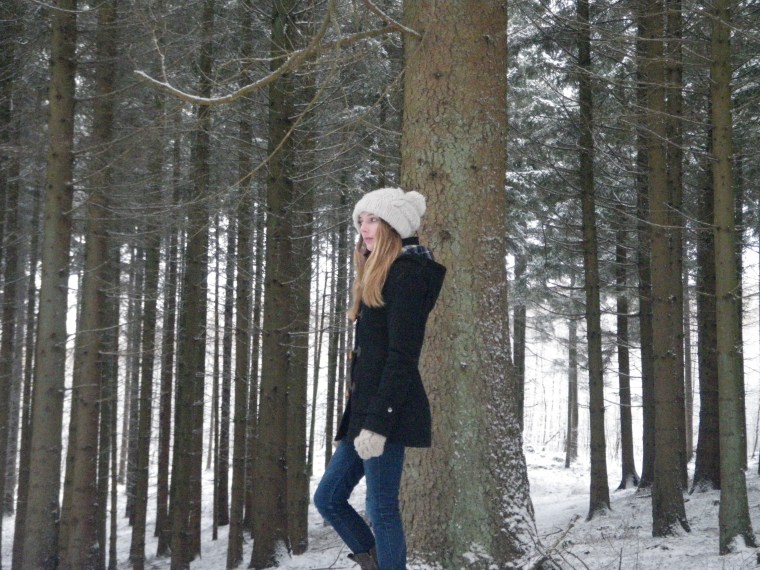
remember Little Red Riding Hood? There was not a child more law abiding, sweet and obedient than her. A fact often overseen by those who refer to her story as a cautionary tale: the first third of it is entirely dedicated to how much everyone loved her due to her lovely and loyal disposition, truthfulness and dedication to her mother’s advice and guidance.

Do you think anyone hearing the story for the very first time – and being somewhat ignorant of the basic concept of morality in a fairy tale – do you think that such a person would expect her to forget about her mother’s advice the very first moment she encounters a challenge? Which is exactly what happens once she has wandered off happily with her basket filled with goods for her sick grandmother.

Well, we have to concede that she strays from the path of virtue for two reasons that somewhat make us stay sympathetic to her ordeal: first of all, she means well. A bunch of flowers from the wayside would surely be a welcome present for her grandmother? Never mind though that mother not only warned her against leaving the path but actually forbid her to do so! We see her put her own judgment without much quarrel with her conscience before her mother’s clear and concise directions. Let’s not forget we are talking about the most obedient girl in the village here!

The second aspect to exculpate her somewhat of course is that she is being seduced by a cunning conjurer of convincing tales. Can we really expect her to stick to those dry rules when confronted with the loveliness of the world beyond the right path as presented by a seasoned liar? The woods have never looked more inviting to her than after the wolf’s description of finely scented flowers growing in the shade of luscious trees! Shouldn’t we also blame her mother, by the way, who sends her into harm’s way? If there is a wolf lurking in those woods, as she well knows, why does she send her little girl on the errand? And you expect me to send you out into a world full of strange and unexpected temptations, equipped with just a few rules?

Here is the part of the story that has not been distributed widely but is worth considering. Prior to the whole walk in the woods scene Little Red’s mother had received a letter from her daughter. “Dearest Mother”, it read, “I am responsible and obedient. I would never do anything you told me not to! I have proven myself, now let me go!” Wouldn’t such a letter touch a mother’s heart just as yours’ touched mine? Wouldn’t it make her feel just a little guilty that she hasn’t entrusted Little Red Riding Hood with an important errand earlier already, Little Red Riding Hood, the best behaved, the loveliest, the most obedient girl in the village? You bet, it did. And we all know how the story ends!

Wait a minute, how does it end? If you think it has a bad ending, read again. Here we see her, sitting chipper at the table at her grandmother’s house, enjoying wine and cake in the company not only of her suddenly recovered grandmother but also in the company of a handsome huntsman?

Maybe this is not a moral warning tale about a girl who forgets the rules while she walks through the woods, ahem, to school on her own for the first time. Maybe it is a story about a girl who needs to make her own mistakes to find her own way, wolfs and all, and that despite all dangers there is a good chance for her to do just that. Maybe it is a story about a mother who needs to let her child go into the woods to find a way out again?

The more I think about it, the more I suspect that this is more a tale about the inevitable fact that mothers have to let their children go their own ways despite their fervent wishes to protect them against all evil and bad will, real and imaginary.

Go walk find your way through the wild woods as you must, my Little Red Riding Hood. But know that there is a wolf out there who will talk about moonflowers in the shades of the trees far off the beaten path …

With all my love,
Your Mother
Song of the Aelvor

Song of the Aelvor

i am luminous in my loneliness
there is no one else
to tell morning from evening
water from sky
light from shadow
no one to divide
idea and the symbol
representing it
the it from the i
and the i from the you
trying to find a bridge
back from nonexistence
reaching for stars
that burn in a distant sky
a sky that is a cold tent to dreams
conceived around hearth fires
we realize that
we cannot loose what is ours
and we cannot gain what is not.

past and future

past and future

but to this day humans are unique in their ability to remember both, the past and the future, only sometimes they are not aware of this enviable gift because, you see, past and future are often confusingly alike and quite difficult to distinguish.

… consequently there cannot be an edge over which to lean to catch a glimpse of eternity

English version / German translation

Few travelers have ever reached the end of the world, even in the days of the Aelvor, for it is such an awful long way to go and full of obstacles, too. Yet when my grandmother told me about the Willow as I tell you about her now, it had seemed to me that I almost remembered her as if I had seen her with my own eyes and touched her with my own hands but couldn’t quite remember anymore where or when that could have been.

Of course you know that the earth is a ball and that consequently there cannot be an edge over which to lean to catch a glimpse of eternity. And yet, our elders might not have been as naïve as we are told today by believing that the world is located on a disc and that you can walk only so far before reaching an end. In our hearts we are closer related to ways that must end eventually than the Aelvor were who soberly talked about the eternal cyclic renewal of all times and beings.

Wenige Reisende haben jemals das Ende der Welt erreicht, selbst in den Tagen der Aelvor, denn es ist ein furchtbar langer Weg dorthin, wie jeder weiß, und,  wie es die alten Märchen erzählen, voller Hindernisse und Gefahren. Und dennoch, wenn meine Großmutter mir von der Weide am Ende der Welt erzählte, eben so, wie ich Dir jetzt von ihr erzähle, belebte sich ihre sonst oft müde Stimme und sie sprach so lebhaft und anschaulich, als erinnerte sie eine Geschichte aus ihrer eigenen Jugend, und mir, die ich ihr zuhörte, kam es wirklich so vor, als könne ich mich selbst beinahe erinnern, dass ich den Baum einst mit meinen eigenen Augen gesehen und mit meinen eigenen Händen berührt hätte, auch wenn ich, gefragt, nicht mehr zu sagen gewusst hätte, wann oder wo das hätte gewesen sein sollen.

Natürlich weißt Du, dass die Erde eine Kugel ist und dass es also keine Kanten geben kann, über die man in einen Abgrund stürzen oder über den man  sich auch nur hinauslehnen könnte, um einen Blick der Unendlichkeit zu erhaschen, wie es in den alten Geschichten heißt. Und dennoch waren die Menschen früher vielleicht nicht so naiv wie wir es mit ein wenig Überheblichkeit heute gerne glauben wollen, nur weil sie annahmen, dass die Welt eine Scheibe sei und man nur so weit gehen konnte, bis man an ihr Ende kam. Wenn wir aufrichtig sind, ist uns auch in unserer Zeit die Vorstellung, dass jeder Weg schließlich endet, immer noch vertrauter, als es die Geschichten der Aelvor sind, die nüchtern von der Unendlichkeit und der zyklischening, Wiederkehr aller Zeiten und Kreaturen zu erzählen verstanden.Bild

Woe to the unfortunate stranger who should come upon the gate they were keeping

For a brief moment also I did wonder now whether I was still dreaming. Yet the wet sand, the sea gulls of the lake circling overhead, the light on the water, the dark blue reflections of the two adjacent Mountains, Mount Hor and Mount Pisgah, in the misty mirror of the lake on the distant Southern shore, everything had a coherence that was not dreamlike. And yet the situation was surreal, not only because I had fallen asleep on my bed and woken up on a wet, cold beach hundreds of miles away from home. The sun, for example, was incredibly small, too small for our planet, planet earth. In the east the sharp crescent of a waxing moon, greeting the morning with disdain, was accompanied by a second crescent, a twin moon. And the surface underneath me was still breathing. And yet I knew the silhouettes of the twin peaks by heart. My mother used to tell us on warm summer nights, when the sun had already left the sky and only the patient outlines of the rock formations on both sides of the lake were still cutting into the advancing darkness, that the mountains were ancient guardians who were forgotten by their masters and not having been relieved of their duty had decided to keep their post to the edge of doom. Woe to the unfortunate stranger who should come upon the gate they were keeping. Lake Willoughby was an incredibly deep, glacial, water filled ravine, and there was some sparse folk lore about creatures living in the dark, about a connecting underground acquifer between the lake and its twin lake, Crystal Lake, to the West behind Mount Hor. It was a strange place, but being as remote had kept all stories at bay.

I sat still for a while, waiting for the scenery to change or disappear like dream images do, especially if you pay too much attention to the details, but the situation was as real as you can imagine, and not prone to change any more than Ms. Havenshire’s classroom during an especially tedious lecture on a philosophical concept that excited her. I stared around for a while, bravely ignoring the piercing cold, trying to take an inventory of everything. Except for the strange planetary constellations, the lake seemed real. I had never been up here in fall but I imagined it to look as lonely and cold as it did now. It is not exactly a lively place even in summer. And in winter, once the snow started, it would be one of those places that were cut off from the outside world for weeks on end, alas with the local people being prepared for it and not disconcerted by a few inches more or less of snow or even by massive boulders coming thundering down the mountains just like every winter. There was no skiing and therefore no seasonal dwellers in winter. Both, Mount Hor and Mount Pisgah were too steep and fully covered with trees.

I was shivering violently now, my clothes were as damp as if I had actually spent the night unprotected on the beach. When I finally stumbled up to my feet, it took me a moment to find my balance just as it would have on a big gym mat. I tried to disregard the breathing of the surface and made a few gingerly placed steps towards the water. What to do next? What to do if you are suddenly stranded in a place without any preparation or at least warning? Why was I here? In a dream, typically, events keep unfolding and you keep reacting but the lake was quiet with quick shadows dancing over the surface. I stopped at the water’s edge. Little waves arrived at the shore with a sweet sound. Light was dancing silver on the ripples. I was getting colder by the second, shaking most convincingly.

I had to find shelter. There was a colony of summer cottages at the North Beach, they would be boarded up for the winter, but maybe I could find a way in all the same to warm up and think. It seemed a reasonable plan, if you can at all call it reasonable that you have to think about finding shelter in a dream. Again I asked myself what I would do once I got inside. Maybe there would be a phone but even if there was, it probably would be disconnected for winter. Would it even make sense to call home and ask for someone to please come and rescue me? How ever to explain how I got here? And would it be possible to call home even if I found a working phone? I turned around to scan the tidy row of vacation cottages at the North Shore to find one that would suit my improvised plan and I faced an impenetrable row of trees. The cottages were gone.

Without opening my eyes, I carefully and with a sense of controlled terror extended my other hand…

I lay curled up like a cat and I could feel the curve of my spine, I could feel my knees against my chest and my hand underneath my cheek. Without opening my eyes, I carefully and with a sense of controlled terror extended my other hand to feel the surface of my quilt. I would know the stitching of its pattern, the softness of the filling having long since relaxed against the fabric. My fingers gently touched the surface. I hesitated. It felt grainy. Not grainy like cookie crumbles. Grainy, like sand. When I thought “sand”, I shoved my fingers deeper into the surface. They did not meet much resistance. I pushed easily into the sand like I would, aimlessly, on a beautiful day on the beach. All the while the surface underneath me was breathing. I had to open my eyes to find myself. I wondered whether I was still dreaming, and for a moment considered trying to drift back into nothingness, but I felt wide awake, too awake.

So I did. I opened my eyes. It was not dark at all as I had fully expected, yet the sun was pale, far away in the winter sky, just so illuminating the grey mists rising up from the water. I knew where I was. I was most definitely not on my bed in Summerville, NJ. I was curled up, like the sole survivor of a ship wreck, on the shore of a lake. I sat up, stunned, on the wet sand, numb with cold as much as with surprise. I knew the beach. It was small. I had spent many summers here with my family. I was sitting on the North Shore Beach of Lake Willoughby.

All things considered, it was strange that my mind accepted this truth so readily. I didn’t think: I must be dreaming. I didn’t look for an explanation.

the earth itself, underneath my body, was a breathing organism, like a gigantic whale you find yourself stranded on

How hard my mind had to work to keep control, to still try to make sense out of a wealth on information that had long stopped to be apprehensible by any rules I had been led to understand applied. But only submission to the world of grown-ups would have you believe that they were – in general – truthful about the world. I didn’t believe this anymore but tried to rely on my own senses instead. It was treacherous ground.

For example that night. As I lay in the dark, eyes closed though wide awake, the surface of my bed felt soft as was to be expected, but it felt soft in the way I had experienced and shied away from before. It seemed to be soft in an organic, breathing way. I tried to distinguish between my own breathing pattern and the breathing of that soft, pliable surface I felt underneath my body.  It was an uncanny feeling – but just ask yourself how many sensations you can really clearly distinguish besides soft and hard, warm and cold, pain and pleasure. Truth is, you constantly rely on additional sensations and context to tell you about the thing you are experiencing through just one of your senses to make sense of something.

What was it that I was feeling? Something that I feared, but I didn’t know why I feared it or whether I had reason to fear it in the first place as I was completely unaware of its nature. All I knew was that last time I checked my bed had not been breathing. As before it felt actually – and it made perfect sense to think those words as irrational as they might seem – that the earth itself, underneath my feet, my body, was a breathing organism, like a gigantic whale you find yourself stranded on. It didn’t make sense and I couldn’t explain to myself where that strange idea actually orginated. Nothing I had read or talked about lately had pointed in that direction. Remember, there was no internet and but little TV. None in our house, by the way.

And yet, I just felt it, right there and then, the surface underneath me belonged to something alive, and I knew I had to open my eyes to find out what was going on, but I was entirely too scared to live up to my own imaginative ability. All I could manage to do, pathetically,  was to continue breathing slowly just as I had done during those long ago nights when I had led some non-existing intruder to believe that I was asleep. And with each moment the sensation of a sighing, breathing surface underneath my body was getting stronger.

god and a decade ending with the brief and delirious ruling of acid freaks, post feminists and de-constructors of language

When I thought about the idea of god waking me (or not) I became afraid. There was a German lullaby by Brahms that my then ancient great-grandmother used to sing to me when I was really very little which ended with the words: “Tomorrow morning, if God wants so,
you will wake once again.…”  Our family life was altogether politically non-theistic, except for the great-grandmother who passed away when I was about four, but the idea of god deciding about my waking in the morning was still disconcerting. What if he did not want to? On a whim? Would I just sleep forever? Would I die? What if he plain forgot about me?

When I had asked my mother about the song she had explained to me that the lyrics dated to a time when it was understood that everything – everything – happened only with god’s consent and that these lines, by their content, did not deal primarily with the idea of god remembering to wake people or not.

I don’t know whether that explanation did much to put my anxiety to rest, I think probably not. But it certainly was with relief that one day I realized that I actively did not believe in god. That was an easy attitude to acquire in my family, by the way, and an easy attitude in that decade following the sixties, a decade ending with the brief and delirious ruling of acid freaks, post feminists and de-constructors of language which left a lasting impression on western societies and which was my intellectual parents’ undeniable contribution to a new cultural value system, a system that allowed for people like them to unfold their wings and discover entirely new horizons and ideas.  I don’t remember that we had ever attended any church service. Even wedding ceremonies in my parents’ circle of friends and family were civil ceremonies. No baptisms. Still, God remained a quaint distant relation who, after a history of misfortunes, had found asylum in old nursery rhymes and lyrics. All but forgotten and without charitable visitors, but hanging on.

My parents’ were avidly confessing atheists for many years until older age and the dawning sense of their own mortality softened their rhetoric. And yet, my childish sense of superstition, during the phase of their most decided and articulated stand on the topic, detected an ominous quality to the concept “god” and it took some years and my awakening intellect to overcome the threatening taste the fear of that forgotten but lingering god left in my mind. Maybe god explained and explored would have been easier to understand but I was pretty much left to my own devices to figure out what the idea of god stood for.  I vaguely feared god until I shed that fear pretty much like I had shed the fear of the nightly intruder eventually. Only much later did it occur to me that the elimination of god did not erase the randomness and with it the terror of the unpredictable nature of death.